Category Archives: Electric Cars

News and reviews of the latest electric cars (full electrics and plug-in hybrids).

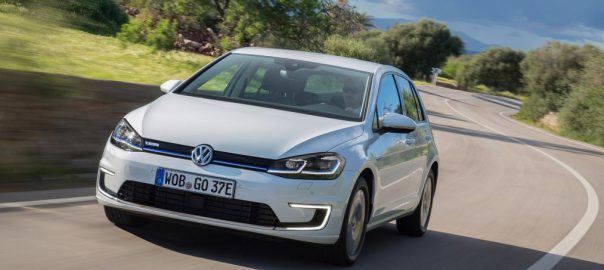
VW e-Golf 2017 First Drive

The e-Golf has long been a very good EV in terms of driving experience, but it has significantly lacked the range to truly compete with the big players in the electric car market.

It started out with a below average electric range, and almost all of its rivals have upped their game since the e-Golf’s launch. Now though it’s Volkswagen’s turn to bring out an improved model. NGC went to the car’s launch in Majorca to try out the new VW e-Golf.

What’s new

Volkswagen has given its entire Golf line-up a refresh, with sharper styling front and rear, and improved equipment levels inside. The e-Golf is no different and benefits from these changes, though more importantly, the all-electric model has also had more done to it than any other Golf.

On top of the Golf line-up’s updates, the e-Golf also now benefits from a more powerful electric motor and significantly larger battery capacity. The upshot is a slightly more stylish car, with more tech and improved value for money; and an EV with around 50% more range and a little extra performance to go with it. That means an increase in battery capacity from 24.2 kWh to 35.8 kWh, and power jumps from 85 kW (115 hp) to 100 kW (136 hp). It all sounds great on paper, but how does it come together on the road?

What’s it like to drive

Something that was a positive with the first-generation e-Golf for some was that it was similar to a ‘normal Golf’. Unlike rivals such as the Nissan Leaf and BMW i3, VW didn’t create a new and edgier car, but used it’s tried, tested, and very popular Golf as a foundation. Climbing from a conventional petrol or diesel Golf and into an e-Golf sees very few changes presented to the driver, instantly putting many at ease behind the wheel.

From there, the driving experience does change but actually becomes easier in many respects. The instant torque from the electric motor, the single gear transmission, and regenerative braking create a very digital driving experience, and one that is both enjoyable and convenient. An EV’s most natural habitat is in built up areas, with the low speeds and stop-start traffic minimising the restrictions of the relatively limited range of an EV compared to a conventionally powered car. Here the e-Golf excels, helped by the low centre of gravity created by the battery pack being placed in the car’s floor. It’s nimble, very nippy in short bursts of acceleration, and fun to drive.

Read more: Next Green Car

 

Re-Energizing Earth Day 

The eco-dream of the ’90s is alive in the electric car

Electric motors have instant acceleration, like a roller coaster on wheels

I haven’t bought gas in a year. Yes, you read that right. Go ahead and let that sink in a bit.

Last April, when I was looking for a new ride, my wife told me I should try an electric car. Why not? Skeptically, I tested a used BMW i3, and it was like going out to take a look at a puppy. Of course we brought it home.

You should know that my first car was a Chevy Celebrity — probably the least sexy car to come off an American production line in the past 50 years. So I was overdue, but who knew the solution to my midlife crisis would look more like a golf cart than a Mustang?

A year in, I can tell you it’s the coolest car I’ve owned — the technology makes you feel like you’re driving around inside an iPhone. It’s also an instant conversation starter. “What is that thing?” asks the dude in the parking lot or the woman working the drive-through window.

“It’s an electric car,” I say. “Did I mention that I haven’t bought gas for it in a year?”

What I didn’t realize at first was that the simple act of driving an electric car is kinda subversive. Lots of powerful people don’t want us to go electric. Sticking with gasoline to power our lives is part economics, but part unfair play, as oil-industry fat cats have long pulled the levers of power to kill the dream of emission-free travel.

There were electric cars going all the way back to the dawn of the automobile, but the concept was put on the shelf as Henry Ford’s factories dictated the future of the industry.

Then in the 1990s, with the dawning realization that our cars were like cigarettes, choking our planet’s health, electricity got another look. Starting in 1996, GM built more than 1,000 prototype EV1 vehicles, and celebrities and other energy rebels started leasing them. (As a test vehicle, they couldn’t buy them.)

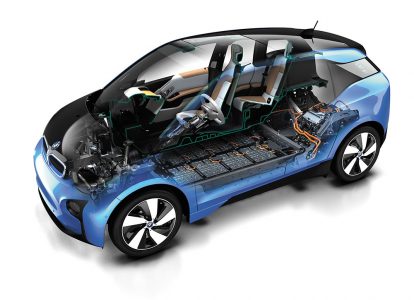
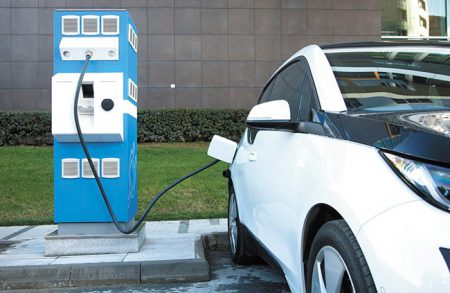
The electric BMW i3’s passenger compartment is made from strong, lightweight carbon fiber manufactured in Moses Lake.

The test was going well — too well, and those big-oil folks, some claim (as documented in the 2006 film Who Killed the Electric Car?) got nervous. The project was not only ended, but the cars were repossessed by GM and nearly all of them were crushed into oblivion.

Instead GM doubled down on the all-American, gas-guzzling SUV. Meanwhile, America changed. We bought a lot of SUVs, sure, but we also learned about some nasty things that some of the money we were spending on foreign oil was being used to fund. The growing desire to clean up our carbon footprint led Toyota to launch the Prius hybrid; in 2008 Elon Musk sold his first Tesla. In 2009, outgoing GM CEO Rick Wagoner said his biggest mistake was killing the EV1.

And in a sign of how far the tables have turned, last week Tesla surpassed Ford in total market value — and is only $3 billion behind General Motors. Here in 2017, driving an electric car isn’t so subversive any more.

Read more: Inlander

James of Digital Group Media awaits his turn in the Leaf (Image: T. Larkum)

Electric Car Day – Focus on Nissan

The Nissan vehicles at our Electric Car Day were the Leaf Tekna electric car and the e-NV200 electric van. We’ve sold lots of Leafs but it was nice to see the more unusual e-NV200 ‘in the flesh’; we can supply these too so don’t hesitate to ask us if you want to know more.

James of Digital Group Media awaits his turn in the Leaf (Image: T. Larkum)

Below is a quick video of the e-NV200 taken during the event.

Our thanks to Darren and Chris from Glyn Hopkin for bringing the Nissan vehicles.

Cheap Motoring

Electric Cars Are Growing In Popularity, But Will The Bubble Burst?

As recently as five years ago the prospect of our roads being filled by electric cars seemed unlikely. Although the technology had accelerated dramatically in the previous five years, there were still so many obstacles to overcome, not least of which were the vehicle’s limited run time and the non-existent infrastructure necessary to accommodate them (no charging points).

Nay-sayers still look askance at the electric car even now, but with London sales rocketing up 85% this year, it’s hard to deny that it is beginning to come into ascendance.

In cars as in practically every other part of life, London can be easily dismissed as being in its own reality-free bubble. Journeys in England’s south-east are typically shorter than elsewhere in the UK, and because it’s home to most of the ‘people who matter’ for at least half of the year, developments happen at a far speedier pace – the likelihood of finding an electric vehicle charging point in London is, one would imagine, far higher than in rural Shropshire or the Scottish highlands. However, it would be wrong to reject these figures out of hand; with more than 10,000 electric vehicles now owned across the UK, this is more than just a Capital-based blip. So why are electric cars gaining such popularity, and are they worth it?

Firstly, it’s important to know that there are two types of electric powered car. The most common runs on a battery which needs to be charged before use. Less common is the hydrogen fuel-cell battery powered car, which uses the engine’s motion to fuse hydrogen with oxygen to create electricity: clever but expensive and therefore currently less popular – although that may change as prices stabilise.

Regardless of the type of battery it uses, there are three key reasons why it makes sense to go electric:

Cutting costs

Costing as little as 2p per mile to charge, the electric vehicle is extremely economical to run. And because their inner workings are a lot less complicated than a traditional combustion engine, electric cars are cheaper to maintain; it’s estimated that the Nissan Leaf costs a meagre £11 per month, versus £30p/m for the Ford Focus.

Cutting carbon

Air pollution is increasingly appearing on the international agenda, with a recent report stating that more than 40,000 early deaths per year are linked to the problem in the UK alone. Electric cars produce no emissions, so driving one is no worse for the environment than walking.

Add to that, in purchasing an electric vehicle you’re purchasing cutting edge tech and that applies as much to the driver interface as it does to the internal mechanisms. In short, if you want the bells and whistles you’ll find them in electric cars.

So what about the flip side?

Range anxiety

There’s no arguing with the fact that even though electric cars can travel far further than they ever could before, they still come with the niggling concern of ‘what if I run out of power?’ No one wants to be stuck on a country lane with no way of powering their vehicle.

Expense

Going green has always come with government subsidies, but even still electric vehicles do still require a higher than average initial outlay and this can present a major deterrent.

Whether an electric car is worth the investment is entirely down to individual perspectives. As independent vehicle supply professionals, at OSV we’ve watched the development of electric with close interest. The environmental credentials are deeply appealing, and with the global issue of diminishing oil supplies producing very real concerns for the future, in our view green could be the way to go.

Read more: Huffington Post

Tesla and BMW show electric at the London Motor Show

Here I am at the London Motor Show looking to extend our reach and be able to offer all quality electric cars.

Disappointed not to see Elon here but had a great chat with Joan from the Chiswick Tesla office. No update yet on the model 3 release.

Big showing from BMW with electric i3 and i8 centre stage. Asked about the all electric Mini but nothing official yet.

I simply wish there were more electric cars here. However I do know the tide is turning. Every dealer I speak to is conscious of the demand and expecting it to grow.

Enjoying a rest in the Tesla Model X

2017 World Urban Car = BMW i3 (94 Ah)

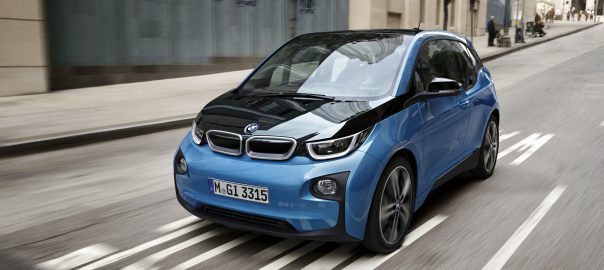
As the inaugural winner of the 2017 World Urban Car award at the New York International Auto Show, the new BMW i3 (94 Ah) is getting a well deserved nod of attention.

The i3 is a blast to drive, subcompact (allowing for much easier urban parking and maneuvering), elegant, clean, and widely available. In a world of growing city fees or bans for dirty vehicles, it’s apropos that an electric vehicle win the inaugural World Urban Car award.

“This award highlights BMW Group’s commitment to sustainable mobility through BMW’s first all-electric vehicle made primarily of carbon fiber,”

Ludwig Willisch, Head of BMW Group Region Americas, said.

“The design brief for the BMW i3 was to create a Mega City Vehicle for the cities of the future. Today, the new 2017 BMW i3 (94 Ah) provides more range paired with a high level of dynamic performance, making it the perfect urban vehicle for people around the world.”

I tell everyone I know who shares a shred of interest in electric cars to test drive a BMW i3. There is no experience that compares. The car is cool and inspiringly unique.  A press release from the BMW Group about the win and the winning car notes:

“Launched in 2014, the born electric BMW i3 represents a new era of electro mobility offering a visionary design, a ground-breaking vehicle architecture, dynamic performance and innovative connectivity. No other car represents such a holistic approach to sustainability throughout the value chain.”

Read more: Clean Technica


Like asking a vegetarian to eat meat

Under warranty I took my Renault ZOE into my dealership for a repair following an amber light warning of an electrical fault. I later had a call to say my ZOE would need a new part that was on back-order. It could take up to 4 weeks to get my Electric Car back and whilst I waited I would be sorted out with a regular petrol car arranged through a hire car company.

Renault ZOE showing electrical fault

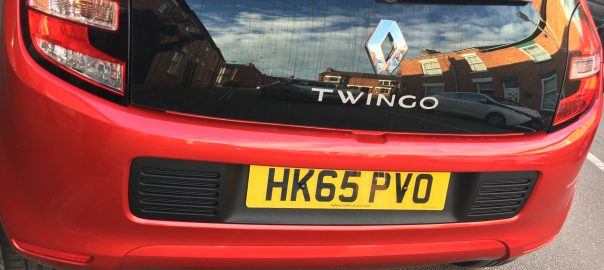
With no Electric Car solution available, I was given a small, manual transmission, Renault Twingo. I really didn’t want to drive a regular petrol car, not only would I not be driving ‘Green’ but I would also be liable for some hefty parking fees at my place of work and of course the cost of petrol. Parking is usually free for an Electric Car in the city and charging is payable monthly and costs me less than £15 for the month.

Renault Twingo, Hire Car

Having totalled my estimated 4 week spend on parking and fuel at around £250 I asked the dealership if they would cover these costs, incredibly they said no but at my request they gave me the number of Renault Customer Services so I could raise a case with them.

Thankfully the person I spoke to completely understood the situation and took swift action to make sure I had a car within an hour, also agreeing and confirming that all associated costs (parking and fuel) would be paid back to me at the end of the rental (subject to supply of receipts). Phew! – that was at least something.

It’s not ideal, I would still much rather be driving an electric hire/courtesy car, every time I turn the key in the ignition and the engine rumbles to life I can’t help but feel incredibly guilty for my short journeys’ CO2 emissions, it also feels strangely old fashioned.

When explaining the situation to someone they said to me

“well it’s like asking a vegetarian to eat meat for a month”

and in a way I guess it is.

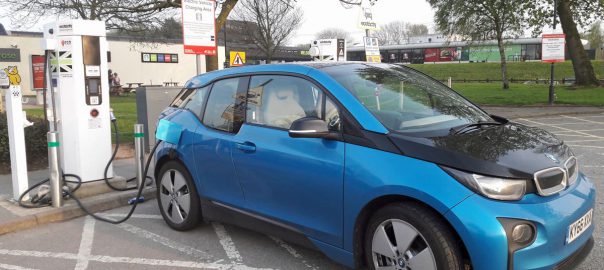
Our BMW i3 on charge at Corley Services (Image: T. Larkum)

Rapid Charging with an Ecotricity Charge Point

Rapid Charging on the Motorway

Our BMW i3 on charge at Corley Services (Image: T. Larkum)

Once you’ve had an electric car for a short while you’ll want to venture beyond its initial range and you can only do that by charging away from home. The most popular method is to use one of the network of Ecotricity rapid chargers, their ‘Electric Highway‘; there is at least one located at virtually all service stations on the UK motorway network.

In advance you need to have installed the Electric Highway smartphone app (available for Apple and Android devices) and set up an account with Ecotricity to allow you to use it. Ecotricity home customers get 52 free uses per year, otherwise the charge is £6 per half hour charge.


Step-by-Step Guide

Here is your guide to charging your electric car at an Ecotricity rapid charger:

1. On arrival, park up so the required cable can reach the charge socket on your car. Typically that means facing forward if your car has the charge point in the nose (e.g. the Nissan Leaf, Renault ZOE or Kia Soul) but reversing in if the charge point is near the rear (e.g. BMW i3, Mitsubishi Outlander, Hyundai IONIQ or Tesla Model S).

Rapid Charging Step 1: Access the Rapid Charger (Image: T. Larkum)

2. Get out of the car and check the screen on the rapid charger to confirm it’s working. Assuming the charge point is not already in use, the rapid charger will show a screen saying ‘Welcome! To charge your car, use the Electric Highway smartphone app’ or ‘Welcome! Select the correct charger for your vehicle’.

Rapid Charging Step 2: Welcome Screen (Image: T. Larkum)

3. Start the Electric Highway app on your phone. If it has been correctly setup it will show your car type at the top. The screen will say ‘What would you like to do?’ with two big green buttons labelled ‘Charge: charge your vehicle now’ and ‘Find pumps: find compatible pumps’.

Rapid Charging Step 3: Choose to Charge (Image: T. Larkum)

4. Press the ‘Charge’ button. The screen will change to say ‘Charging your car’. Press the ‘Get Started’ button.

Rapid Charging Step 4: Get Started (Image: T. Larkum)

5. The screen will change to say ‘To start, scan the pump’s QR code or enter the pump ID’. Here ‘pump’ is Ecotricity’s term for a rapid charge point. For simplicity we’ll choose the latter – press the ‘Enter pump ID manually’ button.

Rapid Charging Step 5: Identify the ‘Pump’ (Image: T. Larkum)

6. This will bring up a box to enter the pump identification number; selecting in this box will bring up your ’phone keyboard. Type in the four digit number as written below the screen on the charge point.

Rapid Charging Step 6: Enter the Pump Number (Image: T. Larkum)

7. The app will look this up and specify the location of the rapid charger with that number. If the number matches your location press ‘YES’.

Rapid Charging Step 7: Identify the Pump Location (Image: T. Larkum)

8. The screen will change to allow you to select the appropriate cable and connector for rapid charging your car. This is essentially straightforward: the Renault ZOE uses AC rapid, the Leaf, Outlander and Kia Soul use CHAdeMO and most others use CCS. You should know the connector type for your car, and the app will also exclude the ones it believes are incompatible. However, you should be aware that most cars can use the AC at low speeds as well as the DC at high speeds and so you may accidentally use AC but find your car charges only very slowly. In other words, use CCS and CHAdeMO in preference to AC unless you have a ZOE.

Rapid Charging Step 8: Select the Connector (Image: T. Larkum)

9. At this point control of the charging moves from the app to the charge point itself. Once initialised the charge point screen will show ‘Connection: connect your vehicle’.

Rapid Charging Step 9: Connect to the Car (Image: T. Larkum)

10. Plug the connector into the car, remembering to remove the secondary dust cover if you have a CCS socket. So long as the car is set to charge (i.e. you don’t have the charge timing override set) the car and charge point will ‘negotiate’ the fast charge they can both support, and charging can begin. The screen will show ‘Initialization: Please wait whilst your vehicle connects to the charge point’ and will highlight the charge point going through a number of check steps: Start communication, Isolation check, Precharging, Charging.

Rapid Charging Step 10: Initialization (Image: T. Larkum)

11. At this point charging starts, and you can usually hear the distinctive high pitched whine of rapid charging underway.

Rapid Charging Step 11: Car is Charging (Image: T. Larkum)

Monitoring the charge progress, and ending the charging session, are covered in Part 2.

New Volkswagen e-Golf 2017

All-electric Volkswagen Golf receives new tech, more power and big range boost for 2017 – can it compete with the best EVs as a result?

Of the near-half a million Golfs sold in Europe last year, only a tiny fraction featured an electric powertrain. Most of those were the plug-in hybrid GTE, too, so the e-Golf – first launched three years ago – still has plenty of ground to cover to take battery power to the mainstream market. Sales projections are much more positive for 2017 and beyond, however.

Volkswagen e-Golf 2017

The biggest change will be the extension in predicted range. VW has managed to fit a more energy dense lithium-ion battery, allowing greater capacity without increasing the physical size of the pack.

As a result, the claimed range has risen from 119 miles to 186 miles, while you can now charge it to 80 per cent from a fast charging point in just 45 minutes. It still takes four hours to charge fully on a home charger, or 13 hours from a domestic three-pin plug socket, and we’d expect around 130 miles to be achievable in the real world.

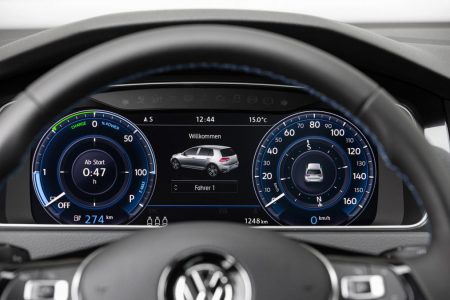
Volkswagen e-Golf 2017Like many top-spec Golfs you’ll find new tech in the form of VW’s 12.3-inch Active Info Display, which replaces lesser cars’ analogue dials. This is particularly useful in the EV, allowing you to prioritise things like remaining range, as well as accessing real-time info on the required length of your next charging stop.

Elsewhere, all e-Golfs get the glossy new 9.2-inch Discover Pro infotainment system as standard, which is feature-packed and largely slick to operate – save, that is, for the rather useless hand-swipe gesture control.

Volkswagen e-Golf 2017

Aside from that, it’s the same sober but impressively solid Golf interior that we’ve grown to appreciate over the years. From the inside, the only clues that you’re driving an EV are the subtle badges and the blue stitching. Sticking the electric motor where the engine usually is means that there’s no dent to the VW’s ample rear passenger space, either, although the 341 litre boot is 39 litres down on the standard car due to the batteries under the floor.

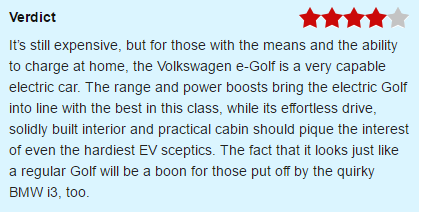
Auto Express Verdict

Read more: Auto Express