Category Archives: Electric Cars

News and reviews of the latest electric cars (full electrics and plug-in hybrids).

BMW 530e iPerformance SE 2017 review

Plug-in hybrid version of BMW’s 5 Series is well-placed to take sales away from its higher-end diesel siblings. Strong performance and handling with favourable running costs.
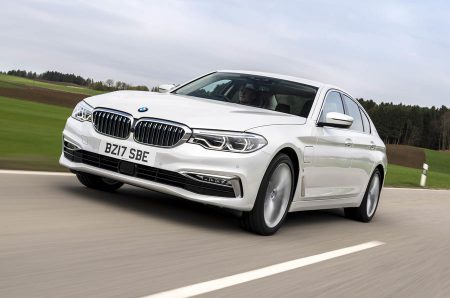
BMW 530e iPerformance

What is it?

This is the first plug-in hybrid 5 Series. It’s not the first hybrid 5 Series, that being the ActiveHybrid 5 available with the last-generation model range. Less than one percent of the 15,000 or so Fives BMW sells here yearly have been part-electric. The ActiveHybrid 5 was expensive, equipped with six cylinders and 302bhp, 149g/km CO2 performance to suit the US, which is why it made little ground here.

BMW hopes that will change, dramatically, with this new 530e iPerformance hybrid, which is a plug-in propelled by a 181bhp 2.0 litre TwinPower Turbo petrol engine and a 112bhp electric motor. The crucial difference lies in some key numbers: the 530e’s £44,765 list price is £770 more than for a 530d SE and £7405 more than for a 520d Efficient Dynamics, while its 46g/km CO2 emissions score it a 9% BIK rating compared to the 520d ED’s 23% and the 530d’s 26%. That’s vastly more competitive than for the ActiveHybrid 5 and enough, BMW thinks, to see it selling around 5000 plug-in 5 Series in a full year.
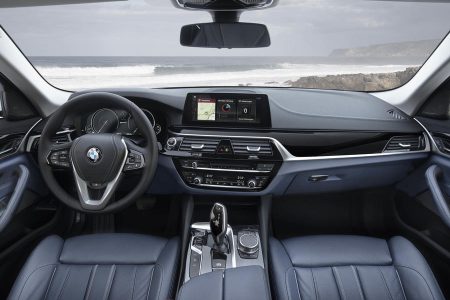
BMW 530e

What’s it like?

Start your trip with a fully charged battery and it’s on electric power that you’ll initially travel unless you’ve heavy with the throttle, in which case the petrol engine momentarily assists.

The 9.2kWh lithium-ion battery will realistically allow a 22-mile range, and in near total silence, the only sound being the tyres’ hum. The car remains tranquil even when the petrol engine kicks in, although the four-pot produces a pleasing internal combustion rasp if you ask plenty of it. The transition from one to the other is tremor-free, as you’d expect, and it’s easy to forget that you’re in a hybrid car at all, the ‘Auto eDrive’ driving mode enabling the car to select the optimum mix of power sources depending on the driver’s demands and the terrain advice supplied by the sat-nav. And while it may be saving fuel, the 530e is not slow, breaking 62mph in 6.2sec: pretty rapid for a car that’s partly about economy.
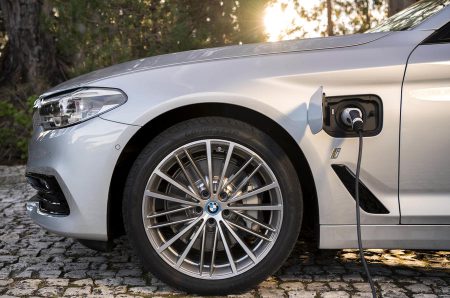
BMW 530e

This twin-engined zest is complemented by a lithe, confident chassis that delivers a supple and sophisticated ride that’s as pleasing as this car’s quiet agility. Only the steering lets it down, the weight at the rim feeling curiously mushy, although it points the car accurately. As always with hybrids, there’s diversion to be had from monitoring the car’s energy usage and the game of trying to see how far you can go on amperes alone.

Read more: Autocar

AA Trust launches free EV driving course

The AA Trust is launching the first ever free of charge EV driving course in collaboration with Chargemaster.

AA Trust’s chairman Edmund King

The course was launched following an AA Populus survey of 16,239 drivers, of which 32% said they want to learn to drive in an EV.

Drivers were asked, to what extent would you be interested in a free one-hour electric vehicle driving lesson – aimed to show you how to get the best out if an EV – in your local area?

  • 32% were interested (16% extremely interested, 16% interested)
  • 33% males interested, 30% females
  • 35% younger drivers (18-24, 25-34) interested as opposed to 31% older drivers (65+)
  • Drivers in London were more interested (35%) followed by those in West Midlands and South West (34%)
  • Drivers in North East least interested (26%) followed by those in eastern region (28%)
  • Those in Scotland, Wales and Northern Ireland also showed high levels of interest.

AA Driving School and Drive Tech trainers developed the experience in conjunction with Chargemaster and will be piloted in Milton Keynes with a view to be rolled out nationally.

AA Trust’s chairman Edmund King said: “We are approaching a tipping point as more and better electric cars come on stream.

“We want to help drivers understand this exciting new technology at the EV experience centre but we also want to help them get the most out of their electric cars.

“Drive electric sessions, conducted by AA instructors, can either be carried out in the driver’s own electric car, or in one of the EV experience centre’s test drive fleet. The EV Experience and Drive Electric experiences be really put Milton Keynes on the map as the most go-to EV City in the world.”

Chargemaster’s chief executive David Martell said: “The number of electric vehicles in the UK is continuing to grow, and we recently marked the 100,000th plug-in car registration in the UK.

“To get more people driving electric vehicles, getting them behind the wheel is key. The EV experience centre aims to do exactly that, and the drive electric experience sessions from the AA Trust will be a great way to help consumers better understand electric vehicles and how easy they are to live with and how to get the best out of them when driving.”

Source: AM Online

Big Oil Starting To Take Notice Of Rise Of EVs

It was really only a matter of time, and now the world’s top oil companies are seeing EVs as a viable and permanent threat.

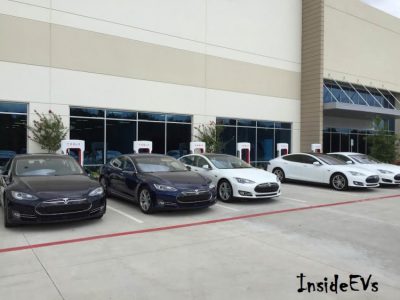
Tesla continues to lead the pack with U.S. plug-in sales, but the Chevrolet Volt and Bolt, Toyota Prius Prime, and Nissan LEAF are all faring well, and the outlook for EVs continues to improve. (via Josh B/InsideEVs)

Though makers of EVs are still much more bullish about the timeline for mass adoption, several oil producers are taking note, and many are beginning to change their initial conclusions. BP and Exxon Mobil have bumped up their estimates this year, and OPEC has quintupled its future sales forecast for plug-in EVs.

Bloomberg New Energy Finance (BNEF ) believes that EVs will sell better than ICE vehicles by 2040, totalling 530 million plug-ins on the road at that time, which will account for one-third of the world’s vehicles. According to a study by BNEF, by 2040 EVs will lower the global oil demand by eight million barrels. Chief of advanced-transport analysis at BNEF in London, Colin McKerracher, shared in a note to clients:

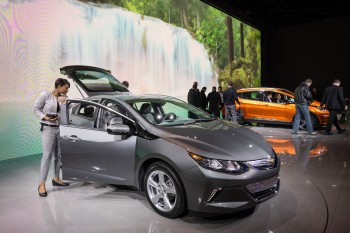
The Chevrolet Volt and Chevrolet Bolt EV on display Friday, February 12, 2016 at the Chicago Auto Show in Chicago, Illinois. (Photo by Steve Fecht for Chevrolet)

“The number of EVs on the road will have major implications for automakers, oil companies, electric utilities and others. There is significant disagreement on how fast adoption will be, and views are changing quickly.”

“What oil companies and car companies are saying is diverging. This is a trillion dollar question, and somebody is going to be wrong.”

Though these estimates will continue to diverge, the truth is that both sides of the equation are seeing that the popularity of EVs is and will continue to increase, which will drop the demand for fossil fuels. While oil companies may be attempting to make it seem like they aren’t concerned, multiple recent forecasts sing a vastly different tune.

  • OPEC’s previous 2040 estimate was 46 million EVs, and now the group representing 14 nations is forecasting 266 million.
  • Exxon Mobil initially predicted 65 million electric cars by 2040, but has now upped it to 100 million.
  • Norwegian-based Statoil ASA sees an electric vehicle market share of 30 percent by 2030.
  • The International Energy Agency raised its 2030 EV fleet size from 23 million to 58 million.
  • BP bumped its future outlook up by a whopping 40 percent, to 100 million plug-ins on the road by 2035.

Obviously, these estimates are markedly different, but the trend is the same. OPEC’s recent oil market report shows that due to EV sales, oil demand in Asia could see significant declines as soon as next year.

There are many variables, which make these type of estimates difficult. Fuel cost and battery costs are two of the most obvious, but another gray area lies in government support and subsidies (or lack thereof).

According to BNEF, top world automakers combined plans show estimated sales of six million EVs per year as soon as 2025, and eight million by 2030, and these estimates continue to rise.

Source: Inside EVs

Visit the showroom where you can test drive every electric car

Yet to be convinced that electric cars are the future? EV stalwarts are hoping this unique ‘experience centre’ located in a shopping centre in Milton Keynes could be the encouragement you need to swap your diesel for a plug-in – and we’ve been for a behind-the-scenes look at the showroom which is being described as a “landmark moment”.

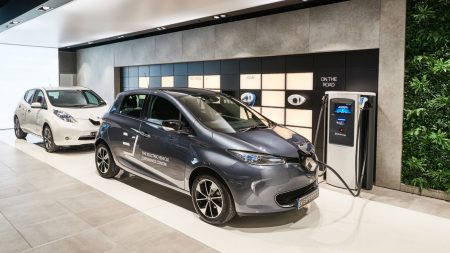
Renault ZOE ZE40

The EV experience centre is operated by Chargemaster using Government funds through Milton Keynes’ Go Ultra Low City status. It’s not a pop-up dealership – there’ll be no hard sell, just experts on hand to talk people through electric cars and advise about whether they’ll fit into their lifestyle.

“[There’s] a series of myths people have about electric cars,” transport minister Jesse Norman told Motoring Research during our preview of the EV experience centre.

“They think about whether they might be expensive or whether they’re hard to charge, and how long that takes. An experience centre that actually gives a person the experience of actually sitting behind the wheel or potentially driving it, that just knocks down a whole series of these myths and that makes it much easier to think about buying one.”

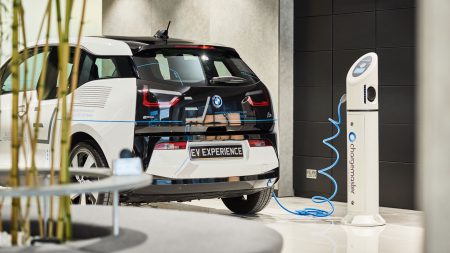
BMW i3

The showroom, located in Centre:MK, is multi-brand, displaying cars from partners including Renault, Mitsubishi, Volkswagen, Nissan, BMW and Kia. The experts on hand won’t be on commission and will be able to give independent advice on which – if any – electric car suits a particular person’s needs.

If an electric car won’t fit a person’s lifestyle, they’ll be honest that they’re better suited to a conventional petrol or diesel car – while, although Tesla isn’t a partner, a visitor with a big budget after a long range and high performance will be pointed in the direction of a Tesla dealership.

“With 17 million people a year coming into this particular shopping centre in Milton Keynes, that’s potentially an awful lot of people who are potentially going to be impressed by it,”

added Norman.

Read more: Motoring Research

Solar car start-up launches vehicle and prepares for European tour

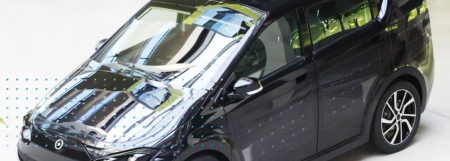
German start-up manufacturer Sono Motors has presented its solar car, the Sion, in Munich. Sold without a battery, the vehicle has a range of 250km and will sell for €16,000.

The Sion features integrated solar cells, which generate additional energy to top up an electric vehicle (EV) battery, creating an extra 30km of range in a day. The company’s vision is to offer a mobility concept for the future which does not produce CO2 emissions or use oil. The Sion also offers drivers the opportunity to extract power from the vehicle and offer it to other users, in a form of bidirectional charging. The company believes ‘with the Sion’s output of 6.6kW, other electric cars can be charged.’

Sono Motors aims to either sell a battery for an additional €4,000, or offer a monthly lease, similar to that offered by Renault. The company hopes the car’s design will make it a popular choice for both families and commuters, with its low price bringing it in line with the traditional automotive market, in a sign that EV prices are beginning to come down.

A statement released by the company to coincide with the launch comments: ‘Sono Motors first attracted attention after launching a successful crowdfunding campaign in the summer of 2016. For the development and production of the vehicle, the company is working together with well-known contract manufacturers and system suppliers from the European automotive industry. A total of 5,000 reservations of the Sion are required to start serial production in the second quarter of 2019. Shortly before the presentation of the solar car, more than 1,200 reservations had already been placed.’

As Sono Motors sees sharing as the future of mobility, the Sion comes equipped with three mobility services: ‘powerSharing, rideSharing and carSharing.’ An app allows Sion users to share power, rides and even the car itself with other users.

Read more: Autovista Group

Swing to electric cars will be a quiet evolution

The stone age didn’t end because we ran out of stones. It ended because we learnt how to make and work something even more versatile…metal. Bronze and then Iron.

Those “Ages” took us thousands of years to get through. But things have speeded up a bit as we have harnessed, made and learnt how to use many other things –the Industrial Age (revolution) leading to the Engine Age and then a rat-a-tat-tat of Jet Age, Atomic Age, Space Age, Digital Age (another revolution) and Information Age.

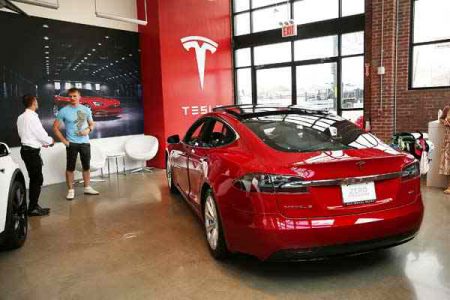
Tesla Model S

Many of those advances have taken place in an overlapping “Oil Age” which has lasted little more than a century. And picking up on the theme of this column last week, that Age is entering the beginning of its end not primarily because we are running out of oil. We could keep using this and other fossil fuels for at least another century, even at gas-guzzling rates.

But it will be replaced by the “Electric Age” because oil-sourced energy is ultimately finite, more expensive to extract, has some end-of-the-world-side effects and above all because we have discovered (but so far grossly under-used) more ways to make something better – electricity – using more powerful methods like nuclear fusion/fission and infinitely more abundant and planet-friendly sources like rivers (hydro power), the sun (solar power), the wind and ocean currents.

HUGE APPETITE

The fundamental point here is that imminent swing from petrol and diesel to electric and hybrid motor vehicles will dominate the headlines for a while, but in practice this change will be a quiet evolution. The real “Revolution” will be how we generate the electricity and how we use what will be massive advances in that process in myriad ways other than the propulsion of your car.

All existing technology for generating electricity will improve exponentially in efficiency, availability and versatility – at prices that get progressively lower and for sure there will be new technologies not yet thought of.

Read more: Daily Nation

Government Financial Incentives for Electric Cars

Here is the third eBook in our series, and gives a clear overview of the grant and tax benefits of an electric car:

  • Dealer discount at the point of purchase
  • Road tax savings
  • Charge point installation grants
  • Income tax benefits

If you are considering an electric car and you want to understand the various grants and tax incentives that the government offer to encourage electric cars, then this is the guide for you.

Electric Car Benefits - Government Financial Incentives

Click on the image, enter your details, and download your free guide.

Previous titles were:

If it leaves any questions unanswered, just get in touch (contact details here and in the eBook).

Jason Tisdall
FuelIncluded.com

First all-EV car showroom opens in Milton Keynes

The UK’s first multi-brand, electric vehicle showroom has opened in central Milton Keynes, with the ambitious aim of trebling the national take-up of EVs and plug-ins in the local area over the next five years.

The showroom, operated by Chargemaster as part of the Milton Keynes’ £9m Go Ultra Low City programme, won’t sell cars directly, and its 11 EV “gurus” are not salesman. They concentrate instead on educating people about the capabilities and advantages of electric vehicles and on showing them a selection of the latest EVs from VW, BMW, Kia, Renault, Nissan and Mitsubishi, Chargemaster’s partners in the venture.

Q&A, David Martell, chief executive, Chargemaster

Will you be looking to attract visitors who are serious about electric cars?

Not necessarily. We’d like to talk to people who are simply curious about them, and want to reach the truth for themselves. We can help with all kinds of facts and figures, impartially delivered because we’re not selling anything. Or we can take people on a familiarization drive.

How does Chargemaster gain from such an apparently philanthropic exercise?

We’re convinced electric cars will play a vital part in future motoring. If that happens, as the country’s leading provider of charging points we’ll benefit. In the meantime, we’re aware of a lack of general knowledge about electric cars and we want to help address that.

When the number of EVs sold is still so small, how can you be confident about their future?

Three things: they’re a great answer to some of the difficult problems we’re facing, the population of EVs is increasing fast (5000 to 100,000 in five years) and the best models are easy to own yet great to drive. Latest forecasts say EV sales will reach 150,000 a year by 2020.

Read more: Autocar
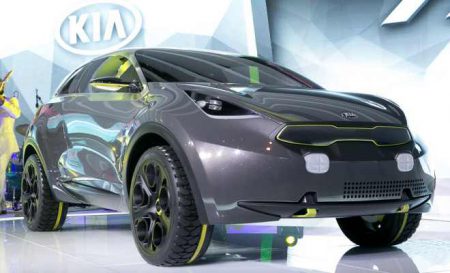
Kia Niro Not Easing Hyundai IONIQ Production Output

South Korean carmakers are now widely recognized as major players in the automotive industry and they are about to touch new heights after launching new electric vehicles.

KIA Niro

Hyundai has got the IONIQ whereas Kia has a Niro. Both the IONIQ and Niro are offered with a hybrid system at the moment but they are about to welcome a full EV trim.

While it all sounds positive, the Niro is apparently putting the brakes on the IONIQ EV production output. The Niro is the more popular choice between the two and there is already a great deal of demand for the Niro hybrid.

The bad part about this is that both Kia and Hyundai rely on LG Chem for batteries and the supplier is struggling in meeting battery demand. This is having a negative effect on the Kia Niro and Hyundai IONIQ as their unexpected EV demand has created supply problems due to battery shortage.

With the Niro bagging more sales, the supply priority will be on them and it may leave the IONIQ further delayed.

Source: NSEAVOICE