Category Archives: Electric Cars

News and reviews of the latest electric cars (full electrics and plug-in hybrids).

Hyundai launches SUV, electric assault to overtake Toyota in Europe

Hyundai has announced it is to place electric vehicles (EVs) at the centre of its product line-up going forward, which alongside sister brand Kia, will total eight battery-powered vehicles and two hydrogen cars by 2020.

The Hyundai brand will also double its Europe SUV offering to four models by 2019, plus further bolstering of its crossover range, as it looks to ride the wave of these growing segments to meet its target of overtaking Nissan and Toyota to become the best-selling Asian brand in Europe by 2021.

The electric assault will be led by a premium long-range EV aimed at targeting upmarket leaders including Tesla and models launching from other rivals. This electric sedan will be launched under its high—end Genesis brand in 2021 with a range of 500km (310 miles) per charge – matching models launching from Volkswagen Group around this time.

Hyundai Executive Vice President Lee Kwang-guk said on Thursday: ‘We’re strengthening our eco-friendly car strategy, centring on electric vehicles,’ underscoring the realistic, mainstream promising nature of the technology.

Hyundai and Kia, together fifth in global sales volumes, said they would add three plug-in electric vehicles to their plans, surging their total line-up to 31 models by 2020 – including eight-battery-powered and two hydrogen models. This is a dramatic shift in plans from only three years ago, when in 2014 they had planned 22 models, with only two being battery powered.

It is also planning its first dedicated EV platform, allowing the company to build multiple EV models with longer driving ranges. While it launched its first all-electric volume car the IONIQ last year, its driving range was uncompetitive with those from Tesla and General Motors (Ampera-e).

Read more: Autovista Group

UK used car market follows new vehicle sales with Q2 decline

According to the latest data released by the Society of Motor Manufacturers and Traders (SMMT), the UK’s used car market declined in the second quarter of 2017, following record results in the previous year.

The figures suggest that 1,832,400 used vehicles changed hands during the period between April and June 2017, a drop of 13.5%.

The society puts this down to the strong results of Q2 2016 being hard to match and turbulence in the new car market following the introduction of new vehicle excise duty (VED) rates introduced in the country on 1 April. This follows the trend of UK new car sales, which experienced another drop in August 2017.

Overall, for the first half of the year, the number of used car sales fell by 5.1%, with 3,966,356 sales in total. Most of this drop was seen in the petrol market, which declined by 5.1%, whereas the diesel market, which has been much maligned in recent months and will soon see the introduction of manufacturer-backed trade-in incentives in the UK, only declined by 0.1% year on year in the first half of 2017.

Demand for alternatively fuelled vehicles (AFVs) rose 24.2% with electric cars enjoying particularly strong growth – up 79.3%. However, volumes remain low with AFVs currently accounting for just 1.2% of the used car market.

Read more: Autovista Group

Skoda announces EV offensive as Czech national EV network approved

Skoda is ramping up plans to launch four electric vehicles (EVs) by 2021 and a further two by 2025, including two SUVs and an image-boosting sports car.

The news comes as the European Commission approves the Czech Republic’s plans to launch a country-wide alternative fuel vehicle charging network, including recharging points for EVs, as it prepares for the upcoming EV revolution over the next decade.

First among Skoda’s EV plans will come the plug-in hybrid version of its Superb sedan in 2019, as well as an all-electric version of the small Citigo in the same year. Following this, 2020 will see the launch of Skoda’s first next-generation EV built on Volkswagen Group’s (VW’s) new MEB architecture, a model which has been unveiled in concept form as the ‘Vision E’ coupé-SUV.

This is expected to become the most expensive vehicle in the brand’s 122-year history and especially targets the surging Chinese EV market, where EV sales are expected to become mainstream first. The cost – around €44,000 (£40,000) – is due to the high number of batteries required to achieve Volkswagen Group’s ambitions for a 500km (310 mile) standard range for its EVs. While expensive for Skoda, it is still only half the price of the Tesla Model X. Alongisde other MEB vehicles, it is likely to be built at VW’s factory in Bratislava, the capital of auto-hub Slovakia, and due to Skoda’s success in China, it is being given almost the same priority as VW’s first MEB –based car, the Volkswagen ID.

Finally, in 2021, Skoda will add a second smaller EV more in line with the brand’s traditional pricing, which may carry the historic Felicia E name. This will essentially be Skoda’s version of the Volkswagen ID hatchback, including the rear-mounted 168bhp electric motor, and so will be smaller than the Octavia hatchback but roomy due to the clever MEB architecture.

Read more: Autovista Group
More details surface on VW, Audi and JLR’s model electrification plans

Further to the news reported yesterday (15 August) that Skoda is ramping up plans to launch four electric vehicles (EVs) by 2021 and a further two by 2025,  including two SUVs and an image-boosting sports car, more details of EV plans from Volkswagen Group’s other brands Volkswagen (VW) and Audi have come to light.

Also, Jaguar Land Rover (JLR) plans to offer plug-in hybrid variants of its best-selling Range Rover and Range Rover Sport models from the beginning of 2018.

According to an article published on autoblog.com, the I.D. Crozz crossover will be VW’s second EV based on the dedicated MEB (modular electric drive) platform, following the I.D. hatchback. The Crozz is now scheduled for a market launch at the end of 2020 or early in 2021. Autoblog also reports that the Crozz will even be the first MEB-based vehicle to launch in the US as there are no plans to introduce the I.D. hatchback there.

Whereas the I.D. hatchback has a quoted range of 373 miles on the European test cycle, the Crozz is quoted at 311 miles. As the Crozz will feature four-wheel drive, it will be powered by two motors producing a total of 302 horsepower, compared with the 168 horsepower reported for the regular I.D. hatchback.

As previously reported, the I.D. Buzz microbus-styled minivan (pictured) is expected to arrive in showrooms by 2022 and so will be VW’s third EV offering, but autoblog also suggests that this model could now come to market much later, possibly not even until 2025.

Meanwhile, Autocar reports that the second-generation Audi Q3, which is scheduled for launch within the next year, will be offered in both plug-in hybrid and fully electric versions. According to Autocar, ‘Ingolstadt sources involved in the engineering of the new Audi also confirm that the German car maker is working on a pure electric version of the second-generation Q3 as part of plans to meet China’s new energy vehicle regulations.’ Audi is also planning to introduce an electric version of its new Q2 subcompact crossover to the Chinese market within the next year.

Read more: Autovista Group
UK announces ‘innovative’ customs ‘partnership’ for post-Brexit trade, SMMT wants interim single market access

UK announces ‘innovative’ customs ‘partnership’ for post-Brexit trade, SMMT wants interim single market access

The SMMT and Freight Transport Association (FTA) have largely welcomed the first landmark UK policy paper outlining Britain’s Brexit negotiating strategy with the EU, which involves a proposal for an ‘innovative and untested’ new UK-EU customs ‘partnership’, which would avoid customs checks and enable ‘frictionless’ trade. This would involve importers from outside the UK and EU paying whichever tariff out of the UK or EU is higher, and then reclaiming the difference if the goods are sold in the region with the lower tariff. The plan also includes a transition period where UK customs arrangements remain equivalent to that of the EU; the SMMT, however, continues to call for full single market access during this period.

Customs arrangements are particularly crucial for the automotive industry, due to Rules of Origin requirements as well as ‘just in time’ production lines – and low margins that have little room for flexibility.

However, the SMMT warns that maintaining the substance of customs arrangements will not be enough, and that single market access is also essential for a smooth transition period. Hawes says:

‘To maintain frictionless trade and ensure business only has to adjust to one change, interim arrangements must retain membership of a customs union with the EU and full participation in the single market. Any other arrangement risks additional administration, delays and costs, undermining the competitiveness of UK exporters and increasing the costs of imports. We will continue to work with government to try and avoid such an outcome.’

The FTA, whose members operate half the UK fleet with more than 220,000 goods vehicles, was fully positive of the plans, but called for experts to play a greater role in negotiations to achieve the best deal.

Read more: Autovista Group

Electric vehicle charging hub approved

Planners have given the green light for a new electric vehicle charging hub near the centre of Dundee.

Images have been released showing how the charging hub would look in what is currently a vacant yard

Solar canopies and charging points will be installed at the site in Princes Street, which is currently a vacant yard.

The chargers will be available to the public, taxis, NHS vehicles and local businesses.

Dundee City Council now has an 83-strong fleet of electric vehicles, the biggest of any UK local authority.

Funding for the hub, as well as charging points at eight other locations, was part of a £1.86m award made to the city by the Office of Low Emission Vehicles (OLEV) last year.

Mark Flynn depute convener of Dundee City Council’s city development committee said:

“Our use and encouragement of electric vehicles in Dundee has been something of a quiet revolution and in leading the charge we have been meeting many social and economic priorities.

“Zero and low emission vehicles reduce cost, congestion and carbon emissions as well as improving air quality and the charging hub will help us to continue our journey.

“The council’s extensive use of such vehicles is encouraging other public bodies and private individuals to buy and use them as a real practical alternative to fossil fuelled cars.”

The council owns 58 charging point at eight publicly available charging locations, including Scotland’s first rapid charger.

Work on the new charging hub is expected to start in autumn and it is planned to be up and running by the end of the year.

Source: BBC News

New engine development at German makers to end by 2025, says supplier

Continental, a major supplier for automakers around the world, has come out with a bold prediction: internal-combustion engine development by German automakers will essentially end by the year 2025.

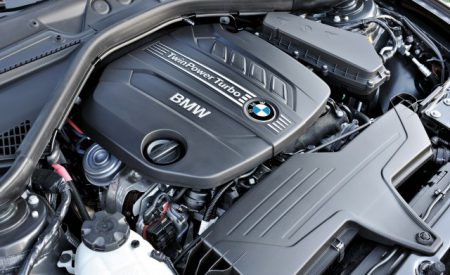
BMW Engine

The supplier, which makes exhaust-gas-cleaning systems for diesel cars and nitrogen oxide-measuring sensors, lists several factors contributing to its prediction: the increasing costs of development, the end of diesel’s dominance, and an overall shift to electric cars and other alternative propulsion methods.

Specifically, Continental CFO Wolfgang Schaefer predicts 2023 will be the final hurrah for German engines running on fossil fuels.

He believes one final generation of internal-combustion engines will be developed and launched by that date. Then investment and engineering will taper off after 2023, with 2025 sealing the engine’s fate with the very last refinements.

“A new generation of combustion engines will again be developed, but after that (around 2023), a further development will no longer be economically justifiable because more and more work will switch into electric mobility,”

he said in an interview with Reuters.

Schaefer’s prediction comes at a time when the use of fossil fuels for transportation faces greater scrutiny than ever across Europe.

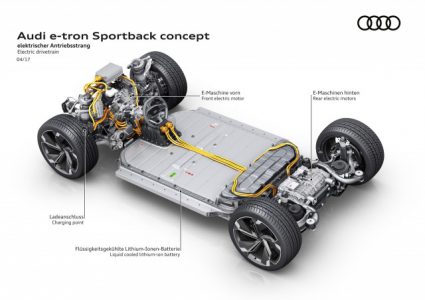
Audi e-tron Sportback concept, 2017 Shanghai auto show.

France, the United Kingdom, the Netherlands, and Norway have all announced similar plans to phase out sales of cars powered by internal-combustion engines.

The Netherlands and Norway want the ban to be in place by 2025, while France and the UK have targeted 2040 for implementation.

All the while, European authorities continue to investigate Volkswagen Group over diesel emission cheating and have alleged BMW, Daimler, and VW Group colluded to manipulate emission regulations.

Each German automaker now plans to update software on its diesel-powered vehicles to curb emissions further, at no cost to customers.

Read more: Green Car Reports

Electric Cars

I live a short drive away from the birthplace of the shale oil revolution. It was 2006 that we started to get an inkling that something big might be happening.
I’m referring to the Bakken boom…

My business has always been finance, so I wasn’t directly involved. However, the people around me very much were.

I watched twenty-five year olds blow through hefty six-figure salaries as fast as the money came in. Then I watched them scramble to keep their houses when oil prices crashed in 2014.

For years now I’ve been surrounded by oil industry families wherever I go.

My gym, the grocery store, at my kid’s school. Everywhere I go, interacting regularly with oil patch workers is part of my daily life.

Nice people for the most part, if a little rough around the edges. It has been hard to watch them go through the bust that followed the really good times that were driven by $100 oil.

What I’ve learned through my interactions is that these oil industry folks share some very passionate opinions. Not surprisingly those opinions are directly aligned with what is in the best interests of their industry.

If you are wondering what I mean, let’s just say that the strong majority of them drive giant gas guzzling trucks or SUVs, don’t own a copy of Al Gore’s Inconvenient Truth, and probably don’t live in a neighborhood with solar panel rooftops.

And it’s my familiarity with the loyalty these people have to their industry that made the remarks from the mouth of Royal Dutch Shell’s CEO even more surprising.

In fact, I’d say that his words were like a splash of cold water in my face that provided me with a much needed wake-up call as an investor…

His exact words were…

“The next car I buy will be electric.”

Our Wake Up Moment – The Inflection Point For Electric Cars Is At Hand

I’m pretty sure that when I look back on today ten years from now, those words from Shell’s CEO Ben Van Beurden will be a critical point in time that I remember.

That will be the moment when I realized that the electric car revolution is truly underway.

The talking points about electric cars for an oil man are supposed to be about all the reasons they aren’t even close to being ready for mainstream acceptance:

  • The lack of range
  • The prohibitive up front cost
  • The lack of charging station infrastructure
  • Inability of an owner to self-service
  • The fact that they still require lots of energy to charge them, likely including coal

Shell’s CEO said none of those things. What he said told me that the age of the electric car is underway.

That means that the growth curve for electric car use is about to go parabolic. Seriously, I mean parabolic.

I want you to fully appreciate how crazy the numbers here really are.

The chart below from International Energy Agency data shows the impressive growth that the electric car has had since 2010. We have gone from virtually zero electric cars on the road to just over 2 million in 2016.

Read more: Daily Reckoning

Vegans rejoice: Tesla quietly goes leather-free

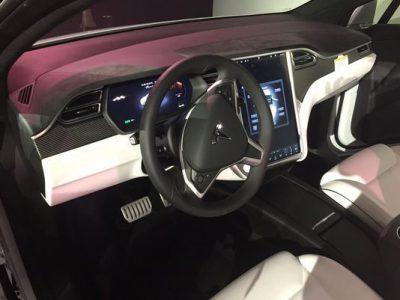
Tesla’s electric cars are known for being environmentally-friendly, and they just got a little more vegan-friendly. The automaker this week quietly upgraded all of its premium interior options to be completely leather-free.

While the company hasn’t made an official announcement, a Tesla spokesperson confirmed the change, saying that the company now only sells its premium seating option, which is a non-animal seating material designed specifically for Tesla.

Cars still come with leather steering wheels, but leather-free options are available upon request, according to a blog post from the People for the Ethical Treatment of Animals (PETA).

No official announcements have been made about the interior of the new Model 3, and the representative from Tesla could only confirm this transition for the Model S and Model X.

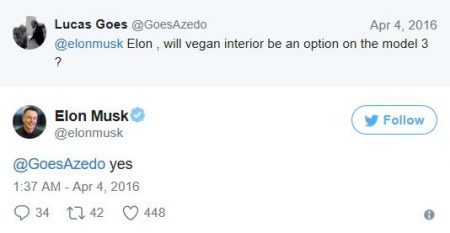
Tesla CEO Elon Musk, however, appeared to confirm that vegan seating would be an option for the Model 3 on Twitter.

PETA, one of Tesla’s shareholders, applauded the move in a blog post Monday.

Tesla has always offered standard cloth seating which is a vegan option, but PETA began pressuring the automaker at a 2015 stockholder’s meeting to drop leather seats entirely by 2019.

Although Tesla stockholders voted against that proposition, the following year Tesla rolled out its first synthetic leather premium seating option in “Ultra White” for the Model X crossover SUV.

Anne Brainard, PETA’s Director of Corporate Affairs, noted that other luxury car companies like BMW and Mercedes-Benz have also begun offering faux-leather seating options.

Despite this, Brainard said dozens of major automakers are still supplied by cattle ranches that subject animals to horrific abuse, citing a 2016 PETA investigation.

“PETA will continue to urge all companies to follow Tesla’s lead in choosing sustainability and kindness over cruelty,”

Brainard said.

Source: USA Today

EV triple test: Hyundai Ioniq Electric v Renault Zoe v Nissan Leaf

With the announcement of the 2040 ban on all new petrol and diesel cars, we get behind the wheel of three electric vehicles to see if the future really is green.

(L to R) Nissan LEAF, Hyundai IONIQ, Renault ZOE

WHAT’S NEW?

Since the announcement of the 2040 ban on new petrol and diesel cars, all you read in the news is about how we’re all going electric. So if that’s the case, which is the best electric car to buy? We chose three to test – a Renault Zoe, Hyundai Ioniq and Nissan Leaf.

The Hyundai Ioniq is by far the newest and in our opinion one of the best-equipped. The Nissan and the Renault have both been around for some years now, and the Leaf is actually due to be replaced by a new model next year.

The Ioniq is Hyndai’s first attempt at making an all-electric car, and it’s very good.

Inside, the cabin feels solidly built and very comfortable. It also has lots of kit including, on our car, heated and cooled electric seats.

Next is the Renault Zoe, a great-looking little car with bags of character on the exterior alone. Step inside and it’s also a funky place to be. It also features the best-claimed range of the three EVs, with 250 miles on the NEDC cycle thanks to its new ‘Z.E. 40’ battery.

Finally, we have the Nissan Leaf, the oldest of the three in terms of design and this shows in its rather ungainly styling and outdated technology. It also has the lowest theoretical range with just 155 miles.

LOOKS AND IMAGE

This is where the Nissan Leaf falls down – massively. It is not appealing at all on the outside with its bulbous rear-end and huge headlights. This continues inside where it can best be described as dull and old-fashioned.

The Hyundai is in a different league. It looks fresh, funky and modern. Add a touch of colour and you have a car that will be very enjoyable to own. This continues inside too where it feels light and airy with a very easy to use dashboard and centre console.

The Renault is the best looking of the bunch. Its chic Parisian styling blends well with modern life and makes it look more premium than it actually is. However, this doesn’t quite continue inside. Although the cabin looks chic, it feels cheap, with the plastics belonging in a cheap supermini.

SPACE AND PRACTICALITY

In terms of space, all three are roughly the same, offering ample leg, head and luggage space and a plethora of cubbyholes throughout the cabin.

The Hyundai feels a tad better than the other two, and has a fairly decent-sized boot at 350 litres – enough for some suitcases or a weekly shop. You can probably fit the family dog in there too.

The Zoe feels slightly smaller in comparison, but is more of a hatchback compared to the Ioniq’s saloon looks. It has a marginally smaller boot at 338 litres, but this would definitely be enough on a daily basis.

The Nissan Leaf boasts the largest boot at 370 litres. It also has a fairly large cabin, which can easily accommodate four adults.

Read more: Aol.