Category Archives: Electric Cars

News and reviews of the latest electric cars (full electrics and plug-in hybrids).

Apple’s autonomous programme reportedly ‘where Google was three years ago’

Apple’s development of autonomous driving technology, following a major refocussing and scaling back of its auto project last year, is way behind its main competitors, a source familiar with autonomous vehicle technology and who has seen their tech told Business Insider.

They say that Apple’s autonomous technology, a field CEO Tim Cook described as the ‘mother of all AI projects’ in June, is only about at the stage where field-leader Google ‘was three years ago.’

He added:

‘Apple is just trying to play catch-up.’

Apple’s autonomous project, once a sprawling team aiming to create a revolutionary self-driving Apple Car, is still transitioning following massive layoffs when the immediate plan to build an Apple Car was abandoned as too ambitious last year. Google had also made a similar less-drastic change of course around the same time, shelving immediate plans to re-invent driverless cars with no steering wheel or pedals towards working more closely with OEMs on conventional cars. It also spun off the division into its own company called Waymo, allowing it to diverge its business model away from that of Google, and also signifying the huge promise Google sees for the technology.

Apple’s autonomous scheme, part of its internal Special Projects Team, according to the source is still suffering from confusion of its purpose, with an underdeveloped concept of how it is to use the technology and monetise it. However, it is hiring again following the period of mass-culling initiated by new leader and Apple veteran Bob Mansfield, particularly for those with autonomous vehicle software experience. This presumably means poaching people from other firms – with more than 250 companies and startups working on self-driving technology. However, talent is scarce and fiercely competitive, with seven-figure salaries not uncommon.

Similar to how Google developed a shuttle service around its Googleplex campus in Mountain View, California at the early stages of its self-driving programme, Apple has set up a commuter car service for employees to test its autonomous technology between Apple’s Infinite Loop campus and the nearby town of Palo Alto, California.

Three years ago, Google’s programme – which is now rapidly approaching commercial deployment – still had lots of kinks to work out – including the ability to detect open manholes on streets and read traffic lights in glare of very bright sun.

Read more: Autovista Group

Hyundai Ditches Hydrogen Fuel Cell Technology For Now, Pivots to Electric Vehicles

The Korean automaker finally puts its focus on batteries, rather than hydrogen, to power the car of tomorrow.

Hyundai has often proclaimed that hydrogen will power future generations of cars, even as other manufacturers believe that it is too early to make such claims, especially since the rise of electric cars has come to pass. Despite recently announcing a new hydrogen fuel cell vehicle, BBC reports that Hyundai has decided that it needs to pivot in order to remain competitive in the electric market during the coming years.

The Korean manufacturer is no stranger to electric cars, though its current long-range offering, the Ioniq, only delivers around 124 miles of range. This sandwiches its EPA-rated range between the BMW i3’s 114 miles and the Volkswagen e-Golf’s 125 miles. Though it may be ideal for the urban commuter, this is hardly long range when compared to equivalent gasoline-powered vehicles. If Hyundai wants to remain in competition with the next generation of EVs, they will need to work on matching the range of the Tesla Model 3 or Chevy Bolt.

Hyundai can’t be happy that their plans for a hydrogen-powered future seem to be falling short. The company put forth plenty of effort marketing their hydrogen fuel-cell Tuscon, including elaborating on the shorter fill-up time compared to an EV, as well as the potential for longer range. Its downfall, however, isn’t necessarily due to the price or uncommon nature of the fuel cell, but rather the availability of hydrogen fill-up stations. In fact, the United States Department of Energy only charts 38 hydrogen fill-up stations in the entire country, primarily localized in California.

Source: The Drive

Electric cars charging in Milton Keynes (Image: T. Larkum)

National Grid issues EV grid demand fact check after misreporting

National Grid has moved to dispel various misconceptions over its projections for extra power demand triggered by an electric vehicle revolution in the UK.

Electric cars charging in Milton Keynes (Image: T. Larkum)

Earlier this summer the UK government pledged to ban the sale of all new conventional petrol and diesel cars and vans by 2040, promoting a wider switch to hybrid and pure electric vehicles.

That announcement coincidentally followed the publication of National Grid’s Future Energy Scenarios (FES), within which the system operator established various scenarios of EV uptake and how they would impact on overall power demand.

But while National Grid had the best intentions for including such estimates, today’s ‘myth buster’ document argues that they have been “cited incorrectly and sometimes out of context” by national media outlets.

National Grid appears to have been particularly irked by a number of articles which claimed that it had said that a mass uptake of EVs would require as much as 30GW of new generating capacity. One report in particular went as far as to suggest that this would require “ten new nuke plants” to be built in the UK.

The SO has thus moved to stress that the FES document is not to be regarded as an accurate forecast, but a “set of four credible pathways” for electricity demand out to 2050. EV peak demand in those four scenarios ranged between 4 – 10GW, with the “best fit” scenario placed at around 5GW.

This, National Grid stressed, would equate to an 8% increase on today’s peak demand value and far from the “ten new nuke plants” some media outlets had claimed.

National Grid indicated that the 30GW figure appeared to have been spun out of a more extreme scenario included in the FES document for the first time, dubbed ‘High EV’, which was designed to be an outlier and was based on a number of outlying predictions, typically that conventional vehicle sales would have been stopped by 2025 and that society was prosperous enough to allow 85% of people to charge their vehicles at peak time.

Read more: Clean Energy News

Ford offers both diesel and petrol scrappage scheme in the UK

Ford has become the latest vehicle manufacturer to offer a scrappage scheme in the UK, following the likes of BMW and Volkswagen (VW) in offering drivers the opportunity to save on their new vehicle by trading in their old one for scrap. With the largest fleet in the UK, this could have a significant benefit for drivers and air quality levels in the country.

However, unlike its scrappage plan in Germany, which followed the country’s government led diesel forum, for the UK market the company will take both petrol and diesel vehicles. These have to be pre-Euro 5 vehicles registered by 31 December 2009, with customers being offered £2,000 (€2,181) against a new Ford vehicle.

However, the manufacturer does not yet offer a pure electric vehicle (EV) in the country, and the scrappage scheme does not include the company’s Mondeo model, the only vehicle the company offers with a hybrid option. Furthermore, the Focus EV is expected to launch in the UK during 2018, while the scrappage deals only run until 31 December 2017, meaning drivers will simply be trading in for a new petrol or diesel.

‘Ford shares society’s concerns over air quality’,

said Andy Barratt, Chairman and MD of Ford of Britain. ‘Removing generations of the most polluting vehicles will have the most immediate positive effect on air quality, and this Ford scrappage scheme aims to do just that.

‘We don’t believe incentivising sales of new cars goes far enough and we will ensure that all trade-in vehicles are scrapped. Acting together we can take hundreds of thousands of the dirtiest cars off our roads and out of our cities.’

According to data from the Society of Motor Manufacturers and Traders (SMMT) there are around 19.3 million pre-Euro 5 vehicles on the road in the UK. Therefore, Ford believes it will be aiding the reduction of that number, which, together with other scrappage schemes from other manufacturers, could have the effect of reducing CO2 by 15 million tons per year.

Read more: Autovista Group

EVs reach best ever market share in July

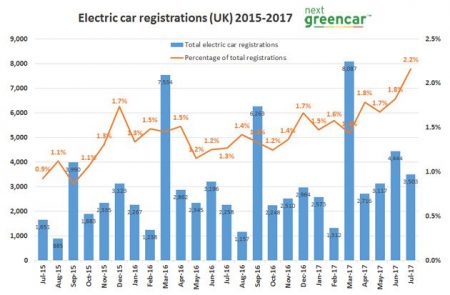
July saw the UK’s electric car market have its best performing month ever, taking a little over a 2% market share for the first time.

Significant growth for both pure electric models and plug-in hybrids combined with an overall decline in sales for the 2% figure to be reached. Pure EVs had an exceptional month, up 105% on July 2016 with 860 models registered. PHEVs still fared well, with a growth of 43% vs last year.

The strong performance of plug-in vehicles contrasts strongly with diesel’s performance, which continues to fall significantly. With 20% fewer sales than last year, the UK’s drop in new car registrations across all fuel types is largely attributable to this. Petrol cars were down 3% too though, and it is only alternatively fuelled cars – including hybrids – that was positive performances.

To date, there have now been more than 107,000 plug-in car grant eligible vehicles registered, 3,277 of those in July 2017. Last month’s figures were 50% up on the year before, and almost 25,000 PiCG-eligible models have been registered so far this year, up around 4,000 units compared to the same period in 2016.

In terms of EV market share, PHEVs had a far stronger month than in recently, with three quarters of plug-in car sales. Total electric car registrations came in at 3,503 for June, which also shows that more than 6% of plug-in car sales were not eligible for the PiCG. Whether that’s because of price or emissions/electric range, we don’t know.

All in all, July was a very positive month for electric cars and further typifies the shift away from diesel in the public consciousness. With recent news pieces about a ban on non-electrified new car sales in the UK from 2040, plus other announcements from manufacturers, it seems as though drivers are looking at plug-in models more than ever before.

Although July’s registrations were the sixth highest figures ever for the UK plug-in car market, the far more important aspect is how many are sold in comparison to conventional internal combustion cars.

July is typically a fairly quiet month for the market, only a little ahead of February and August – the months before the new registration plates – in terms of overall sales. It is encouraging then to see that plug-in cars are actually increasing in popularity while petrol and diesel sales – the latter especially – drop.

Source: Next Green Car

VW denied permission to use SEAT name on EVs in China

SEAT, a brand of the Volkswagen (VW) Group, is being prevented by a Chinese Government agency from lending its name to a number of locally made electric vehicles (EVs).

In a move which is seen as limiting foreign manufacturer ability to compete in the country’s car market, especially with the introduction of quotas on EVs in 2018, VW has been refused permission to use the SEAT name on vehicles produced by its joint venture with Chinese firm JAC. However, according to a report in the Financial Times, the decision could yet change, according to one person familiar with the matter. ‘The first step is for a local brand name,’ he said.

The ability for vehicle manufacturers to use their brand power to sell vehicles in the world’s biggest car market could be at stake, with the potential domination by foreign brands threatening to out-compete the country’s home-grown industry and the country’s plans to become a world leader in EVs and battery technology. The latter is a move already seen with the announcement that Geely will turn Volvo into an electric and hybrid only manufacturer, and a Chinese consortium buying Nissan’s battery company.

Therefore, a foreign name on a car produced by a venture including a Chinese company would be seen as taking away a local name from the market. Some are interpreting the National Development and Reform Commission’s (NRDC) decision as one aimed at ultimately hamstringing foreign carmakers’ ability to market locally produced electric vehicles and hybrids in China, where their brand recognition could provide an edge over local Chinese brands.

Read more: Autovista Group

Nissan Leaf (Image: Qurren/Wikipedia)

More electric car charging stations than fuel stations by 2020

More electric car charging stations than fuel stations by 2020

Nissan Leaf (Image: Qurren/Wikipedia)
  • Number of electric car charging locations to overtake petrol stations by August 2020.
  • UK has lost more than 75% of petrol stations in four decades, whilst electric charging points have gone from hundreds to thousands in just a few years.
  • Edward Jones, EV Manager, Nissan Motor (GB) Ltd., said; ‘We believe the tipping point for mass EV uptake is upon us.’
  • Nissan was the first manufacturer to introduce a mass-produced electric vehicle and has sold more EVs than any other car brand worldwide.

There will be more public locations to charge electric cars in the UK than there are petrol stations by the summer of 2020, according to new analysis by Nissan.

At the end of 2015, there were just 8,472 fuel stations in the UK, down from 37,539 in 1970. Assuming a steady rate of decline, Nissan predicts that by August 2020 this will fall to under 7,870.*

In contrast, the number of public electric vehicle charging locations is expected to reach 7,900 by the same point in time. However, the accelerating adoption of electric vehicles means this crossover could happen a lot sooner.

Just over 100 years since the first fuel station opened – November 1919 at Aldermaston in Berkshire – the number in the UK has peaked, declined and is expected to be overtaken by charging stations designed for battery, not combustion, powered cars.

More than 75% of UK petrol stations have closed in the last 40 years, whilst the number of electric vehicle charging locations has increased from a few hundred in 2011 to more than 4,100 locations in 2016, as electric car sales take off.

According to Go Ultra Low, the joint government and car industry campaign, more than 115 electric cars were registered every day in the first quarter of 2016, equivalent to one every 13 minutes. The campaign also believes electric power could be the dominant form of propulsion for all new cars sold in the UK as early as 2027, with more than 1.3m electric cars registered each year.

Read more: Nissan GB

Tesla’s used car sales ecosystem growing rapidly

As part of its progress towards becoming a fully-fledged OEM, Tesla is now quickly adding considerable scale towards its used car business cash flow.

As part of its progress towards becoming a fully-fledged OEM, Tesla is now quickly adding considerable scale towards its used car business cash flow.

Its nascent used car operation in the first six months of this year has already well surpassed sales from 2016 – and if the pace continues would result in a tripling of the size of the business in just a year. Total 2016 sales reached $117.4m (€99.8m), and sales recorded so far this year have topped $154.1 million (€131.0m).

Tesla says the sales jump is down to more used Tesla vehicles being in circulation, as well as due to the support of various Tesla trade-in programmes. It is now itself also listing its stock of used cars online on Cars.com following owners having listed their own vehicles on the website for some time.

In the second quarter of 2017, Tesla’s total business – including Tesla cars on the way to the consumer, vehicles in Tesla showrooms, used Tesla vehicles and energy storage products – reached $1.47 billion (€1.25 billion). After a falling out over how to treat existing clients, Tesla CEO Elon Musk ousted executive Klaus Grohmann in March, meaning Grohmann’s Prüm, Germany-based firm Tesla Grohmann Automation, which gave Tesla fundamental engineering expertise, will be playing an increasingly small role going forwards, with more development being done in-house.

As part of its Q2 filing, Tesla said:

‘In future periods, we do not anticipate meaningful revenue from sales of powertrain or other vehicle systems and components to third parties.

‘However, we anticipate that revenue from sales of pre-owned vehicles will continue to increase as the volume of pre-owned vehicle sales increases and that revenue from services by Grohmann will decrease as we primarily consume internally its services.’

Read more: Autovista Group
Greener electricity generation makes EVs cleaner than ever

The electricity going into electric cars is made by ever-cleaner sources

Nissan Leaf

Electricity used to charge electric vehicles (EVs) is now cleaner than ever before, a study has revealed.

The Electric Insights report, which was produced by Imperial College London researchers and Drax Power, found that electricity generation between April and June this year contained 199g of CO2 per kilowatt hour – 10 per cent less than last year’s minimum set.

This decarbonisation of electricity generation in the UK means that EVs are now cleaner than ever, as the energy used to charge them is increasingly coming from greener sources.
Dr Iain Staffell from Imperial College London said:

“It is widely accepted that electric cars dramatically reduce air pollution in cities, but there is still some debate about how clean they actually are – it varies depending on where the electricity to charge them with comes from.

“According to our analysis, looking at a few of the most popular models – they weren’t as green as you might think up until quite recently, but now, thanks to the rapid decarbonisation of electricity generation in the UK, they are much better.

“For example, producing the electricity to charge a Tesla Model S back in 2012 would have created 124g of carbon per km driven. Nowadays emissions from charging the same car have halved to 74g per km driven in winter and just 41g per km in summer – thanks to the decarbonisation of electricity generation in the UK.

“Smaller electric cars like the Nissan Leaf and BMW i3 can be charged for less than half the CO2 of the cleanest non-electric car on the market – the Toyota Prius hybrid.”

The UK is now home to more than 100,000 electrified vehicles, which now count for 1.8 per cent of new car registrations.

Electric cars are going to become an increasingly common sight on roads around the UK over the next few years. Last month, the government announced that the sale of new petrol and diesel vehicles will be banned by the year 2040 – meaning motorists will have to look to other means of powering their vehicles.

Source: Shorpshire Star

Recent research shows unrivalled value of electric and hybrid cars

Buying a car can be fun but also a little overwhelming. It’s easy to get swept up in choosing makes, models, colours, and added extras for your car. However, in the rush to find something you like in the moment, you can often overlook long-term costs.

There are certain things that you just can’t be sure of. For example, car insurance will vary greatly depending on the type of car you have, your age, your driving history, and numerous other factors. But you can inform yourself of long-term maintenance costs. Choosing the right model could save you a huge amount of money over the lifetime of your car.

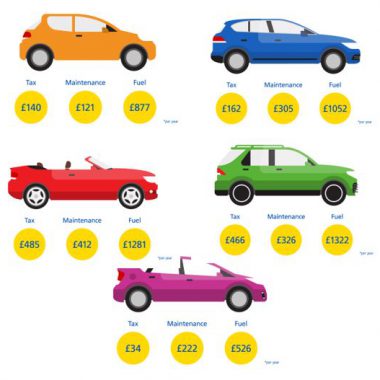
Aviva Insurance recently looked at how much hatchback, estate/saloon, convertible, SUV and electric/hybrid cars cost over their lifetimes. Their research assessed the main expenses of popular models for each category of car in current dealerships.

Stuart Masson from The Car Expert has reviewed each of these models with us to provide some invaluable advice when choosing your next car.

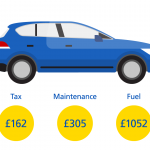
Hatchback

Masson says,

“Hatchbacks are still the most popular type of car sold in the UK, every day, week and month of the year. They are generally very practical and fuel efficient, and relatively inexpensive for servicing and repairs.”

Hatchbacks are the cheapest for maintenance at an average of just £121 annually, however, as with all non-electric vehicles, the cost of fuel can really add up over time.

Estate/Saloon

Estate and saloon cars fared worse than hatchbacks, due to the fact that they’re larger and use more fuel. At an average of £1519 for tax, maintenance and fuel, they’re nearly £400 a year more expensive than their hatchback cousins. Masson adds that

“depreciation is usually worse so you will lose more money over the first few years.”

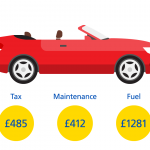
Convertible

According to Masson,

“UK drivers buy more convertibles than anywhere else in the world. But you do pay for the privilege of dropping the top; convertibles cost more than equivalent coupés, and driving at speed with the roof down will seriously affect your fuel consumption.”

Tax is significantly higher than other types of car on the list, and this could increase under new tax rules if the car is worth more than £40,000.

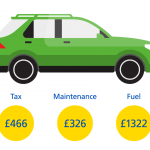
SUV

Masson states that buying an SUV for most people is “a case of style over substance.” He states, “most so-called SUVs have little to no off-roading abilities and will never see anything more challenging than a gravel driveway.” As you can see, their costs are very high in each category. Masson says this is because

“they are often based on normal hatchback models, but you are paying more money and getting extra weight, poorer fuel economy and higher levels of pollution, all to enjoy that chunky SUV styling and feel.”

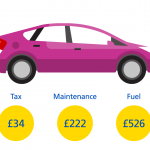
Electric/Hybrid

As you can see, the running costs of electric/hybrid cars is unrivalled. The cars Aviva Insurance looked at include both, which means the cost can be lower or higher depending on which car you choose. If you go for an electric model, you won’t have to pay fuel or tax but you will need access to a charging point – which is becoming much easier with thousands being installed across cities like London. In terms of hybrids, Masson says,

“around town, you can use the electric motor for clean, quiet urban driving. And out on the road, you have a petrol engine to give you the range you need.”

The results show that hatchback, hybrid or electric models will save you the most money over the course of your car’s lifetime. However, with recent plans to ban all diesel and petrol cars by 2040, selling non-electric vehicles on may become a challenge.

As a society, we are becoming more and more environmentally and financially conscious, and with that, the future is looking cleaner, greener… and electric.

Research Source: Aviva