Category Archives: Electric Cars

News and reviews of the latest electric cars (full electrics and plug-in hybrids).

Nissan Leaf 3.Zero e+ (Image: Nissan)

2019 Nissan Leaf Plus First Drive: Is It Plus Enough?

Nissan’s top-range Leaf finally has battery range on par with other affordable EVs

Remember the horsepower wars of the 1960s?

In yet another twist on Mark Twain’s saying, “History doesn’t repeat itself, but it often rhymes,” the car industry is humming its 50-year-old, horsepower one-upmanship tune once again. But now there’s a new verse, with the lyrics “miles of battery range” instead of “plain ol’ horsepower.”

Nissan Leaf 3.Zero e+ (Image: Nissan)

A right-now snapshot of the current BEV-range leader board of affordable EV offerings, with more than 200 miles of range, looks like this:

1: Hyundai Kona Electric – 258 miles

2: Kia Soul EV (just announced) – 243 miles

3: Kia e-Niro – 239

4: Chevrolet Bolt EV – 238 miles

Where, pray tell, is the biggest-selling affordable EV of them all, the Nissan Leaf? When its second-generation version was introduced two years ago in Japan, the Bolt’s then-staggering 238 number had already been announced. Needless to say, that cast a pall over the Tokyo proceedings as Nissan struggled to justify the new Leaf’s 150-mile range. Sure, sure, we all nodded in agreement; of course it’s way better than the first gen’s 107 miles. But it was as if Ford pulled the sheet off a Mustang with 37 percent fewer ponies than the existing Camaro. The guys in Yokohama had miscalculated. They knew it. And Scouts’ honor, they promised a bigger-battery fix, ASAP.

True to its word, here’s the car Nissan wishes it had actually introduced: the descriptively named Leaf Plus.

Read more: Motor Trend

VW e-Golf (Image: Volkswagen.co.uk)

Volkswagen is pushing for CO2 neutral production of electric cars

The Volkswagen group is doing a 180-degree turn from their emission cheating days to pushing for CO2 neutral production of electric cars.

In a new presentation, VW shows how the I.D., its first next-generation electric vehicle, will be “CO2 neutral throughout the entire life cycle if the customer consistently charges with green power.”

They want to address CO2 emissions through the different phases including manufacturing.

VW e-Golf (Image: Volkswagen.co.uk)

In the manufacturing phase alone, VW says that “the carbon footprint of the ID. will be improved by more than 1 million tons of CO2 per year.”

They want to use green power throughout the entire supply chain and at their own factories.

Earlier this year, Volkswagen launched a new energy and charging unit to complete energy loop and help its future electric vehicle owners power their cars with green power.

Thomas Ulbrich, the Board Member responsible for e-mobility at the Volkswagen brand, commented on the effort:

“Climate change is the greatest challenge of our times. As the world’s largest car manufacturer, Volkswagen is assuming responsibility: The new ID. will be the Group’s first climate-neutrally produced electric car. To ensure that it remains emission free during its life cycle, we are working on many different ways to use green power. Truly sustainable mobility is feasible if we all want it and we all work on it.”

Read more: Electrek

Tesla showroom in Milton Keynes (Image: T. Larkum)

Electric Vehicles and the Future of Oil

Just two percent of all auto sales today are electric. It is estimated that over 3.5 million electric cars are on the road today, and there may be as many as 36 million electric cars by 2025.

By 2040, 30 percent of all new car sales will be electric, according to analysts at IHS Markit. What does this massive increase of electric vehicles mean for the future of oil?

China Matters

The largest disrupter to the future of oil may be coming from China. Elon Musk has big plans in China where electric vehicle sales are three times higher than they are in the United States. Tesla (TSLA – Get Report) has just broken ground on a massive gigafactory that will have capacity to manufacture 500,000 cars per year.

Tesla showroom in Milton Keynes (Image: T. Larkum)
Tesla showroom (Image: T. Larkum)

Since tariffs have driven up the price of importing these vehicles, Tesla will now be able to build locally and bypass tariffs. In addition, BP Ventures just invested in the Chinese electric vehicle (EV) charging start-up PowerShare.

China is targeting sales of more than 7 million EVs by 2025, up from just 350,000 over the last 12 months. By 2030, China will overtake the United States as the largest consumer of oil with net imports reaching 13 million barrels per day, (the U.S. currently consumes about 20 million barrels per day).

Transportation Still Dominates Crude Demand

Global oil demand is forecast to stall within the next decade and the rise of EVs may accelerate the decreased demand. According to the Energy Information Administration, global oil demand is expected to average over 101 million barrels per day in 2019. But growth may have already peaked. The EIA’s estimate is a reduction of about 100,000 from its previous outlook.

The 101 million barrels consists of approximately 80 percent crude oil and 20 percent natural gas liquids. According to EIA, about 55 percent of the crude oil demand is for transportation while 35 percent is for industrial use and the remainder in other categories such as electricity. IHS also estimates that roughly a third of global oil demand is from cars: 40 percent of the growth since 2000 has come from cars. Again, the growth of EVs, especially in China, may greatly affect this number.

Read more: The Street

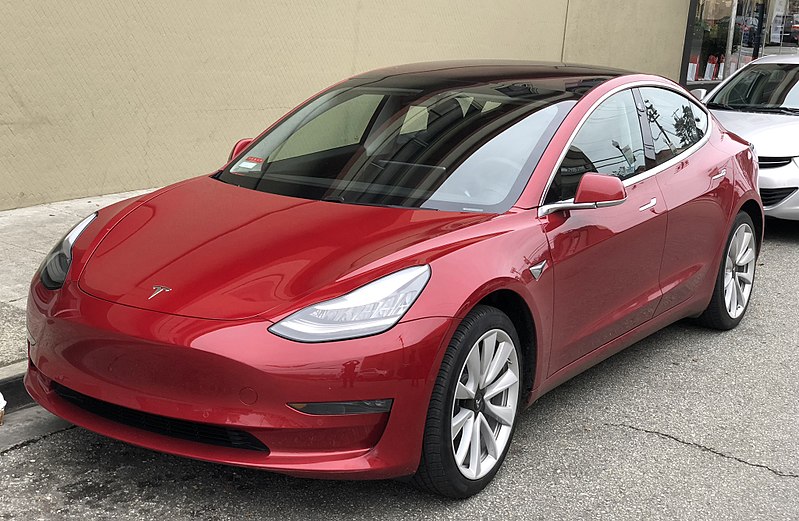
Tesla Model3 (Image: Wikimedia/Carlquinn)

As More Electric Cars Arrive, What’s The Future For Gas-Powered Engines?

Most American automobiles are powered by internal combustion engines: Gas or diesel goes in, tiny explosions power pistons and turn a crankshaft, the car moves forward, and carbon dioxide goes out.

But a growing chorus of environmental activists, business analysts and auto executives are predicting a sea change as battery-powered electric vehicles grow in popularity.

Tesla Model3 (Image: Wikimedia/Carlquinn)

Going electric is not just an eco-friendly goal, an ambition that would help fight climate change. It’s a business reality, according to industry analysts. But if the general path ahead is widely agreed on, the speed of the change — and the role that combustion vehicles will play during the transition — is far from clear.

‘You cannot stop it any more — it’s coming’

“Electrification, you cannot stop it anymore — it’s coming,” says Elmer Kades, a managing director with the consulting firm AlixPartners. “We have fantastic growth rates, between 50 and 60 percent on a global level.”

Electric vehicles are currently a tiny fraction of the car market, which is dominated by internal combustion engines. But many more electric car models will hit showrooms in the next few years, and several factors have analysts convinced that is part of a major transition in the industry.

Read more: National Public Radio

Cheap Motoring

Is This The Tipping Point For Electric Vehicles?

A new report by McKinsey forecasts a rapid switch from gas guzzlers to electric vehicles on the world’s roads will be boosted by the plummeting costs of owning a battery powered vehicle.

The consulting firm’s 2019 Global Energy Perspective report foresees a two-thirds drop in the cost of EV battery packs by 2030. The tipping point at which EVs will be cheaper to own than internal combustion engine-powered vehicles is forecast to be reached in the early 2020s:

The timing of total cost of ownership (TCO) parity in the U.S. and China is comparable to Europe, with China slightly earlier and the U.S. slightly later, reflecting differences in fuel taxation and subsidies for electric vehicles.

Cheap Motoring

After this tipping point, “economic considerations alone” would be sufficient to accelerate the growth of EV sales, says McKinsey. Car sharing and autonomous driving will add further incentives to go electric. Improving battery technologies will mean that even long-haul trucks could be economically electrified during the second half of the next decade.

Read more: Oil Price

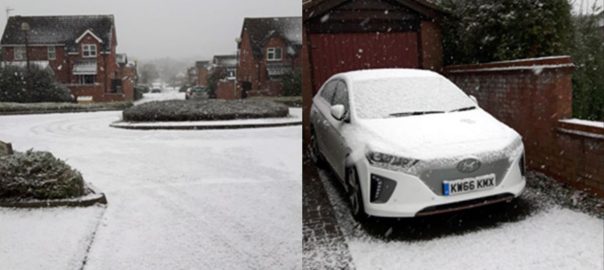
This was the scene when Leighton arrived this morning (Image: T. Heale)

Why Electric Vehicles Are Great Winter Cars

Winter is not the easiest season for getting around.

Electric cars, like cars with internal combustion engines, function less efficiently in the cold. But while we accept and ignore the limitations of traditional vehicles, reports from groups like AAA misrepresent cold weather concerns about electric vehicles, fueling anxiety about vehicle range.

The reality is, electric vehicles are great winter cars.

This was the scene when Leighton arrived this morning (Image: T. Heale)
Hyundai IONIQ in the snow (Image: T. Heale)

Being realistic about range

Cold weather range is becoming less of an issue with the rapid advancement of battery technologies. Every year, electric vehicle ranges get longer.

Take my family’s experience as an example. Our first 2012 Nissan LEAF had only 73 miles of driving range. This year the same vehicle has a battery that offers a 151-mile range and in a couple of months you will be able to get a LEAF with an even bigger battery and a range of well over 200 miles. So, range is becoming less of an issue and truthfully we never had any issues with it. My wife has a 35-mile round trip commute so she could manage it even with the 2012 LEAF, but nowadays with longer range electric vehicles, things are really easy. Battery electric vehicles available in Minnesota this year have ranges between 151 to 335 miles and people who want even more flexibility in their daily driving range should choose one of the plug-in hybrids that can take you up to 640 miles. See all plug-in EV models available in Minnesota here.


Many reasons to love electric vehicles in the winter

The best part of electric vehicles for me in the wintertime is the fast heating system. Many electric cars have a heat pump heating system that works like the traditional AC, but in reverse. This system is incredibly fast in heating up the car. I tried it the first time with our 2016 Nissan LEAF. It was a typical 16 degree Minnesota winter day. I went into our cold garage and reversed the car outside to the alley. While I waited for the garage door to close I wondered why the automatic fan was already running and to my surprise it was already pushing lukewarm air from the heating ducts. I drove less than a block and the air coming out was already hot. I had never experienced this kind of heating performance from any car before.

Another rocking feature is the preheating. These cars have a preheating function that we have set up so that when my wife walks to our cold garage at 7:20 in the morning her car is waiting with a warm interior, hot seat, and even a hot steering wheel. It is a nice way to start the commute to work. Naturally I don’t recommend trying this inside a garage with an internal combustion vehicle, because the exhaust gas emissions could be lethal. This feature also mitigates the effects of cold on the range, since the bulk of the heating was done using grid power. Another perk is that you can do this anywhere you want with your phone app. Whether you are ready to leave work or a restaurant, the only thing you have to do is to take your phone and tell your car to please heat up.

Read more: Clean Technica

Electric car with A.I. to undertake 745 mile Australian ‘road trip’

An electric vehicle with artificial intelligence (AI) sensors and computers is set to embark on a 1,200 kilometer (745 mile), three-month journey in Queensland, Australia.

The zero-emissions Renault ZOE will be used to map roads in the state, which is in the northeast of the country. Researchers from the Queensland University of Technology (QUT), which is based in Brisbane, will man the car.

“As researchers drive the car across Queensland, onboard sensors will build a virtual map to help refine AI-equipped vehicles to drive safely on our roads,” Mark Bailey, Queensland’s minister for Transport and Main Roads, said in a statement Wednesday.

2018 – Renault ZOE

Bailey added that while it was “early days”, AI technology and smart road infrastructure had the potential to transform the way people travelled in Queensland and “reduce road trauma.”

The project will look at how the vehicle and its AI system adapts to lane markings, traffic lights and street signage. Additionally, it will look to overcome GPS systems’ limitations “in built-up areas and tunnels for vehicle positioning.”

Michael Milford, from QUT’s Australian Centre for Robotic Vision, said that as the vehicle was driven, AI would “watch and determine if it could perform the same as a human driver in all conditions.”

Read more: Yahoo

The Mother Who Wants to Put Air Pollution on Her Daughter’s Death Certificate

Millions die each year from dirty air. The trauma of a 9-year-old London girl may bring the dangers home.

LONDON — Dirty air kills millions of people around the world every year, but it can be hard to put a face on a danger so vast. Rosamund Adoo-Kissi-Debrah is fighting to do just that. The face she has in mind is her daughter’s.

Ella Kissi-Debrah was 9 when she died in 2013, after three years of asthma attacks so bad, they sometimes triggered seizures. In photos, her smile is broad and bright, her hair braided. She loved music and swimming, and dreamed of becoming a pilot.

Ella lived with her family just off London’s South Circular Road, a major thoroughfare that is clouded by the diesel fumes that make London’s air — like much of Europe’s — thick and foul-smelling. A scientist’s analysis found that many of her hospitalizations coincided with local pollution spikes.

Now Ms. Adoo-Kissi-Debrah wants to put air pollution on Ella’s death certificate. On Jan. 11, the top legal adviser for England and Wales, Attorney General Geoffrey Cox, backed her application for a new inquest, and this week, her lawyer plans to petition the High Court to authorize it.

The coroner who originally investigated Ella’s death ruled she had died of acute respiratory failure, but made no mention of pollution. Ms. Adoo-Kissi-Debrah did not know then what diesel fumes can do to young lungs. It was more than a year after Ella’s death that she first learned dirty air is a known asthma trigger. “It was like putting a picture together” as it finally began to make sense, she told me.

Air pollution has never appeared on a British death certificate, said Ms. Adoo-Kissi-Debrah’s lawyer, Jocelyn Cockburn. If a new coroner amends Ella’s to note its role, he or she could also demand that the government take action to prevent future deaths. And the moral and political repercussions could be even wider.

This grieving mother’s fight holds a power far greater than its potential to clarify the cause of one family’s tragedy. It’s bigger than just London and Britain, too. In demanding that dirty air be written into the official record as having contributed to her loss, Ms. Adoo-Kissi-Debrah wants to force us all to recognize a danger that is all around us, but which we have long chosen to ignore.

Read more: NY Times

Volkswagen Passat GTE (Image: T. Larkum)

New Volkswagen Passat Mk8.5 gets new tech and plug-in hybrid boost

The Volkswagen Passat range has been facelifted for 2019, with the GTE model getting longer electric-only range of 35 miles

Within the next month or two, the 30 millionth Volkswagen Passat will have been produced. Eight generations have hit the road since the car’s launch back in 1973, and UK orders for this newly updated Peugeot 508 rival will open in June.

The latest version is still based upon the Mk8, but VW believes the changes are significant enough to consider it a ‘Mk8.5’. Under the subtly massaged metal, the revised Passat packs improved safety tech, updated infotainment and connectivity systems, semi-autonomous driving capability and an overhauled engine range.

Volkswagen Passat GTE (Image: T. Larkum)
2017 Volkswagen Passat GTE (Image: T. Larkum)

Perhaps the most significant change under the bonnet is an improved GTE plug-in hybrid. The power output from the petrol/electric set-up remains the same as before, at 215bhp, but a larger-capacity battery – up to 13kWh from 9.9kWh – sees the electric-only range rise to 35 miles on the latest WLTP standards. That’s an increase of 40 per cent. However, there’s no fast-charging tech, so at best the GTE can replenish its cells in four hours.

Read more: Auto Express

Electric cars charging in Milton Keynes (Image: T. Larkum)

Zouk Capital named preferred bidder to run government-backed EV Charging

Infrastructure fund manager Zouk Capital has been named as the preferred bidder for the government’s much-vaunted EV Charging Infrastructure Investment Fund (CIIF).

The £400 million fund – half of which will be raised from the private sector and matched by the UK government – was announced in the 2017 Autumn Budget amongst a raft of other measures designed to accelerate the adoption of electric vehicles in the UK.

Electric cars charging in Milton Keynes (Image: T. Larkum)

The CIIF was launched in a bid to both enable the more rapid expansion of public EV charging networks and to stimulate further capital investment in the sector, with the government aiming for the fund to act as a catalyst for further investment.

A bidding process was launched by HM Treasury’s Infrastructure and Projects Authority last summer, inviting tenders from investment managers to be tasked with either the entire CIIF or a section of it.

Read more: Current News