Category Archives: Kia

News and reviews of Kia electric cars (including plug-in hybrids).

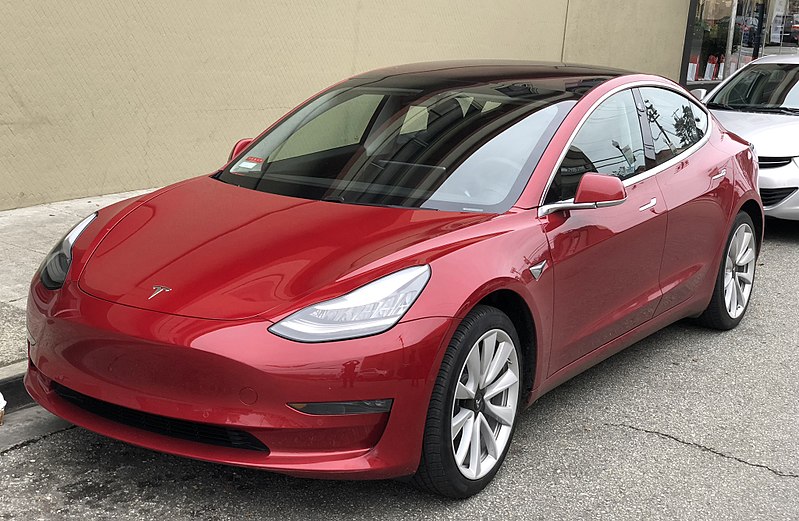
Tesla Model3 (Image: Wikimedia/Carlquinn)

Tesla Model 3 wins UK Car of the Year 2020 award

Tesla’s Model 3 has been crowned UK Car of the Year 2020, making it back-to-back wins for electric vehicles at the awards following the Jaguar I-Pace’s victory in 2019.

After emerging triumphant as Best Executive car when the category winners were announced on February 12, the Tesla battled it out against eight other category winners for the overall title.

Tesla Model3 (Image: Wikimedia/Carlquinn)

Three of these cars were electric vehicles (EVs) and the popularity of another one of the trio – the Kia e-Niro – ensured the closest-ever winning margin in the history of the UK Car of the Year Awards.

John Challen, director of the UK Car of the Year awards, said: “Game-changer is an often-overused phrase, but the Tesla Model 3 has shaken up the executive segment and got many brands thinking. Electric vehicles attract a broad spectrum of opinions, but it’s clear that with its technology, performance and range, the Model 3 is converting a lot of people….

Read more: Telegraph

It’s Time to Go Green!

If you would like to know more about Solar Panels and the PowerBanx range of home battery systems, and get a free instant quote, please complete our online form:

Kia XCeed PHEV (Image: Kia)

Hybrid XCeed and Ceed now available in UK

Kia UK has now opened the order books for the plug-in hybrid versions of the XCeed and Ceed Sportswagon.

The XCeed PHEV will start from £30,695, the Ceed Sportswagon PHEV from £29,995 and deliveries are scheduled to start in April.

Kia XCeed PHEV (Image: Kia)

After Kia presented the two vehicles in September last year, the South Korean company is now releasing more concrete data on the two hybrid models. Most of the key data remain unchanged, with a 1.6-litre petrol engine, a 44.5 kW electric motor and an 8.9 kWh battery. The same drivetrain as the Kia Niro PHEV (or Hyundai Ioniq PHEV for that matter) is used in both compact PHEV models. The biggest difference is that the two Ceed derivatives have a lower standard consumption level, with provisional measurements showing a purely electrical range of up to 60 kilometres, although the official rating has yet to be released on both the fuel economy and CO2 emissions.

Read more: Electrive

It’s Time to Go Green!

If you would like to know more about Solar Panels and the PowerBanx range of home battery systems, and get a free instant quote, please complete our online form:

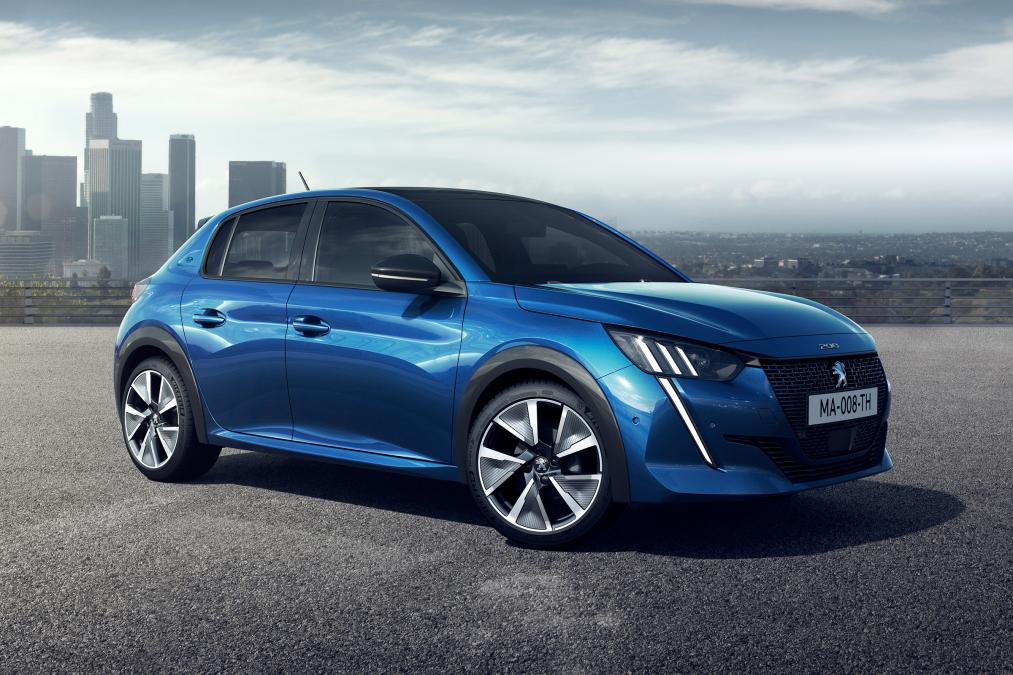
Peugeot e-208 (Image: Peugeot)

2020 set to be year of the electric car as sales soar

Experts are predicting that 2020 will be the year of the electric car as sales continue to rise.

Figures released today by the Society of Motor Manufacturers and Traders (SMMT) show that the number of battery-electric vehicles registered in November increased by 228.8 per cent compared to the same month in 2018 – with over 4500 new EVs hitting the roads.

So far this year, nearly 14,000 electric cars have been registered in the UK, compared to 38,500 plug-in hybrids and nearly 80,000 hybrids. Mild hybrids have also seen a dramatic increase in popularity, with registrations of mild-hybrid diesels increasing by more than 450 per cent last month.

Peugeot e-208 (Image: Peugeot)

Car manufacturers are rushing to launch new electric cars in a bid to meet new emission targets set by European Union legislators. By 2021, they face strict fines if their average CO2 emissions for each car exceed 95g/km. By selling more electric vehicles (with zero tailpipe emissions) and hybrids (with reduced tailpipe emissions), average CO2 emissions will drop.

Kia recently admitted that it has 3000 customers on a waiting list for the e-Niro – something it says it intends to clear in the first half of 2020, despite previously having to halt orders as it couldn’t keep up with demand.

Volkswagen is set to launch its new electric ID range with the ID.3 hatchback, while the Volkswagen Up, SEAT Mii and Skoda Citigo city cars are also going electric-only for 2020. Vauxhall’s new Corsa is available as a pure-electric model, as is the closely-related Peugeot 208.

Read more: Honest John

It’s Time to Go Green!

If you would like to know more about Solar Panels and the PowerBanx range of home battery systems, and get a free instant quote, please complete our online form:

Electric cars with the longest range

EV range is a hot topic right now so we’ve listed the new electric cars with the longest range you can buy now…

The first question most people have when a new electric car comes out is how much range it has. ‘Range anxiety’ is a phrase often thrown around to describe the fear EV owners could face when driving their electric car with a level of remaining battery charge that may not get them to their destination. As a result, there’s a certain kudos attached to the electric cars with the longest range as well as a valuable competitive advantage manifested as electric car buyers are attracted to them. If you’re wondering which electric car has the longest range, you can find out below.

Manufacturers have quickly realised the importance of range to existing petrol or diesel car owners and now some electric cars can travel just as far on a single charge as an internal combustion engined (ICE) equivalent can manage on a full tank – all the while producing zero emissions at a cheaper running cost to the owner. The fact that most drivers will very rarely travel the kind of distances in a single day that would deplete a modern electric car’s battery is seen as less important than the need to reassure motorists considering the switch to the new technology.

There’s no doubt that the UK’s charging infrastructure still remains a stumbling block for electric cars and their owners. Charging points are increasing in number across the country and charging times are dropping but the chargers that there are are still often in use compounding the fact that recharging an EV is still noticeably slower than filling up a petrol or diesel vehicle.

With increasing investment from the Government and charging infrastructure providers to improve EV charging options coupled with the appeal of emission-free motoring and cheaper running costs than ICE vehicles, electric cars are more appealing than ever. Manufacturers too are in a race to develop enhanced batteries and electric car technology that will increase the range available in electric cars to the point that range anxiety will become a thing of the past.

Read more: Auto Express

Kia e-Niro EV (Image: Kia)

You can now compare running costs for electric and petrol cars

The figure – dubbed ‘miles per pound’ (mpp) – reveals how much a car can travel for £1 of petrol, diesel or electricity.

Electric cars travel up to three times the distance of their petrol or diesel rivals for the same amount of money, according to research.

With interest in electric cars rising, many potential buyers are left confused by the way running costs are explained, with ‘miles per kWh’ difficult to compare to ‘miles per gallon’.

Kia e-Niro EV (Image: Kia)

To help consumers, car reviews and advice website Parkers.co.uk has developed a way of showing how far your car will go on a single pound – regardless of what fuel it runs on.

The figure – dubbed ‘miles per pound’ (mpp) – reveals how much a car can travel for £1 of petrol, diesel or electricity.

The study found the Kia e-Niro First Edition and the Renault Zoe 65kW are the most efficient models on sale in the UK today, with the cars capable of travelling 33.1 miles per pound (mpp) of electricity.

This is more than three times as far as the most economical version of the Ford Fiesta (9.3mpp), the UK’s best-selling vehicle, when using official testing figures.

With the average UK motorist driving around 7,150 miles per year, they would spend just £216 over a 12 month period if they charged their Kia e-Niro or Renault Zoe from home.

The Tesla Model 3 Standard Range was the third most economical, covering 32.3mpp, while the Volkswagen e-Golf was fourth on 30.8mpp.

Read more: Daily Post

Kia e-Niro EV (Image: Kia)

Is it just laziness that stops me from switching to an electric car?

The practical reasons against electric are disappearing – and now councils are stepping in to help

This feels like one of the “You’re the expert” questions that appear in Guardian Money every week. I have an old-ish petrol-fuelled car, sitting parked outside my terraced home, which I use only at weekends. And I have a brother-in-law who is evangelical about his Nissan Leaf. I’d like to be more like him. Yet the closest charging point for me is a 10-minute walk away, and often busy. Is it just too early to ditch my old car and go electric?

The question marks over electric vehicles used to be about battery technology and the cost. But “range anxiety” has largely been conquered. The first Nissan Leaf batteries took you about 80-85 miles without needing a charge; the latest ones do 150 miles. The new Kia e-Niro family car manages 300 miles, while at the Frankfurt Motor Show, Mercedes was showing off its Vision EQS model with a “comfortable” range of 435 miles. Given that the average car journey in the UK is just 10 miles, according to the RAC, fears over the usability of electric cars are fading fast.

Kia e-Niro EV (Image: Kia)

Sadly, prices for new electric cars remain higher significantly higher than for petrol or diesel, with the eGolf at about £30,000 compared with petrol ones starting at about £20,000. But as we highlight this week, a used market is now developing in electric vehicles, with entry-level prices as low as £5,000 – with no annual tax, and low servicing charges to boot. What’s more, driving costs are a fraction of the cost of petrol, without even mentioning the enormous benefit to the environment, especially in cities.

So why aren’t we all switching over? The knee-jerk response is now about charging times, for city dwellers like me without the luxury of a drive or garage. Who in their right mind is going to spend half an hour queuing for a charge point, then sit there for an hour or so while it fills up? Or faff around finding the only on-street overnight charge point available, then walk home in the rain for half an hour? It’s not going to happen.

The correct response is that the climate crisis means we will have to live without the hyper-convenience we became accustomed to. If the average journey is just 10 miles, why not take the bus or use an e-bike? And if you must insist on a private car, is a 10- or 15-minute walk to a charging point really such a sacrifice to save the environment?

Read more: The Guardian

Kia e-Niro EV (Image: Kia)

New evidence: Carmaker holding back EV sales to maximise SUV-fueled profits

Kia Motors dealers in Spain are not allowed to sell pure battery electric cars or plug-in hybrids (PHEVs) until the first day of next year under new management instructions.

In a letter sent to the entire dealership network of Kia Motors in Spain, the director of planning and logistics, Javier Casado, urged dealers to postpone invoicing EVs and PHEVs as of 1 October and delay the registration of the same type of vehicles as from 1 November. All these ‘obligations’, the letter reads, are ‘unavoidable’ and must be observed ‘without exception’. The sales ‘restrictions will be eliminated as of 01 January 2020’.

This new evidence proves what T&E has been saying for months now: carmarkers have been delaying the sales of cleaner cars until the new CO2 standards kick in 2020. Kia is waiting until literally the last possible date, the final day of the year. The tactic by carmakers is delaying more European drivers getting electric cars in an attempt to maximise SUV-fueled profits.

Julia Poliscanova, clean vehicles director at T&E, said: ‘Carmakers have been crying wolf that demand for electric cars is not there, that customers don’t want to buy cleaner cars. The reality is that carmakers have been holding back sales of EVs in order to squeeze every last drop of petrol and diesel cars. This letter is just another proof of it.’

Read more: Transport & Environment

800 miles in a week in an electric car: 12 things I learned

Earlier this year, as part of a long-term test review, I had six months to discover just how good the Kia e-Niro is. But as the time neared its end, it became apparent that the car’s real-world 250-300-mile range meant I hadn’t driven anywhere that necessitated the use of the UK’s public charging network.

So it was that I took the plunge, adding further jeopardy by making this pioneering journey with my entire family in tow, off on our summer holidays to West Wales.

At worst, I wouldn’t return just on a flatbed truck but also divorced and with children who no longer wanted to know me.
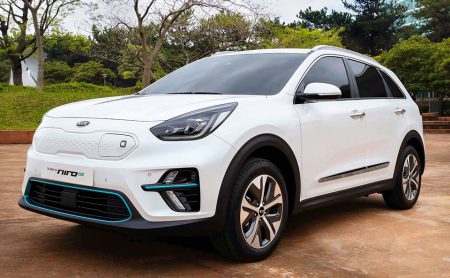
The challenge was complex, because we needed to travel to and from Wales on the motorway networks, whereas we would be looking for every kind of charger available while we were there, from rural public spots to those provided by local car dealers and even, on occasion, three-pin plugs where we were staying.

However, 800 miles later and with two journeys of more than 250 miles under our belts, we were back home and still on speaking terms. It took some planning and there were fleeting moments of inconvenience and lost time, but it worked out just fine, a few ultimately minor dramas aside.

Here, then, are some of the lessons learned from a trip that proved to me once and for all that the capability of today’s EVs and charging network make the switch from a petrol or diesel car far easier than most people imagine.

1. Electric car people are nice people

I’ll be honest, I had my doubts. Social media is awash with virtue-signalling EV evangelists who jump at the chance to strike out at anyone who dare suggest even the slightest compromise of electrification. But everyone I met in an electric car was friendly, helpful and informative, and many went out of their way to help and educate me. This is the kind of advocacy needed to persuade anyone with doubts to switch to electric motoring, and it was a joy to discover a positive subject that bound people together in a common goal.

2. Some people can’t help behaving like idiots

Based on my journey, ‘some people’ is actually mostly made up of BMW drivers. The chap who parked his diesel X6 in a charging bay and left its engine running for 20 minutes? Idiot. The BMW 5 Series plug-in hybrid buyer who dropped it in a charging bay but then got ticketed because he wasn’t smart enough to plug it in? Bigger idiot. The only upside was that they weren’t using disabled bays, I guess.

Read more: Autocar
Kia Ceed Sportwagon PHEV and XCeed PHEV (Image: Kia)

Kia presents new hybrid Ceed & XCeed

Kia introduced the plug-in hybrid versions of the Ceed Sportswagon and the new XCeed. The PHEV versions of the station wagon and the crossover model, which will be available from the beginning of 2020, are based on Hyundai-Kia’s already known tech.

The key data with a 1.6-litre petrol engine, a 44.5 kW electric motor and an 8.9 kWh battery make it clear that the drive train of the Kia Niro PHEV (or Hyundai Ioniq PHEV) is used in both compact PHEV models. The biggest difference: Since the two Ceed derivatives have a lower standard consumption, provisional measurements show a purely electrical range of up to 60 kilometres.

Kia Ceed Sportwagon PHEV and XCeed PHEV (Image: Kia)

The combined fuel consumption is between 1.3 and 1.4 litres, with Kia predicting electricity consumption of 10.4-12.2 kWh/100 km (Ceed Sportwagon) and 10.5-12.2 kWh/100 km (XCeed) respectively. These are, however, values that were determined according to the WLTP but calculated back to the NEDC. Kia did not communicate the pure WLTP values. The same applies to the range.

The hybrid drive with its system output of 104 kW and a maximum torque of 265 Newton metres accelerates the Kombi Ceed Sportswagon to 100 km/h in 10.8 seconds and the XCeed to 11.0 seconds. The electric motor continues to sit between the petrol engine and the six-speed dual-clutch gearbox.

Read more: Electrive

Kia e-Niro vs BMW i3 vs Hyundai Kona Electric

We find out if the new Kia e-Niro or revamped BMW i3 can beat our current EV champion, the Hyundai Kona Electric

Until recently, electric vehicles generally fell into one of two camps: small, more affordable and often frustrating because of drawbacks such as a limited range; or bigger cars that had larger batteries and therefore a longer range, but were also much pricier.

However, there’s now a growing group in the middle ground promising affordability and usability, thanks to their accurate and genuinely exploitable predicted range that’s making ‘range anxiety’ a thing of the past.

EVs are as usable as ever and leading this group are two upstarts and one familiar face. The newest model is the Kia e-Niro, which combines an advanced electric drivetrain with a conventional compact SUV body. The latest BMW i3 gets a bigger battery that gives it even more range. And in the sportier i3s trim that we’re testing here, it pretty much matches the e-Niro for performance and price.

Finally the Hyundai Kona Electric is our current favourite affordable EV, having taken the title at our New Car Awards last year – but it’s by no means old. The e-Niro shares much of the Hyundai’s tech, so it’ll be interesting to see how much difference there is and which will be Britain’s best wallet-friendly EV.

Read more: Auto Express