The Jaguar I-PACE was the best selling vehicle (of any type) in December, while the Tesla Model S was the #1 plug-in vehicle for all of 2018.
December had 6,232 plug-in vehicle registrations in the Netherlands, a four-fold increase compared to the same month last year and the market’s best month since December ’16. The sales total translates into a stratospheric 31% plug-in electric vehicle (PEV) share in December, pulling the 2018 PEV share to 6%, a great result, especially when we realise that BEVs represented 89% of PEV registrations in 2018 and 98% in December alone.
Of course, the higher taxation of expensive BEVs in 2019 is the major reason for this surge, but something tells me (ahem, Tesla Model 3 …) that this exponential growth is set to continue through 2019.
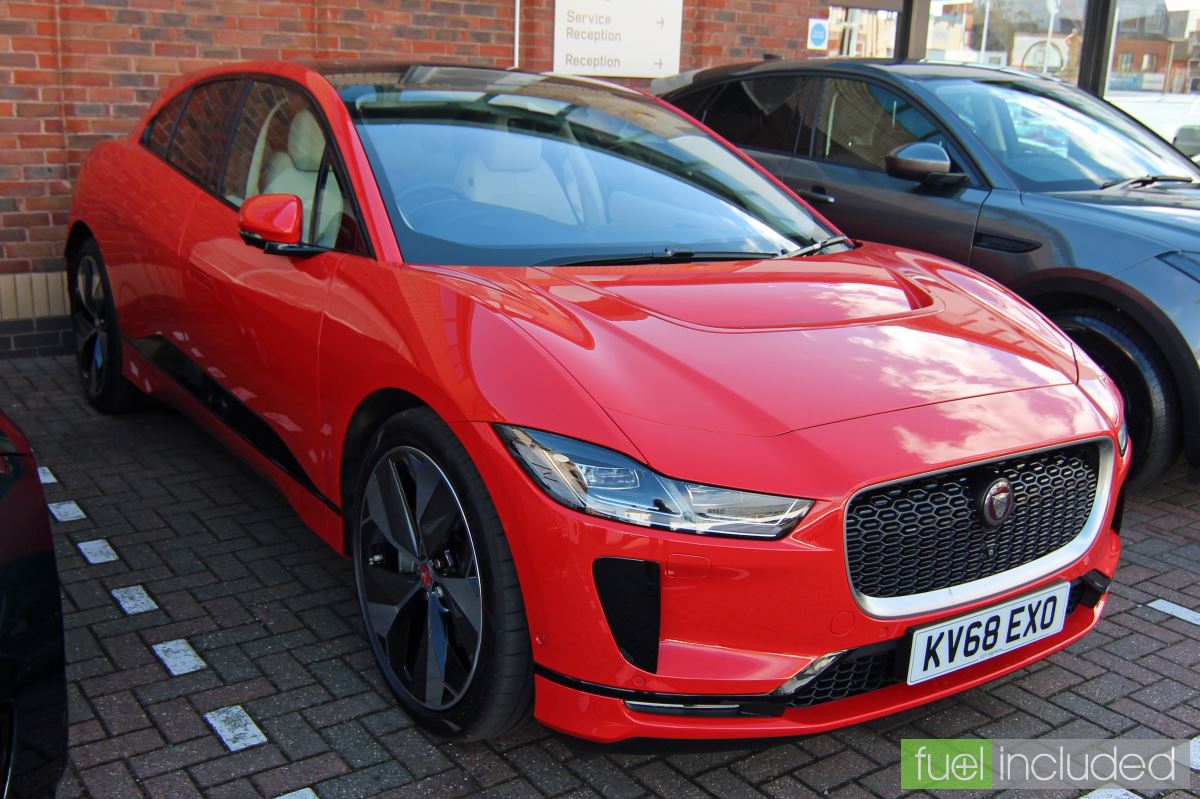
Jaguar I-PACE Electric Car (Image: T. Larkum)
This good market performance was the result of three exceptional individual results, starting with the Best Seller of the Month, the Jaguar I-PACE, which delivered 2,621 units, not only a new all-time record for a BEV, but also the first time that a 100% electric vehicle became the best selling model in the mainstream market.
Latest electric cars sales results show we may expect a dramatic rise this year. Lead times should increase too.
In 2018 the electric vehicle segment grew by 10%. If we look at available figures, we’ll see, that one in every 100 cars sold in November 2018 was pure electric. Compared to the same month of 2017, it is almost by 70% more.
Experts have advised customers to make orders for EVs promptly to beat lengthening lead times.
A period from placing an order and its delivery to a customer (lead time) vary from 10 weeks to half a year for new electric cars, depending on a model.
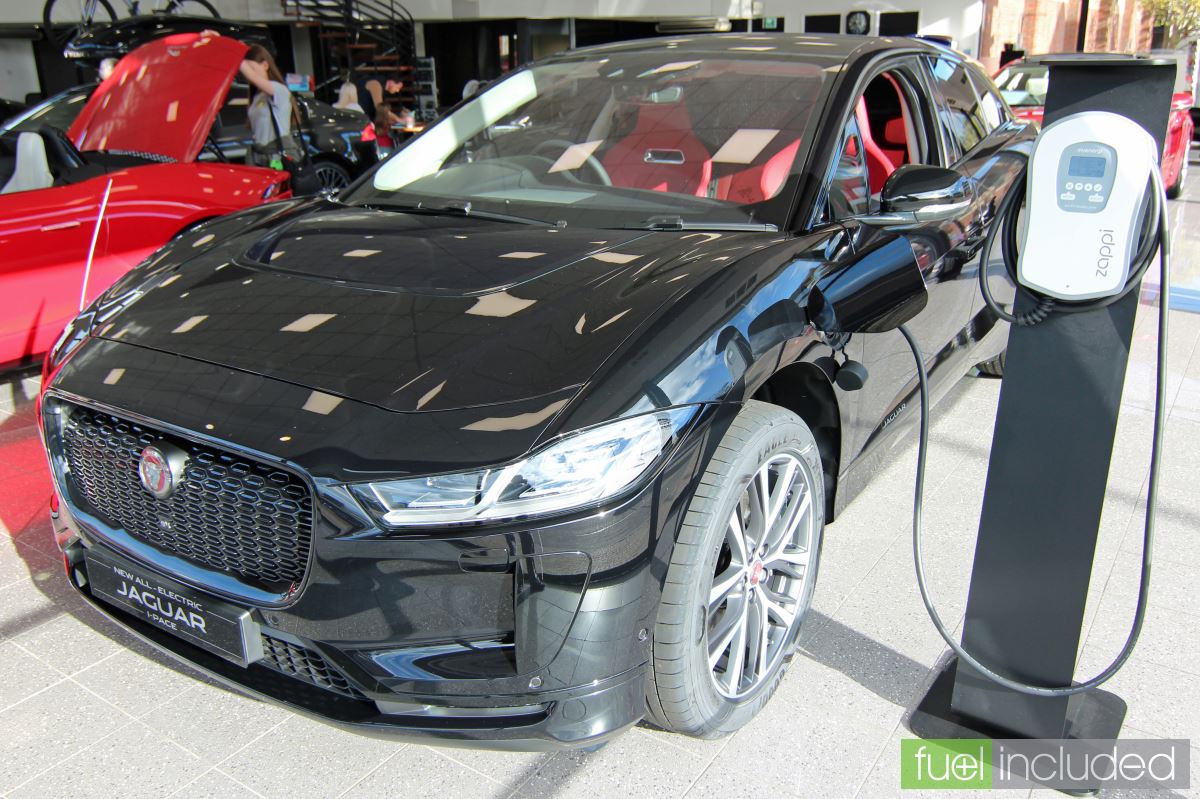
Jaguar I-PACE Electric Car (Image: T. Larkum)
For example, the lead time for the Jaguar I-Pace (pictured) is 6 month, for the popular Hyundai Kona Electric – up to 10 months, the Hyundai Ioniq – 4 month, for the Volkswagen e-Golf – 18 weeks.
As for the all-electric Kia Soul, a small number of vehicles left in showrooms, as a newer model will replace the current one this year. Supplies are running low.
After decades of ups and downs, electricity is finally emerging as the fuel that will propel the planet into the future as more governments look to address their pollution problems by phasing out vehicles that run on fossil fuels.
As a result, automakers are scampering to flood the market with electric cars, trucks and, especially, SUVs over the next few years.
Nowhere is this more evident than at this year’s Los Angeles Auto Show, which will officially open to the public on November 30. Almost every automaker that is displaying at the downtown convention center, especially in the luxury segment, is looking to discuss its electrification strategy for the next decade with any journalist willing to listen.
Jaguar I-PACE Electric Car (Image: T. Larkum)
Porsche wants 50% of its stable to be electric by 2023. Jaguar Land Rover has announced it will shift production entirely to electric and hybrid vehicles by 2020.
Ford plans to deliver 13 new electrified models over the next five years. General Motors plans to roll out 20 all-electric models by 2023.
BMW will offer 25 electrified vehicles by 2025. Aston Martin expects that EVs will account for 25% of the company’s stable by 2030.
And that’s just the beginning. If projections are correct, there should be 400 electrified models on the road by 2025. That’s 300-plus more EVs and hybrids than are running about today.
On Friday I had my first taste of the new Jaguar I-PACE as I took my family for a test drive.
I was intrigued to see what it’s like as I think it would be fair to say that the motoring press have been raving about it, the first all-electric production car from the Jaguar Land Rover group.
Jaguar I-PACE Electric Car (Image: T. Larkum)
It turns out it is a nice car to sit in and drive; it’s very comfortable, has a decent (though not huge) boot and lots of features. My family particularly liked the rear seat heaters, air conditioning and USB ports.
It accelerates nicely and pretty quietly, and has a decent range – somewhere between 250 and 300 miles (with the usual caveats over driving style, ambient temperature, etc). Overall a pretty good car.
However, I couldn’t help but feel a bit disappointed as I was expecting something a little more special. I guess I’m a bit spoilt, driving a BMW i3 and having driven the Tesla Model S a number of times. But it pretty much seemed like just another Jaguar but this time with an electric powertrain.
Jaguar I-PACE Electric Car (Image: T. Larkum)
While almost any car can be improved by going electric, I had hoped for a more ‘clean sheet’ design. For example, it had a huge console between the driver and passenger as though it had a gearbox and transmission tunnel, where on the i3 there is space, and a flat floor.
Anyway, if you are in the market for a Jaguar then do consider the I-PACE as it’s certainly the best Jaguar available. It has good looks, electric performance and a decent range so it’s well worth a look.
My thanks to David at Guy Salmon Jaguar Northampton for giving us the test drive.
Could this week’s road test subject be the most significant new car to leave the halls of a British manufacturer since the McLaren F1?
Don’t bet against it. For one thing, it is remarkable that the Jaguar I-Pace – not just a new Jaguar but a new breed of Jaguar, remember – was conceived in a mere four years.
Regardless of our verdict, this is a courageous project from a marque whose total annual sales amount to a fraction of what big-hitting Audi, BMW and Mercedes-Benz can muster. Despite the greater R&D budgets of its rivals, Jaguar has become the first established luxury car brand to bring its expertise to bear on a zero-emissions product.
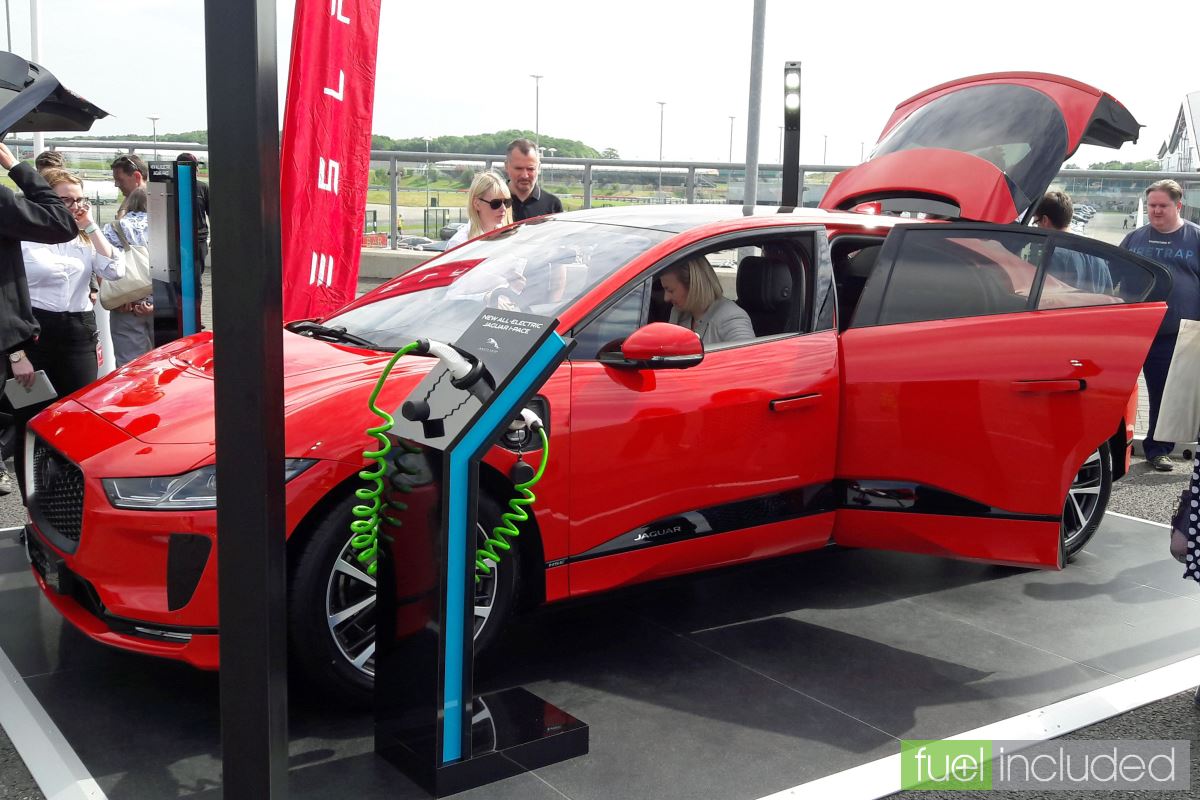
Jaguar I-PACE at Fully Charged Live show (Image: T. Larkum)
The curious paradox is that the I-Pace is simultaneously the most limited and unrestricted Jaguar yet built. On one hand, to fulfil its potential it relies on the scope of a charging infrastructure outside of Jaguar’s direct control, and owners will need to plan activities in a way they simply wouldn’t need to if they owned a petrol-powered car. On the other, this opulently sleek, long-range electric car is claimed to accelerate to 60mph in less than five seconds but is uncommonly spacious within owing to its cleverly packaged powertrain.
It can also perform software updates ‘over the air’; can wade to a depth that’s typically the preserve of purpose-built off-roaders; is clever enough to save battery charge by only activating air vents for the seats in which passengers are actually sitting; and should, claims Jaguar, set new benchmarks on crossover SUV handling with perfect weight distribution, a low centre of gravity and a focus on feel. Early drives have suggested its four-wheel-drive powertrain also has huge potential off the beaten track, though that is to be followed up on another occasion.
On this one, our aim is to discover whether the I-Pace is good enough for you to put that Tesla Model S order on hold; or maybe even if its versatility and dynamism can convince us to give up hydrocarbons altogether.
People keep calling this car a ‘game changer’. It’s almost like some unspoken law, especially on Twitter. If you’re a car journalist and you’ve driven one, you have to tweet about it using the words ‘game changer’. I find this a bit strange. I mean, what game is it changing? Is it darts? Is it snooker? Can you move the balls with your hands now? Or is it, to be more accurate, the ‘game’ of ‘Jaguar selling electric cars’ in which case, yes, this is a game changer. It is also, if you want to stretch this to twanging length, the ball because before this car there was no game on account of there being nothing to play it with. So, erm… yea.
Like many cars, the I-Pace seems to be spec sensitive. There are some really attractive wheel options, up to a hearty 22 inches too, and a particularly nice blue paint, though it also seems to look good in dark grey and white. Unfortunately, this press car is in a different sort of grey, one that looks a bit flat and drab, like that colour you used to get on sporty Clios, and which in some lights appears British Leyland beige. It wouldn’t be my choice, especially not paired with the optional all-black alloys. I don’t like all-black alloys on a car. They’re like the all-black off-brand trainers worn by that weird kid at school who smelt a bit of TCP and once threw a rucksack at the maths teacher. There’s more spec madness inside this press demo where it teams stridently red leather with dark wood trimmings. Having played with the I-Pace configurator I know you can spec one up in a much nicer way, one that it doesn’t look like a car the factory cobbled together to use up whatever was left over, like the mad food you make the night before you go on holiday. Mmm, cheesy lamb chop with yoghurt.
Jaguar I-PACE at Fully Charged Live show (Image: T. Larkum)
Aside from the colour/trim choices, there’s something else disturbing about this I-Pace and it’s a sort of strange gravelly noise. Normally electric cars are very quiet but there’s definitely an odd sound in the background. After a few minutes I realise it’s the sound synth which is meant to deputise for the missing internal combustion engine noise. A rummage through the touch screen menus finds the slider that controls it, and which is currently set to ‘dynamic’. There’s an un-named middle setting, and then ‘calm’ which is what I choose, immediately making the gravelly sound go away. I can see why they’ve done this, to bat away those people who say they don’t like electric cars because of the lack of engine sound, but I love electric cars because they’re so smooth and quiet and with the synth disabled the I-Pace is about as smooth and quiet as they come. Unless you’re reversing, then it beeps like a bin lorry.
Day two
Off to film a Smith & Sniff episode with this car (coming soon guys, don’t forget to like and subscribe!!11!!! etc). The first thing this involves is getting out of London. At some lights on a dual carriageway I come up behind a bloke in a Huracan Spyder. When the lights turn green he makes an energetic getaway and I take a small slice of delight in hanging on to his arse until the next set of lights. I’m sure if he’d really clogged it he could have got away, but the I-Pace wouldn’t have made it easy for him. It’s a plenty brisk car. The next part of my journey is a short trip up the A1 during which the I-Pace proves itself to be an excellent motorway cruiser. In a way a bit too excellent because it feels like it’s straining at the lead and will happily sit at a speed that is more than the speed limit causing the range-o-meter to drop at more than a mile per mile, wasting precious electricity. In the end, I stick the cruise control on to stop myself constantly going a little faster or becoming unable to resist the temptation to surge commandingly past some dickwit in a 320d. Instant access to a deep well of torque, 513 lb ft of it if you’re interested, is a wonderful thing.
The Jaguar I-Pace has set the best time around Laguna Seca for an unmodified electric car.
Jaguar announced Thursday that its electric I-Pace crossover has set the lap record for unmodified electric vehicles at Laguna Seca.
Jaguar I-PACE at Fully Charged Live show (Image: T. Larkum)
A 2019 I-Pace HSE First Edition was piloted by professional racing driver Randy Pobst, who achieved a lap time of 1:48.18 in the I-Pace, the fastest known time for a stock four-door electric vehicle around the circuit. The best known time for a similar vehicle prior to this was a 1:57.5 set by a Tesla Model 3 in March. The base Model 3 was easy prey for the I-Pace, though, as its 400 horsepower, 512 pound-feet of torque, and all-wheel-drive give it a rapid zero-to-60 time of 4.5 seconds, and its near 50/50 weight distribution keeps it tidy in corners.
Base Tesla Model 3s come with 50 kilowatt-hour batteries with 210 miles of range, which can be upgraded to 75 kilowatt-hours for 310 miles of range. The I-Pace, however, has 90 kilowatt-hour battery that offers just 240 miles per charge. It is unclear how quickly the Tesla Model 3 Performance can lap Laguna Seca, and though it’d have to slash more than ten seconds from its best known time to beat the I-Pace, that shouldn’t be too hard with its added performance and the right driver.