Receiving my monthly bill from Chargemaster makes me happy. Let me explain….
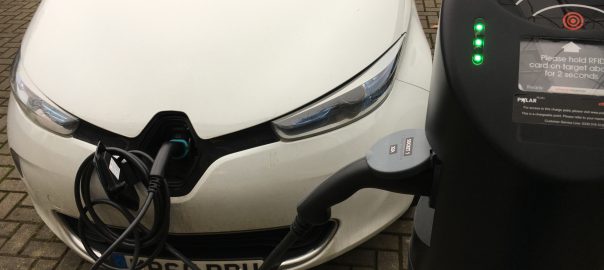
Chargemaster Plc is the company that provides the majority of Milton Keynes electric car charging points and since I only charge publicly I am billed by them for all of my ‘fuel’ consumption.
Working in Central Milton Keynes, I am lucky to have a vast network of charging points available to me, I charge mostly during my working day, as and when I need to. I also benefit from free parking under the Green Permit Scheme which covers all standard bays (purple) and some premium bays (red), both can be found across the city centre area.
Last month’s bill really did highlight to me the huge cost savings owning an Electric Car has given me, and why every commuter in Central Milton Keynes should consider getting one.
Check this out…
Petrol Car
Electric Car
Fuel cost per day
£3 (approx.)*
£0.71**
Parking
£18 (£2 per hr x9)
£0
Total cost per day for parking & fuel
£21
£0.71
Total for the period
(11 working days)
£231
Estimated
£17.20
Actual cost billed by Chargemaster PLC
(inclusive of Polar subscription fee)
Averaged over a working year (261 days)
£5,481
£408.11
*Based on my 15 mile round trip commute @ 20p per mile.
** Averaged daily cost from bill, includes ALL mileage not just commutable distance.
Imagine charging your electric car as easily as you charge your electric toothbrush.
Or, your car charging itself as it drives down the road.
Those scenarios are not as far-fetched as you may think. Indeed, a group of tech gurus who gathered last month in San Diego discussed how a wireless electric vehicle is about to become a reality.
“This is definitely coming,”
said Jesse Schneider, chairman of the wireless task force for the Society of Automotive Engineers, or SAE, an international group working to develop common standards to make sure the sector’s competing technologies work together.
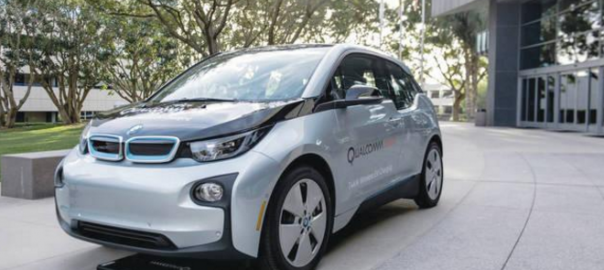
Qualcomm Halo, wireless charging (Qualcomm/ TNS)
Car buyers are familiar with plug-in hybrids and all-electric vehicles, but companies such as Qualcomm seek to jump-start the transition from internal combustion to zero-emission cars with “inductive” charging.
Instead of charging a vehicle with a plug or cable, the driver using a wireless system aligns the car over a charging pad and an electromagnetic field does the rest.
“Customers wait for the green light and then walk away, knowing when they come back they will be more fully charged or fully charged, depending on how long they were away,”
said Schneider.
“You can actually just park over the wireless charging system and everything is done automatically after that.”
The technology has been talked about for years but, starting with the hybrid version of the 2018 Mercedes-Benz S550e, wireless vehicle charging technology will make its debut. The German automaker reached an agreement with Qualcomm to use the San Diego-based company’s Halo technology as a feature on the luxury car.
There can be a significant lead time in arranging the installation of a charge point so it is best if this gets underway as soon as possible after your new electric car is ordered.
If the car is a new Renault ZOE or Nissan Leaf on PCP (Personal Contract Purchase) then installation of the charge point will be organised by the manufacturer. As part of this deal the manufacturer will specify their preferred charge point.
In most other cases you will need to arrange the installation yourself. We can help you through the process with advice and guidance:
We provide details of the main installation companies below.
Our guide to selecting the most suitable charge point for you is here: Choosing a Charge Point.
If you are a Fuel Included customer then you can of course call or email us at any time for more detailed advice.
Note you may find that a charge point is occasionally referred to by its more technical name ‘Electric Vehicle Supply Equipment’ or EVSE.
Charge Point Installers
The biggest companies making and installing domestic charge points – let’s call them the ‘Big 3’ – are the following (with links to their website and to our news feed with articles about them):
New Motion EVSE Ltd, based in London and part of a Dutch group, the largest provider in Europe.
Installation Process
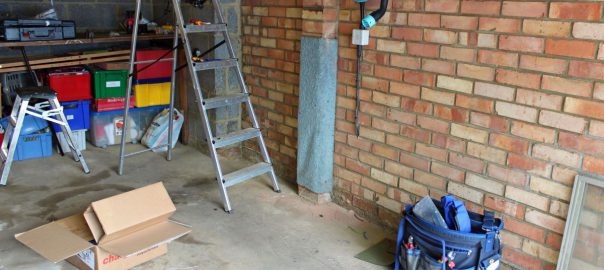
In most cases the installation company is likely to contact you for information on your property, including asking for photographs of your main consumer unit (‘fuse box’) and the preferred location for the charge point. Usually a dedicated cable will be run from the consumer unit to the charge point so sometimes the installer may also ask for information on, and photographs of, the route between the two. Generally an isolator switch will be installed in this new circuit.
The Charge Point Being Installed for my First EV, a Renault ZOE (Image: T. Larkum)
Typically a standard installation will allow for cabling of up to 20m in length. If the distance is greater than this then there may be an additional cost to the customer (of perhaps £5 per metre). Similarly there may be additional costs if the installation is complex (e.g. passing a cable over a walkway or under a path); these issues are likely to be highlighted by the installer ahead of the installation visit. Sometimes the electrical system in the house will lack a mains isolator switch and this may need to be installed in advance by your electricity supplier; again the installer should flag this ahead of their visit.
The installation itself will take less than a day (it can be as little as an hour). You will need to be in attendance and the electricity supply will be turned off for much of the work.
After the installation is complete you will likely be asked to sign off on the work (and will be given a set of keys to the charge point if it is key protected). You should test the charge point as soon as possible by connecting your car, ideally while the engineer is still present in case it shows up any issues.
PS: I have previously described the installation of my charge point in detail here and here.
This is a summary of the UK Government’s scheme for subsidising home charge points for electric cars, known as the Electric Vehicle Homecharge Scheme (EVHS).
It has been kept relatively simple; if you need detailed guidance you should consult the original document (linked at the bottom).
1. Most plug-in vehicle owners carry out most charging at home.
2. Customers who are the registered keeper or have primary use of an eligible electric vehicle may receive up to 75% (capped at £500, inc VAT) off the total capital costs of the chargepoint and associated installation costs.
3. The key features of the Electric Vehicle Homecharge Scheme are as follows:
The grant is a 75% contribution towards the cost of one chargepoint and its
installation up to a maximum of £500 (including VAT) per household/eligible
vehicle.
Customers must provide evidence of being the primary user of an eligible electric vehicle or have a vehicle on order in order to be able to qualify for the grant.
The date of installation must not be more than 4 months ahead of the date
of delivery or start date of vehicle use.
4. The grant covers up to 75% of the eligible costs of chargepoint installation, the
customer form requires confirmation of who is paying the balance of the
installation costs.
5. The grant for 75% must be claimed against an approved chargepoint and
made on your behalf by a chargepoint installer which has been authorised
by the Office for Low Emission Vehicles (OLEV).
6. You must have off street parking facilities suitable for chargepoint installation (a survey prior to installation should be conducted by your installer). If you do not have off street parking, your Local Authority may be able to help via a central Government grant.
7. The authorised chargepoint installer will claim the 75% (capped at £500) on your behalf. How the remaining cost is to be met should be agreed with your installer prior to installation. In any event, you should satisfy yourself whether you are expected to pay the remaining cost, and if not who will be paying for it, before the installation takes place. The grant will only be paid in arrears (i.e. once installation is complete).
8. No more than 2 chargepoints can be funded at one property irrespective of how many vehicles are registered there.
Electric Vehicle consultancy, Zero Carbon Futures, has been appointed as project manager to Milton Keynes Council to support the delivery of their Go Ultra Low City programme.
The appointment follows the announcement last year that Milton Keynes has been awarded £9 million from the Office for Low Emission Vehicles’ Go Ultra Low City Scheme. The funding is to support the city to become a showcase of what can be done to encourage the uptake of Ultra Low Emission Vehicles.
Following a competitive tender process, Zero Carbon Futures has been commissioned to oversee the project’s key strands including the EV Experience Centre, EV charge point infrastructure and innovation as well as work on the Highways to support the programme.
Brian Matthews, Head of Transport Innovation, at Milton Keynes Council, said:
“We had a number of exceptionally strong tender submissions for the project management contract however Zero Carbon Futures’ expertise and knowledge of the industry really stood out. The company will be a critical friend for the project throughout its five years.”
Zero Carbon Futures has been involved in a number of high profile electric vehicle projects such as the Rapid Charge Network, Plugged in Places and My Electric Avenue and has overseen the development of charge point networks across the UK including at motorway service stations. The company has also developed a number of electric vehicle marketing and promotional campaigns to encourage residents and businesses to consider making the switch to electric.
Dr Colin Herron, Managing Director at Zero Carbon Futures, said:
“Milton Keynes put forward an exceptionally strong bid to become a Go Ultra Low City and we are delighted to be working with the Council to support its delivery. This is a significant programme which will make a demonstrable difference to electric vehicle uptake in the City and we hope that our expertise will provide real added value to the Council.”
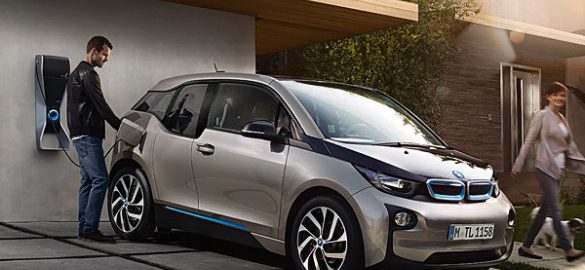
When buying an electric car it is nearly always worthwhile to get a dedicated charge point installed at home.
It’s more convenient than an ‘occasional use’ or ‘granny’ (13 Amp) charge cable because you don’t need to reel it up and put it away each time.
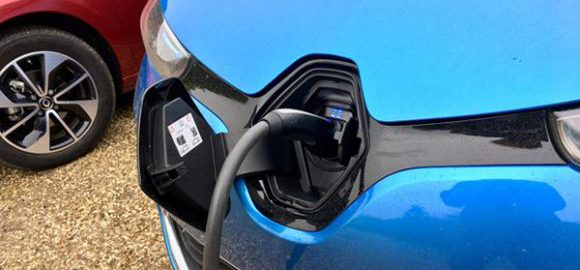
Charging a Renault ZOE with a Home Charge Point (Image: Charging Solutions)
It will also be significantly faster because a dedicated charge point can provide more power without the risk of overheating. Also some electric cars, such as the Renault ZOE, don’t come with such a cable and buying one yourself can be very expensive (£500+).
The good news is that the installation of domestic charge points is subsidised by the UK government.
There are 3 decisions to be made when selecting the type of charge point for your car:
Tethered or Untethered
Connector Types
Power Level
Tethered or Untethered
There is usually the choice of a ‘tethered’ cable (it is fixed to the charge point) or an ‘untethered’ cable (it plugs into and can be removed from the charge point).
Untethered and Tethered Charge Points (Image: Chargemaster)
Untethered has the advantage of allowing different cables to be connected (for example you can use the same charge point for a Nissan Leaf and a Renault ZOE). However, most people choose tethered because it avoids the inconvenience of connecting a cable whenever you need to charge (usually daily). It also reduces the risk of the cable being stolen.
A charge point with a tethered cable will usually cost more than an untethered one (typically about £50 more) because of the cost of its cable.
Untethered and Tethered Charge Points (Images: POD Point)
If you choose untethered you will need to use your own cable to connect to the car; it is the same cable that would be used to connect to a public charging point. It may come free with the car, for example the Renault ZOE or the Nissan Leaf with the 6.6kW charge option come with one. Otherwise you will need to buy one (we can advise you on suppliers).
Connector Types
All untethered domestic charge points supplied in the UK come with a Type 2 socket on the charge point, just as all public charge points now have (or at least officially should have) Type 2 sockets. Similarly all charge cables have a Type 2 plug at the charge point end.
Type 1 (5 pin) and Type 2 (7 pin) connectors
If the cable is tethered then you need to tell the installer the type of plug you want at the car end. This will depend on the car:
Type 1 socket: Nissan Leaf, Mitsubishi Outlander PHEV, Kia Soul EV
Type 2 socket: Renault ZOE, BMW i3, Tesla, VW e-Golf and Hyundai IONIQ
The Type 2 or ‘Mennekes’ connector is the official standard in Europe and should eventually replace the Type 1.
Power Level
A dedicated charge point can provide higher powers than a typical occasional use charging cable which will run at 10 Amps, equivalent at 230 Volts to 2.3 kilowatts. The charge will take place at the highest power that both the charge point can provide and the car can use.
There are two common power levels:
16A = 3.5kW: This is the maximum charge level of the Nissan Leaf 3.3kW, the Mitsubishi Outlander and the VW e-Golf.
30A/32A = 7kW: This is the maximum charge level of the Nissan Leaf 6.6kW, BMW i3, Kia Soul EV and Hyundai IONIQ. The standard Renault ZOE can use this level, in fact anything up to 22kW.
The higher power reduces the charge time so a typical EV battery will charge in about 8 hours at 16A but in about 4 hours at 32A.
It may be best to install the highest power charge point you can afford; even if your current car can’t use all the power, the next one almost certainly will be able to.
Motorway services and large petrol stations could be made to provide EV charging points too, and possibly include hydrogen refuelling stations on site.
With the new bill, the Government has the ability to enforce aspects of electric vehicle recharging or refuelling to be simplified. Among considerations is creating standardised payment systems, whether that be via apps, RFID cards, or credit/debit cards.
Also, the potential is there to standardise recharging/refuelling pricing. Hydrogen is widely charged in £/kg and that is likely to remain with the refuelling infrastructure in its infancy. However, EV charging is often priced at £/kWh or £/minute – potentially confusing users as to costs.
John Hayes, Minister of State for Transport said:
“If we are to accelerate the use of electric vehicles we must take action now and be ready to take more action later.
“I recognise that to encourage more drivers to go electric, the infrastructure needs to become even more widespread than the 11,000 charging points already in place and more straightforward. We are determined to do all we can to make electric vehicles work for everyone and these new laws will help make this a reality.”
The city of San Francisco has not been shy to use its building codes to try to accelerate the deployment of sustainable energy. Last year, it required new buildings to have solar panels installed on the roof and this year, it will try to accommodate electric vehicles by using a similar approach.
San Francisco already has one of the highest concentration of electric vehicles in the world and that comes with a more than decent public charging station coverage.
Now they want to make sure people can also have a charger at home more easily, which is why Mayor Edwin M. Lee and Supervisor Katy Tang introduced new legislation to require that all new buildings are ‘100% electric vehicle ready’.
Mayor Lee said about the announcement on Tuesday:
“San Francisco is working towards smart, long-term investments and policies that reduce pollution and make sense economically. We are committed to continuing our leadership on fighting climate change. By improving access to electric charging citywide, San Francisco is accelerating our transition to a clean-energy transportation future.”
They want to require all new parking construction to accommodate EVs with at least 10% of the space and the rest to be “ready” to have chargers installed:
“This 100 percent EV Ready ordinance requires all new residential and commercial buildings to configure 10 percent of parking spaces to be “turnkey ready” for EV charger installation, and an additional 10 percent to be “EV flexible” for potential charging and upgrades. The remaining 80 percent of parking spaces will be “EV capable,” by ensuring conduit is run in the hardest to reach areas of a parking garage to avoid future cost barriers.”
The city expects that this approach will reduce the cost of installing an electric vehicle charger by as much as 75% versus a building/parking that wasn’t designed to be “EV ready”.
It’s a more aggressive approach than the state’s. California building codes now require 3 percent of parking spaces to be designed to serve electric vehicles.
On-street Residential Chargepoint Scheme available since January 1
EV owners must ask their local authorities to apply for chargers on their behalf
Scheme will favour areas where no off-street parking is available
Councils can apply for multiple plug-ins to cover current and future EV demand
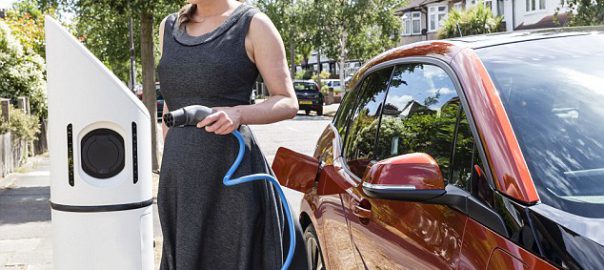
Coming to a street near you? You can make a case with your local authority to have an electric car charge point installed on your street
The biggest issue strangling the nation’s switch from petrol and diesel cars to electric vehicles is undoubtedly the lack of infrastructure in the UK. Too few chargers to replenish batteries – especially in inner-city areas where short journeys are best served by zero-emissions electric cars but most people must park their car on the street – have restricted the take-up of pure electric models in Britain.
However, a new £2.5 million ‘On-street Residential Chargepoint Scheme’ has been created to allow EV owners to apply to have a plug-in point installed on their street – and perhaps even right outside their house – the only problem is you have to apply through your council.
The scheme offered by the Office for Low Emission Vehicles from January has made £1 million available to fund installations during the current financial year and an additional £1.5 million to cover applications made during 2017/18. Residents who want one of the twin charge points added on their street will have to ask their local authority to take up their case, with funding then allocated on a first-come first-served basis.
Of course, if you (or your local authority) is fortunate enough to secure one of the charge posts, there’s no guarantee it’ll be available for you to take advantage of – any electric-car or plug-in hybrid driver will be able to use it and you’ll have to pay to have access to the supply. So don’t expect to plug your BMW i3 or Nissan Leaf into one overnight every day.
The scheme is aimed at EV owners who have no off-street parking, for example those with on-street resident parking bays – suggesting most accepted applications will be in highly-populated urban areas. However, local authorities can also apply to the scheme to meet future demands, meaning plug-in posts capable of charging two vehicles at once could be erected in your area even if there are currently no electric car owners living on your street.
Poppy Welch, head of Go Ultra Low – a joint government and industry campaign to encourage motorists into zero-emissions vehicles – said:
‘The growing demand for electric vehicles justifies greater on-street charging infrastructure and for EV owners that do not have access to off street charging, this public infrastructure is vital.
‘2016 marked a record year for plug-in registrations with more motorists than ever making the switch to electric. Annual uptake rose 29 per cent and we expect this strong growth to continue, so welcome all investments made in the national charging infrastructure.
‘While Go Ultra Low research shows more than 90 per cent of charging is done at home, there are already more than 11,000 publically accessible charge points around the country, so this growing national network provides a useful additional option to motorists.’