Category Archives: Charging

Smart charging mandated by law as Automated and Electric Vehicle Bill passes

The UK has taken ‘a major step’ towards the electric vehicle revolution according to the government after the Automated and Electric Vehicles Act completed its passage through parliament.

First published in its draft form in October 2017, the AEV Bill constitutes the government’s main route to greater provision of charging infrastructure, which it sees as the main barrier to uptake of EVs in the future.

Upon receiving royal assent, a series of measures around deployment and access to charge points are set to become enforceable by law once transport secretary Chris Grayling selects a date for implementation.

Speaking on Thursday when the bill passed, roads minister Jesse Norman said:

“The UK is becoming a world leader in the roll-out of low-emission transport. Today we have passed a significant milestone in that journey.

“This act will ensure that the UK’s infrastructure and insurance system is ready for the biggest transport revolution in a century.”

Read more: Current News

eVolt Rapid Chargers installed in Aimer Square, Dundee (Image: eVolt)

Take a look around the ‘globally impressive’ new electric car hub in Dundee

The transformation of a once-vacant Dundee yard into a site dedicated to electric vehicles is “globally impressive” and could inspire cities across the globe, it has been claimed.

A new Princes Street facility complete with with solar canopies, charging points and electrical infrastructure, designed to meet all the needs of those taking to the roads in eco-friendly cars, was officially opened on Friday morning.

The city site was once a petrol station but had lain vacant until a £1.86 million investment from the Office of Low Emission Vehicles made the development possible.

eVolt Rapid Chargers installed in Aimer Square, Dundee (Image: eVolt)

Dundee has been hailed for leading the way in the use of electric vehicles – with 100 taxis in the city now running on electricity.

Visitors from as far afield as France, Germany, the US and New Zealand – in the city for a low emissions conference – were among those in attendance at Friday’s opening ceremony.

Read more: Courier

Figure 4: Charging on Christmas Day (Image: T. Larkum)

Smart charging to enable 11 million EVs by 2030 with limited impact on grid

The increased peak demand from as many as 11 million electric vehicles on UK roads by 2030 could be just 8GW thanks to the use of smart charging technologies, according to National Grid’s latest forecasts.

The much-anticipated Future Energy Scenarios 2018 was launched today, outlining a range of four potential scenarios for the future of the UK energy system.

Figure 4: Charging on Christmas Day (Image: T. Larkum)
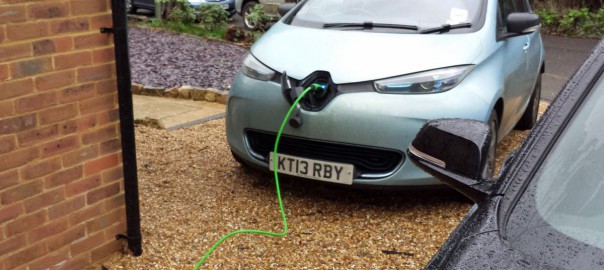
Home Charging a Renault ZOE (Image: T. Larkum)

Across all of them, electricity demand is expected to grow significantly by 2050, particularly from 2030s onwards, driven by increased electrification of transport, with heat contributing to this in some cases.

However, National Grid revealed that the emergence of smart charging will mitigate the impact on the grid of these millions of vehicles by shifting demand out of peak periods.

Read more: Current News

OVO Vehicle-to-Grid (V2G) charging (Image: T. Larkum/Fuel Included)

National Grid set to tackle electric vehicle boom with ‘smart charging’

There could be as many as 11 million electric vehicles on British roads by 2030 and 36 million by 2040, in what would be a major upheaval for the UK’s energy system.

National Grid’s latest report on the future energy system overshoots the Government’s own targets which call for an end to petrol and diesel car sales by the same year.

The acceleration of the electric vehicle market will bolster demand for electricity, which is already in relatively tight supply, but the dual growth in battery storage will dramatically reduce the amount of new power generation projects which will be needed.

This time last year National Grid data estimated that the electric cars could increase peak demand electricity by as little as 8GW by 2030.

In its latest report the same amount is likely to be needed only by 2040 if consumers charge vehicles at off-peak times and through vehicle-to-grid technology.

OVO Vehicle-to-Grid (V2G) charging (Image: T. Larkum/Fuel Included)

Fintan Slye, of National Grid, said the growth of electric vehicles is one of the major trends in the system operator’s scenario planning which is used within the industry to inform decision making.

“We are already operating in an exciting period of change – a trend which is set to continue, certainly up to 2050 and beyond,”

he said, meaning that National Grid’s work balancing energy supply and demand “will become increasingly complex”.

National Grid expects “smart” energy use, which uses digital algorithms to charge and release energy from storage at the most cost effective time, will play a major role in shaping the energy system by the end of the next decade.

Read more: Telegraph

UK sets out a plan to become the world leader in electric vehicles

  • There are currently more than 150,000 ultra-low emission vehicles on British roads.
  • The strategy sets out a target that at least 50 percent of new car sales be ultra-low emission by 2030.

The British government has unveiled a plan that it hopes will make the country a world leader in electric vehicles.

The Road to Zero Strategy contains a series of proposals to help increase green infrastructure, cut vehicle emissions and “drive the uptake” of zero-emission vans, trucks and cars, the government said in a statement Monday.

The strategy sets out a target that at least 50 percent of new car sales — and “up to” 40 percent of van sales — be ultra-low emission by 2030. The government added that it had already made a commitment to invest £1.5 billion ($2 billion) in ultra-low emission vehicles by the year 2020.

Other measures include plans to install charge points in newly-built homes and lampposts, the launch of a £400 million Charging Infrastructure Investment Fund and a new £40 million program to develop and trial “innovative, low-cost wireless and on-street charging technology.”

Additionally, electric vehicle owners would be provided with as much as £500 to help them install a charge point at their home.

Read more: CNBC

Electric cars charging in Milton Keynes (Image: T. Larkum)

Electric cars: Charge points could be requirement in new build homes

New homes in suburban England would need to be fitted with electric car charging points under a government proposal to cut emissions.

Ministers also want new street lights to come with charge points wherever there’s on-street parking.

Details of a sales ban on new conventional petrol and diesel cars by 2040 are also expected to be set out.

Electric cars charging in Milton Keynes (Image: T. Larkum)

The strategy comes at a time when the government is facing criticism for failing to reduce carbon emissions.

The government’s target is to reduce the UK’s greenhouse gas emissions by at least 80% of 1990 levels by 2050.

The proposals, announced by Transport Secretary Chris Grayling, aim to make it easier to recharge an electric car rather than refuel petrol or diesel vehicles.

They include:

  • The need to assess if new homes and offices should be required to install charging points as standard
  • New street lighting columns with on-street parking to have charging points in appropriate locations
  • More money being allocated to fund charging infrastructure.

Mr Grayling said the proposed measures would mean the UK having “one of the most comprehensive support packages for zero-emission vehicles in the world”.

“The prize is not just a cleaner and healthier environment but a UK economy fit for the future and the chance to win a substantial slice of a market estimated to be worth up to £7.6 trillion by 2050,” he said.

Read more: BBC

eVolt wins contract to provide electric vehicle (EV) charging units for Cambridge City Council

Cambridge City has selected eVolt UK to supply electric vehicle (EV) charging points across Cambridge for its Ultra Low Emission Vehicle Taxi project, which aims to increase the number of EV taxis used in the historic city.

The project, which is being primarily funded by the Office for Low Emission Vehicles (OLEV), will see eVolt install 21 of its Rapid and Fast Chargers across the city over the next three years. The first phase is underway, with two chargers already operational in the Adam and Eve Car Park (CB1 1DX). A further six Rapid Chargers will be installed across three other sites, due for completion by the beginning of September.
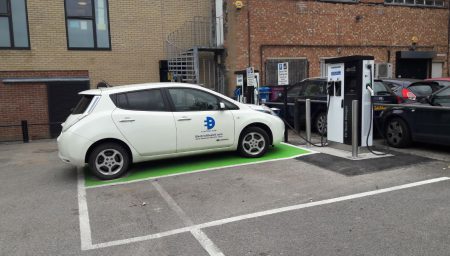
The three other initial sites include: car parks at Castle Hill and Arbury Court, and one on-street location in Newmarket Road, which initially will only be available for taxis. The Rapid Chargers are capable of providing 80 per cent charge to an EV Taxi in 30 minutes.

Cllr Rosy Moore, Executive Councillor for Environment and City Centre, says: “Installing these new rapid chargers for electric taxis marks a genuinely positive shift away from polluting diesel taxis.

“Work like this is one way the council is aiming to make it much easier for people to use electric vehicles, in order to help improve air quality for all of Cambridge’s residents plus all of those people who work in and visit the city.”

eVolt will work alongside Electric Blue, who are providing the remainder of the funding for the project and will also provide operational support throughout.

Justin Meyer, General Manager of eVolt UK, says eVolt is proud to support the project:

“We are committed to help Councils lower emissions, improve local air quality and provide reliable charging infrastructure where it is most needed. We anticipate that these units will help promote the use of EV taxis in Cambridge and encourage more drivers to make the switch.”

Cambridge was one of 10 councils in the UK to be awarded funding by OLEV in its competition for EV Taxi Infrastructure. The project aims to help reduce carbon dioxide emissions across the UK and provide cleaner air for a more sustainable and eco-friendly future.

Source: eVolt/Gravity London


eVolt Rapid Chargers installed in Aimer Square, Dundee (Image: eVolt)

eVolt installs rapid charging units for Dundee City Council

eVolt UK, the nationwide supplier of electrical vehicle (EV) charging units, has installed the latest versions of its rapid charging units for a new hub to help Dundee City Council promote electric taxi use.

eVolt has installed four Raption 50kW Rapid Chargers and three 22kW eVolve chargers at the new hub at Aimer Square. The Rapid Chargers are capable of charging two vehicles simultaneously at full power in approximately 30 minutes.

eVolt Rapid Chargers installed in Aimer Square, Dundee (Image: eVolt)

This is the first of three rapid charging hubs to be introduced in Dundee in 2018 through the Office for Low Emission Vehicles (OLEV) Go Ultra Low programme. Dundee City Council selected the locations based on commuter routes and also following a questionnaire sent to the city’s taxi drivers considering their opinions on where the hubs should be sited.

Fraser Crichton, Transport Officer at Dundee City Council, has been encouraged by the early usage of the units: “The Rapid Chargers have been in use at Aimer Square since the beginning of April and have already been used over 700 times in the 10 days since opening, including over 100 different users. There are currently 94 pure electric taxis in use in Dundee and we hope to see more drivers make the transition.

“We have worked together with eVolt for a number of years now and have found the products to be high-quality and extremely reliable. They have always provided us with excellent customer service and support.”

A further two Rapid Chargers will be installed at Aimer Square later this year. The other two hubs will also be completed this year, with four Rapid Chargers and two eVolve chargers being installed at Queen Street car park, and six Rapid Chargers and three eVolve chargers being installed on Prince’s Street in the city centre.

Justin Meyer, General Manager of eVolt UK, says the company is pleased to be involved in the project in Dundee:

“With over 100 charge points, including the busiest Rapid Chargers in Scotland, Dundee is leading the way for EV. We are proud to be supporting the council’s project to lower emissions and increase the number of EV taxis by providing highly reliable and efficient charging units for these hubs.”

Source: Gravity London PR

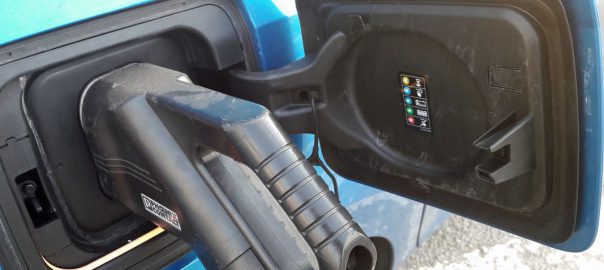
Rapid Charging Step 11: Car is Charging (Image: T. Larkum)

Smart charging could deliver EVs a decade earlier at lower cost to consumers

Smart charging of electric vehicles (EVs) could cut the cost of integration into the UK power system by over £1 billion compared to standard charging, according to a new report that also found running an EV could be ten times cheaper than a conventional car.

WWF commissioned Vivid Economics to deliver a two-part report on the effect of bringing the UK’s proposed 2040 ban on the sale of new petrol and diesel vehicles ahead by ten years.

Rapid Charging Step 11: Car is Charging (Image: T. Larkum)
Rapid Charging (Image: T. Larkum)

It found that the ‘2030 scenario’, which forecasts 20 million electric cars and vans on UK roads, could be delivered at lower cost than the 13 million under the ‘2040 scenario’. The report argues that this is due to the charging profile rather than the number of EVs, which it said is a more important factor.

“The smartness of the transition to electric vehicles will be the main factor determining how cost effective the transition is, not the speed of the transition,” it states.

Read more: Current News

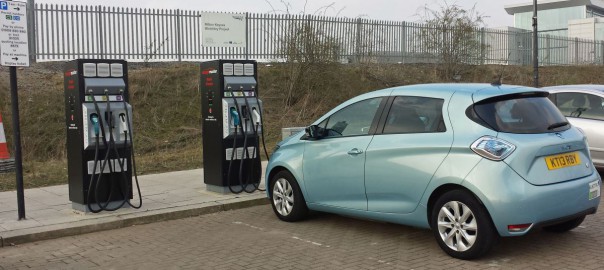
Rapid Chargers next to Milton Keynes Central railway station parking (Image: T. Larkum)

BP to buy Chargemaster electric car charging network

BP to add EV fast chargers at its 1,200 filling stations with its new BP Chargemaster venture

Oil giant BP has announced that it intends to buy the UK’s biggest electric vehicle charger suppliers Chargemaster. The Luton-based company operates the Polar charging network with over 6,000 charging points across the UK, covering home, workplace and public installations.

Rapid Chargers next to Milton Keynes Central railway station parking (Image: T. Larkum)
Chargemaster Rapid Chargers next to Milton Keynes Central railway station parking (Image: T. Larkum)

BP currently has 1,200 filling stations in the UK and says that it will roll out ultra-fast chargers, including 150kW rapid chargers capable of delivering 100 miles of range in just 10 minutes, across its forecourts within the next 12 months. The oil company estimates that there will be 12 million EVs on UK roads by 2040, up from around 135,000 in 2017.

David Martell, Chief Executive of Chargemaster, said

“The acquisition of Chargemaster by BP marks a true milestone in the move towards low carbon motoring in the UK. I am truly excited to lead the Chargemaster team into a new era backed by the strength and scale of BP, which will help us maintain our market-leading position and grow the national POLAR charging network to support the large range of exciting new electric vehicles that are coming to market in the next couple of years.”

The deal will see Chargemaster, which has 40,000 customers, rebranded as BP Chargemaster.

Read more: AutoExpress