Category Archives: Charging

Ubitricity charging post demonstrator at CENEX show (Image: T. Larkum)

Siemens to deploy London’s street light electric vehicle chargers with ubitricity

Siemens has partnered with electric vehicle charging solutions provider ubitricity to transform hundreds of London’s street lamps into new on street chargers.

The company was one of eight to win a place on a city-wide framework contract hosted by Transport for London (TfL), the Greater London Authority and London Councils.

It will work with the Berlin-based company to deliver ‘Smart City’ EV charging points, which use mobile electricity metering technology to allow existing street lights to share electricity supply with an EV charge point.

Ubitricity charging post demonstrator at CENEX show (Image: T. Larkum)

Drivers connect to it using a cable fitted with a meter that identifies the charging point and turns on the power. The data is sent digitally to a mobile power supplier who would bill for the electricity consumed, while those using a standard cable would be authorised through a mobile site.

Both the boroughs of Wandsworth and Kensington and Chelsea have committed used lamp post charging in their EV infrastructure schemes to overcome the lack of on street parking facilities in the capital.

Chris Beadsworth, director at Siemens Energy Management, said: “By using existing infrastructure, it will provide a quality, convenient and simple charging point to help accelerate the increase in privately owned electric vehicles. Our aim is that charging your car should be as simple as charging your phone.

“Working together with our partners we make a cleaner more modern energy network a reality whilst delivering benefits for UK consumers without compromise.”

Read more: Current News
Union Of Concerned Scientists’ President: Electric Cars Rock

But he also identifies why electric vehicle ownership remains out of reach for many.

Earlier this year Ken Kimmell, President of the Union of Concerned Scientists, purchased a Chevrolet Bolt EV. After about 6 months, he has found electric vehicle ownership to be everything he had hoped. The car is fun to drive, has a low cost of ownership, and far more efficient than a gasoline car.

Mr. Kimmell has uncovered what many EV owners have already come to realize. For a home owner with a garage, an EV is more convenient (not less) than a gasoline-powered vehicle.

“I charge the car once or twice a week overnight. Plugging it in takes about five seconds, and the charging takes between 4-8 hours. When I wake up, the battery is full. No more trips to the gas station. (…) Because of the long range, I rarely need to use public charging stations while on the road. I’ve used them five times since I leased the car, typically to add about fifty miles of range.”

Owning an EV like a Chevy Bolt, Tesla Model 3 or Nissan Leaf is also much more affordable than it appears at first blush. In addition to taking advantage of the $7,500 federal tax credit, $2,500 of his down payment was paid back by the MA rebate program. Similar programs are available in many other states. That is just the upfront savings:

“At the same time, I am saving about $60/month in fueling costs, as electricity cost per mile is less than half of gasoline, even in a state like Massachusetts that has relatively high electricity costs and relatively low gas prices. And not paying for oil changes, air filters, belts, brake pads and many other maintenance expenses for a gas-fired car also saves money.”

Read more: Inside EVs

Figure 4: Charging on Christmas Day (Image: T. Larkum)

E.On revs up new tariff designed for electric vehicle drivers

E.On has launched a 100% renewable electricity tariff designed specifically for electric vehicle drivers, offering a fixed reward equivalent to driving 850 miles for free.

E.On ‘Fix and Drive’ is a two-year fixed price tariff is available to drivers who own or lease a plug-in electric or hybrid vehicle who receive a £30 credit on their electricity account six months after they sign up to the tariff and is earned annually.

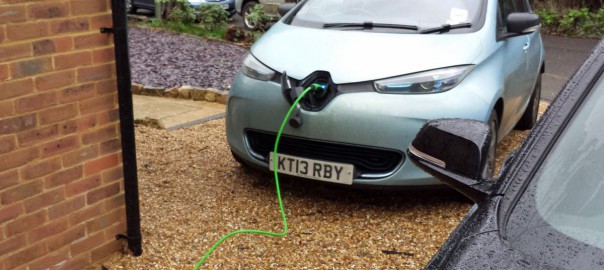
Figure 4: Charging on Christmas Day (Image: T. Larkum)
Charging at home (Image: T. Larkum)

Michael Lewis, Chief Executive of E.ON UK, said:

“Sales of electric vehicles are increasing year on year and the UK is now one of Europe’s largest markets for them. Drivers need to be able to charge their cars quickly and conveniently, and for many, that means plugging in at home.

“Our new Fix and Drive tariff has been specifically designed with these customers in mind, who likely have higher electricity bills, to provide competitive pricing, a rebate and clean energy to supply their homes and power their vehicles.”

The tariff comes with 100% matched renewable electricity certified through Renewable Energy Guarantees of Origin (REGO), while E.On will aim to offset the carbon associated with customers’ gas use by funding projects that reduce CO2 emissions.

Read more: Current News

Electric cars charging in Milton Keynes (Image: T. Larkum)

Northern Powergrid to trial vehicle-to-grid charging under range of new initiatives

Northern Powergrid will install electric vehicle (EV) and vehicle-to-grid (V2G) chargers at a number of its own sites as part of a series of new initiatives aimed at growing its understanding of the impact of fleet electrification.

The distribution network operator will begin installation of 16 V2G charging points this month, which will be used to contribute to a trial of the technology when used in fleet operations.

The DNO will also invest in the installation of new EV charging points at 11 of its sites. In addition to the V2G chargers, these will support Northern Powergrid’s efforts to electrify its fleet beginning with its pool cars.

Electric cars charging in Milton Keynes (Image: T. Larkum)

“We have to get hands on and lead by example. We are starting small to begin with, bringing on five Nissan Leaf EVs that will be available for our people to use,” said Jim Cardwell, head of policy development at Northern Powergrid.

“Although colleagues frequently have to take our vehicles to places where there is no electricity, there is huge internal appetite to decarbonise as much of our fleet as possible, as soon as is practical.”

Read more: Current News

Cheap Motoring

Tax policy for electric vehicles makes ‘zero sense’

Gerry Keaney, chief executive of the British Vehicle Rental and Leasing Association (BVRLA), has called on Government to “get its act together” and address the “obvious failures” in its short-term tax policies for electric cars.

The current company car tax and VED rates act as “a positive disincentive” to fleet operators and drivers who want to take an electric car as a company car, Keaney told delegates as the BVRLA’s annual Fleet Technology Congress.

The company car tax band for zero emissions vehicles is currently scheduled to increase over the next two years to a high of 16% in 2019/20, before dropping to 2% the year after. The BVRLA wants the Government to accelerate the introduction of the 2% band.

Cheap Motoring

“Short-term tax policy relating to electric cars today makes zero sense to anybody,” Keaney said. “It doesn’t reflect any sort of connected thinking between an air quality objective, between the diesel campaign that’s going on, between the tax harmonisation objectives.”

He urged the Government to take action in November’s Budget because “if it wants to make a difference, that is the single biggest thing it can do to accelerate the take-up of electric cars”.

Once the Government has addressed its short-term tax policy it needs to look at the longer-term because as the take-up of electric vehicles grows, the tax yield from both company cars and private cars will decline rapidly, Keaney said.

“There needs to be a grown-up discussion in the UK about what is going to replace the current tax yield that comes from cars when looking to tax electricity, for example. How is electricity going to be taxed? What is the role it’s going to play? How is it going to be addressed?”

Keaney repeated calls from the Fleet Industry Manifesto, put together by Fleet News, fleet operators’ association ACFO and the BVRLA in 2015, for the Government to consider road pricing to replace fuel duty.

“Road charging is politically unacceptable today,” Keaney said.

“But actually, as the tax yield from hydro-carbons declines, there needs to be a discussion, and we need to be part of that, on how we top up the Exchequer’s coffers.”

Read more: Fleet News

Electric cars charging in Milton Keynes (Image: T. Larkum)

Here’s what charging your electric car will look like in 2030

EVs to hit 11 percent of new car market by 2030, with up to 40 million charging stations worldwide.

A new study finds that electric vehicles (EVs) and their charging stations are poised to see explosive growth over the next decade.

At the same time, utilities, car companies, and other businesses are pursuing a variety of charging strategies — many of which will be very cheap and possibly even free for consumers.

By 2030, EVs are projected to comprise 11 percent of the new car market, with up to 40 million charging points worldwide, according to a new study by Greentech Media (GTM), a division of Wood Mackenzie.

Electric cars charging in Milton Keynes (Image: T. Larkum)

So power demand for EV charging will soar, led by China, North America, and Europe.

To reach this kind of exponential growth in charging infrastructure, GTM explains, “utilities, along with manufacturers, oil and gas giants and sector-specific specialists, will need to test new business models.”

One of the most innovative business models comes from a U.S. startup, Volta Charging, which bills itself as “the largest free electric car charging network in the US.” It has raised nearly $60 million to create an EV charging network that shows video ads, providing revenue designed to allow free charging for customers.

So far “sponsored stations have delivered over 22 million free electric miles,” the company says, “saving over 9 million pounds of CO2.”

Read more: Think Progress

Figure 4: Charging on Christmas Day (Image: T. Larkum)

Electric car charging could offer selling point for new-build homes

By 2040, the UK government wants all new cars to be either electric or hybrid, and the switchover could have major implications for the UK housing industry.

The government’s “Road to Zero” strategy, set to be phased in over the next 20 years which will lead to a complete ban on non-electric cars being sold in the UK, is a huge step forwards in reducing emissions and promoting a cleaner, greener way of life for the country.

Figure 4: Charging on Christmas Day (Image: T. Larkum)
Charging at home (Image: T. Larkum)

While there is still debate over exactly which vehicles will be affected, with recent news that petrol and diesel hybrid cars could be exempt from the new rules, as well as a target for 50% of all new cars to be ultra-low emission by 2030, it will undoubtedly have a huge effect on the country’s housing market, which will need to be ready to cater to the changes.

Best and worst places for electric cars

One study conducted recently by Motorway.co.uk has revealed that much of the country is largely unprepared for such an overhaul in terms of its property stock, with many areas having very low levels of off-street parking available – which will be a necessity after the switchover so that people are able to charge their electric cars near their homes.

Read more: Buy Association

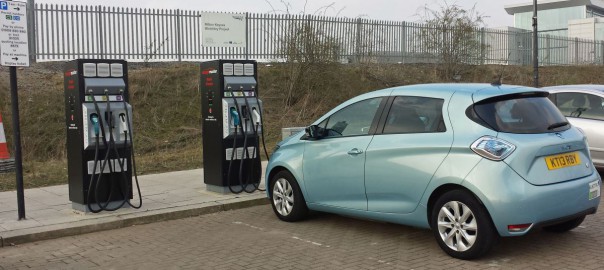
Rapid Chargers next to Milton Keynes Central railway station parking (Image: T. Larkum)

Chargemaster and BP to boost UK EV charging network

Chargemaster is offering to install 4,000 plug-in vehicle charging points at AA hotels and B&Bs for free across the UK to boost infrastructure for drivers.

The strategic partnership between the AA, Chargemaster and its new parent company BP, will see hotels fitted with 50kW rapid chargers for any EV driver to use on the POLAR network.

Rapid Chargers next to Milton Keynes Central railway station parking (Image: T. Larkum)
Chargemaster Rapid Chargers next to Milton Keynes Central railway station parking (Image: T. Larkum)

The first hotel to benefit from the offer is Sandford Springs Hotel in Kingsclere, Hampshire.

Chargemaster will work with any AA-inspected establishments interested in taking up the offer to determine the best charging points for their location

Research by Chargemaster shows that 90% of EV drivers will seek out destinations that have charging points over those that don’t, meaning that having a charging point provides an additional draw for hotels while the EV market continues to develop.

David Martell, chief executive of Chargemaster, said: “We believe that within the next five years, all hotels will offer EV charging, just like they provide Wi-Fi today.

“Our offer for AA hotels is a great opportunity for hotel owners and operators to get a competitive advantage with a facility that could attract hundreds of thousands of customers in the coming years.”

Read more: AM Online

Highways England on track to meet electric vehicle charging goal by summer 2019

Highways England is on track to reach its targets for deployment of electric vehicle chargers next summer after revealing that 83% of its network is within 20 miles of a charger.

The government body set a target of ensuring 95% of its strategic road network was served by an electric vehicle charger within this distance by 2020. This work is being carried out as part of a £15 billion investment promised in a road investment strategy up to 2021.

Through a programme of grant initiatives, collaboration with local authorities and use of a specialist framework of suppliers, the former Highways Agency has made significant progress towards this target.

In addition, plans are already in place to deliver the remaining chargers as a Highways England spokesman explained to Current±.

“We continue to work collaboratively with local authorities to provide grants to install charge points on local authority land, which will help us achieve a further 4% of coverage towards our commitment. We anticipate this could be achieved by summer 2019.

“We will be awarding a specialist framework for the installation of a further 65 rapid chargers, again by summer 2019, to provide a further 8% coverage.”

Read more: Current News

Solar EV Charging Hub on Princes Street, Dundee (Image: eVolt)

eVolt installs rapid charging units for first solar power hub in Dundee

eVolt UK, the nationwide supplier of electrical vehicle (EV) charging units, has installed the latest versions of its rapid charging units for the first and largest purpose-built charging hub in the UK that includes solar power and energy storage.

The hub is located on Princes Street in Dundee city centre and features rapid charging units, 18 bays of solar canopies and an integrated energy storage system utilising second-life EV batteries. eVolt has also installed six of its Raption 50kW Rapid Chargers, capable of charging two vehicles simultaneously in approximately 30 minutes, and three 22kW eVolve chargers.

Solar EV Charging Hub on Princes Street, Dundee (Image: eVolt)

Fraser Crichton, Transport Officer at Dundee City Council, says the hub is a landmark development for the city

“We are so excited to have completed our latest EV infrastructure project as we continue to drive our e-mobility vision. With over 100 pure electric taxis in the city this hub will be vital to support our taxi fleet as well as benefitting the wider EV community ”

This is the second of three hubs to be introduced this year in Dundee through the Office for Low Emission Vehicles (OLEV) Go Ultra Low programme. The first hub was introduced at Aimer Square in April and has been used frequently since its launch. Six rapid chargers and two eVolve chargers will also be installed at Queen Street car park later this year.

Justin Meyer, General Manager of eVolt UK, says:

“This is the first hub of its kind, combining EV charging, solar canopies and energy storage, we are proud to be supporting Dundee Council’s project to lower emissions and to encourage more people to make the switch to sustainable e-Mobility.”

Source: eVolt / Gravity London