Category Archives: BMW

News and reviews of BMW electric cars (including plug-in hybrids).

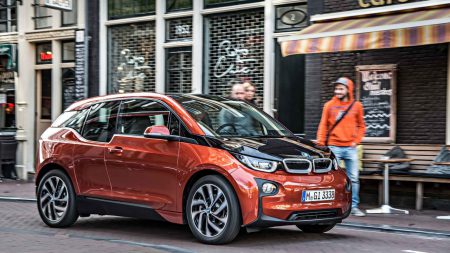
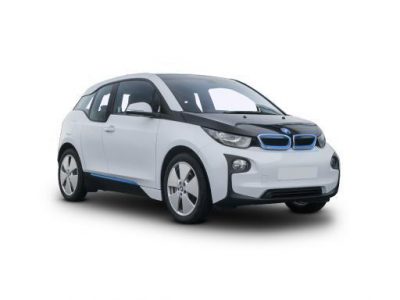
BMW i3 All-Electric (Image: BMW)

BMW i3 facelift launched with 181bhp i3s range-topper

BMW has unveiled the i3s – an updated version of its three- year-old electric-powered hatchback featuring a more sporting appearance, added reserves and an upgraded wheel and tyre package.

It heads a new four-model strong facelifted i3 line-up that’s on display at the Frankfurt motor show. Sales have kicked off now, with prices for the range starting at £34,070. The i3s starts at £36,975.

Central among the changes brought to the new i3s is a more powerful synchronous electric motor. With 181bhp and 199lb ft of torque, the rear mounted unit is tuned to deliver a subtle 13bhp and 15lb ft more than the in-housed produced motor used by the standard version of the facelifted i3, which continues to produce 168bhp and 184lb ft.

Both new i3 models deliver drive to the rear-wheels via the same a fixed ratio gearbox. But while the standard i3 runs restyled 19-inch wheels shod with the same 155/70 profile low rolling resistance as the original model launched in 2014, the new i3s comes with larger 20-inch alloys and wider 195/50 profile rubber.

With the larger wheels and greater levels of standard equipment, the i3s tips the scales 20kg above its standard sibling at 1265kg. However, its added power and torque sees it post a faster 0-62mph time at 6.9sec versus the claimed 7.2sec for the standard i3. The new range topping i3 model also reaches a higher limited top speed of 100mph against the 93mph of its less powerful sibling.

In a bid to improve its agility, BMW has provided the i3s with a 40mm wider rear track. It is combined with a sport suspension featuring a 10mm lower ride height than the standard i3, together with uniquely tuned springs, dampers and anti-roll bars.  Further changes are concentrated at the dynamic stability control system, which receives new software that is claimed to provide it with faster and improved response to a loss in traction.

Read more: Autocar

It’s The Business!

We’re in Skegness for the aquarium, our youngest is diving with the sharks! While she waits to go in I’m off to get the car charged.

The i3 has plenty enough range to get back to the Peterborough services. In fact it’s suggesting we could get 160 miles out of this charge which theoretically could get us all the way back to Northampton.

However Zap-map.com says there’s a free POD Point charger in Skegness so I’m going to investigate.

It’s in the Aura Business Park and it turns out to be easy to find. I plug in and it’s charging immediately, nothing else required.

While in the Aquarium the car gets fully charged. The dive has just finished and we’ll be heading back to the car in a minute. There’s a Pizza Hut next to it so I suspect that’s what we’ll be having for dinner tonight!

Update: We did eat in Pizza Hut. We also got home all the way from Skegness to Northampton without needing to charge (in fact, with about 40 miles left on the clock) – and for free!

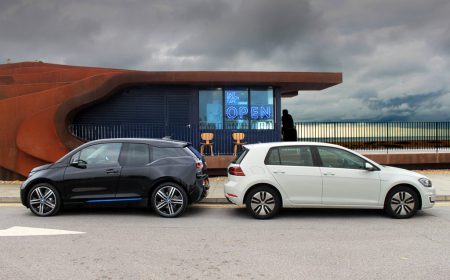
Battle of the electric family cars: 2017 BMW i3 REX vs Volkswagen e-Golf

BY 2040, if the government gets its way, drivers looking for a new car will have a simple choice: buy an electric car or a hybrid car.

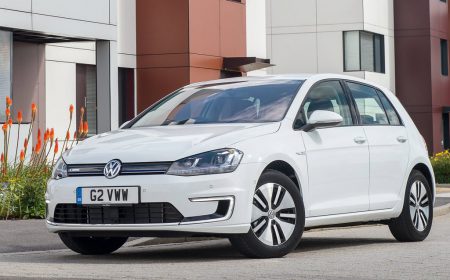
The Volkswagen e-Golf and BMW i3 REX give a taste of things to come. The former is Britain’s best-known family hatchback first, and a pure-electric car second. It should mean it’s user-friendly and doesn’t require as big a leap of faith as a high diver jumping from a cliff top.

The i3 REX is an electric car for pragmatists. In addition to having an electric motor and a battery pack, it has a two-cylinder petrol engine, packaged beneath the boot floor, in the same space as the car’s electric motor. This acts as a generator, to maintain battery charge when it gets low.

The e-Golf, which is propelled under battery power alone, has been revised for 2017 as part of the updated Golf range, and can officially travel 186 miles on a single charge. The i3 REX has a battery range of around 140 miles, but the REX motor allows it to travel a total of 200 miles before you need a top-up of electricity or petrol.
The e-Golf, which is propelled under battery power alone, has been revised for 2017 as part of the updated Golf range, and can officially travel 186 miles on a single charge. The i3 REX has a

We put the pair to the test, on a trip to the seaside. Needless to say, it rained; could the electric cars keep our spirits high?

2017 Volkswagen e-Golf review

Words: Will Dron

Well, it’s a Golf, isn’t it? VW sold 5,236 of its ever-popular hatchback in July alone, just 15 short of the best-selling Ford Focus. In order to create its electric car, all VW had to do was strip out the petrol or (whisper it) diesel engine, along with its transmission, and bolt in a few Duracell batteries and an electric motor. Oh, and change the alloys and tweak the styling of the lights slightly.

When you climb inside, it looks like a Golf, too. The instruments are the same, the switchgear is the same, the seats are the same, the infotainment system is the same (albeit with updated software to show electric energy flow and driving efficiency).

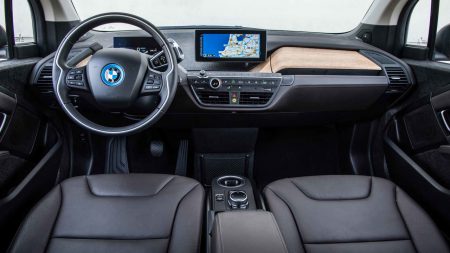
The i3, on the other hand… now that’s an incredible achievement. Designed from the ground up as an electric car, with a carbon fibre tub to save weight and carefully considered packaging, for optimal weight distribution. And the interior of the i3 — totally original and full of reclaimed wood and other dolphin-friendly materials. BMW put a huge amount of research and development into coming up with that car.

But then you remember… being a Golf is no bad thing.

The moment the penny really dropped was when James Mills, having parked his totally original, very clever little i3 REX next to the e-Golf, was having a little root around the back of my car. He quickly pointed out that the i3 has only four seats, whereas the VW has five, just like a normal Golf. Yes, the transmission tunnel houses the battery pack, so it doesn’t have a flat floor in the rear, but other than that, it’s a Golf.

Read more: Driving.co.uk

BMW and FCA alliance to develop autonomous cars

BMW GROUP and Fiat Chrysler Automobiles have formed an alliance, along with technology company Intel and advanced driver assistance systems company Mobileye, to develop self-driving vehicles.

The four companies signed a memorandum of understanding in order to allow them to work together on a new ‘world-leading, state-of-the-art autonomous driving platform’.

Under the arrangement, each organisation will be able to ‘leverage each other’s individual strengths, capabilities and resources’.

The aim is to start production of vehicles with Level 3 (highly automated driving) and Level 4/5 (fully automated driving) autonomous capabilities by 2021.

The companies are planning to have 40 autonomous test vehicles on the road by the end of 2017. They also expect to benefit from data received from Mobileye’s 100 Level 4 fully autonomous test vehicles.

Harald Krüger, chairman of the board of management of BMW AG, said: ‘The two factors that remain key to the success of the cooperation are uncompromising excellence in development, and the scalability of our autonomous driving platform.

‘With FCA as our new partner, we reinforce our path to successfully create the most relevant state-of-the-art, cross-OEM Level 3-5 solution on a global scale.’

Brian Krzanich, CEO of Intel, said:

‘The future of transportation relies on auto and tech industry leaders working together to develop a scalable architecture that automakers around the globe can adopt and customise.

‘We’re thrilled to welcome FCA’s contribution, bringing us a step closer to delivering the world’s safest autonomous vehicles.’

Professor Amnon Shashua, CEO and CTO of Mobileye, said:

‘We welcome FCA’s contributions and use of the cooperation’s platform, which has made substantial progress over the last year and is rapidly entering the testing and execution phase.

‘The combination of vision-intense perception and mapping, differentiated sensor fusion, and driving policy solutions offers the highest levels of safety and versatility, in a cost-efficient package that will scale across all geographies and road settings.’

Source: CarDealer

Living With The BMW 740e

Two Weeks With The Green Limo

It sits at the top of the BMW tree, sure there’s the i8 but when it comes to a pioneering marvel the BMW 7 series wins hands down. So many world firsts debuted on this car along with its rival the Mercedes-Benz S-Class. The generation one car featured BMW’s first on board computer and airbags, today gesture control is another precedent set. The flagship has always been powered by petrol and from the mid-nineties diesel. In more recent times electricity helps to propel the beast along. Chris Bowen spent two weeks in the plug-in hybrid variant, the 740e.

Very Potent

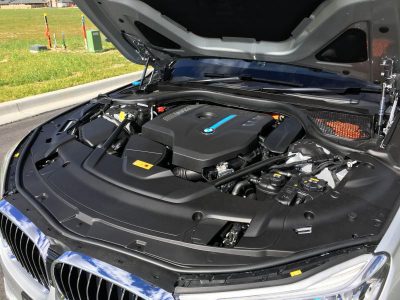
First up the usual 3.0-litre inline turbo-six-cylinder petrol unit has been ditched for a turbo 2.0-litre turbo-four-cylinder hooked up to an electric engine. Don’t underestimate what seems like lunacy, the combo pumps out 240kW and even more torque at 500Nm. If you’re interested in breaking down the figures the petrol engine contributes 190kW / 400Nm while the electric motor tips in the extra 83kW / 250Nm. This is a very quick 8-speed mothership that’s marginally quicker than its petrol donor car.

After jumping inside the 740i early last year I was expecting more of the same. That sameness means spades of opulence and an ability to stir the senses. In fact, having one for an entire two-week period really gave me a reality slap, it’s easy when doing this gig to lose perspective. The car simply makes you feel like a king, a king that likes to drive himself.

The Drive.

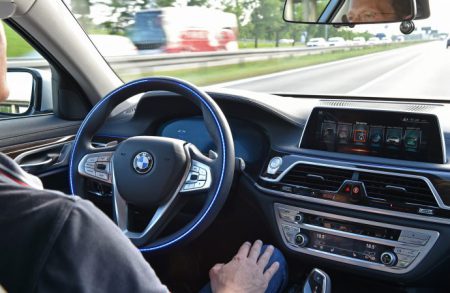
The cabin is so well insulated that if it wasn’t for the unique iPerformance instrument cluster and eDrive graphics you’d be flat out knowing when the battery is providing the momentum or the petrol engine has kicked in. It just floats along in a very pillowy way. The automatic self-levelling air suspension dispatches just about all surfaces with ridiculous ease. Even on dirt this thing just seems oblivious to the real world conditions. I’d say with my Rolls Royce experiences in mind the ride is basically the same, plus a bucket load cheaper.

The usual driving modes are there to suit your mood. There are two comfort modes, “Comfort” and “Comfort Plus” the latter dead set makes the car feel like it’s floating. In fact, the comfort modes are clearly more aimed at providing those in the back with the ultimate, hushed ride to and from the office. As a driver, they turn the limo into a slightly annoying woolly experience, especially around town. But flick into “Sports” mode and it’s goodbye flying magic carpet, hello excitement machine.

Read more: EFTM

New engine development at German makers to end by 2025, says supplier

Continental, a major supplier for automakers around the world, has come out with a bold prediction: internal-combustion engine development by German automakers will essentially end by the year 2025.

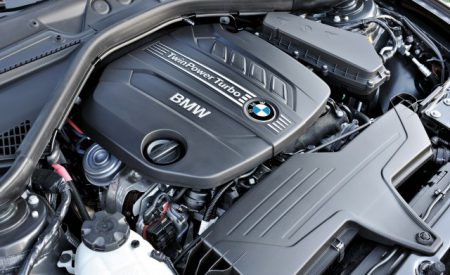
BMW Engine

The supplier, which makes exhaust-gas-cleaning systems for diesel cars and nitrogen oxide-measuring sensors, lists several factors contributing to its prediction: the increasing costs of development, the end of diesel’s dominance, and an overall shift to electric cars and other alternative propulsion methods.

Specifically, Continental CFO Wolfgang Schaefer predicts 2023 will be the final hurrah for German engines running on fossil fuels.

He believes one final generation of internal-combustion engines will be developed and launched by that date. Then investment and engineering will taper off after 2023, with 2025 sealing the engine’s fate with the very last refinements.

“A new generation of combustion engines will again be developed, but after that (around 2023), a further development will no longer be economically justifiable because more and more work will switch into electric mobility,”

he said in an interview with Reuters.

Schaefer’s prediction comes at a time when the use of fossil fuels for transportation faces greater scrutiny than ever across Europe.

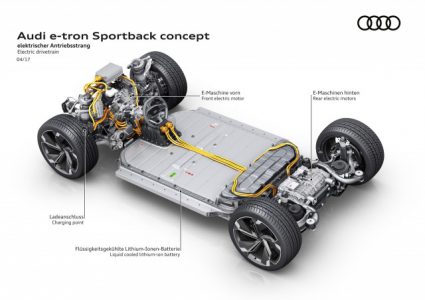
Audi e-tron Sportback concept, 2017 Shanghai auto show.

France, the United Kingdom, the Netherlands, and Norway have all announced similar plans to phase out sales of cars powered by internal-combustion engines.

The Netherlands and Norway want the ban to be in place by 2025, while France and the UK have targeted 2040 for implementation.

All the while, European authorities continue to investigate Volkswagen Group over diesel emission cheating and have alleged BMW, Daimler, and VW Group colluded to manipulate emission regulations.

Each German automaker now plans to update software on its diesel-powered vehicles to curb emissions further, at no cost to customers.

Read more: Green Car Reports

Electric cars are getting ever more attainable

You’ve probably seen the news that the Government is planning to ban the sales of new petrol and diesel cars by 2040, instead encouraging drivers to invest in electric cars in a bid to improve air pollution.While we’re not saying you should rush out to part exchange your petrol or diesel car for an EV, the experts at Cap HPI have pointed out that now seems to be a good time to buy a secondhand BMW i3.

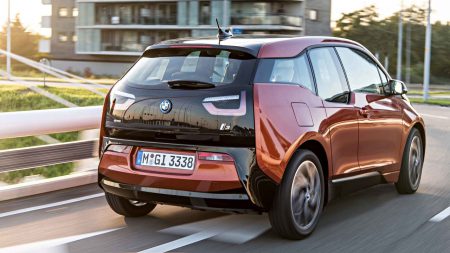
BMW i3

More than 10,700 new alternatively-fuelled vehicles (AFVs) were registered in the UK last month – meaning they now account for a record 4.4% of cars on our roads. This growth in electric and hybrid vehicles has worked wonders for their residual values, which have increased by 7% on average this year – and this is only set to increase as interest builds.

It’s hard to believe that early examples of the futuristic BMW i3 are now three years old, but Cap HPI’s valuation experts have noticed that they’ve now halved in value, meaning you could pick one up for less than £15,000. New, a regular BMW i3 would have been £30,925.

BMW i3

The smart money, however goes on the BMW i3 Range Extender, which can be picked up from around £17,000. Again, that’s a 50 percent saving over new.

“Interestingly it appears to be the range extender models which is driving the recent strong performance as values of pure electric have struggled of late,”

said HPI’s motoring expert Chris Plumb.

“The BMW i3 is a popular choice and is a great second hand buy. It brings a good level of specification and badge prestige.

“The optional range extender can increase the range of the BMW i3 in comfort mode from up to 125 miles to a total of 206 miles. The small, rear-mounted, quiet two-cylinder petrol engine powers a generator that maintains the charge of the battery at a constant level, so that the BMW i3 can continue to drive electrical.”

BMW i3

It’s yet to be confirmed whether the Government’s plans will allow for the sales of cars with a petrol engine – even when, like the i3, combined with an electric motor. Although the regulations will only affect new cars (and the rules aren’t coming into force until 2040), expect more legislation to reduce harmful emissions in the near future – particularly in urban areas. A £15,000 secondhand BMW i3 could save you a lot of money in the long run.

Source: Motor1

Government car ban: which is the best used electric car you should buy?

THE Government has said it will ban all diesel and petrol powered cars from 2040 bringing the curtain down on the era of the internal combustion engine.

Ministers unveiled their court-mandated plans for meeting EU limits on harmful nitrogen dioxide pollution this morning.

They include a £255 million fund to help local authorities come up with ways to improve air quality, ranging from improving public transport and changing road layouts, to charging zones for polluting vehicles if other measures don’t work.

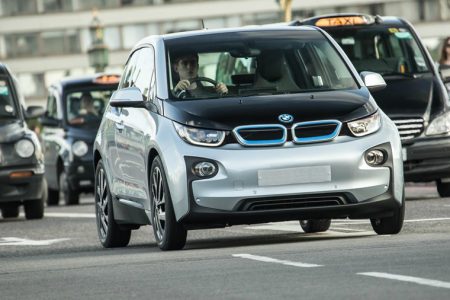
The BMW i3 – one of the UK’s most popular EVs

But much of the focus was on plans to end the sale of all conventional petrol and diesel cars by 2040, to help tackle air pollution and climate change emissions.

The impending shake-up is already having an impact on the electric car market.

Consumer interest in electric vehicles is soaring. The market for alternatively fuelled vehicles (AFVs) saw a record market share of 4.4 per cent in June with more than 10,700 hitting the roads, a rise of 29 per cent.

At the same time the overall used market for electric vehicles has seen values increasing by 7 per cent this year.

Motoring expert Chris Plumb from hpi said:

“Interestingly it appears to be the range extender models which is driving the recent strong performance as values of pure electric have struggled of late. The BMW i3 is a popular choice and is a great second hand buy. It brings a good level of specification and badge prestige.

“The optional range extender can increase the range of the BMW i3 in comfort mode from up to 125 miles to a total of 206 miles. The small, rear-mounted, quiet two-cylinder petrol engine powers a generator that maintains the charge of the battery at a constant level, so that the BMW i3 can continue to drive electrical.”

A used BMW i3 with 15,000 miles on the clock has a used value of £14,650 against a new price of £30,925.

The made-in-Sunderland Nissan Leaf with the 30KWh power train is attracting higher used values than the lower powered 24kWh battery pack as it has a larger range.

According to Nissan, the Leaf has an official range of up to 124 miles (4kWh) or up to 155 miles (30kWh).

Source: The York Press

Case study: What’s it like to run an electric fleet?

It’s not always easy being green, especially where business is concerned.

If you’re a business considering an alternatively fuelled fleet, you aren’t alone. In fact, more than half of fleets (56%) are already operating at least one alternative to traditional petrol and diesel models or are planning to do so in the next three years, according to new research from Arval.

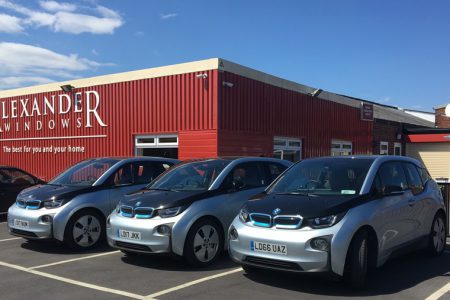
We’ve been in touch with a business that’s already taken the plunge and decided to replace its fleet of ageing Volvo V40s with all-electric BMW i3s. Was it a smart move?

BMW i3

Alexander Windows is one of the north west’s biggest supplier of windows, doors and conservatories, and as such has a team of sales people and surveyors travelling all over Manchester all-day, everyday.

The BMW i3 hatchback makes up part of the company’s range of electric and hybrids – which includes the supercar-esque i8 – and is fast becoming a go-to choice as an eco-friendly fleet vehicle.

BMW i3

We asked Lauren Tutton, director of Alexander Windows, about how the BMWs have been received:

“They have a decent range (120 miles), which is very important because our field sales representatives and technical surveyors travel all over, and we don’t want them getting caught out.

“We still have a need for small vans, but the i3 is more than adequate for day-to-day survey appointments.”

Lauren also drives the stunning BMW i8 plug-in hybrid sports car, which boasts an official average fuel consumption rating of 134.5mpg, and CO2 of 49g/km. Ticking plenty of boxes when it comes to a directors’ car.

Like lots of businesses, Alexander Windows’ fleet is part of a wider eco-friendly initiative, and when it comes to windows, going green is far more involved than simply improving a home’s insulation.

“We’ve had a very positive response from everyone to the new fleet. They’re very quiet, have good acceleration and the standard specification of the vehicle is great. The initial scepticism that people expressed about driving an electric car soon disappeared once they began driving them.”

Read more: Contract Hire and Leasing

Enquiries: Fuel Included Fleet Deals