Category Archives: BMW

News and reviews of BMW electric cars (including plug-in hybrids).

BMW i3 120Ah (Image: BMW)

Long-term report: Becoming an EV super-fan in a BMW i3

I’ve tried very hard indeed to not become one of those evangelical electric car owners that we all try to avoid – but it’s slowly creeping in.

You know the type I mean: the ones that constantly tell anyone who’ll listen just ‘how good electric cars are’, how they’re ‘easy to live with’ and that ‘they’re the future’.

They annoy me as much as they probably annoy you, but after nearly two months with the BMW i3 I’ve sort of become that person by default. The thing is, with a unique-looking car like the BMW, more people than usual ask you what it’s like to live with.

BMW i3 120Ah (Image: BMW Group)

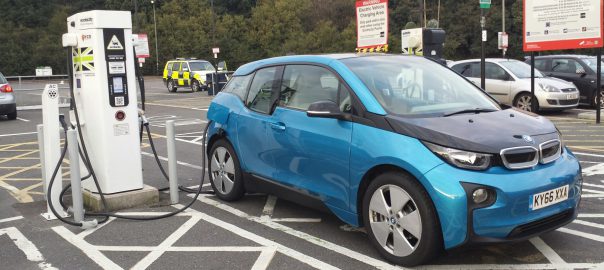
I’ve had neighbours wait for me by the car in the morning to ask what it’s like and a group of shoppers at the local supermarket hang around and want to know how the charging works as I plug it into the fast charger there.

I can’t help but tell them just how much I love it. In fact, I’m genuinely surprised at how well it has fitted into my life. With a range of around 200 miles – which flexes up and down by around 20 miles depending on how and where I’m driving it – I’ve managed to get away with just two fast charges in that time.

By plugging it in at work every day, in a normal three-pin plug socket, I’ve managed to keep the i3 topped up enough for my daily usage. I haven’t got access to charging at home so am relying purely on this trickle-charging at work (it takes 15 hours for a full charge this way) and it’s working. It effectively means the 1,000 miles I’ve covered so far have cost me personally the grand sum of £14 for two fast charges. OK, so that’s not very realistic, as most owners will be paying for their electricity at home, but if you’ve got a free charging point at work then it could equate to very cheap motoring indeed.

Read more: Evening Express
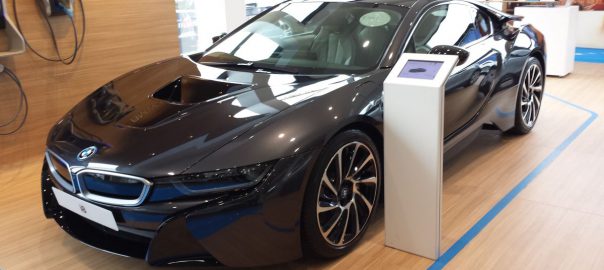
BMW i8 in Sophisto Grey (Image: T. Larkum)

BMW i8 Ultimate Sophisto Edition means curtains for the hybrid supercar

The BMW i8 will be discontinued in April 2020 and to mark the occasion BMW has built a special edition, limited to just 200 units globally

BMW has announced it will cease production of the i8 next year. To mark the occasion, the German brand has built a special edition version of the plug-in hybrid sports car, called the i8 Ultimate Sophisto Edition. Limited to just 200 units globally, the run-out special edition will be available from November 2019 in both Coupe and Roadster body styles.

BMW i8 in Sophisto Grey (Image: T. Larkum)

The BMW i8 Ultimate Sophisto Edition features a set of lightweight, copper-coloured 20-inch alloy wheels, gloss black brake calipers, transparent rear light lenses and fresh gloss black trim for the tailgate. Its bodywork is finished in exclusive “Sophisto Grey Brilliant Effect” paint, which is accented by a range of copper highlights.

Inside, the limited edition BMW i8 features a pair of leather sports seats, an Anthracite- coloured headliner, a head-up display and a Harmon Kardon stereo system. It also comes with a pair of unique treadplates, stamped with the ‘Ultimate Sophisto Edition’ logo, as well as a numbered plaque for the centre console.

The limited edition BMW i8 features the same plug-in hybrid powertrain as the standard car, which comprises a turbocharged 1.5-litre three-cylinder petrol engine and an electric motor, producing a combined output of 369bhp and 570Nm of torque. Its performance is identical, with a 0–62mph time of 4.4 seconds and a top speed of 155mph.

Read more: AutoExpress

New BMW X5 PHEV has an 87 km range

BMW launches the second generation of the X5 xDrive45e. Thanks to a significantly larger battery, the X5 PHEV has one of the highest electrical ranges in the segment.

Depending on the equipment, the X5 xDrive45e will travel a slightly longer distance than other PHEVs – (WLTP) between 67 and 87 kilometres purely electrically. If drivers want to achieve the latter value (at least theoretically), they have to pay close attention to the selected options when ordering. Wide tyres on large rims not only increase the weight, but also the rolling resistance.#

BMW X5 xDrive45e PHEV (Image: BMW)

This electric range is made possible by one of the largest batteries in the current series PHEV: the high-voltage storage unit has a gross capacity of 24 kWh, of which 21 kWh can be used – more than a BMW i3 of the first battery generation. This results in a WLTP consumption of 1.2 to 1.9 litres, which corresponds to CO2 emissions of 27 to 44 grams per kilometre. BMW estimates the combined power consumption at 23.1 to 28.3 kWh per 100 kilometres. According to BMW, these values are not only due to the larger battery capacity but also to the further developed power electronics, which should enable a more efficient interaction of the two drives.

Read more: Electrive

Mercedes-Benz EQC (Image: Mercedes-Benz)

Has the country that invented the car fallen behind on tech?

The relief was palpable from Berlin to Munich when Germany – announced its latest GDP figures.

After months of gloom, modest growth of 0.4pc in the first quarter was heralded as a sign Europe’s largest economy might weather the global slowdown better than most experts predict.

For the first time in six months, Germany is growing again, and the figures follow last week’s announcement that exports rose unexpectedly by 1.5pc in March.

That such lean figures are seen as something to celebrate is a clear indication of how Europe’s industrial powerhouse has slowed – and behind the numbers lurk unpalatable truths.

That there is any growth is down to the service sector and a construction boom fuelled by housing shortages.

Mercedes-Benz EQC (Image: Mercedes-Benz)

The manufacturing sector that is the engine of the German economy, in particular its fabled car industry, is in trouble. Automotive orders fell 5.3pc in the first quarter. In mechanical engineering, the outlook is more bleak, with orders down 7.3pc.

But its growth strategy is built around industrial exports, and that has left it exposed. The car industry – the jewel in Germany’s economic crown – has been through a torrid time since the emissions scandal in 2015, when Volkswagen admitted it had installed software in millions of cars to help cheat emissions tests.

This year EU regulators accused BMW, Mercedes-Benz owner Daimler and VW of colluding to block the development and introduction of clean air technology, raising the spectre of multi-billion euro fines.

Already facing expensive recalls, carmakers have run into the growing wave of diesel bans as cities struggle to bring air quality within EU limits. In Germany alone, Berlin, Hamburg, Munich, Stuttgart and Frankfurt have outlawed older diesel cars.

VW announced investment in a new battery cell production plant this week but German carmakers lag far behind US and Chinese rivals in battery technology. The country that invented the car is rapidly falling behind.

Read more: Stuff

Kia e-Niro vs BMW i3 vs Hyundai Kona Electric

We find out if the new Kia e-Niro or revamped BMW i3 can beat our current EV champion, the Hyundai Kona Electric

Until recently, electric vehicles generally fell into one of two camps: small, more affordable and often frustrating because of drawbacks such as a limited range; or bigger cars that had larger batteries and therefore a longer range, but were also much pricier.

However, there’s now a growing group in the middle ground promising affordability and usability, thanks to their accurate and genuinely exploitable predicted range that’s making ‘range anxiety’ a thing of the past.

EVs are as usable as ever and leading this group are two upstarts and one familiar face. The newest model is the Kia e-Niro, which combines an advanced electric drivetrain with a conventional compact SUV body. The latest BMW i3 gets a bigger battery that gives it even more range. And in the sportier i3s trim that we’re testing here, it pretty much matches the e-Niro for performance and price.

Finally the Hyundai Kona Electric is our current favourite affordable EV, having taken the title at our New Car Awards last year – but it’s by no means old. The e-Niro shares much of the Hyundai’s tech, so it’ll be interesting to see how much difference there is and which will be Britain’s best wallet-friendly EV.

Read more: Auto Express

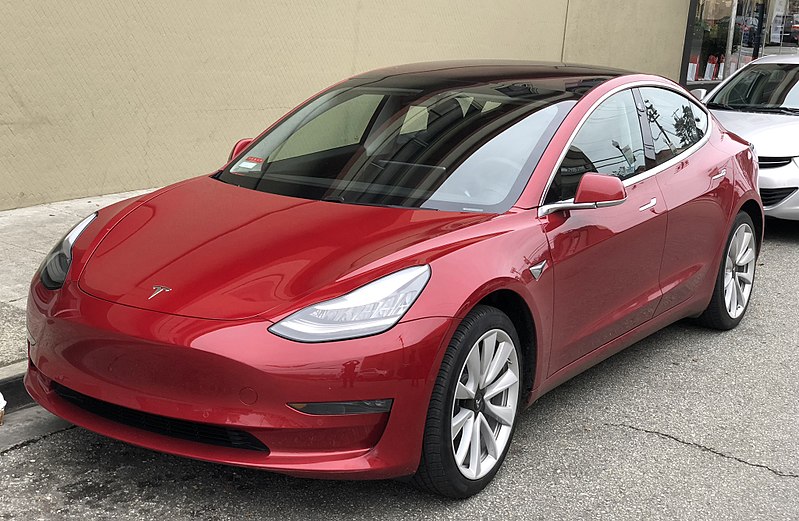
Tesla Model3 (Image: Wikimedia/Carlquinn)

Tesla Model 3 Performance Crushes Fossil BMW M3 Around Race Track

Top Gear magazine has track tested the Tesla Model 3 Performance head to head against fossil fans’ favorite sports saloon, the BMW M3.

The track times were conducted on the 2 mile Thunderhill Raceway Park West circuit, with the Tesla coming in a significant 2 seconds ahead of the (more expensive) BMW. Fossils must now accept all-round inferiority in the performance realm.

Top Gear Magazine’s head-to-head also found — unsurprisingly — that the Tesla beat the BMW on pure acceleration, as well as on their 0–100–0 mph acceleration-and-braking tests. It’s worth noting also that the price of the Tesla came in at more than a thousand dollars below that of the BMW M3.

Tesla Model3 (Image: Wikimedia/Carlquinn)

A lead of almost 2 seconds on a 2 mile track (with lap times around 85 seconds in total) is significant. Both vehicles were stock without modifications, and were lapped by the same driver.

On the feel of the two vehicles around the track, the testers found that for the BMW, compared to the Tesla:

“when you floor it, the throttle response is glacial by comparison, and the accompanying racket isn’t quite as glorious as you remember — more of a distraction from listening to what the tyres are doing and getting on with the business of going fast.”

They also noted the superiority of the Tesla’s ride for normal daily driving, away from the track:

“Where the BMW’s comfort and refinement is conceded quite a bit to unlock its track potential, the Tesla is utterly uncompromised…”

Read more: Clean Technica

BMW i3 120Ah (Image: BMW)

Twilight of combustion engine comes for Germany

The completed combustion engine fitted into a BMW M5 is a 1,200-piece puzzle that weighs more than 181 kg (400 pounds).

There are about 150 moving parts whose interlocking precision can catapult a six-figure sports car to 97 kph (60 mph) in 3.3 seconds.

The engine under the bright lights of the vast BMW factory hall in Dingolfing, Germany, has come together from a web of hundreds of suppliers and many, many hands.

The electric-vehicle motor produced in the same factory is different in almost every respect: light enough for a single person to lift, with just two dozen parts in total, and lacking an exhaust, transmission, or fuel tank. The battery cells themselves are mostly an industrial commodity, products bought in bulk from someone else. No one brags about the unique power of BMW’s electric drivetrain.

Yet, this slight battery-driven motor can outgun the combustion engine in BMW’s fastest performance car from a standstill at a traffic light.

BMW i3 120Ah (Image: BMW Group)

The fact that both combustion engines and electric motors find themselves inside the same 18,000-person complex in Dingolfing, BMW’s largest in Europe, makes it a microcosm of a shift overtaking automakers the world over.

A visitor can see that 625-hp engine–more than twice as powerful as the original from 1985, a luxury product relentlessly branded as “the ultimate driving machine” — then walk around the corner and see its small electric replacement. You start thinking the better slogan might be “the ultimate combustion engine.” As in: last of its kind.

Read more: Autonews

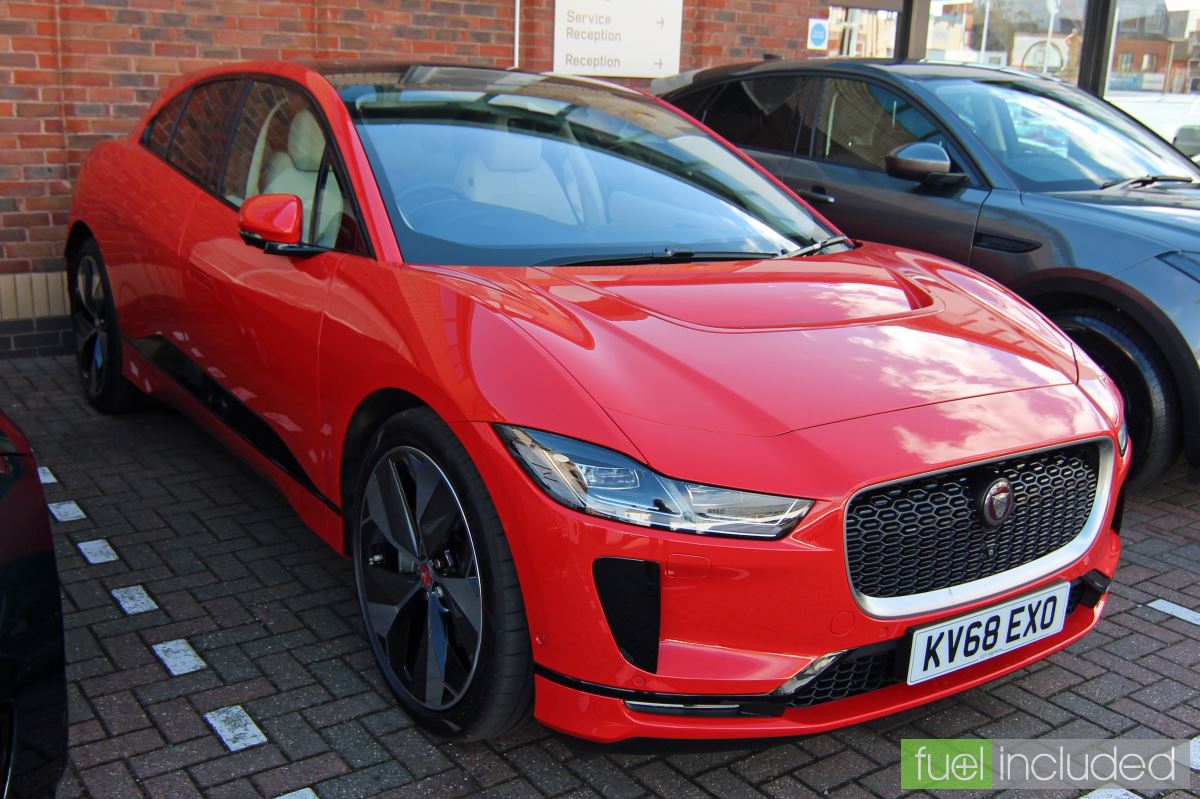
Jaguar I-PACE Electric Car (Image: T. Larkum)

Lease costs for electric vehicles fall in 2018

Leasing costs of battery electric vehicles (BEVs) have fallen throughout 2018 according to data experts at Cap HPI.

The study looked at five of the best-selling models in the UK and discovered that monthly lease costs had fallen by 9.5% on average.

The UK’s best-selling electric car, the Nissan Leaf saw monthly lease values fall by 6.6% between January and November 2018. Monthly lease prices for the Renault Zoe fell by 16% between June and November.

Between in the 12 months up to November 2018, the BMW i3 saw lease prices drop by 9.2%. The Volkswagen e-Golf saw prices drop 14% over the same period.

The Jaguar I-Pace saw the smallest price drop with a fall of only 1.7% since April 2018.

Jaguar I-PACE Electric Car (Image: T. Larkum)

Mark Turnbull, global head of consulting at Cap HPI, said: “Over the next few years the new price of BEVs will come down as more affordable ‘mainstream’ model ranges are introduced by many manufacturers.

“Used buyer perception will continue to improve as battery ranges are extended and charging times are reduced, and electric car technology proves to be robust and reliable. So subject to adequate investment in charging infrastructure, and positive government legislation, I believe their residual values will be stronger.

“A pincer movement of lower new prices and improved RVs will mean less depreciation in pound terms, and cheaper lease rates will speed up the adoption of this technology.”

Read more: Fleet News

Milton Keynes 'Mushrooms' Charging Hub (Image: T. Larkum)

Milton Keynes Mushrooms: A New Generation of Charging Stations

Driving from Northampton to Surrey to visit my family over Christmas I was due to go past the new Milton Keynes Charging Hub so took the opportunity to call in.

The Hub was developed by Milton Keynes Council with a government grant, with the charging infrastructure provided by BP Chargemaster. I had heard on social media that the hub was recently completed. However there’s been nothing in the mainstream press about it – I’m guessing there’ll be an official launch soon.

Milton Keynes 'Mushrooms' Charging Hub (Image: T. Larkum)
Milton Keynes ‘Mushrooms’ Charging Hub (Image: T. Larkum)

It is quite difficult to find. It is tucked away at the far corner of the Coachway bus station (near Junction 14 of the M1) and there’s no signage in place yet. There were fresh road markings in place though.

The location is pretty good, not just because of proximity to the motorway. Being co-located with the bus station means that while you wait to charge there’s easy access on foot to its cafe and toilets (though you have to pay 30p for the latter).

The hub consists of a triangular island with 8 rapid chargers around its edge (why not 9?) all covered over with three large concrete ‘mushroom’ canopies for rain protection. I was there mid-week and it was pretty quiet, however two other EVs did call in even during the short time I was there topping up my i3.

Charging is through BP Chargemaster’s Polar network so requires either the Polar Instant app or Polar Plus subscription as described previously.

BP Chargemaster Rapid Charger at Milton Keynes Charging Hub (Image: T. Larkum)

The Hub is a great idea and seems to be implemented well. It also gives an exciting view into the future of organised EV charging, being potentially a bit like using an airport lounge. It represents another nail in the coffin of fossil fuel motoring – who would want to relax and eat at a petrol station?!

If there’s a criticism it’s just the usual one of uneven rapid charger allocation, and one can hardly blame MK council for taking every opportunity to support EVs. But for sure MK alone has more rapid chargers than anywhere else in the UK, including the entire country of Wales.

New 450kW EV charger from BMW and Porsche is as fast as filling up with petrol

BMW and Porsche’s prototype 450kW FastCharge unit can give 62 miles of range in just three minutes, once vehicle technology catches up

A new electric vehicle charger capable of delivering 100km (62 miles) worth of charge in just three minutes, and fully charging an EV’s batteries in just 15 minutes, has been developed by a number of German companies, including BMW and Porsche.

The companies’ 450kW (kilowatt) FastCharge system – while still a prototype – trebles the charge rates of the world’s rapid chargers’ at present, and promises “to make charging electric vehicles as fast and convenient as fuelling with petrol”.

When operating at its maximum 450kW capacity, it has proven capable of replenishing a BMW i3 (fitted with a “specially developed high-voltage battery”) from 10 to 80 per cent in just 15 minutes, and delivering 62 miles of range to a Porsche research vehicle in just three minutes.

While not technically a ‘full’ charge, this is representative of a full charge in real-world conditions, as manufacturers advise against recharging to 100 per cent, and most owners are unlikely to allow their batteries to drop below 10 per cent.

Read more: Auto Express