Category Archives: BMW

News and reviews of BMW electric cars (including plug-in hybrids).

Porsche Taycan Turbo S (Image: Porsche)

Best EVs 2023: putting this year’s top electric cars to the test

From BMW to Polestar, these are some of our favourite electric cars available to

Just a few years ago, it would have been simple enough to write an article listing every electric car available. There would be a couple of Teslas, the Nissan Leaf, the Renault Zoe and the Jaguar I-Pace. But times change, and in the case of electric cars (EVs) a century-old industry can be transformed in the blink of an eye.

BMW i8 in Sophisto Grey (Image: T. Larkum)

In 2023 there are now numerous electric offerings from Audi, BMW, Mercedes, Polestar and Volvo, plus others from Ford, Porsche, Fiat, Mini, Lexus, Kia, Hyundai and Genesis.

Today’s market includes small city EVs like the Mini Electric and Honda E, all manner of SUVs, a budget estate in the form of the MG5, battery-powered sports cars like the Porsche Taycan, 2,000-horsepower hypercars like the Rimac Nevera, and fashion-forward rides from startups like Genesis and its GV60. Prices run from under £30,000 to over £2m and quoted range estimates span from a little over 100 miles to 400 or more.

With such a broad range of electric options to pick from, there’s also a lot to understand before you make your purchase. Battery size and range are only one part of the EV equation though, as charging speed is equally important.

Read more: T3

It’s Time to Go Green!

If you would like to know more about Solar Panels and the PowerBanx range of home battery systems, and get a free instant quote, please complete our online form:

Volkswagen ID.3 electric car (Image: Volkswagen.com)

Every brand’s cheapest electric car on a lease deal

Think all electric cars are expensive? Prepare to think again, because we’ve gathered leasing deals starting from just £313 per month on models from Audi to Volvo…

Tempted by a new electric car? One way of getting one on your driveway could be with a lease deal.

Sometimes called personal contract hire or personal leasing, leasing is one of the most affordable ways to access a new car. The way it works is similar to other forms of car financing, because you pay for the car with a deposit and regular monthly payments.

Contracts usually last for three or four years, with a pre-agreed annual mileage limit. Unlike Personal Contract Purchase (PCP), there’s no option to buy the car at the end of the term. In effect, this means you’re renting the car, but the benefit of this is that the monthly payments are generally lower than with other forms of financing.


BMW i8 in Sophisto Grey (Image: T. Larkum)

So, in this instance we name every brand’s cheapest electric car that’s currently available through What Car? Leasing. Our list includes a wide range of models, including small electric cars to electric SUVs, although some manufacturers are excluded due to a limited number of deals available.

In each case, you can follow the links to learn more about our leasing deals or read our full What Car? review on the car.

Read more: WhatCar

It’s Time to Go Green!

If you would like to know more about Solar Panels and the PowerBanx range of home battery systems, and get a free instant quote, please complete our online form:

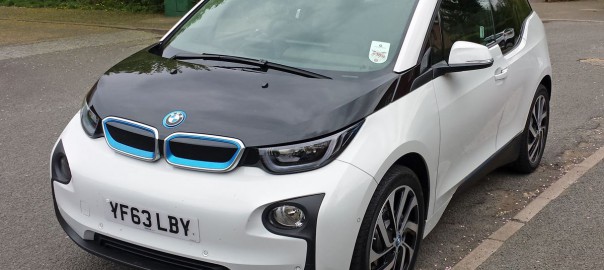
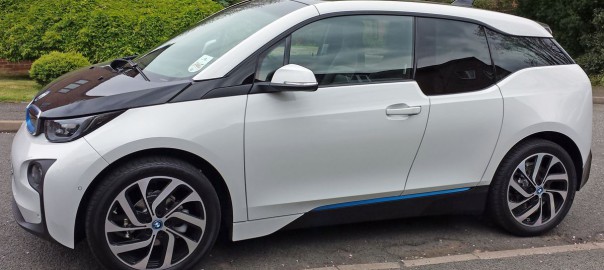
BMW i3 Test Drive (Image: T. Larkum)

BMW i3 is EV cult classic in U.S.

BMW’s first mass-market EV, the i3, is gaining cult status in the U.S.

When BMW launched its i3 electric-hatchback in 2013, it was the automaker’s first ever mass-produced full-electric vehicle.

A quirky little car, with four seats, rear-hinged back doors and a frame made from carbon fiber-reinforced plastic, the i3 stood dramatically apart from the rest of the brand’s lineup.

This was by design. BMW was not trying to convince its core customers to abandon their sporty sedans and roomy SUVs — the goal was to entice early EV adopters to give the automaker a try.

The plan worked perhaps too well. When the i3 started popping up on U.S. dealership lots, BMW loyalists largely ignored it, while new customers came looking for the car.


BMW i3 Test Drive (Image: T. Larkum)

By 2021, the company was ready to refocus on its core customers, and set a goal of making 50 percent of all BMW sales EVs by 2030.

In January 2022, BMW said it would stop production of the i3 entirely, instead leaning into larger, longer range EV options like the i4 and iX — cars meant to look like the brand’s other models.

Over the i3’s nine years on the market in the U.S., slightly more than half of sales went to first-time BMW buyers. But it sold fewer than 50,000 units, according to data from Edmunds, often at steep discounts.

Read more: AutomotiveNewsEurope

It’s Time to Go Green!

If you would like to know more about Solar Panels and the PowerBanx range of home battery systems, and get a free instant quote, please complete our online form:
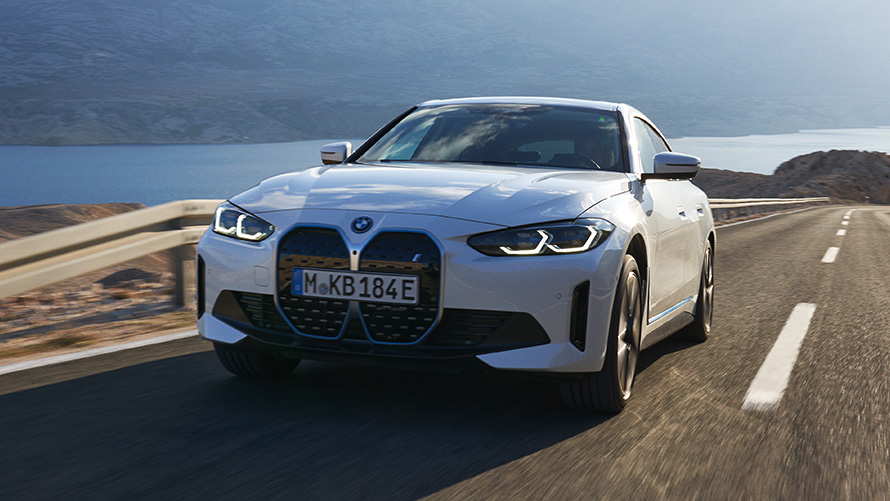
BMW i4 EV (Image: BMW)

Top 10 best plug-in hybrids to buy 2023

The plug-in hybrid market has grown exponentially in recent years. Here are our electrified favourites

Not everyone is ready to take the plunge with a full-electric vehicle, which makes plug-in hybrids (PHEV) a great ‘stepping stone’. What’s more, with many manufacturers joining the PHEV arms race, there’s now a huge array of models to choose from in a variety of formats – whether you want a SUV, saloon, estate or hatchback, there’s an option out there for you, as our list of the best plug-in hybrids to buy confirms.


Mercedes-Benz EQC (Image: Mercedes-Benz)

There are lots of reasons to make the switch from internal-combustion-engined cars to hybrid, whether you’re looking to lower your carbon footprint, take advantage of government incentives, lower tax rates, or just prefer the drive of a plug-in hybrid car.

The sheer variety of vehicles that now offer plug-in hybrid ability means there are PHEV options to suit buyers from a range of markets. It also means that buyers have a tougher time than ever choosing the best plug-in hybrid car for them. On this page we aim to help by explaining the market and delivering our verdicts on the best plug-in hybrids you can buy.

Read more: AutoExpress

It’s Time to Go Green!

If you would like to know more about Solar Panels and the PowerBanx range of home battery systems, and get a free instant quote, please complete our online form:

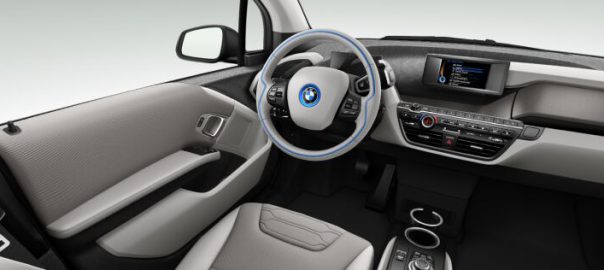
BMW i3 interior: Loft interior world with standard Dark Andesit trim (Image: BMW.co.uk)

BMW iX1 review

Not the most engaging to drive, but a seriously comprehensive and recommendable electric prospect

If you’re hoping for echoes of the BMW i3’s art deco design and originality in the new BMW iX1, you’ll be disappointed.

Let’s face it, the iX1 is rather derivative-looking; as with the vast majority of its rivals, from the Audi Q4 e-tron to the Mercedes EQA and Lexus NX, it’s not ugly but it’s not pretty or even terribly memorable, either. Which is why we’ll actually start with the inside of the BMW iX1, because it’s here that it really makes an impact. Don’t worry, we’ll get to the 308bhp all-electric, four-wheel drive powertrain in just a moment.

BMW i3 and i3S 120Ah (Image: BMW Group)

First, check out the curved touchscreen; a focal point in an interior that feels every bit as plush and high-class as that of an X3, and is deliberately reminiscent of the BMW iX.

Complete with a 10.7-inch touchscreen and a 10.4-inch driver’s information screen, the operating system 8’s graphics are second to none. With wireless Apple CarPlay and Android Auto as standard on ever iX1, native features such as the excellent nav will be defunct for most. If you do use them, the configurable shortcut icons on the touchscreen’s home page will be useful.

Read more: Autocar

It’s Time to Go Green!

If you would like to know more about Solar Panels and the PowerBanx range of home battery systems, and get a free instant quote, please complete our online form:

BMW i4 EV (Image: BMW)

Mountain Wheels: BMW’s all-electric i4 is a performance fan’s dream come true

Imagine a BMW M3 that never needs gas, accelerates like an M5 on racing fuel, yet behaves almost normally in all of the regular attributes associated with automobiles.

BMW i4 (Image: BMW.co.uk)

The remarkably non-weird, high-performance future is finally here with the i4. And unlike BMW’s previous mass-market electrics — the very peculiar but charming i3 and the futuristic, supercar-styled i8 — the new i4’s electric platform is a 3-Series-esque body. That means almost totally regular seating, controls and driving setup, though also radically transformed.

I can’t say that the i3’s M50 edition is exactly what lies ahead for other BMW electrified vehicles, but for this performance-oriented model, priced at $77,070, things are literally breathtaking: dual electric motors that produce 536 horsepower and 586 pound-feet of torque, almost instantaneously, and entirely silently.

You can, if you are brave, still get wheelspin at 75 mph in the M50, as so much oomph is almost a challenge to connect with the pavement, despite beautiful 20-inch wheels and high-performance summer tires. The specs say 0-60 in 3.7 seconds but, given a week of independent tomfoolery, I think that is an understatement.

That kind of boost means you can dart out in front of traffic like you are about to jump into hyperspace. More hilariously, you can give it a 50% recharge in about 45 minutes. Suddenly, EVs seem more fun. The slightly more restrained i4 eDrive40, with a more robust 301-mile range, still offers 335 horsepower, with just a little less neck-snapping yank as a result.

Read more: SummitDaily

It’s Time to Go Green!

If you would like to know more about Solar Panels and the PowerBanx range of home battery systems, and get a free instant quote, please complete our online form:

BMW i3 interior: Loft interior world with standard Dark Andesit trim (Image: BMW.co.uk)

BMW i3 Production Ends After Nine Years And 250,000 Vehicles

It’s the end of the (assembly) line for the i3 after being in production for nine years at the Leipzig plant. Since its launch in 2013, the electric hatchback has been produced in just over 250,000 units, delivered in more than 74 countries around the world. BMW calls it the best-selling EV in the premium compact segment, but let’s keep in mind it was also offered with a range-extending gasoline engine from the Motorrad division.

The i3 allowed BMW to attract new customers to the brand, especially in the model’s early years when more than 80% of buyers made a switch from other automakers. Its electric drive has served as the backbone of the fifth-generation eDrive technology, which is being used to this day. The powertrain has been adapted for the MINI Cooper SE, which went on to become a huge commercial success for the Oxford-based marque.


BMW i3 120Ah (Image: BMW)

To properly mark the quirky hatchback’s epilogue, BMW created the i3s HomeRun Edition limited to 10 cars. All come finished in a Frozen paint from the Individual catalog, representing a first for the model. These vehicles are finished in either Frozen Dark Grey or Frozen Red II and ride on 20-inch wheels with a double-spoke configuration. Inside the cabin, the limited-run model gets Vernasca Dark Truffle leather upholstery combined with a leather-wrapped instrument panel.

Read more: BMWblog

It’s Time to Go Green!

If you would like to know more about Solar Panels and the PowerBanx range of home battery systems, and get a free instant quote, please complete our online form:
BMW i4 (Image: BMW.co.uk)

Traditional carmakers could boost profits by accelerating move to electric

Analysis suggests electric operations will become rapidly more profitable than petrol and diesel arms within five years

The world’s largest traditional carmakers could improve their profit margins and boost their value to investors by accelerating the transition to electric cars in the next decade, a new analysis has found.

The electric carmaking operations of Toyota, Volkswagen, Stellantis, Volvo, BMW and Mercedes-Benz will rapidly become more profitable than their traditional petrol and diesel counterparts within the next three to five years as carbon emissions regulations tighten, according to modelling by Profundo, a consultancy.

Volkswagen ID.3 electric car (Image: Volkswagen.com)

The world’s biggest carmakers are all seeking to increase electric car production rapidly in the next decade, as laws in major markets including the EU and UK seek to ban new internal combustion engines as part of the effort to curb carbon pollution from transport. Yet at the same time carmakers still intend to sell millions more vehicles with petrol and diesel engines, in part because they remain more profitable but also because making the transition to electric vehicles (EVs) can include major upfront costs.

Read more: TheGuardian

It’s Time to Go Green!

If you would like to know more about Solar Panels and the PowerBanx range of home battery systems, and get a free instant quote, please complete our online form:

BMW i3 120Ah (Image: BMW)

Farewell, BMW i3: how EV changed the face of motoring

We take one last look at pioneering city car which forged the i-brand template a decade ago

The year is 2013 and the BMW i3 has just been launched.

Cast your mind back: the world was mercifully free of Covid, we were still three years away from teenagers TikToking, Prince Harry was mates with his brother and no one had yet thought that chucking a bucket of iced water over your head would lead to millions in charity donations.

It feels like a lifetime ago, and in car terms it was. Nine years is a life cycle and a half in most model runs, yet here we are today, still looking at a new i3 and still marvelling at it. And mourning it, because production will end in July.
BMW i3 and i3S 120Ah (Image: BMW Group)

It has been tipped as a future classic, no less than in our recent Autocar-Beaulieu Future Classics competition, and little wonder. There were other EVs before the i3 (heck, BMW itself had one with the Mini E trial fleet), but the i3 is the one that felt – and still feels – like it defined an era. A movement, even.

Why? I think it’s due to the integrity of the idea: the i3 was born electric.

Read more: Autocar

It’s Time to Go Green!

If you would like to know more about Solar Panels and the PowerBanx range of home battery systems, and get a free instant quote, please complete our online form:
BMW i3 Test Drive (Image: T. Larkum)

BMW Says The i3 Is Being Retired Because Customers Want Bigger EVs

After nine years on the market and more than 200,000 vehicles produced, the BMW i3 heading towards a well-deserved retirement. The announcement didn’t come as a shock, but it’s still sad to hear the quirky EV will be no more from July. The pint-sized hatch arrived before the electric boom, which is why it suffered from poor sales in the early years. Well, the lack of government incentives for electric cars also played its part.

My first glimpse of our new i3 (Image: T. Larkum)

While most vehicles enjoy their best years in terms of sales during the first part of the life cycle, it was the other way around for the i3. So much so that BMW extended the model’s production run to meet strong demand. You could say it aged like a fine wine, but all good things must come to an end. Why is the company pulling the plug now?

Customer tastes have changed, and people are looking for something else when shopping for EVs. Specifically, the typical buyer wants a bigger and therefore more practical car than the i3. That’s the explanation given by a BMW spokesperson in an interview with German publication Automobilwoche, a sister site of Automotive News. But it’s not the only reason.

The company representative went on to specify electric cars should look “normal” in the sense they should mirror combustion-engined models. Well, that’s certainly not the case for the i3. While any other car from 2013 looks more or less outdated, the diminutive hatchback still seems like it traveled back from the future.

Automobilwoche says “quite a few BMW employees” have found the exterior design polarizing, mainly due to the unconventional shape. Apparently, the styling has “deterred many customers”. Even to this day, it’s unclear whether i3 has made any money with the EV and its range-extending counterpart.

Read more: BMWBLOG


It’s Time to Go Green!

If you would like to know more about Solar Panels and the PowerBanx range of home battery systems, and get a free instant quote, please complete our online form: