Category Archives: Autonomous Driving

India is resisting the push towards driverless cars in order to protect jobs, its transport minister has said.

Nitin Gadkari said the government would “not allow any technology that takes away jobs”.

He said India needed to recruit about 22,000 more commercial drivers and would be opening 100 training facilities to address the need.

India’s road system and sometimes chaotic traffic makes it a difficult place to develop the technology.

The Hindustan Times reports Mr Gadkari as saying:

“We won’t allow driverless cars in India. I am very clear on this.
“In a country where you have unemployment, you can’t have a technology that ends up taking people’s jobs.”

However, he did not rule out the idea of a future change of policy.

“Maybe some years down the line we won’t be able to ignore it, but as of now, we shouldn’t allow it,”

he added.

Inderpreet Kaur, an analyst at research firm Ovum said:

“The ministry has cited job losses as a reason behind banning autonomous cars in India, a bigger challenge would be to have ready infrastructure for these self-driving cars.”

Google, BMW, Tesla, Audi and Uber are among businesses working hard to be the first to bring truly autonomous cars on to roads.

Self-drive technology trials, both for private cars and commercial vehicles, are being carried out around the world.

Google has been testing self-drive cars in California and other states since 2012.

Paris began a three-month test of self-driving buses at the beginning of the year, and in the UK a consortium of companies plans to test driverless cars on motorways in 2019, while others are testing cars in off-road sites, including in London.

Commenting on the decision on Twitter, Indian congressman Gaurav Pandhi tweeted:

“The BJP (Bharatiya Janata Party) said the same when Rajiv Gandhi talked about introducing computers to India. They haven’t really changed.”

Source: BBC News

Lyft’s autonomous electric vehicles will run on 100% renewable energy

One of the leading on-demand ridesharing companies has committed to charging its forthcoming autonomous electric vehicle fleet with electricity from renewable sources.

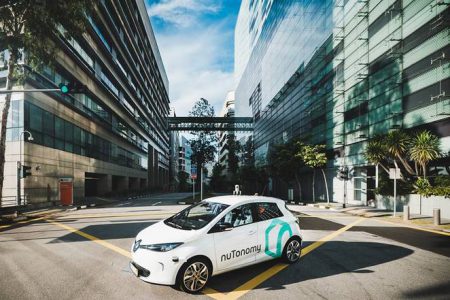
Renault ZOE / nuTonomy

One of the promises of services such as Lyft and Uber (which are called ridesharing platforms but are more like dispatchers for freelance taxis) is that they will reduce the need for car ownership, and that they will bring down the total number of cars driving in cities, thereby also decreasing vehicular emissions.

The logical next step in that clean transport play is to move to greener cars, such as hybrids, plug-in hybrids, and full electric vehicles, and the one beyond that is using autonomous cars, while the third move looks to be a combination of electric mobility and self-driving cars. But although those steps, in conjunction with things like walkable neighborhoods and clean last-mile vehicles, can help move us forward in terms of a more sustainable transportation model, one of the many environmental elephants in the room is the origin of the energy powering this EV evolution, which in many places is still predominantly fossil fuels.

According to a blog post from Lyft co-founders, the company is committed to using 100% renewable electricity to charge its forthcoming fleet of autonomous electric vehicles, right from the get-go, beginning with the nuTonomy self-driving vehicle pilot program launching in Boston this year.

Read more: Tree Hugger

Paris to host on-demand driverless vehicle service

Europe’s first on-demand driverless vehicle service on open roads is set to begin operating in France later this year.

Delphi Autonomy

The pilot service, a collaboration between Delphi and French-based public transport operator Transdev, will see autonomous vehicles operating in Saclay, a Paris suburb, and Rouen in Normandy.

In Paris, initially one shuttle will operate along a fixed route from the train station to the campus of the University of Paris-Saclay.

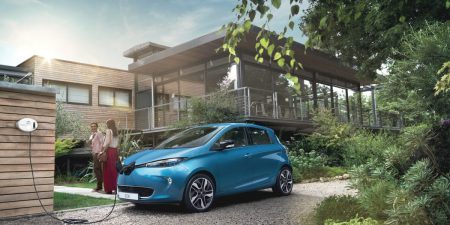
In Rouen the service will operate in an area of the city where there is currently no public transport, and will initially consist of two driverless Renault Zoe cars.

Customers will be able to use a smartphone app to book a ride in the vehicles, which will be tracked by a remote control and command centre. A driver will initially sit in on the journeys to monitor the vehicles, but by 2018 the companies hope to operate the service without a driver on-board.

For the pilot the companies have chosen the so-called “last-mile” of public transport – the journey between a train or bus station and the commuter’s place of work, for example – as it is seen as an area of particular need, according to Serge Lambermont, director of automated driving at Delphi.

“People like to travel by public transport, but this last mile, how to get from your subway station to your destination, is an inconvenience,”

he said.

“So if you can arrive with the ticket already on your smart phone connecting you to an automated, mobility-on-demand taxi or pod system, which takes you on to your location, you take all the inconvenience out.”

The vehicles will be equipped with a range of different sensors, designed to complement each other. Each vehicle will be fitted with short range radar, for example, with sensors at each corner and two at either side, as well as one forward facing image radar and one rear facing long range radar.

Read more: The Engineer

Continental joins BMW partnership as Germany pushes forward with autonomy

The joint venture in autonomous driving by BMW, Mobileye and Intel has gained another partner in German automotive parts and tyre company Continental.

As the development of the technology continues at a pace, manufacturers are finding themselves in needs of an alliance with technology companies to ensure they can keep up with the demand required to meet launch targets. The BMW venture will see Continental play a role in the commercialisation of the platform, which will be sold to other vehicle manufacturers.

Frank Jourdan, member of the Executive Board of Continental AG and head of the Chassis & Safety division, comments:

‘We have already had very good experience in working with the BMW Group through jointly successfully completed development and series projects. Contributing development and integration for the partnership is a recognition of our extensive competence in the field of automated driving. The cooperation with the core partners involved represents the unique opportunity to drive ahead and get this technology of the future to our roads more quickly.’

Speaking on behalf of the partnership, Klaus Fröhlich, member of the board of management of BMW AG for development, adds:

‘Every new Tier One partner brings us a step closer to our goal: We intend to bring safe autonomous driving to series production by 2021 and actively shape this technology. With our non-exclusive approach to this technology of the future we will deliver a safe, fast and cost-efficient solution that is highly attractive also for other manufacturers.’

The group added Delphi to the partnership in May 2017, while Mobileye was bought by Intel earlier in 2017, the technology giant seeing the need to integrate the autonomous specialist into its ranks.

Read more: Autovista Group

The U.K. Wants to Lead World in Driverless and Electric Vehicles

The U.K. government plans to invest more than 800 million pounds ($1 billion) in new driverless and zero-emission vehicle technology as it seeks to boost its economy while leaving the European Union.

Investment in research and new recharging infrastructure is intended to make Britain a “leader” in electric and autonomous vehicles, Queen Elizabeth II said in a speech marking the state opening of Parliament in London on Wednesday. The technology may be worth 28 billion pounds to the economy by 2035, the government estimates.

In order to deliver on that goal, the government will:

  • Extend mandatory vehicle insurance to cover the use of automated vehicles
  • Set a target for almost every car and van to be zero emission by 2050
  • Allow government to require motorway service areas and large gasoline stations to install electric vehicle recharging points
  • Require a set of common standards for charging points so they can be used widely across all vehicles
  • Invest 200 million pounds in researching and testing driverless car infrastructure and 600 million pounds during the course of this Parliament in supporting the ultra-low emission vehicles, sums which had been previously announced

The measures were welcomed by businesses, which had been concerned that Prime Minister Theresa May’s focus on withdrawing Britain from the European Union would push issues like air pollution down the agenda.

“It is encouraging to see the government’s desire to make the U.K. a leader in new industries and enhance its role on the world stage,”

said Nick Molho, executive director of the Aldersgate Group, an alliance of business leaders, politicians and non-profit groups that’s pressing the Treasury on environmental policies.

Read more: Bloomberg