Category Archives: Solar Power

(Image: Razzouk/Shutterstock)

2016 Will Be the Year the Fossil Fuel Era Enters Terminal Decline

This year is set to be even warmer than last, but there are reasons to believe the shift to clean energy will gain serious momentum in 2016.

(Image: Razzouk/Shutterstock)

2015 was a landmark year for climate action. Its many highlights were topped by a Paris agreement where 195 countries set themselves on a low-carbon path via economy-wide plans sure to be developed and strengthened every year.

In the meantime, climate chaos continues to build: 2015 was the warmest year of the warmest decade since we started recording temperatures. 2016 is forecast to be even warmer. The number of climate refugees are swelling and everywhere popular movements against more pollution and irresponsibility are strengthening.

Expect the following broad trends to accentuate in 2016.

Clean Energy can no Longer be Stopped

Notwithstanding the low price of coal and oil, solar power and other forms of clean energy will continue their onward march in 2016 and quasi-monopolize additions to electricity supply worldwide.

Order books for new clean energy power plants are up sharply in the United States, China, India, as well as in the developing economies of Africa and Latin America. India, for example, with current electricity grid capacity of less than 300 gigawatts (GW), is on its way to building 100 GW of solar power by 2022 (from 5 GW currently), double the current solar capacity of China.

Meanwhile, cheaper battery technology will continue to drive clean energy costs down, while changing the way people think about energy: We will produce more electricity from solar power, but also store and manage it ourselves. This foretells nothing short of a revolution in the way our modern society fuels itself, upending previous assumptions about the need for large fossil fuel plants connected by an expensive, inefficient electricity grid.

Read more: Alternet
UK’s Poor 2015 Made Worse By Paris Agreement Expectations

2015 saw the UK destroy its position as a climate and energy leader, and now faces some tough questions in the wake of a successful Paris climate agreement.

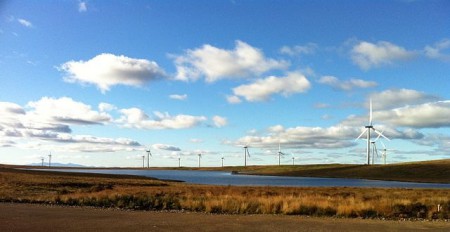
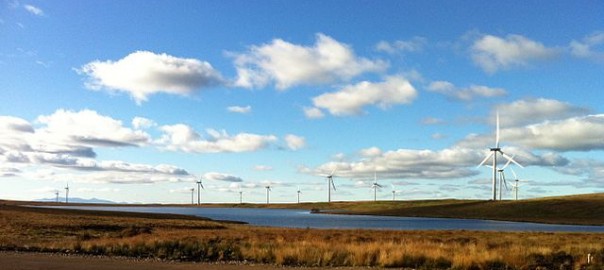
image_wind_farm_unk

Despite a big year in 2014 which saw a number of renewable energy records broken and strong momentum created for the country’s renewable energy industry, following 6 months of baffling policy decisions and a lacklustre attendance in Paris, the UK has a long way to go if it is to accomplish its role in tackling climate change.

Read more: Clean Technica

Vauxhall Ampera Charging (Image: OLEV)

The Coming Electrification of Everything

At Obvious Ventures, we believe stored electricity, increasingly derived from renewable sources, will entirely replace fossil fuels as the preferred method to power everything in our lives.

Vauxhall Ampera Charging (Image: OLEV)

From cars to scooters to boats to locomotives to industrial equipment, we are in the midst of a transition that will electrify everything previously driven by combustion.

There are two simple reasons we’ll make this change sooner than most people think. First, electrically powered things just work better. And people want things that work better. The second reason is really just a piece of the first. “Better” increasingly means “better forever.” That is, not just better in the moment for that use, but also better for our surroundings, our health, and the health of our planet.

But, at least for the short term, our climate will be served not simply by environmental motivations, but by the same relentless human force that created it: the desire for more, faster, better. Ever-better technology will lead consumers, rather than idealists, to drive this electricity evolution.

Why now? Key trends emerging only in recent years have created the foundation for this evolution.

Read more: Greentech Media

Two pictures of Beijing taken 24 hours apart show the Chinese capital engulfed by smog earlier this month (Image: Rex)

Climate change is the challenge of our generation

Consumers and businesses will have to be more energy-efficient and switch to alternatives to fossil fuels

Two pictures of Beijing taken 24 hours apart show the Chinese capital engulfed by smog earlier this month (Image: Rex)

[From 4 December} The Paris climate change summit will conclude at the end of next week. It aims to reach an international agreement on limiting emissions of carbon dioxide and other greenhouse gases that are contributing to global warming. The main source of these emissions is the burning of fossil fuels – oil, coal and natural gas – that power industry, and heat and light our homes.

One big area where technology is helping is through the development of renewable energy sources, such as solar and wind power. The energy from these sources has increased by a factor of four in the past 10 years. Biofuel production, which is more environmentally friendly than extracting oil from the ground, has increased at a similar rate.

If we can get another four-fold increase from renewable energy sources over the next decade, a total of around a quarter of the world’s energy needs can be met from renewables, nuclear energy and hydro-electricity – without burning fossil fuels and creating greenhouse gas emissions.

Another area where technology is having a big impact is in the development of electric cars. Bigger and better batteries are being developed so that electric cars can be charged more quickly and drive further without recharging.

These developments in technology will enable society to cut its dependence on fossil fuels and reduce the damage to the world’s climate.

But there will still need to be changes to our lifestyles and the way in which businesses operate.

The first change is that we are going to have to become a lot more energy-efficient at home and at work. The less energy we use overall, the easier it will be to reduce our carbon emissions. Consumers need better-insulated homes and smart meters to monitor their energy use.

Read more: Telegraph

An electric vehicle [Renault ZOE] is charged with photovoltaic power from the roof of the house using a charging station (Image: Fraunhofer ISE)

Solar vehicle charging at home

Owners of home photovoltaic systems will soon be able to make their households even more sustainable, because PV power is also suitable for charging personal electronic vehicles.

An electric vehicle [Renault ZOE] is charged with photovoltaic power from the roof of the house using a charging station (Image: Fraunhofer ISE)
A home energy management system created by Fraunhofer researchers incorporates electric vehicles into the household energy network and creates charging itineraries.

The house of the future is environmentally friendly, energy efficient and smart. Its inhabitants can utilize rooftop-generated PV energy not only for household consumption but also to charge their personal electric vehicle. This scenario has already become reality for a collection of row houses built according to the “Passive House” standard in the German city of Fellbach in Baden-Württemberg. The group of new homes was upgraded as part of the “Fellbach ZeroPlus” project to include electromobility enhancements as well as a comprehensive energy management system. The initiative is sponsored by the German Federal Government’s “Electric Mobility Showcase” program.

Fast charging stations and home energy management

“The large photovoltaic systems on the rooftops of the houses provide more power than the inhabitants consume over the long term. Surplus power can be fed into the public grid as well as be used for charging the household electric vehicle,” explains Dominik Noeren, a scientist at the Fraunhofer Institute for Solar Energy Systems ISE in Freiburg. To efficiently incorporate electromobility enhancements into the daily routines of the households, Noeren and his team designed a 22 kW fast charging station as well as a home energy management system (HEMS) for five of the seven homes. The Java-based HEMS software runs on small computers known as embedded systems. The HEMS collects data from the various electricity meters in the house, including those for the photovoltaic system, the electric vehicle, the heat pump, and general household power. The system displays the various power flows and informs the homeowners about their current power consumption at any time of the day. “They can see how much power is coming from either the public grid or the household solar system, and they can see where it is going — to the heat pump, household appliances, or the electric vehicle,” says Noeren.

Read more: Science Daily

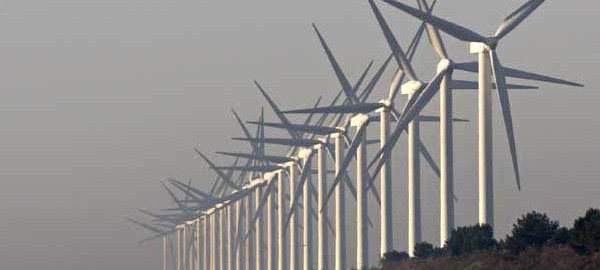
Wind farm in Europe (Image: EV World)

UK downgraded on global energy rating

The World Energy Council rates countries in their energy and climate policies. The recent rating is available on the WEC website. The WEC points out that only two countries have the triple A rating. This post from Reuters in The Guardian shows that the UK has lost that rating, because of the government scrapping onshore wind subsidies and cut solar subsidies.

Britain loses top energy rating after green policy U-turns

Wind farm in Europe (Image: EV World)

Britain has lost its top-notch energy policy rating from the UN-accredited World Energy Council after the government prematurely cut some renewable energy subsidies, creating uncertainty about how it will address support in future.

The World Energy Council has downgraded Britain to an AAB rating, from AAA, in its annual “energy trilemma index”, which ranks countries’ energy and climate policies based on the issues of energy security, equity and sustainability.

The downgrade reflects the damage the subsidy cuts have caused to Britain’s reputation as an attractive renewable energy market.

Earlier this year Britain scrapped subsidies for onshore windfarms, closed support for small-scale solar projects and changed the way other renewable energy projects qualify for payments, saying they were becoming too costly for taxpayers.

“The UK government must give more predictability to investors in the way the electricity market reforms are progressed,” said Joan MacNaughton, executive chair of the World Energy Trilemma study.

Read more: Energy in Demand

Oil and gas firms will be fossils by 2025

Technological development will transform the global marketplace over the next decade, with the oil and gas sector set to be the most negatively affected, according to Neptune Investment Management’s chief investment officer and economist James Dowey.

AAEAAQ_Oil_RollerCoaster_LinkedIn

Speaking at a press event, Dowey argued that the pace of technological change is likely to speed up over the next decade, with the development and adoption of new technology likely to drive returns in financial markets far more than traditional macro-economic factors.

‘Over the next 10 years macro-economic issues such as the growth of China are going to be far less important. Rather, technological innovation and change is going to drive markets, and many established businesses will have their current models ripped apart,’ says Dowey.

TECHNOLOGICAL CHANGE

Pointing to the pace of technological change since the 1970s, Neptune’s newly appointed CIO says that markets continue to underestimate the transformative power of technology despite the exponential growth of firms such as Google over the past five to 10 years.

In particular, he argues that the oil and gas industry could be entirely wiped out by 2025, with consumers and industry far more likely to be generating their own solar energy in a decade.

‘The potential disruption to the energy sector is the most profound. I am not at all clear that we will still be digging oil out of the ground in 10 years’ time. Household energy consumption will be radically different, with most generating their own solar energy at home,’ says Dowey.

Read more: Money Observer

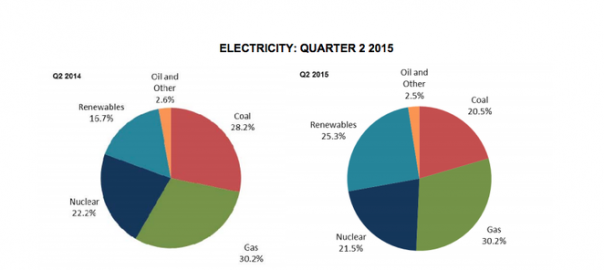
Electricity supply sources Q2 2015 (Image: UK gov)

Renewables beat coal in UK electricity mix

Some good news on renewables – despite government policy.

Often when we talk about countries breaking renewable energy records, we focus on momentary spikes caused by exceptionally sunny or windy days. While these records are, in and of themselves, important—they still leave a bigger question hanging: How does the electricity grid cope when the sun isn’t shining or the wind isn’t blowing?

Electricity supply sources Q2 2015 (Image: UK gov)

What’s becoming increasingly clear, however, as countries integrate more renewable energy into their grids, is that clean energy can indeed supply a significant portion of our energy over an extended period of time. Indeed, new data from the UK government on Q2 electricity supply suggests that renewables beat out coal in the country’s electricity mix for the first time ever over an entire quarter. Specifically, renewables accounted for 25.3% of electricity generated in Q2 2015 (up from 16.7% in Q2 2014). Meanwhile coal fell from 28.2% to 20.5% in the same period. Gas remained the same. And nuclear fell slightly to 21.5%.

Read more: Treehugger

Domestic batteries help the grid

Let’s hope one day schemes like this get to the UK

Energy provider Ergon Retail is running a trial, with support from the Australian Renewable Energy Agency (ARENA), in 33 Queensland homes in Toowoomba in the south of the state and Townsville and Cannonvale in the north.

In recent months, about 30 country householders have joined a pilot project that provides a glimpse of the future of our energy grid.

For no up-front cost, these homes will get a state-of-the-art rooftop solar and battery system installed in their homes.

Tesla Motors plans to bring its new batteries in 2016 to Australia, which will join Germany as the company's first two markets outside the US (Image: Reuters)
Tesla Motors plans to bring its new batteries in 2016 to Australia, which will join Germany as the company’s first two markets outside the US (Image: Reuters)

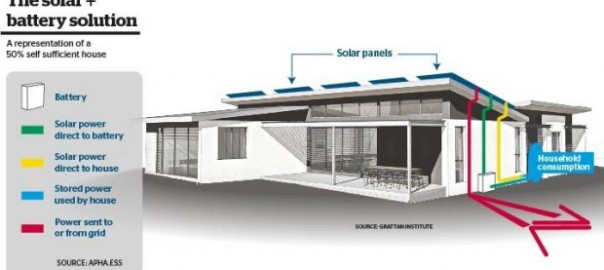
Participants will pay a monthly fee to use the battery system, with their electricity bills expected to be significantly reduced because about 75 per cent of their power will be generated by the sun. Their shiny new cabinet-sized battery will allow them to store some of the energy from their solar panels that they then use during peak times – usually in the early evening.

For its part, Ergon will be able to remotely control and monitor these home batteries, and feed power back into the grid when the network is being stretched. The company talks about these in-home batteries as “virtual power plants” that will act to smooth out demand and strengthen the network.

Read more: World Energy News

Lithium-ion batteries have been on offer to Australian homes and businesses for the last year or so

Australia going over to battery-powered homes

Where Australia leads – with its large amounts of sunshine – the UK should eventually follow

When Jane Whiltsher used to open her power bill it grated.

“I always felt that I was being ripped off,” she says.

“It’s just the way they operate. It keeps going up and up.”

Two months after having a rooftop solar and battery system installed, it’s a different story.

Lithium-ion batteries have been on offer to Australian homes and businesses for the last year or so

Whiltsher’s bill has more than halved. She enjoys the novelty of watching her “new toy” transforming the flow of energy around her house, leaving her largely independent of the wires outside.

At approaching $40,000, it hasn’t been a cheap investment. But that’s not the point.

“As far as I am concerned if it takes me off the grid then it’s paid for itself already,” she says.

Whiltsher’s enthusiasm to invest hard-earned cash for a home power system that may take as long as 12 years to pay for itself is being echoed around the country as Australians race to install batteries.

Read more: SMH