Category Archives: Solar Power

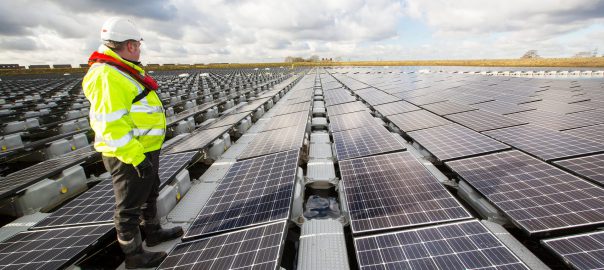
The floating solar farm on Godley Reservoir near Manchester (Image: A. Cooper/Guardian)

If wind and solar power are cheaper and quicker, do we really need Hinkley Point?

Nuclear energy’s cost, and a focus on alternative technology, including research on a new generation of hi-tech battery storage, is leading observers outside the green lobby to question the project’s value

Should Theresa May take the axe to the troubled Hinkley Point nuclear project, it will propel wind and solar power further into the limelight. And for renewable technologies to become really effective, Britain and the rest of the world need breakthroughs in electricity storage to allow intermittent power to be on tap 24/7, on a large scale and for the right price.

Cheap, light and long-life batteries are the holy grail, and achieving this requires the expertise of people like Cambridge professor Clare Grey. The award winning Royal Society fellow is working on the basic science behind lithium-air batteries, which can store five times the energy in the same space as the current rechargeable lithium-ion batteries that are widely used today.

The floating solar farm on Godley Reservoir near Manchester (Image: A. Cooper/Guardian)

She is also focusing on sodium-ion and redox flow batteries; the latter store power in a liquid form, contained in vats or tanks that in theory can easily be scaled up to power-grid sizes.

“There has been an amazing transformation in this field. There is an explosion of interest and I am extremely lucky to have decided early on to concentrate on this area,”

she says, although she is keen to play down the idea that a eureka moment is just around the corner.

She is also thankful for Hinkley – if only because of the government’s long-term funding deal with EDF Energy that it gave rise to.

“It has put a price on [future] electricity in the market which is high, and this has potentially opened up further commercial space for new technologies such as batteries. But independent of Hinkley we do need better batteries and my chemistry will hopefully help find them,” she says.

The wisdom of bringing in the Chinese to help EDF, the French state-owned utility company, construct the proposed new Somerset reactors has been highlighted as a key factor behind the government’s reluctance to push the go button.

But ministers are also aware that, in the last 18 months, many experts in the field have concluded that the biggest argument against the plant is not that it is too expensive, at £18.5bn, but that the kind of “on-all-the-time” power it delivers is no longer what is required.

Read more: The Guardian

Mavero Home Energy Storage Systems Offers Up To 9.6 kW Output For Charging

Kreisel Electric, which is building a new battery facility “3K One” in Austria, announced a new home energy storage solution – the MAVERO.

13537569_mavero_storage_kreisel

The Kreisel MAVERO is to be available from 2017 in four versions (each under €700/kWh *pre-tax):

  • 8 kWh / 4.8 kW / €5.590
  • 11 kWh / 4.8 kW / €7.530
  • 16 kWh / 9.6 kW / €10.860
  • 22 kWh / 9.6 kW / €14.740

The MAVERO reminds us a lot of the Tesla Powerwall, although each block is higher energy, and higher power.

If everything goes well, MAVERO should work for over 20 years, while the first 10 years is guaranteed.

https://www.youtube.com/watch?v=W69Ci2E2rok

“Kreisel Electric presents MAVERO, the highly efficient and beautifully designed home energy storage system

MAVERO is a highly efficient and flexible energy storage system for private and commercial application. Thanks to the modular design, each unit can be tailored precisely to individual conditions. The flexible home storage system will be available in four different sizes. The battery packs are based on Li-ion technology and the usable capacity ranges from 8 kWh to 22 kWh. The elegantly designed casing is available in two colours and communicates all charge and discharge activities by means of LED visualisation.

Berlin, 15. June 2016 Everyone is talking about renewable energy sources and the energy transition. One major problem for practical implementation, however, is the lack of suitable storage technology for irregular energy production. Austrian manufacturer of high performance batteries Kreisel Electric presented a viable solution for private households and commercial application at the Motorwerk in Berlin on June 15.

The new home storage system MAVERO – be self-sufficient

The name comes from the Italian language (“ma vero”) and translates roughly as “but true”. It is “true” that you can now supply yourself with energy from renewable sources – and, in the ideal scenario, even “fill up” your electric car. MAVERO enables independence from natural fluctuations in supply (e.g. wind lulls or insufficient sunlight) and worsening feed-in compensation from energy providers.

“The market is crying out for a high-end energy storage technology solution that is also stylish and really worth it for everyone,” stated Markus Kreisel, Marketing Manager with Kreisel Electric, at the premiere in Berlin.
Electricity storage with an elegant outfit

MAVERO is a wall-mounted home energy storage system that stores electricity from any renewable energy source. With its sophisticated design and a size of 105 x 140 cm (w x h), it can be installed in almost any interior space – even in the living room. MAVERO will be available in four versions, ranging from 8 to 22 kWh output volume, and a weight of 70 kg to 170 kg. The discharge power ranges from 4.8 to 9.6 kW in the voltage range from 288 to 384 V. Owners of electric vehicles in particular will be pleased, since the system enables accelerated loading with 100% self-generated electricity. Compared to competitors, the efficiency rate is unrivalled at 96% and the space requirement is considerably lower. With an installation volume of 1.95 dm3/kWh, Kreisel is able to achieve 70% more capacity in the MAVERO system in roughly the same size, thanks to their proprietary high-performance batteries.
Modular design and moderate price

The system is modular and can be installed quickly by a single technician at a relatively low cost. The modular design also offers flexible optimization based on your energy needs, since additional modules can be added later. An innovative lighting design (ambient interface LED) communicates the battery level and the charge and discharge activities. Kreisel Electric also wants to break new ground in terms of the price with their new “Kreisel Energy” division. Ultimately, the retail price should be under €700 per kWh.
Home storage paving the way for the energy revolution

MAVERO is designed to provide enough energy each day for the average household. The models MAVERO 20 and 28 have a higher capacity for more demanding applications like charging electric cars.

Read more: Inside EVs

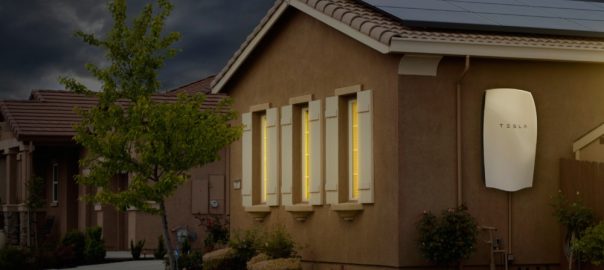
SolarCity System With Tesla Powerwall

Tesla & SolarCity Finalize $2.6 Billion Deal

[From 1 August] The Tesla Motors merger with SolarCity, announced first approximately on month ago, becomes reality today.

SolarCity System With Tesla Powerwall

Both companies will combine in all stock deal, in which SolarCity stockholders will receive 0.110 Tesla common shares per SolarCity share.

Total equity value of SolarCity stands at ~ $2.6 billion, while Tesla is valuated at approximately $34-$35 billion.

The transaction is to be closed in Q4.

SolarCity now has a 45-day period known as a “go-shop” to see whether there are better options for stockholders.

Elon Musk, who owns more than 20% of shares in both companies, argued that the merger is needed to achieve synergy between solar energy (SolarCity) and energy storage systems (Tesla Motors). After the combination, Tesla will be able to offer various products in the one-stop solar + storage experience.

Read more: Inside EVs

The welcoming entrance of Disney’s magic kingdom (Image: L. Larkum)

How Far Behind is the US in General, and Disney in Particular?

Culture Shock

With apparently ever-increasing globalisation most of us have an expectation that we can travel to other Western countries and find facilities and a culture similar to our own – after all, a McDonald’s Big Mac bought in Paris is recognisably the same as one from New York.

Occasionally, though, we find things to be suddenly different from what we expect. The difference is marked because it is not just a different food or architecture. It is marked – a culture shock – because it arises from very different assumptions about how a culture should be. I had such a feeling twenty-five years ago when, as a member of the British armed forces, I moved into married quarters in Germany. For the first time ever I encountered a culture with sustainability as a core value – we found recycling facilities all along our street, and were given full instructions on how to recycle our waste as part of moving in.

Such an approach was entirely absent in the UK, there we were still wondering whether we should consider starting to recycle some waste, and so returning to the UK felt like going back in time. Of course, since then the UK has caught up, at least to a large extent. For example, there are weekly collections of plastic and metal/can containers, of paper and cardboard, of glass, and of food waste, plus fortnightly collections of garden waste.

I write this as I approach the end of a vacation in Disney World and Florida, having experienced another such step back in time. Things are so far behind here it has been another culture shock. We last visited twenty-five years ago and it seems that the culture in general and Disney World in particular are virtually unchanged over that time.

Conspicuous Consumption and Pollution

It began with our accommodation – a lovely rented villa in a community estate in Davenport, half an hour outside Orlando. It’s huge and well-appointed with a very nice small pool and patio. However, it feels like living in a ‘consumption machine’. I write this in the open-plan kitchen/lounge area. Behind me upstairs the air conditioning system rattles away providing welcome cooling throughout the house – but it seems to be on permanently, 24/7, set to a temperature of 76°F (24°C). The energy consumption must be enormous, but its controls are locked away so we don’t have the choice to turn it off and save energy.

Behind me just outside the wall is the monstrous pump and filter system for the pool, whirring away. In front of me is a massive fridge which almost never goes quiet. Later today we’ll have men coming round making noise along the road (strimmers, leaf blowers, etc.). This evening we’ll have the sprinklers coming on to disturb our sleep. Not just carbon pollution, but noise pollution seems to be an accepted part of life here.

Even the cars of our neighbours coming and going seem inordinately loud, and why must they beep their horns every time they lock the doors? Everything is just so noisy (in this house we even watch TV in the same large living space as the dishwasher, washing machine and tumble dryer). The whole concept of noise pollution seems alien here, as though it were something to be embraced rather than avoided. I can’t imagine how hard it would be to try and get some peace and quiet. Yet in the UK people put a premium on quietness whether it’s buying a quiet car (such as an electric) or a house in the country – here the preference seems to be for cars and houses that are as big and noisy as possible.

The big irony, of course, is that the massive carbon footprint of this house is entirely unnecessary. A big chunk of it is for air conditioning because of the powerful sunshine here, yet it is precisely that excess of solar power that could be powering the house with solar energy for free. Instead, it is using fossil fuels and their associated carbon emissions to try and offset the energy being dissipated on the roof. I’ve only seen one house in the area with solar panels, and I noticed that precisely because it was an isolated example in a sea of blank rooftops.

Part of that irony is that we have solar panels on our home in England, even though we are at a much higher latitude than Florida and so get correspondingly less solar energy. Nonetheless, even with our supposedly cloudy and rainy climate the panels produce more than half the energy used by the house over the course of a year. In Florida a similar setup could potentially power the entire house, and with some left over going into the grid to reduce its overall footprint, or used to fuel an electric car.

It was good to see that our housing estate had a weekly recycling collection, even if it was just a mixed box (and many of our neighbours’ wheelie bins were overflowing with cardboard boxes and other items that could have gone in recycling).

No Leadership From Disney

So on to Disney. Over the last two weeks we have visited Magic Kingdom, Hollywood Studio and Animal Kingdom twice each, and Epcot and the Typhoon Lagoon water park once each. We had a good time on the roller-coaster and other rides, and at the various shows. However, it felt like very little had changed in the last quarter century.

A tram with its diesel exhaust just a few feet from waiting passengers (Image: T. Larkum)

After parking up we were transferred to the park entrances via vehicles referred to as ‘trams’. While in Europe that name implies electric trolley buses, and given their workload and fixed routes these vehicles could have been electric, it was immediately obvious they were not. You didn’t have to get very close to them to hear the roar and smell the nauseous and toxic fumes that gave away that they were powered by massive diesel engines. And this, in the 21st century, and with half the passengers being young children.

Read more: Linked In
Tesla showroom in Milton Keynes (Image: T. Larkum)

Tesla and SolarCity? Yes, it makes sense.

The combined company will be perfectly suited to markets that barely exist yet

Tesla showroom in Milton Keynes (Image: T. Larkum)

Elon Musk announced last week that he wants Tesla, his electric-car company, to acquire SolarCity, the rooftop-solar company he helped found and now serves as chairman. The result would be a single “end to end” energy behemoth.

“As a combined automotive and power storage and power generation company,” Musk said, “the potential is there for Tesla to be a $1 trillion company.”

Reaction was, by and large, skeptical. (Tesla stock dropped 10 percent the following day.) Over at Stratechery, Ben Thompson says Tesla already faces “very long odds of achieving its plans.” Adding SolarCity’s negative $2.6 billion cash flow to Tesla’s already negative $1.5 billion is no help to Tesla, though it might save SolarCity. Thompson thinks Musk wants it because he’s “highly exposed to SolarCity’s plummeting stock.” Otherwise it makes no sense, he says, because Tesla and Solar City have “zero business synergies.”

Analysts at research firm UBS, in a pair of briefs, echo that critique, arguing that there’s little these businesses offer one another that they couldn’t get from some kind of cross-marketing agreement.

I’m not qualified to comment on the near-term business merits of the deal. It may well prove to be a disaster. But I think Thompson and other critics are underestimating the synergies. They are limited now, but they will grow over time. (Over at Greentech Media, Julia Pyper also has good piece on this.)

How fast will the synergies grow? That depends on factors largely outside either company’s control.

That’s the big risk of this deal: Even assuming the merged company could get past its short-term challenges, its long-term fate rests on policy and regulatory decisions it can’t predict or determine. It’s a merger based on hope.

Synergy depends on future markets

The kinds of markets in which electric cars, home batteries, and solar panels could fully, uh, synergize do not currently exist in most places. They are precluded by the way the US structures its electric utility sector, as a patchwork of monopolies and quasi-monopolies.

Read more: Vox

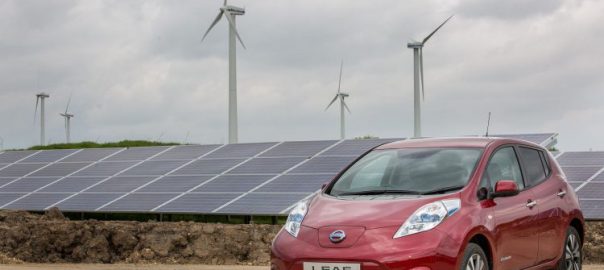
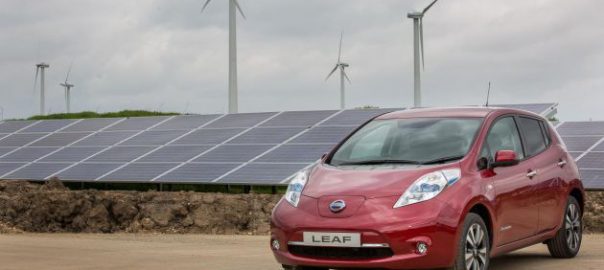
Nissan switches on solar farm to power UK car production (including LEAF)

Nissan Switches On Solar Farm To Power UK Car Production

Nissan expanded its renewable electricity generation in the company’s Sunderland Plant.

Nissan switches on solar farm to power UK car production (including LEAF)

The latest additions adds a 4.75 MW solar array, with some 19,000 solar panels – which is on top of the 6.6 MW in place from 10 wind turbines, displacing some 7% of electricity usage.

Nissan states that a total 11.35 MW of power will supply enough electricity to build over 31,000 cars a year.

Nissan Sunderland Plant is currently the largest car manufacturing facility in the UK.

Recently, the Japanese auto maker passed 50,000 LEAFs (and batteries) produced locally at the facility. In the near future, Sunderland has also been confirmed to produce also generation batteries (it does not build the current 30 kWh packs in the 2016 model).

“Nissan has switched on a new solar farm at its biggest manufacturing site in Europe, the latest landmark in the company’s journey towards Intelligent Mobility.

Made of up 19,000 photo-voltaic panels, the new 4.75MW facility is now fully operational at Nissan Sunderland Plant, as Nissan strives towards its twin goals of zero emissions and zero fatalities.

The solar farm has been installed alongside 10 wind turbines already generating clean power for Nissan in Sunderland, the European centre of production for the all-electric Nissan LEAF and its batteries.”

“Nissan began integrating renewable energy sources in Sunderland in 2005 when the company installed its first wind turbines on site. These 10 wind turbines contribute 6.6MW power, with the 4.75MW solar farm bringing the total output of renewables to 11.35MW in Sunderland. This equates to 7% of the plant’s electricity requirements, enough to build the equivalent of 31,374 vehicles.

The solar farm has been developed and installed within the loop of Nissan’s vehicle test track in Sunderland by partner company European Energy Photovoltaics, with 100% of the electricity generated to be used by Nissan.

Its installation comes as Nissan celebrates its 30th anniversary of manufacturing in the UK, having become the biggest UK car plant of all time and now supporting nearly 40,000 jobs in Britain in vehicle design, engineering, production, parts distribution, sales and marketing, dealer network and supply chain.”

Colin Lawther, Nissan’s Senior Vice President for Manufacturing, Purchasing and Supply Chain Management in Europe, said

“Renewable energy is fundamental to Nissan’s vision for Intelligent Mobility.”

“We have built over 50,000 Nissan LEAFs in Europe, and the industry-leading new 250km-range LEAF is now available. With 10 wind turbines already generating energy for our Sunderland plant, this new solar farm will further reduce the environmental impact of Nissan vehicles during their entire lifecycle.”

Source: Inside EVs

The installation comes as Nissan celebrates 30 years of manufacturing in the UK

Nissan switches on solar farm to power UK car production

Nissan has switched on a new solar farm at its plant in Sunderland, its biggest manufacturing site in Europe, and the latest landmark in the company’s journey towards Intelligent Mobility.

The installation comes as Nissan celebrates 30 years of manufacturing in the UK

Made of up 19,000 photo-voltaic panels, the new 4.75 MW facility is now fully operational at the Sunderland Plant, as Nissan strives towards its twin goals of zero emissions and zero fatalities.

The solar farm has been installed alongside 10 wind turbines already generating clean power for the manufacturing facility in the North East, the European centre of production for the all-electric Nissan LEAF and its batteries.

Colin Lawther, Nissan’s Senior Vice President for Manufacturing, Purchasing and Supply Chain Management in Europe, said:

“Renewable energy is fundamental to Nissan’s vision for Intelligent Mobility.

“We have built over 50,000 Nissan LEAFs in Europe, and the industry-leading new 250 km-range LEAF is now available. With 10 wind turbines already generating energy for our Sunderland plant, this new solar farm will further reduce the environmental impact of Nissan vehicles during their entire lifecycle.”

Nissan began integrating renewable energy sources in Sunderland in 2005 when the company installed its first wind turbines on site. These 10 wind turbines contribute 6.6 MW power, with the 4.75 MW solar farm bringing the total output of renewables to 11.35 MW in Sunderland. This equates to 7% of the plant’s electricity requirements, enough to build the equivalent of 31,374 vehicles.

The solar farm has been developed and installed within the loop of Nissan’s vehicle test track in Sunderland by partner company European Energy Photovoltaics, with 100% of the electricity generated to be used by Nissan.

Its installation comes as Nissan celebrates its 30th anniversary of manufacturing in the UK, having become the biggest UK car plant of all time and now supporting nearly 40,000 jobs in Britain in vehicle design, engineering, production, parts distribution, sales and marketing, dealer network and supply chain.

Pursuing a goal of zero emission vehicles and zero fatalities on the road, Nissan’s Intelligent Mobility vision is designed to guide Nissan’s product and technology pipeline, anchoring critical company decisions around how cars are powered, how cars are driven, and how cars integrate into society.

Other Nissan initiatives recently announced concerning electric vehicles and next generation battery technology include: a future generation of electric vehicle batteries for the UK battery plant; a major vehicle-to-grid trial in the UK that will see Nissan EVs supplying the UK’s National Grid; and a revolutionary new residential energy storage system called xStorage.

Source: Next Green Car