Category Archives: Pollution

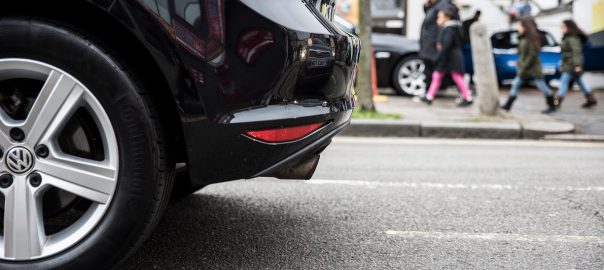
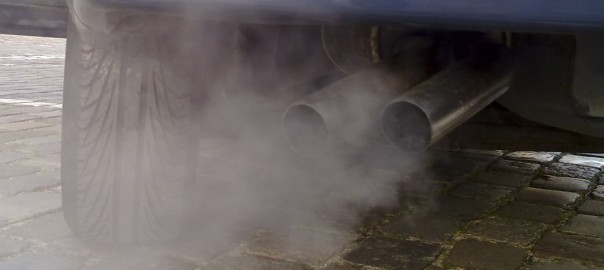
Car exhaust pollution (Image: Wikipedia)

When will we see ‘tailpipes’ on cars as morally wrong? An Earth Day question

Economists call them “externalities.” They’re the costs of people’s actions on other people or communities—though the people taking those actions don’t have to pay for those costs, even as they harm others.

Car exhaust pollution (Image: Wikipedia)

The emissions from combusting fossil fuels to propel vehicles are clearly a prime example.

While complaints about air quality in the Los Angeles Basin date back centuries, research established more than 50 years ago that vehicle emissions were the primary cause of photochemical smog.

That led the state of California to begin efforts to regulate tailpipe emissions—well before the U.S. Environmental Protection Agency even existed—which led in turn to the first catalytic converters in U.S. vehicles in 1975.

Catalysts spread throughout most of the automaking world over the next 20 years, hugely reducing emissions of carbon monoxide (CO), hydrocarbons (HC), and nitrogen oxides (NOx), all toxic in various ways.

It’s well established that electric cars have the lowest wells-to-wheels CO2 footprint of any near- or medium-term alternative, varying from the equivalent of about 35 miles per gallon on the dirtiest U.S. grids to more than 100 mpg on the cleanest grids.

And the carbon footprint per mile of driving an electric car declines every time the grid gets cleaner, whether from adding renewable energy sources or replacing a coal-fired generation plant with one using natural gas.

With increasing availability of zero-emission cars over the coming years, when will citizens at large start to question the idea that every vehicle has an “exhaust pipe” that just belches harmful substances into our shared air?

And when will driving a car that emits carbon dioxide every time it moves become morally unacceptable?

Read more: Green Car Reports

Car exhaust pollution (Image: Wikipedia)

Nearly 40 million people live in UK areas with illegal air pollution

Nearly 40 million people in the UK are living in areas where illegal levels of air pollution from diesel vehicles risk damaging their health, according to analysis commissioned by the Labour party.

The extent of the air pollution crisis nationally is exposed in the data which shows 59% of the population are living in towns and cities where nitrogen dioxide (NO2) pollution breaches the lawful level of 40 microgrammes per cubic metre of air.

Car exhaust pollution (Image: Wikipedia)

Labour says the air pollution crisis is a “national scandal”. Sue Hayman, shadow secretary of state for environment, food and rural affairs, said a Labour government would bring in a new clean air act to tackle what was a public health emergency.

“Labour will not allow the Tories to use the snap general election or Brexit to kick this issue into the long grass or water down standards that would put millions of UK adults and children at risk,”

said Hayman.

She said the party was committed to putting in place a network of clean air zones across the UK where there are high emissions, and would act at an international level to close loopholes in emissions testing of vehicles.

The analysis published by Labour shows more than 38 million people, representing 59.3% of the UK population, are living in areas where levels of nitrogen dioxide pollution are above legal limits.

Local authorities including Aberdeen, Birmingham, Bournemouth, Burnley, Derby, Chelmsford, Leeds, Northampton, Richmond and Sheffield – among many others – have NO2 levels above the legal limit.

Read more: The Guardian

Re-Energizing Earth Day 

The eco-dream of the ’90s is alive in the electric car

Electric motors have instant acceleration, like a roller coaster on wheels

I haven’t bought gas in a year. Yes, you read that right. Go ahead and let that sink in a bit.

Last April, when I was looking for a new ride, my wife told me I should try an electric car. Why not? Skeptically, I tested a used BMW i3, and it was like going out to take a look at a puppy. Of course we brought it home.

You should know that my first car was a Chevy Celebrity — probably the least sexy car to come off an American production line in the past 50 years. So I was overdue, but who knew the solution to my midlife crisis would look more like a golf cart than a Mustang?

A year in, I can tell you it’s the coolest car I’ve owned — the technology makes you feel like you’re driving around inside an iPhone. It’s also an instant conversation starter. “What is that thing?” asks the dude in the parking lot or the woman working the drive-through window.

“It’s an electric car,” I say. “Did I mention that I haven’t bought gas for it in a year?”

What I didn’t realize at first was that the simple act of driving an electric car is kinda subversive. Lots of powerful people don’t want us to go electric. Sticking with gasoline to power our lives is part economics, but part unfair play, as oil-industry fat cats have long pulled the levers of power to kill the dream of emission-free travel.

There were electric cars going all the way back to the dawn of the automobile, but the concept was put on the shelf as Henry Ford’s factories dictated the future of the industry.

Then in the 1990s, with the dawning realization that our cars were like cigarettes, choking our planet’s health, electricity got another look. Starting in 1996, GM built more than 1,000 prototype EV1 vehicles, and celebrities and other energy rebels started leasing them. (As a test vehicle, they couldn’t buy them.)

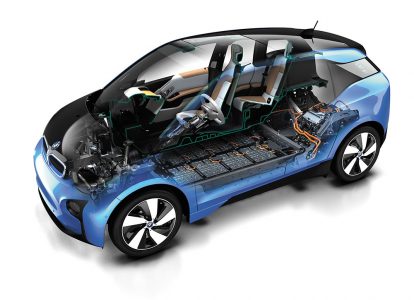
The electric BMW i3’s passenger compartment is made from strong, lightweight carbon fiber manufactured in Moses Lake.

The test was going well — too well, and those big-oil folks, some claim (as documented in the 2006 film Who Killed the Electric Car?) got nervous. The project was not only ended, but the cars were repossessed by GM and nearly all of them were crushed into oblivion.

Instead GM doubled down on the all-American, gas-guzzling SUV. Meanwhile, America changed. We bought a lot of SUVs, sure, but we also learned about some nasty things that some of the money we were spending on foreign oil was being used to fund. The growing desire to clean up our carbon footprint led Toyota to launch the Prius hybrid; in 2008 Elon Musk sold his first Tesla. In 2009, outgoing GM CEO Rick Wagoner said his biggest mistake was killing the EV1.

And in a sign of how far the tables have turned, last week Tesla surpassed Ford in total market value — and is only $3 billion behind General Motors. Here in 2017, driving an electric car isn’t so subversive any more.

Read more: Inlander

The Oil junkies and The moral panic over pollution

Every trainee journalist is taught about a model of behaviour exhibited by the general public called ‘moral panics’. In a moral panic the media pumps out stories like it has bad guts after a curry and people get enraged over the issue. Currently there’s a swirl of stories going out on pollution killing us and our children. The BBC is running a series of stories called So I can breathe and even the fossil fuel loving Telegraph has stooped to tell its high Tory readership that the air is foul. I smell a moral panic somewhere…

But hold on, wasn’t it bad before the media storm?

Traffic congestion has got steadily worse over the years on nearly every major British road, and energy demand has rocketed. No matter what they tell you, a car pumping out 130g/km of carbon emissions would kill you in about five minutes if you sat in an airtight room with it. Energy supply has to come from somewhere and generally that’s coming from coal, gas and even oil powered power plants.

We are at a tipping point with Global Warming. Even if Donald Trump hadn’t got into power we would be in a dire climate emergency and, guess what? That’s the same pollution that’s choking us.


Oil Junkies

Let’s start a new name for climate change deniers and those who can’t get their heads away from fossil fuels. Let’s call them oil junkies. Junkies freak out and get sick without heroin, and given the US and UK governments’ somewhat less than rational stance on renewable energy, you wonder if they need to be locked in a room for a month with 24 hour medical care if they stopped using fossil fuels central to their energy policy.

Forget Trump – our oil junkies have been in for almost a decade now. Only last week the UK Chancellor of the Exchequer said he would give more tax breaks to oil companies working in the North Sea. A 2015 LinkedIn blog by energy expert Simon Ede says simply: “As it now stands, local communities will have veto power to stop new wind turbines being constructed but should those communities resist or delay the development of Shale gas projects they’ll risk their case being fast tracked to Ministers in Whitehall for decision.”

The air looks clean…

The UK, US and Europe have all got ‘clean air’ legislation that prevents the smogs that choke Beijing, Kolkata and other developing countries’ cities. These clean air acts and regulations ensure at least some semblance of cleanliness in the pollution that our power stations, cars and factories belch out.

Even so it is estimated that 2,500 people in London died due to pollution in 2016. Though people can smell the fumes of cars, vans and lorries they can’t see the stuff. Much of this has been put down to diesel?

The diesel red herring

The focus of the moral panic is turning towards diesel engines. London’s Mayor Sadiq Khan has started a campaign to get rid of diesel engine vehicles in his city. His campaign seems to be gaining traction and there is talk of a ‘diesel scrappage scheme’ to get rid of the most polluting older diesel engine cars.

Read more: Electric Car Test Drives

No Filter: The Air Pollution Update

As air pollution levels reach new highs, Vogue investigates the best ways to minimise the impact on your health and beauty.

Take a deep breath. Or maybe, don’t: the director general of the World Health Organisation has just described air pollution as “one of the most pernicious threats” facing global public health today, and UK scientists estimate that air pollution can cut life expectancy by up to six months. But before you presume that the UK has got things under control, the news gets worse: the government recently lost two court cases over illegally dirty air, and by July 2017 must come up with a new clean air plan to tackle illegal levels of pollution across the country.

At the same time, more and more is being discovered about the long-term health effects of pollution. There’s now evidence linking pollution to heart attacks, lung disease and asthma, with other conditions like dementia still being investigated. What is known now is that the microscopic PM2.5 molecules found in polluted air are small enough to get into your lungs and bloodstream.

So what can you do to protect yourself? Many people have begun taking matters into their own hands: some London schools are considering issuing pupils with masks, environmentalists are calling for diesel car scrappage schemes and one council in Cornwall has even suggested moving people out of houses located in “pollution hotspots”. And inevitably, a whole industry of pollution-fighting products has sprung up. In China, since 2013’s “airpocalypse” of record pollution levels, home air purifiers are on track to become as ubiquitous as fridges, and Mintel has identified anti-pollution as one of the beauty industry’s biggest growth areas. These and other products like them may provide a “sticking plaster” solution while our governments raise their game, but it’s worth considering the latest anti-pollution products to minimise the impact on your health and beauty.

Read more: Vogue

The death of diesel: has the one-time wonder fuel become the new asbestos?

Diesel was the dream fuel, promoted by governments and the car industry as a cheaper way to save the planet. Then the cracks started to appear

It’s hard to believe, as diesel vehicles find themselves thrust into the spotlight of a global urban environment crisis, that Audi’s Superbowl advert was made just seven years ago. Air pollution now kills 3.3 million people prematurely every year – more than HIV, malaria and influenza combined – with emissions from diesel engines among the worst culprits; a joint investigation by the Guardian and Greenpeace showed hundreds of thousands of schoolchildren across England and Wales are being exposed to illegal air toxicity levels from diesel vehicles. And yet such was the more or less widely accepted thinking as recently as Superbowl XLIV in 2010 – namely, that cars running on diesel fuel could be driven with a pure, unclouded conscience.

Diesel was touted at inception as a wonder fuel. It was a way of driving cost-efficiently while doing your bit to save the planet. Government, industry and science united to sell us the dream: cars running on diesel would help us cut our CO2 emissions as we eased smoothly into a new eco-friendly age.

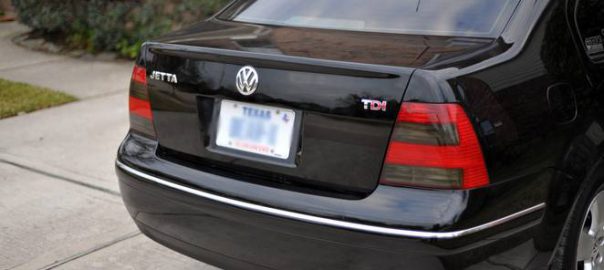
Then in 2015 came Dieselgate. In September of that year, Volkswagen, which vies with Toyota for top spot in the list of world’s biggest car companies and a firm that had for years been running its own marketing campaign in favour of “clean diesel”, rocked the industry by admitting that it had cheated on its emission tests. As recently as last week, David King, the UK government’s former chief scientific adviser on climate change, admitted ministers had made a huge mistake by promoting diesel. They had trusted the car industry when it said the fuel was clean. “It turns out we were wrong,” he said.

Sadiq Khan, the mayor of London, has stopped short of an outright ban on diesel, but he has ordered the replacement of the capital’s current diesel bus fleet with clean alternatives. The mayor’s office will also enforce a £10 toxicity charge, or T-charge, on the highest-polluting cars entering the city centre as of October. The measures are part of a wider plan to create an ultra-low-emission zone (ULEZ) in central London from April 2019.

Read more: The Guardian

Diesel cars will ‘almost disappear’ by 2025, says UBS

I got pretty excited when I heard that London was committing to buying only 100% emission-free buses for all single-decker city center routes. Likewise, when Eindhoven and Helmond bought 43 extra-long electric buses, it felt like one more step toward cleaner, greener cities.

Given that Paris, Athens, Mexico City and Madrid are pledging to ban all diesel vehicles by 2025 at the latest, the news has been pretty good for those of us who would like to see healthier air and a reduction in emissions.

Now the Financial Times reports that Swiss investment bank UBS is connecting the dots between these trends—making the bold claim that diesel cars will all but disappear from the global car market by 2025.

Not only are individual cities taking up the fight against diesel, says UBS, but countries like Belgium and France are also pledging to fix disparities between gasoline and diesel taxes too. (Lower taxes on diesel have long boosted popularity in Europe.) Add this to the fact that long-range, lower cost electric cars are finally becoming increasingly viable, and that cities are exploring ways to reduce dependence on motor vehicles overall—and you really start to see a convergence of factors which should lead to diesel’s demise in the passenger car market much sooner than many of us would have expected. UBS does expect diesel to continue to be used in large SUVs and trucks for now—but we’ll see if even that prediction really pans out.

Even more exciting than the demise of diesel cars, to me, is the fact that this demonstrates how the broader transition to a low carbon economy will ultimately come about. Just as US utilities are pressing ahead with phasing out coal, regardless of what short-term electoral politics might look like, diesel is not falling victim to any single policy or initiative. It’s simply facing a perfect storm of headwinds that will ultimately bring about its demise.


Read more: TreeHugger

Firms could be sued over diesel cancer

Employers have been told they are legally obliged to protect their staff from diesel fumes — and could be sued if workers develop cancer later in life.

The Institute of Occupational Safety and Health (IOSH) and Health and Safety Executive (HSE) have issued the warnings because diesel fumes have been reclassified as a

“grade 1 carcinogen”

meaning they are a

“definite cause of cancer”.

As many as 500,000 UK jobs are affected.

The warning applies to a huge range of employees, including professional drivers, bus and railway station staff, rubbish collectors, garage mechanics and warehouse and construction workers.

Read more: The Times

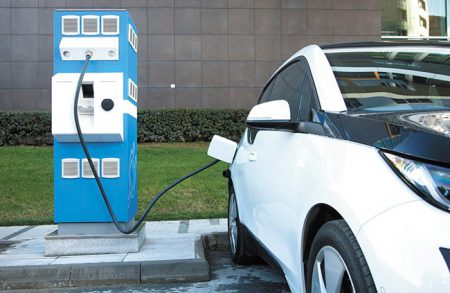
Electric cars charging in Milton Keynes (Image: T. Larkum)

How conniving carmakers caused the diesel air pollution crisis

Cheating, dodging rules and heavy lobbying by motor manufacturers fuelled the toxic air the UK is struggling with today.

Conniving car makers and their lobbying might, assisted by the 2008 financial crash, were the key factors in producing the diesel-fuelled air pollution crisis the UK is struggling with today, according to key observers of the disaster.

Earlier government decisions to incentivise diesel vehicles, which produce less climate-warming carbon dioxide, sparked the problem but were made in good faith. The heart of the disaster is instead a giant broken promise: the motor industry said it would clean up diesel but instead cheated and dodged the rules for years.

Electric cars ready for free test drives in Milton Keynes (Image: T. Larkum)
Electric cars in Milton Keynes (Image: T. Larkum)

The result has been that the air people breathe in cities and towns is now heavily polluted with toxic nitrogen dioxide, causing 23,500 premature deaths a year in the UK and affecting many schools. The government, whose inadequate plans have twice been declared illegal, will come up with a new, court-ordered strategy as soon as next week.

“We were told by the vehicle manufacturers the [diesel emissions] limits would be met and there was no problem,”

said Greg Archer, who was managing the UK government’s air pollution research two decades ago, when new tax breaks led to the diesel boom.

“What of course actually happened was those limits were not met on the road, as the car manufacturers started to turn down the after-treatment systems and cheat the tests.”

The government’s chief scientific adviser at the time, Sir David King, tells the same story:

“I was convinced the [motor manufacturers] could manage the problem. It turns out we were wrong.”

Read more: The Guardian

Thousands of British children exposed to illegal levels of air pollution

Exclusive: More than 2,000 schools and nurseries close to roads with damaging levels of diesel fumes, joint investigation by Guardian and Greenpeace reveals

Hundreds of thousands of children are being exposed to illegal levels of damaging air pollution from diesel vehicles at schools and nurseries across England and Wales, a joint investigation by the Guardian and Greenpeace’s investigations unit has revealed.

The analysis of the most recent government data exposes how dangerous levels of nitrogen dioxide (NO2) pollution from diesel traffic are not limited to large metropolitan centres, but threaten the health of children and young people in towns and cities from Newcastle to Plymouth.

The research shows more than 1,000 nurseries which look after 47,000 babies and children are in close proximity to roads where the level of nitrogen dioxide from diesel traffic exceeds the legal limit of 40µg/m3 (micrograms per cubic metre of air).

The findings come as the government is under pressure to dramatically improve its strategy to clean up the nation’s air, after the high court said its plans to reduce illegal levels of harmful emissions were so poor as to be unlawful. Ministers have to produce new draft measures to tackle air pollution by 24 April.

Chris Griffiths, professor of primary care and public health at Bart’s and the London School of Medicine, said the findings were very important and called for a dramatic change in attitudes within society and from government.

“The research on exposure to traffic fumes and children’s lung growth is pretty consistent. It shows that such exposure reduces lung growth, produces long term ill health and can cause premature death. We should be outraged that we are exposing our developing children to these obvious problems.”

Read More: The Guardian