Category Archives: Energy and Climate Change

News and articles on climate change, vehicle pollution, and renewable energy.

Nissan Ariya EV SUV (Image: Nissan)

Europe’s lost decade: About the importance of interim targets

The European CO2 regulation for new passenger cars appears to be a complete success story. In 2020, the share of electric vehicles rose from 3% to 11%, the average type-approval CO2 emission level decreased from 122 g/km to about 97 g/km, and none of the manufacturers will be subject to noteworthy penalties as all of them are on track for compliance with the regulatory targets.

That the regulation would be a success was not always that clear, however. In reality, it was a rocky road to get to where the European vehicle market is today. Once it became clear that the European Union would implement its first regulation for new car CO2 emission levels, the rate of emissions reduction increased from about 1.2% per year to 3.5% per year by 2008 (Figure 1). At that pace, it was easy for manufacturers to comply with the first regulatory target of 130 g/km by 2015. Unfortunately, only a part of the CO2 reductions achieved during this first regulation’s time period were real, with the majority attributed to manufacturers aggressively gaming the test procedure.

Once the 2015 target had been met, manufacturers showed little interest in further reducing the CO2 emissions of their vehicles. Between 2016 and 2019, type-approval emissions even increased, from 118 g/km to 122 g/km. It was only from January 2020 onwards that manufacturers changed course. Within one year, the official new car CO2 emissions fell by 20.5%, which is more than during the entire 2008-2019 timeframe. The electric vehicle market share more than tripled within one year, easily outpacing other markets such as China and the United States.

This fluctuation reveals one weakness of the EU’s CO2 regulation: Unlike in the United States, the European policymakers did not set annual targets, but instead opted for five-year target intervals. As a result, the 2015 CO2 target applied during the entire 2015-2019 time period until the next regulatory target took effect in 2020. Manufacturers clearly took advantage of this regulatory weak spot by optimizing their vehicle fleet mix in 2016–2019 towards profits, largely ignoring CO2 emissions and delaying the launch of some electric vehicle models until 2020. At the same time, the breathtaking change in the market composition in 2020 highlights a strength of the manufacturers: With the right regulatory instruments in place, vehicle manufacturers can quickly adapt their product portfolio and marketing strategy in such a way that tripling electric vehicle shares and reducing CO2 more than 1% per month becomes possible.

Nissan Ariya EV SUV (Image: Nissan)

Unfortunately, we Europeans are on a pathway to repeat our mistakes of the past. The currently adopted policies require manufacturers to reduce the average CO2 emission level of new cars by 15% by 2025 and by 37.5% by 2030, all relative to a 2021 baseline. The resulting annual CO2 reduction of about 5% is significantly lower than what manufacturers achieved in 2020 (20.5%) and close to the annual 3.5% reduction in the early years of the first CO2 regulation. These policies fail to account for the significant technological advances in the industry, with electrification enabling much faster emission reductions than combustion engine efficiency improvements. In order to be on a pathway that is compatible with the EU’s longer-term climate protection objectives, what we really need by 2030 is a reduction in average new car CO2 emission levels by at least 70%, instead of 37.5%.

But it is not only the target levels themselves that are problematic. The fact that there are no current interim targets entails the great risk that manufacturers will play games again, delivering the CO2 reductions required only at last minute, while holding technology levels constant in the intervening years. Such an approach is detrimental from a climate protection perspective because the sooner new car CO2 emission levels fall, the faster annual fleet-wide CO2 emissions decline and the higher cumulative CO2 benefits are, relative to a business-as-usual scenario.

Aside from the climate protection angle, there is a very important industrial angle to this as well. At a time when politicians across Europe are working hard to persuade companies to increase battery development and manufacturing capacities within Europe, it is of utmost importance to ensure market stability for planning the necessary investments in factories and workers. Without interim targets, such stability is lacking, as the following assessment shows.

In 2020, the new registration share of zero- and low-emission vehicles (ZLEVs) was 11%. Applying a discount factor for plug-in hybrid vehicles, the weighted ZLEV share was about 9%. Leaving any regulatory credits aside, the average new internal combustion engine (ICE) vehicle in 2020 emitted about 117 g/km of CO2 in the New European Driving Cycle (NEDC).

Manufacturers can meet the current 2025 CO2 reduction target of 15% solely by improving the efficiency of conventional combustion engines and transitioning towards mild hybrid vehicles. Emissions from ICE vehicles would decrease by about 4% per year to 96 g/km in NEDC terms. Credits for eco-innovations and an exploitation of the flexibilities of the new Worldwide harmonized Light vehicles Test Procedure (WLTP) would further help comply with the 2025 target. Following this pathway, an increase in the market share of electric vehicles would not be necessary until as late as 2029.

Read more: icct

It’s Time to Go Green!

If you would like to know more about Solar Panels and the PowerBanx range of home battery systems, and get a free instant quote, please complete our online form:

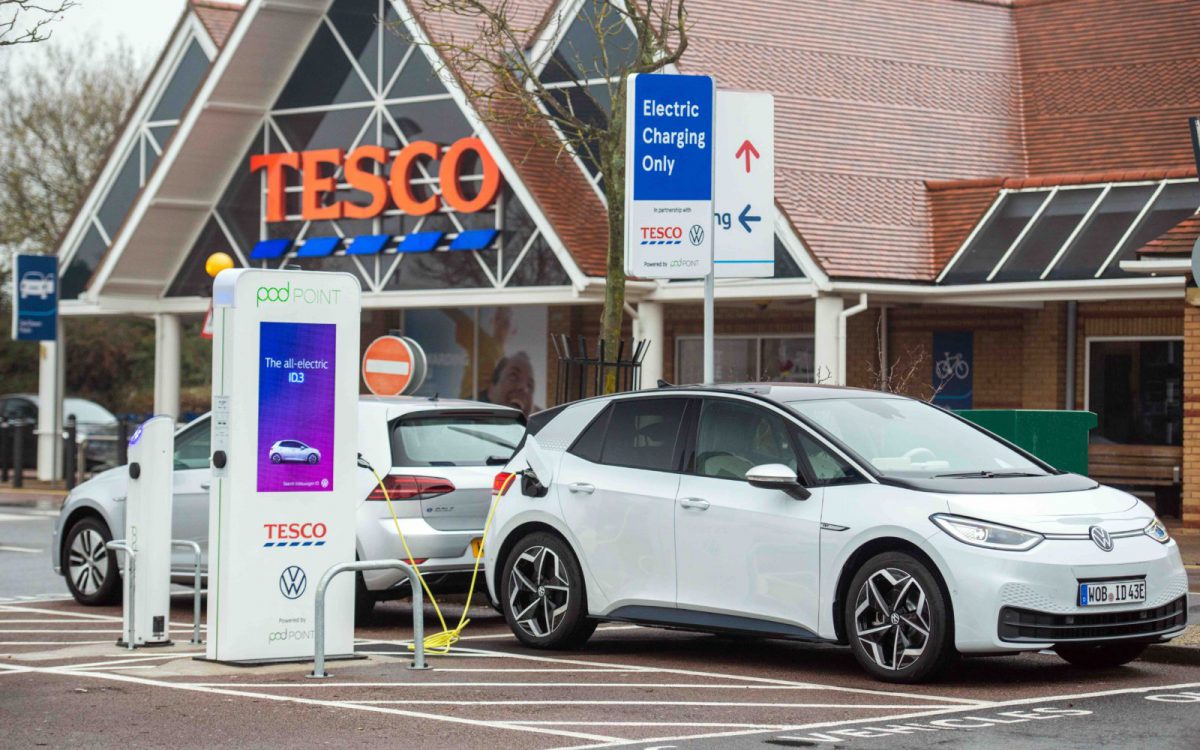
POD Point Rollout at Tesco Stores (Image: Tesco/POD Point)

Good Energy unveils EV tariff offering free periods of charging

Good Energy is launching a new tariff that allows electric vehicle (EV) drivers to charge for free during periods of excess wind and solar generation.

Developed in partnership with Zap-Map – a company Good Energy owns a 50.1% stake in – the Zap Flash tariff includes ‘flash’ windows based on periods where Britain is generating an abundance of solar and wind. Drivers will then be alerted to a four-hour window when charging their vehicle comes at no extra cost and is backed by Good Energy’s 100% renewable electricity supply.

The flash period will vary in day each week, although the times will remain the same in the summer and winter months, with customers to receive at least 24 hours notice ahead of the period. The Summer Flash period will run from April to September between 11am and 3pm, while the Winter Flash Period is to run from October to March between 11pm and 3am.

POD Point Rollout at Tesco Stores (Image: Tesco/POD Point)

The tariff will be enabled by smart metering, with Good Energy to rollout smart EV chargers and an updated app alongside the new product. It will initially be launched in beta phase, allowing for more sophisticated versions as the energy supplier learns from customers.

Good Energy’s CEO and founder, Juliet Davenport, said that with Britain generating “so much” renewable electricity, it only “makes sense for us to take advantage of this free resource”.

It was announced in February that Davenport is to step down as CEO, with Nigel Pocklington to takeover the role.

Read more: CURRENT

It’s Time to Go Green!

If you would like to know more about Solar Panels and the PowerBanx range of home battery systems, and get a free instant quote, please complete our online form:

Dacia Spring 2021 (Image: Dacia.co.uk)

The future of cars is electric – but how soon is this future?

According to a new report by Bloomberg New Energy Finance, 58% of global passenger vehicle sales in 2040 will come from electric vehicles, yet they will make up less than 33% of all cars on the road.

While popular science fiction has set high the expectations of what the future of transportation will look like, BloombergNEF (BNEF) has painted a picture of how the auto industry will evolve in its latest Long-term Electric Vehicle Outlook report.

In the report, BNEF outlines that electric vehicles (EVs) will hit 10% of global passenger vehicle sales in 2025, with that number rising to 28% in 2030 and 58% in 2040. According to the study, EVs currently make up 3% of global car sales.

Beyond just new sales, EVs are predicted to represent 31% of all cars on the road in 2040, making up 67% of municipal buses, 47% of two-wheeled vehicles (scooters, mopeds, motorcycles and so on) and 24% of light commercial vehicles. Compare this to 2020, where EVs make up 33% of municipal buses, 30% of two-wheeled vehicles and 2% of light commercial vehicles.

In terms of gross vehicles usage, BNEF predicts that 500 million passenger EVs will be on the road globally by 2040, compared to a total passenger vehicle fleet of 1.6 billion. Unfortunately, there will still be more miles driven globally by internal combustion passenger vehicles than EVs.

Dacia Spring 2021 (Image: Dacia.co.uk)

Sales and price parity

The ramp in EV adoption will be initially led by reaching price parity with internal combustion engine vehicles. This will begin when large vehicles hit this point in Europe, which is expected to happen in 2022 and will end with small cars making the achievement in India and Japan around 2030.

While this parity takes a global perspective, it will be hard-driven by the European and Chinese markets, which are expected to represent 72% of all passenger EV sales in 2030. By 2030, China and Europe are expected to achieve the feat of 50% of all cars on the road being EVs.

This will be because of the other head of EV adoption, policy support, taking the form of European vehicle CO2 regulations and China’s EV credit system, fuel economy regulations and city policies restricting new internal combustion vehicle sales.

The rest of the pack

As for the United States, the country will be slower to reach the levels of adoption that are expected to come to Europe and China, due to limited projections of charging infrastructure availability. The U.S. does have one factor working in its favor to make a quick catchup possible by the end of the 2030s, according to BNEF: nearly 60% of U.S. households have two or more cars – and many have the ability to install home charging.

On a similar adoption rate projection to the United States comes South Korea. Like Europe and China, the South Korean adoption timeline is predicated upon strong government policy support, yet the country will also get a push from its domestic auto and battery manufacturers.

Read more: pv magazine

It’s Time to Go Green!

If you would like to know more about Solar Panels and the PowerBanx range of home battery systems, and get a free instant quote, please complete our online form:

POD Point Rollout at Tesco Stores (Image: Tesco/POD Point)

IT’S ELECTRIFYING Driving an electric vehicle is cheaper than you think – costing just from 1p per mile!

We spoke to Go Ultra Low ambassador Ben Fogle all about it. In association with Go Ultra Low.

Having seen the positive impacts lockdown has had on the environment, we’re all keen to continue doing our bit – but the advice can be confusing.

From giving up meat to reducing your waste there’s so much you can do – but have you considered an electric vehicle (EV)?

Last year, we caught up with Ben Fogle, Go Ultra Low ambassador, to tell us all about his experiences with EVs.

Go Ultra Low is an industry and government campaign aiming to educate the UK about EVs.

When it comes to going green, Ben says it’s important to focus on what you can do and not what you can’t.

“I don’t think anyone is perfect and I’m the first one to put my hands up and say I’m not the perfect green citizen,” he told us. “The important thing is to realise the impact we have and work out what we CAN do.”

POD Point Rollout at Tesco Stores (Image: Tesco/POD Point)

For Ben and his family, switching to an EV seemed like a sensible and exciting decision and it wasn’t one they took lightly.

“As a family we looked at our mode of transport. We use public transport where we can – we use trains and we use buses but we also have a car and we need a car.”

“No one likes change, we’re all creatures of habit, but we’ve been an EV household for the best part of a year now – and we wouldn’t go back!”

Although switching to an EV seems like a big change, as they are at the forefront of technology, if you’re at the stage of life where you’re looking for a new car it can be an economically friendly decision as well as an ecologically friendly one.

There are now a lot of comparable price points available for EVs and plenty of leasing options, too. We’re also reaching the point where there are second hand EVs coming into circulation, so the price tag isn’t as large as you might think- and they can be cheaper to run.

When Ben used to live in London it used to cost £7 to fill the car at the chargepoint near his house, and he would combine the charge time with a dog walk. It would only take 30 minutes to fully charge and it would last them a week. Now Ben charges as home, so it’s even cheaper.

You can install a chargepoint at home or you can access one of the 38,000 public chargepoint connectors across the country. You can also get a government grant of up to £350 to help install a chargepoint in your home.

“I’d love to meet other people who get a full week’s driving from less than £7 petrol.”

Read more: The Sun

It’s Time to Go Green!

If you would like to know more about Solar Panels and the PowerBanx range of home battery systems, and get a free instant quote, please complete our online form:
Tesla in Bitcoin’s driver’s seat, sending the crypto’s prices to the roof, literally

Elon Musk is powering electric cars, homes and now he’s trying to give homeowners the chance to mine Bitcoin using his solar panels. He’s got vested interests

Your home can allow you to generate actual Bitcoins with the surplus energy your solar system makes
Musk is now tied to the bitcoin story in the eyes of the Street
Tesla could have made more in profits from its recent bitcoin investment than it has made selling EVs

Tesla made a substantial investment in Bitcoin and allowed the cryptocurrency to be used for car purchases in the future perhaps as a way of differentiating Tesla from other auto manufacturers.

But besides cars, Tesla’s other significant business involves solar panels, solar roofs, and batteries. The batteries are used in their cars and provide power storage for their residential solar systems, sold as the Tesla Powerwall.

Powerwalls can store that surplus energy and power various things in your home, including air conditioners, and charge your Tesla EV.

Tesla Powerwall

But Tesla added a capability to its on-premises solar energy/battery energy management computer that would give it GPUs for mining cryptocurrencies.

These are already connected to home Wi-Fi. They have a management app, so upgrading it with Wi-Fi 6 and attaching it to a cryptocurrency network and an easy-to-use mobile app for cryptocurrency account management would be an achievable systems integration effort for Tesla, given the company’s considerable engineering resources.

It would then be possible for your home to become the ultimate idle money-producing game allowing you would generate actual Bitcoins with the surplus energy your solar system makes.

How smart is that? And just how many birds can Musk hit with one stone?

The key is you need areas with plenty of sun and fewer high-rises and plenty of those exist around the world.

A Tesla solar-paneled roof, on average, will cost $50,000 (to $75,000) or just about the cost of one Bitcoin today. A good mining machine will set you back another $5000 and voila! You’re all set.

Of course, not that simple and there’s plenty of technical issues to be solved before any of this happens, but what a way to sell solar panels and drive Musk’s beloved Bitcoin prices to the roof, quite literally.

Talking about power…
As Texas continues to struggle with major blackouts, some of its residents are finding innovative ways to provide power to their homes, using their cars’ battery packs, including Tesla’s.

Local Tesla owners have used the Tesla Powerwall to provide backup power during the outages and many such owners have taken to Twitter and Reddit to share the wonders of their savior Powerwalls, or simply their seemingly heroic Teslas.

EV adoption is skyrocketing globally, led by China, and Tesla is well-positioned to capitalize on this $5 trillion market over the next decade.

Tesla and Bitcoin share a destiny
Tesla’s share price is now directly linked to the price of bitcoin after Elon Musk’s company invested $1.5 billion into it, according to Daniel Ives, an analyst at Wedbush.

Read more: AMEinfo

It’s Time to Go Green!

If you would like to know more about Solar Panels and the PowerBanx range of home battery systems, and get a free instant quote, please complete our online form:

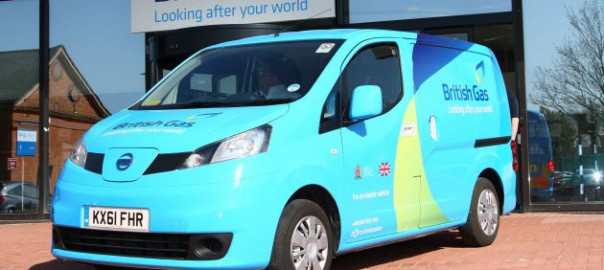
British Gas has a fleet of 100 e-NV200s

Centrica commits to fleet electrification by 2025

Centrica has committed to electrifying its 12,000-strong operational fleet by 2025, five years earlier than it had previously aimed for.

It comes as British Gas – its energy supply arm – orders a further 2,000 of the new all-electric Vivaro-e vans from Vauxhall for its engineers, the largest electric vehicle (EV) order for a commercial fleet in the UK ever. It adds onto the 1,000 ordered by the energy supplier last summer, which at the time was celebrated as the largest order.

All 3,000 of the EVs will be on the road by 2022, with engineers able to volunteer to have the new vans during the rollout, although the company is prioritising high pollution areas to help lower emissions.

British Gas engineers will install all chargers at engineer homes. The company is currently increasing the EV engineer workforce through training existing engineers, recruiting new engineers and creating 1,000 new engineering apprenticeships by the end of 2022.

British Gas has a fleet of 100 e-NV200s

In December, Centrica announced it had signed a three-year framework with Alfen to supply EV chargers to British Gas engineers and Centrica sites, with the chargers to be initially be rolled out at the homes of British Gas engineers before then being installed at their premises and those of Centrica.

Centrica will also make its 1,500 company cars EVs by 2025, it announced, and will be making further orders with Vauxhall for EVs as soon as they are available.

Chris O’Shea, chief executive of Centrica, said that electrifying the company’s fleet will “make a big difference” when it comes to lowering emissions.

“At the same time, we are helping our customers make the switch to electric and working with motor manufacturers such as Vauxhall on services and solutions for their EV customers such as charge points, infrastructure and innovative EV tariffs with cheaper charging at night and free EV miles,” he added.

Read more: CURRENT

It’s Time to Go Green!

If you would like to know more about Solar Panels and the PowerBanx range of home battery systems, and get a free instant quote, please complete our online form:

MPs call for tougher air quality targets

The Government must address ‘alarming’ levels of poor air quality, which disproportionately affect disadvantaged communities, says the House of Commons Environment, Food and Rural Affairs (EFRA) Committee.

Drawing on evidence taken from health experts, local councils and campaign groups, the Committee’s Air Quality report urges the Government to ‘firm up’ its commitment to clean air by amending the Environment Bill – now delayed until autumn – to set a specific target to reduce levels of fine particulate matter (PM2.5) in line with World Health Organisation guidelines.

Long-term targets for other key pollutants, including NO2 and ammonia, must also be set, MPs say.

The committee also wants more support for local authorities.

It suggests there is “too much responsibility” given to local authorities “without sufficient resources” to improve local air quality and wants the Government to provide a long-term funding structure.

Campaign to get people back on public transport
To address concerns that social distancing rules may cause an increase in car use, the MPs want to see a public communications campaign encouraging a return to public transport, once levels of Covid-19 have fallen sufficiently, as well as embracing forms of active travel including cycling and walking.

While the committee welcomes the Government’s pledge to a green recovery, including the ban of the sale of new petrol and diesel cars by 2030, it urges the Government to make investments in infrastructure now, including the roll out of electric vehicle charging points in rural communities, and improved broadband to enable home working.

It also calls on the Government to ‘lead by example’ and update buying standards to ensure that only zero tailpipe emissions vehicles are procured across the public sector by 2025.

Consideration should be given to incentivising small businesses to update transport fleets with cleaner vehicles, MPs say.

Neil Parish MP, chair of the EFRA Select Committee, said: “Every year, an estimated 64,000 deaths are linked to air pollution disproportionately affecting disadvantaged communities.

“In rebuilding after the pandemic, we have a moral duty to put improving air quality at its core.

“While the Clean Air Strategy is a step in the right direction, the Government needs to be more ambitious. Before the Environment Bill comes back, commitments to reduce the levels of toxic particulates that cause the most harm must be strengthened – and targets on reducing the health impacts of air pollution included too.

“We were quick to return to our old ways following the spring (2020) lockdown, with pollution levels bouncing back by the summer.

“The Government has rightly banned the sale of new petrol and diesel cars by 2030, but we need more work to help accelerate towards a greener, cleaner future, so that commuting less and using electric vehicles more will be a real option for the majority.”

Read more: SMART TRANSPORT

It’s Time to Go Green!

If you would like to know more about Solar Panels and the PowerBanx range of home battery systems, and get a free instant quote, please complete our online form:

BMW iX3

UKPN predicts a 3,000% growth in EVs by 2030 while heat pumps set to hit 700k

There could be up to 4.5 million electric vehicles (EVs) and over 700,000 electric heat pumps by 2030 across London, the east and south east.

This is according to UK Power Networks’ (UKPN) 2021 Distribution Future Energy Scenarios research, which looked at the future take up of low carbon technology. It examined four different scenario worlds out to 2050, with bespoke regional modelling and data analysis from Element Energy.

One of these scenarios saw over 3,000% growth in EVs and 2,500% rise in domestic heat pumps by 2030. UKPN said the government’s ban on sales of new petrol and diesel cars in 2030, alongside prices of EVs continuing to fall could help accelerate the sales of new EVs.

BMW iX3
BMW iX3

These figures would keep the UK on track to reach its 2050 net zero target, meanwhile a more ambitious scenario – Leading the Way – reaches net zero two years early by 2048. This scenario predicts 4.2 million fewer cars overall on roads than within other scenarios, with public transport being a more popular choice. It also sees a faster rollout of heat pumps, reaching 1.2 million in UKPN’s service areas by 2030.

Another scenario sees slowing economic growth but still results in a quarter of a million household having solar panels installed, aggregate grid scale battery storage capacity more than doubling that of the UK’s largest nuclear power station and a move towards a zero carbon hydrogen gas grid.

Sul Alli, director of customer services, strategy and regulation at UKPN, said the distribution network operator is “determined to be at the forefront in our industry”, with the government’s Ten Point Plan signalling “an acceleration of the UK’s transition to a net zero carbon economy”.

Within this plan, Prime Minister Boris Johnson set out an ambitious target of 600,000 heat pump installations annually by 2028, whilst earlier this week the government released more detail on the Future Homes Standard, stating that it anticipates “that heat pumps will become the primary heating technology for new homes”.

It comes in the same month that Scottish and Southern Electricity Networks (SSEN) released similar research, finding that across the north of Scotland and central southern England the number of EVs is likely to increase to over 5 million by 2050. It also found that the number of heat pumps will grow from 32,000 now to over 2.47 million.

Read more: CURRENT

It’s Time to Go Green!

If you would like to know more about Solar Panels and the PowerBanx range of home battery systems, and get a free instant quote, please complete our online form:

POD Point Rollout at Tesco Stores (Image: Tesco/POD Point)

Analysis: Demand for plug-ins rose, while fossil fuels dipped

That’s the precis of the sales story for new cars in 2020 but the devil is in the detail

New car registrations fell by around 29.4% in the UK last year, with the 1,631,064 cars sold the lowest total since 1992, as the industry was hit hard by the effects of Covid-19 lockdowns. But new sales of both electric cars and plug-in hybrids both rose sharply, with plug-in cars now accounting for more than 10% of UK sales.

Data from the Society of Motor Manufacturers and Traders (SMMT) reveals 680,076 fewer new cars were sold in the UK last year than 2019, the largest year-on-year fall since 1943.

The bulk of the sales decline in 2020 was attributed to the first lockdown, from March to June last year, when many dealerships were shut. Although sales fell during the second lockdown, in November, dealerships were able to continue offering ‘click and collect’ online sales – which will also be allowed during the current lockdown introduced in England by the UK government.

Before the pandemic began, the SMMT estimated around 2.2 million cars would be sold in the UK last year. The final figure represents a loss to the industry of around £20.4 billion and a £1.9bn loss to the UK government in VAT receipts.

“There’s no surprise it was a very, very difficult year,” said SMMT chief executive Mike Hawes. “These are unprecedented levels and it’s challenging the industry continuously.”

While the overall figures are grim, there are some positive signs for the industry. Sales of battery-electric vehicles (BEVs) and plug-in hybrids (PHEVs) both increased substantially. Those rises will be viewed against a backdrop of the UK’s intention to ban sales of all non-zero-emission cars, with the exception of certain hybrids, by 2030.

POD Point Rollout at Tesco Stores (Image: Tesco/POD Point)

How Covid-19 impacted the UK industry in 2020

Hawes said the UK car market outperformed Spain but fared worse than Germany, France and Italy, adding: “It’s notable that those countries had some form of incentive [for buyers, to boost new cars sales], sometimes confined just to PHEVs and battery-electric vehicles.”

The sales decline was particularly sharp in the fleet and business sectors. While sales of private cars fell 26.6%, fleet sales dropped 31.1% and business sales slumped 43.3%.

Aside from specialist sports cars (up 7.0%), every sector of the market declined in terms of total sales last year, but some performed better than others. Sales of superminis showed the smallest fall in total sales and their overall market share grew from 29.7% to 31.2%.

EV and PHEV sales increase dramatically

The rise in the number of BEVs and PHEVs on sale in the UK helped to significantly increase sales of both last year. A total of 108,205 EVs were sold, representing a 185.9% year-on-year increase and rising from 1.6% of the overall UK car market to 6.6%. Meanwhile, PHEV sales rose 91.2% to 66,877, increasing from 1.5% of the market to 4.1%.

This means that 10.7% of all new cars sold in the UK in 2020 had some level of zero-emission running capability and could be plugged in. With standard hybrids included, 17.5% of cars registered in the UK last year were electrified. Sales of mild-hybrid petrol and diesel cars both increased.

Although that’s encouraging, Hawes noted that these figures will need to continue rising, given the UK government’s target of banning most internal-combustion-engined cars by 2030. He added that meeting this date requires “a strong industrial strategy from government that really ensures the UK remains competitive, attracts investment and remains a strong market [for EVs].” He also said “massive investment” is needed, both to develop battery manufacturing capability and the infrastructure required for mass EV uptake.

“We need an investment in infrastructure of something in the tune of £16bn, with a lot of that going into public on-street charging because not everyone has a driveway or designated parking spot with access to their own charging infrastructure,” said Hawes.

Although they remain the two most popular fuel types, the market share of both petrol and diesel cars declined in 2020. Sales of diesels fell 55.0%, from 581,774 in 2019 to 261,772, while mild-hybrid diesel sales rose from 33,931 to 60,953. Combined, diesel-engined cars now account for 19.7% of the UK market. That compares with 25.2% in 2019 and represents their lowest market share since 2001, when they accounted for 17.8%.

Read more: AUTOCAR

It’s Time to Go Green!

If you would like to know more about Solar Panels and the PowerBanx range of home battery systems, and get a free instant quote, please complete our online form:

West Sussex Council Fleet Goes Electric With Renault ZOE (Image: Renault)

The Zoe Led Renault’s Electric Climb Up The Sales Charts In 2020

Renault claims it is now the EV leader in Europe. The French carmaker announced as much as it wrapped up sales figures for 2020.

The carmaker’s worldwide sales figures are down due to the pandemic, but its EV sales have been buoyed by the little Renault Zoe, which moved in big numbers across the region. Really, Renault’s EV figures have not been buoyed by the Zoe so much as surged on. Renault sold 115,888 electric vehicles in Europe. This is an increase of 101.4 percent over 2019. Of those EVs sold, 100,657 were Zoes.

Clearly, it’s because of the Zoe that Renault is claiming the EV crown in Europe, and we would tell the French multinational to mind its victory lap, with competitors like the Volkswagen ID.3 and the MG ZS EV at the Zoe’s heels. But there’s no denying that the Zoe is enjoying unprecedented success.

West Sussex Council Fleet Goes Electric With Renault ZOE (Image: Renault)

And even though the Zoe is Renault’s EV heavy-hitter at the moment, making up roughly 86 percent of Renault’s entire EV sales, the carmaker expects its other BEV and PHEV models — such as the Clio, Captur and Megane Estate — to round out the sales stats. And Renault is looking forward to its upcoming E-TECH hybrids like the Arkana and Megane sedan.

Try saying that last model name fast five times — it’s actually not that hard, but it is fun. The Dacia Spring Electric and the Renault Twingo Electric will join the Zoe this year, too, and this gives us a clear look at the Groupe Renault’s EV lineup into the new year. Those three models cover the crossover, mini, and supermini segments, so Renault is placing itself in a good position to take on the likes of Volkswagen and Honda.

And to zoom out and look at the broader European market, overall sales of EVs — again, both PHEVs and BEVs — reached 1.33 million units last year, according to Schmidt Automotive Research. That figure amounts to 12 percent of all new cars sold across Europe in 2020. Even though that is a relatively small slice, it’s still a significant number.

Though, it’s important to note that the delta in ICE vs. EV sales could have skewed slightly in favor of electrics due to the pandemic affecting sales overall. Meaning, EVs got a bigger percentage this year as overall sales were down; fewer cars were sold, but more of those that were sold were EVs.

But the big EV push is just beginning, and as of right now, in Europe Renault is pushing hardest.

Read more: JALOPINK

It’s Time to Go Green!

If you would like to know more about Solar Panels and the PowerBanx range of home battery systems, and get a free instant quote, please complete our online form: