Category Archives: Energy and Climate Change

News and articles on climate change, vehicle pollution, and renewable energy.

No global warming pause according to US scientists

The long talked-about global warming pause or ‘hiatus’ may now be consigned to history

US researchers say new evidence casts doubt on the idea that global warming has “slowed” in recent years.

A US government laboratory says the much talked about “pause” is an illusion caused by inaccurate data.

Updated observations show temperatures did not plateau, say National Oceanographic and Atmospheric Administration (Noaa) scientists.

The warming rate over the past 15 years is “virtually identical” to the last century, they report in Science.

Dr Thomas Karl, of Noaa, who led the new analysis, said:

“We would hope that it would inform the general public that the temperature today really is continuing to warm.”

Read more: BBC

Car exhaust (Image: BBC)

1300 deaths from London’s air

The London Evening Standard continues its campaign on London’s poor air quality

More than 1,300 Londoners have already died prematurely due to toxic air so far this year, campaigners warned today.

The shocking death toll includes over 60 estimated fatalities linked to “killer” pollution in Barnet, Croydon and Bromley, and more than 50 in Ealing, Enfield and Havering.

In Wandsworth, Lambeth, Brent, Bexley, Greenwich, Lewisham, Hillingdon, Redbridge and Waltham Forest it was at least 40.

Shadow environment minister Barry Gardiner said:

“So far this year 1,337 people have already died as result of air pollution yet the mayor’s proposals will not bring this down to safe levels until 2030.

“We need a new national framework of low and ultra-low emissions zones within which London must roll out the electrification of buses and the highest vehicle standards for all new fleet vehicles within four years. We need decisive action now to protect our children not vague promises for 15 years down the line.”

Read more: Standard

The 2C climate goal may die in Paris

More bad news about likely results in the Paris climage conference

The U.N.’s Paris climate conference, designed to reach a plan for curbing global warming, may instead become the graveyard for its defining goal: to stop temperatures rising more than 2 degrees Celsius above pre-industrial levels.

Achieving the 2C (3.6 Fahrenheit) target has been the driving force for climate negotiators and scientists, who say it is the limit beyond which the world will suffer ever worsening floods, droughts, storms and rising seas.

But six months before world leaders convene in Paris, prospects are fading for a deal that would keep average temperatures below the ceiling. Greenhouse gas emissions have reached record highs in recent years.

Two Adelie penguins stand atop a block of melting ice on a rocky shoreline at Cape Denison, Commonwealth Bay, in East Antarctica January 1, 2010.   REUTERS/Pauline Askin
Two Adelie penguins stand atop a block of melting ice on a rocky shoreline at Cape Denison, Commonwealth Bay, in East Antarctica January 1, 2010 (Image: Reuters/P. Askin)

And proposed cuts in carbon emissions from 2020 and promises to deepen them in subsequent reviews – offered by governments wary of the economic cost of shifting from fossil fuels – are unlikely to be enough for the 2C goal.

“Paris will be a funeral without a corpse”

said David Victor, a professor of international relations at the University of California, San Diego, who predicts the 2C goal will slip away despite insistence by many governments that it is still alive.

Read more: Reuters


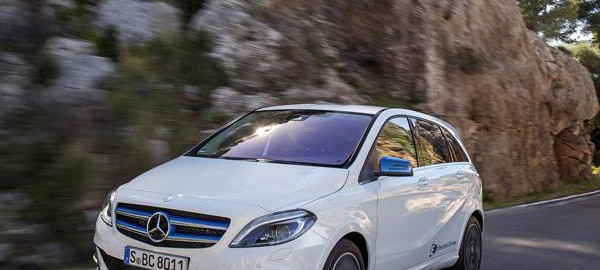
Mercedes B Class Electric (Image: MB)

Mercedes offers home energy storage

Tesla may be the automaker with the highest profile on energy storage, but they’re not the only ones. Now Mercedes goes public with its plans.

As the newest carmaker on the block, it’s perhaps not surprising that Tesla Motors likes to do things differently. That includes reaching beyond the automotive sector with its recently-announced plans to sell standalone battery packs for home and commercial energy storage. Yet that seems to be an idea the world’s oldest car manufacturer is pursuing as well.

Mercedes-Benz now plans to enter the energy-storage business as well. A division of parent company Daimler has been testing battery packs that can power houses, and plans to launch commercially in September, according to Australia’s Motoring.

Like Tesla, Daimler has tested quietly energy-storage systems for some time.

Read more: Green Car Reports

Powervault Energy Storage System (Image: Powervault.co.uk)

Upcoming storage boom in UK market

It looks like affordable home energy storage could finally be coming available in the UK

Maturing and more affordable storage technology promises to “revolutionise” the UK solar PV market, according to a panel at today’s Solar Finance and Investment Conference.

Ray Noble, consultant to the Renewable Energy Association, said that while some storage technologies were 10 to 20 years away from being realised, technological advancements in lithium ion batteries – driven largely by the automobile sector – had meant that storage batteries for residential installations could be affordable within two or three years.

The timeline fits well with projections conducted by industry analysts, with IHS having previously forecast grid-connected energy storage installations to surpass 6GW in 2017, almost treble the 2GW+ estimate for 2015.

Read more: Solar Power Portal

Tesla/Solar City Energy Storage Solution System Is In The “Pilot Program” Stage Today

Home battery storage taking off in Australia

This article argues that Australia has all the ingredients to be the world’s leading market on battery storage: Lots of solar, high prices, and a consumer base that is independent, cost conscious and distrustful of incumbents. It’s from Renew Economy.

There is no doubt that Australia is going to be at the leading edge of battery storage, that is because of the huge number of solar panels already on household rooftops, the high electricity costs (particularly network charges), and the excellent solar resources.

But there is more than that behind the reason so many global battery storage developers are targeting Australia as their first big market, and a test case to the world. It is also about the unique approach Australians have to their energy supplies, a healthy cynicism about the incumbent utilities, and a yearning for energy independence.

Australia, according to Greg Bourne, the chairman of the Australian Renewable Energy Agency, is about to enter the “iPhone” moment in battery storage.

“It would appear that energy storage has arrived!” Bourne told the Australian Energy Storage conference in Sydney. “Of course it’s been around for quite a time in some form or other but just like 2007 was the iPhone moment; 2015 might be seen as the Tesla moment!”

Read more here.

Turbines tower over corn fields in Iowa (Image: D. Graham)

Technical advances making wind power viable everywhere

An interesting and detailed discussion of the technology behind wind power and how it’s changing

Wind power is often described as relying on “mature technology” and, in many contexts, that’s correct. Today, well-sited wind farms in the US and EU generate electricity at a lower cost than coal.

But numerous difficulties remain with the way we build wind turbines, and these difficulties raise the price of the turbines, which in turn determines where they can profitably go. High turbine costs mean that, unless the wind at a site is quite strong, there are typically better ways to spend money.

Fortunately, while wind is mature technology, it hasn’t reached an evolutionary dead end. Plenty of incremental changes can make wind even more affordable—and in many cases, the necessary technology is already being tested.

Read more: Ars Technica

One More Blog Post About Global Warming

I admit to be being concerned about global warming, its many impacts, present and future, on human welfare, and the insidious fact that those least responsible for global warming and the resultant climate change are likely to suffer the most serious impacts.

I also admit to anger at my fellow humans, both scientific and political, who continue to deny the scientific basis for concern about global warming when the consensus among scientists is overwhelming, an unusual situation in science. It is a failure for which the deniers and minimizers should be held accountable.

In retrospect it is easy to reflect on human history and find examples where numbers of people, some highly educated and well respected, were wrong about important events and changes in society. Certainly many were sincere in their ultimately incorrect beliefs, based on limited available information and their life experiences and inevitable mental filters for processing that information. Others were undoubtedly self-serving opportunists who perhaps knew better but compromised their integrity. In this latter category I include those scientists and other well-informed people who denied the link between smoking and serious health effects, and more recently those who deny global warming or minimize its impacts. In my mind they are people who have sold their souls for filthy lucre.

What is so hard to understand about global warming? It is the same physical process that occurs in a car on a hot day that we all experience. The visible light rays from the sun, distributed in a spectrum determined by the sun’s surface temperature (about 5,500C) easily penetrate the car’s glass windows and are absorbed by the car’s interior which gets warm and often hot to the touch. These warm or hot surfaces then reradiate in a spectrum different from the sun’s radiative spectrum because of their vastly different surface temperatures. The basic physics is the same – Planck’s Law, first proposed in 1900, determines the spectral distribution and intensities of the radiation emitted by a black body at temperature T.

In a car the reradiated heat from the interior surfaces is mostly in the infrared region which the glass is not as transparent to as it is to the visible radiation from the sun. This trapping of the reradiated heat causes the car’s interior temperature to rise until enough reradiated infrared radiation gets through the glass due to the interior’s now higher temperature to provide a balance between the energy of the incoming and outgoing radiation streams. This is exactly what happens in the earth’s atmosphere, with gases in the atmosphere playing the role of the glass windshield and determining the atmosphere’s transmission characteristics. Important global warming gases are CO2, largely from combustion of fossil fuels, and natural gas (methane), and a few others. The earth’s current temperatures, hospitable to life, reflect such an energy balance between the sun and the earth. Venus is an example of where the equilibrium temperature reached by the planet to achieve an energy balance with the sun is much higher.

Read more: Lapsed Physicist

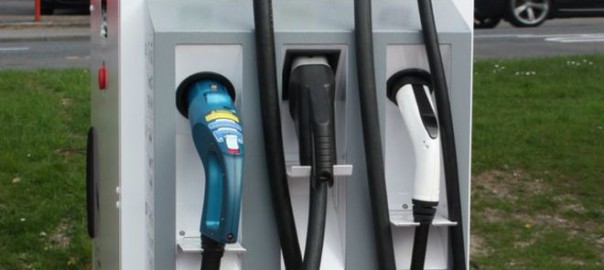
The rapid charger with three standard charging points draws its power from solar panels (Image: Borough of Poole)

Rapid solar vehicle charger installed in Poole

A solar powered rapid charger which can recharge an electric vehicle in 40 minutes has been installed in Dorset

The unit at Poole Civic Centre is the first of its kind in the UK to be installed by a council as part of a government scheme.

It draws its power from solar panels and is faster than standard chargers which take 8-12 hours.

The rapid charger with three standard charging points draws its power from solar panels (Image: Borough of Poole)

Eighteen chargers are to be installed in Dorset following a £900,000 Department for Transport grant.

During daylight hours, the rapid charger with three standard charging points is powered by a 135kWp solar panel installation on the roof of a nearby multi-storey car park.

Ian Potter, the council’s cabinet member for transport, said: “We hope other organisations will follow our lead and install solar panels on their buildings to generate carbon free electricity.”

Six of the rapid chargers are set to be installed in Poole, five in Bournemouth and seven in the rest of Dorset.

Source: BBC

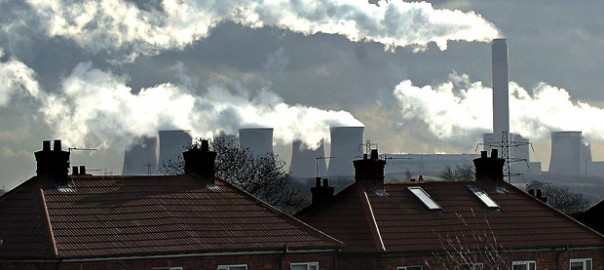
Pollution at Drax Coal Power Station near Selby (Image: J. Giles/PA)

Fossil industry faces a perfect political and technological storm

Fossil industry faces a perfect political and technological storm

The IMF says we can no longer afford the economic wastage of fossil fuels, turning the green energy debate upside down as world leaders plan a binding climate deal in Paris

The political noose is tightening on the global fossil fuel industry. It is a fair bet that world leaders will agree this year to impose a draconian “tax” on carbon emissions that entirely changes the financial calculus for coal, oil, and gas, and may ultimately devalue much of their asset base to zero.

The International Monetary Fund has let off the first thunder-clap. An astonishing report – blandly titled “How Large Are Global Energy Subsidies” – alleges that the fossil nexus enjoys hidden support worth 6.5pc of world GDP.

This will amount to $5.7 trillion in 2015, mostly due to environmental costs and damage to health, and mostly stemming from coal. The World Health Organisation – also on cue – has sharply revised up its estimates of early deaths from fine particulates and sulphur dioxide from coal plants.

The killer point is that this architecture of subsidy is a “drag on economic growth” as well as being a transfer from poor to rich. It pushes up tax rates and crowds out more productive investment. The world would be richer – and more dynamic – if the burning of fossils was priced properly.

This is a deeply-threatening line of attack for those accustomed to arguing that solar or wind are a prohibitive luxury, while coal, oil, and gas remain the only realistic way to power the world economy. The annual subsidy bill for renewables is just $77bn, trivial by comparison.

Read more: Telegraph