Category Archives: Energy and Climate Change

News and articles on climate change, vehicle pollution, and renewable energy.

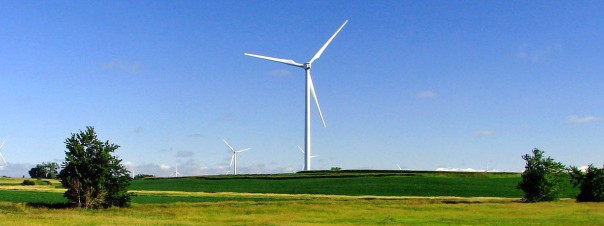
Turbines tower over corn fields in Iowa (Image: D. Graham)

House Of Lords Rejects Discontinuing Onshore Wind Subsidies

After many months of bad news for the country’s renewable energy industry, the House of Lords delivered some unexpected good news.

Wind farm in Europe (Image: EV World)
Wind farm (Image: EV World)

In deliberations on Wednesday, the UK Government’s House of Lords voted to remove a section of the country’s Energy Bill that would end subsidies for onshore wind from 31 March, 2016. This had been an integral part of the newly re-elected Conservative Government’s plans to reshuffle the UK renewable energy industry in a so-called attempt to “keep bills as low as possible for working families and businesses” by ending Government subsidies for onshore wind.

Specifically, Baroness Worthington, the Shadow Energy and Climate Change Minister, moved for the offending clause in the Energy Bill to be removed, which was approved with a vote of 242 to 190.

Read more: Clean Technica

A Low-Carbon World – Are We Finally Getting It?

As we move closer towards the Paris climate talks, something interesting is happening.

imageR_climate_change_unk

Ever more stakeholders seem to be ready to be part of the solution. Negotiations that were earlier bogged down in zero-sum confrontations suddenly have a new fluidity and a ring of can-do optimism about them. Why? … Actually, the new question seems to be: “Why not?” Creating a low-carbon world is seen less as a burden and more as an opportunity.

In developed economies, we are ready to revamp existing industrial and resource infrastructures. In developing economies, we are realising the incredible opportunity of directly building a low-carbon infrastructure. What is clear now is that we have achieved technological as well economic convergence: building a low-carbon world is both technologically feasible and economically attractive. In addition, now we finally seem to reach cognitive convergence: recognising that changing now is a smart choice.

We have all the technologies we need to combat climate change: resource efficiency, renewable energies, and carbon sequestration. There are, of course, challenges. For example, maintaining grid stability when using large amounts of fluctuating renewable energy sources is tricky. However, these challenges are procedural, not fundamental. They can be addressed and solved as we move along. It is worth remembering, that such a piecemeal approach is the very essence of what we know as progress. We expand the Internet, we conquer space, we improve agriculture, and we speed up communication and movement. Transitioning to a low-carbon future is just one more area of progress that is already happening.

Read more: Clean Technica

How come another economic crash is on its way?

David Cameron says a second financial crash is imminent. If he’s right, it’s because the government bailed out the wrong industry, argues Renegade Economist host Ross Ashcroft. He says the last recession was brought on by too much debt. Today private debt is at the greatest level in recorded human history. By ignoring this and instead focusing on the banks, we are heading for economic armageddon.

Source: The Guardian

Exxon’s climate lie: ‘No corporation has ever done anything this big or bad’

The truth of Exxon’s complicity in global warming must to be told – how they knew about climate change decades ago but chose to help kill our planet

I’m well aware that with Paris looming it’s time to be hopeful, and I’m willing to try. Even amid the record heat and flooding of the present, there are good signs for the future in the rising climate movement and the falling cost of solar.

But before we get to past and present there’s some past to be reckoned with, and before we get to hope there’s some deep, blood-red anger.

In the last three weeks, two separate teams of journalists — the Pulitzer-prize winning reporters at the website Inside Climate News and another crew composed of Los Angeles Times veterans and up-and-comers at the Columbia Journalism School — have begun publishing the results of a pair of independent investigations into ExxonMobil.

Though they draw on completely different archives, leaked documents, and interviews with ex-employees, they reach the same damning conclusion: Exxon knew all that there was to know about climate change decades ago, and instead of alerting the rest of us denied the science and obstructed the politics of global warming.

Read more: The Guardian

Tipping Points and Civilizational Survival

In mid-August, TomDispatch’s Michael Klare wrote presciently of the oncoming global oil glut, the way it was driving the price of petroleum into the “energy subbasement,” and how such a financial “rout,” if extended over the next couple of years, might lead toward a new (and better) world of energy. As it happens, the first good news of the sort Klare was imagining has since come in. In a country where the price of gas at the pump now averages $2.29 a gallon (and in some places has dropped under $1.90), Big Oil has begun cutting back on its devastating plans to extract every imaginable drop of fossil fuel from the planet and burn it. Oil companies have also been laying off employees by the tens of thousands and deep-sixing, at least for now, plans to search for and exploit tar sands and other “tough oil” deposits worldwide.

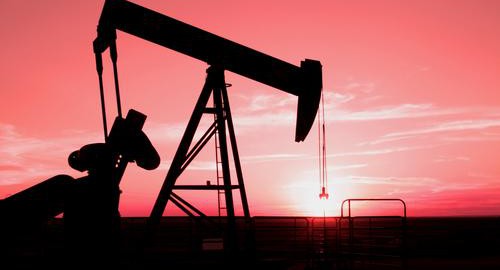
2342872_Oil_Well_shutterstock

In that context, as September ended, after a disappointing six weeks of drilling, Royal Dutch Shell cancelled “for the foreseeable future” its search for oil and natural gas in the tempestuous but melting waters of the Alaskan Arctic. This was no small thing and a great victory for an environmental movement that had long fought to put obstacles in the way of Shell’s exploration plans. Green-lighted by the Obama administration to drill in the Chukchi Sea this summer, Shell has over the last nine years sunk more than $7 billion into its Arctic drilling project, so the decision to close up shop was no small thing and offers a tiny ray of hope for what activism can do when reality offers a modest helping hand.

As Klare makes clear today, when it comes to the burning of fossil fuels, reality — if only we bother to notice it — is threatening to offer something more like the back of its hand to us on this embattled planet of ours. He offers a look at a future in which humanity, like various increasingly endangered ecosystems including the Arctic, may be approaching a “tipping point.”

Read more: Tom Dispatch

A composite image of the Western hemisphere of the Earth (Image: NASA)

Climate scientist hits out at IPCC projections

As a new chairman is appointed to the Intergovernmental Panel on climate Change (IPCC) a University of Manchester climate expert has said headline projections from the organisation about future warming are ‘wildly over optimistic.’

A composite image of the Western hemisphere of the Earth (Image: NASA)

In an article published today in Nature Geoscience Professor Kevin Anderson says that IPCC claims that “global economic growth would not be strongly effected” are unrealistic and that if we are to meet the 2C warming target wealthy and high emitting individuals will need to make dramatic cuts in the energy they use and in the material goods they consume – they will have to accept immediate and fundamental changes to their way of life – at least until the transition away from fossil fuels is complete

Professor Anderson also says that many climate scientists are censoring their own work in order for their results to be more politically palatable, something that does society a “grave disservice.”

Professor Anderson’s claims are a wake-up call to Professor Hoesung Lee, who was installed at the new IPCC chair last week and are well timed in the lead-up to the climate negotiations in Paris, which take place later this year.

A statement last year from the Intergovernmental Panel on Climate Change (IPCC) said that “to keep a good chance of staying below 2 °C, and at manageable costs, our emissions should drop by 40–70 per cent globally between 2010 and 2050, falling to zero or below by 2100”, and that mitigation costs would be so low that “global economic growth would not be strongly affected.”

Professor Anderson notes:

“If the IPCC’s up-beat headlines are to be believed, reducing emissions in line with a reasonable-to-good chance of meeting the 2 °C target requires an accelerated, but still evolutionary, move away from fossil fuels; they notably do not call for an immediate and revolutionary transition in how we use and produce energy. Yet, in my view, the IPCC’s own carbon budgets make it abundantly clear that only a revolutionary transition can now deliver on 2°C.”

According to Anderson, the IPCC’s positive outcomes are:

“Delivered through unrealistically early peaks in global emissions, or through the large-scale rollout of speculative technologies intended to remove CO2 from the atmosphere.

“In stark contrast, I conclude that the carbon budgets associated with a 2 °C threshold demand profound and immediate changes to the consumption and production of energy.

“The complete set of 400 IPCC scenarios for a 50% or better chance of meeting the 2 °C target work on the basis of either an ability to change the past, or the successful and large-scale uptake of negative-emission technologies. A significant proportion of the scenarios are dependent on both. That is unrealistic.”

According to IPCC research, it is cumulative emissions of CO2 that matter in determining how much the planet warms by 2100. The IPCC concludes that no more than 1,000 Gt of CO2 can be emitted between 2011 and 2100 for a 66% chance, or better, of remaining below a 2 °C rise.

However, between 2011 and 2014 CO2 emissions from energy production alone amounted to about 140 Gt of CO2. To limit warming to no more than 2 °C, the remaining 860 Gt of CO2 (out to 2100) must be considered in relation to the three major sources of CO2; those released in cement manufacture, changes in land-use and, most importantly, energy production.

Anderson concludes:

“The severity of such cuts would probably exclude the use of fossil fuels, even with carbon capture and storage (CCS), as a dominant post-2050 energy source. If we are to meet the 2C target, us wealthier high emitting individuals, whether in industrial or industrialising nations, will have to accept radical changes to how we live our lives – that or we’ll fail on 2°C.”

Read more: Phys.org

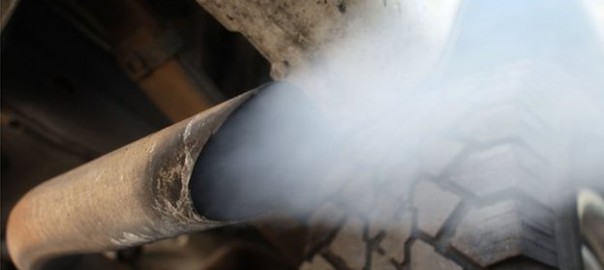
Car exhaust (Image: BBC)

France Moves to End Diesel’s Tax Break Amid Emissions Scandal

  • Environment minister vows to make gasoline, diesel taxes even
  • Decline in diesel’s share of Europe car market may accelerate

France plans to end tax breaks for diesel, ending the special status long enjoyed by the fuel in the wake of Volkswagen AG’s emissions scandal.

Car exhaust (Image: BBC)

French Environment Minister Segolene Royal told journalists after a cabinet meeting on Wednesday:

“It’s obvious today that there’s an inconsistency between the advantages given to diesel and its drawbacks in terms of pollution.”

Officials agreed that, starting with the 2016 budget, diesel taxes will rise and those on gasoline will fall “to neutralize the difference” in the next five to seven years. The price advantage in France amounts 15 euro cents per liter (89 U.S. cents per gallon) of fuel, Royal said.

The move could help further accelerate diesel’s decline in Europe, where four of the five biggest car markets impose lower taxes than on gasoline. The favorable treatment has helped diesel become the dominant technology for cars in Western Europe. But health and pollution concerns had already begun to erode diesel’s popularity even before revelations last month that VW duped regulators about emissions for these cars.

European auto buyers have been attracted by both the lower pump price and better fuel consumption on diesel cars. About 68 percent of cars and light commercial vehicles on French roads as of Jan. 1 were using the fuel, according to the CCFA, the country’s carmakers’ association. The share had started to decline as cities, including Paris, blame smog on diesel exhaust.

The French government’s announcement comes after Volkswagen admitted that it installed technology in nearly 11 million of its diesel vehicles designed to fool emissions testers. The scandal may cause the technology’s market share to drop to as little as 35 percent of cars sold in Europe in 2022 from 53 percent in 2014, according to industry consultant LMC Automotive.

Source: Bloomberg

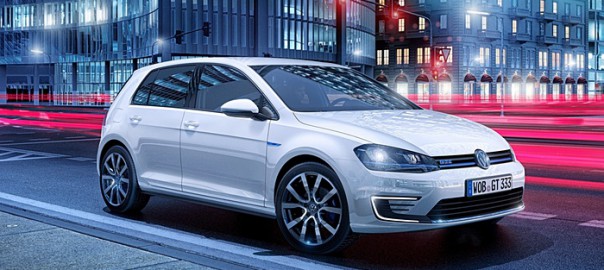
Turn it on: Golf’s GTE is part electric and part petrol, with a promise of 166 miles to the gallon

Car review: Volkswagen Golf GTE

Volkswagen’s new electric hybrid Golf is as green as they come, but can VW ever clean up its ruined reputation?

Turn it on: Golf’s GTE is part electric and part petrol, with a promise of 166 miles to the gallon

After the scandals in sport, food and banking (doping, horse meat, Libor and the rest), only a fool would have bet against the motor industry not cheating the system, too. But no one would have fingered Volkswagen as the culprit. A byword for trust and decency for more than 75 years and the jewel of the German automotive industry, all reduced to lousy tricksters in the space of a single afternoon. That old adage that a good name takes a lifetime to win and a moment to lose has never been more true.

It was ironic, for me at least, that the day Michael Horn, VW’s US boss, stood up and said: “We’ve screwed up!” was also the day I found myself at the wheel of the new Golf GTE. The E in the title stands for Electric, while the GT is for Gran Turismo and tells new customers (and God knows they’re going to need them) that this isn’t just some dull electric buggy affair (a golf buggy!) but a full-on driver’s car that shares the same sporting DNA as the brand’s most famous performance badge – the GTi. It’s certainly a tricky balancing act for this VW to pull off as the car has to be both parsimonious and powerful. A sort of vegan Tarzan.

The car is a plug-in hybrid with both a 1.4 TSI petrol (no diesel here) and a snappy electric engine. It has five operating modes: pure electric, electric plus, battery hold, battery charge and auto hybrid. VW has made the technology that controls each option incredibly straightforward, but like many others, I suspect, after fiddling about with the various settings, I clicked on auto hybrid and let the car sort itself out. It seemed to know what it was about far better than me, anyway. Whichever mode you select the car always pulls away in pure electric and it takes a while to get used to that sudden, silent lurch.

All the extra gubbins associated with two engines and a large battery mean that the car is 300kg heavier than the standard model. That’s like driving everywhere with the Fijian rugby team’s front row sitting in the back. Despite all that heft the car still feels quick and agile around the park (rather like the Fijians themselves) which is testament to the raw power of the GTE. It does 0-62mph in 7.6 seconds with a top speed of 138mph.

Inside and out the car is almost identical to every other Golf on the road. One of VW’s e-mobility taglines is “The future is familiar” – and the GTE is certainly that. Within minutes of taking the wheel you feel completely at home. It’s one of VW’s great strengths that its cars can be totally fresh and yet familiar all at the same time.

Being a hybrid, the car’s eco credentials are clearly what sets it apart. It has a range of 31 miles using its fully charged electric engine alone (and most daily journeys are a lot less than that), and it will do up 580 miles on a single tank if both systems are engaged. VW claims an average of 166mpg (depending on how you drive, of course) with emissions of just 39g of CO2 per km. But, and a BUT could not be BIGGER, what’s the point of it?

How could one arm of VW be producing such a clever, clean machine while its other has sold more than 11m motors that knock out anything up to 40 times the pollution they claim? I fear that VW’s so-called “defeat device” will defeat a lot more than it was intended to.

Source: The Guardian

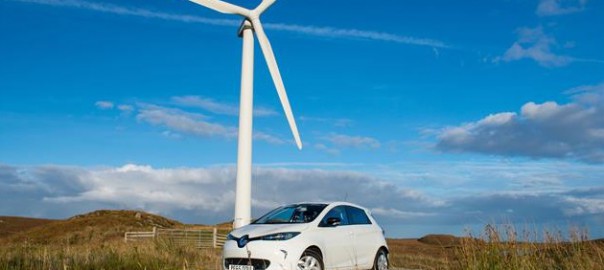
Renault electric vehicles propelled by wind power into the Outer Hebrides

  • 10 Renault electric vehicles available to hire in the Outer Hebrides
  • EVs powered by renewable energy generated by the islands’ wind turbines
  • 100% electric ZOE supermini and Kangoo Van Z.E. ideal for rural and urban areas
  • Vehicles available to hire on an hourly or daily basis
  • New six turbine wind farm to power Outer Hebrides domestic electricity requirements opened today

A 10-strong fleet of 100 per cent electric Renault vehicles powered almost entirely by renewable energy can now be hired by residents and visitors to the Outer Hebrides of Scotland.

Much of the electricity will be generated by the Pentland Road Wind Farm, the largest on any Scottish island that was officially opened today.  The nine ZOE hatchbacks and a Kangoo Van Z.E. have been introduced into the remote region through a unique partnership between E-Car Club and the wind farm operators.

CHR3696_1_nlm_Renault_c

The joint venture brings affordable, zero carbon transport to the area and underlines the suitability of electric vehicles in rural as well as urban environments, with the public being able to hire the innovative models on an hourly or daily basis from a number of locations across the town of Stornoway on the Isle of Lewis.

E-Car Club – the UK’s first entirely electric pay-per-use car club – chose the Renault ZOE and Kangoo Van Z.E. for the Outer Hebrides following the success it has experienced with the models at its other nationwide locations, including its St Andrews operation which opened earlier this year. The models’ specification, fun drive, reliability and excellent customer feedback were also key factors in the decision.

Representing an investment of £24 million and developed over a 12-year period, Pentland Road Windfarm will generate power for the new vehicles as part of providing renewable electricity to the islands. Such is the efficiency of the wind farm and the suitability of the local climate to support wind power, the six turbines will supply sufficient electricity to meet the entire domestic load of the Outer Hebrides.

Nearly 700 households in the Newvalley, Guershader and Laxdale Lane, Sheshader, Knock and Swordale, and Stornoway General communities will also receive 50 per cent of the biannual lease payments made by Pentland Road Windfarm to the Stornoway Trust as landlord, while there will also be agreed annual payments to the Western Isles Development Trust.

Great effort has also been made to minimise the impact of the wind farm on the local landscape. Great care was taken during the design and construction stages so as not to upset the free movement of water across the site and habitat reinstatement measures are also ensuring that plant communities typical of moorland are now returning to areas surrounding the turbine bases and access tracks. Local bird species have also been unaffected by the project.

Ben Fletcher, Renault UK’s Electric Vehicle Product Manager, said:

“This deal underlines that Renault is a leader in the fast-growing EV sector and the rapidly-increasing popularity that our vehicles have with car sharing clubs and the general public alike. As well as offering residents and tourists a great way to save money and help improve air quality, the car sharing scheme perfectly illustrates that our electric offering has the range and ease of use – not to mention driving pleasure – that makes it ideal for all kinds of drivers in all types of areas.”

Those living in or visiting the Outer Hebrides will be able hire one of the Renault ZOEs from E-Car Club for only £5.50 per hour or £45 per day (24 hours). Power and insurance are both included in the price. The Kangoo panel van is available for £7.50 per hour or £60 per day.

In its drive to help combat congestion, reduce parking and enhance local mobility in an environmentally-friendly and affordable way, E-Car Club has over 20 locations across the UK with several more in the pipeline.

Chris Morris, Managing Director of E-Car Club said:

“I’m delighted to be able to officially announce the launch of E-Car Club in the Outer Hebrides. This is an exceptionally exciting project combining shared e-mobility with renewable power generation in what is undoubtedly a landmark sustainable transport project both in Scotland and around the world.”

“The Islands are a perfect fit for electric car sharing with a community who are already committed to a sustainable lifestyle and current car use limited to relatively short journeys and a frequency which does not always justify private ownership.”

“The intention of E-Car is to provide everyone living in, working in or visiting the region with access to flexible, low cost transport whilst at the same time minimising their environmental impact in what is a truly stunning part of the world.”

Peter Crone, Director of Pentland Road Wind Farm and Zero Carbon Marine, said:

“Electric cars are without doubt the future and car sharing is certain to become increasingly more common too, so it’s wonderful that we have been able to introduce both to the community as part of Pentland Road Wind Farm.

“Local reaction to the wind farm has been excellent and the availability of shared electric cars adds another benefit for people in the region. After having driven one of the ZOEs from the most southern to the most northern point of the Outer Hebrides earlier this week, I am certain that the vehicles will prove very popular.”

Dr Alasdair Allan MSP, Scottish National Party (Western Isles) and Mr Angus Brendan MacNeil MP, Scottish National Party, both attended the launch of Pentland Road Windfarm.

Dr Allan said:

“I am happy to see the Pentland Road wind turbines becoming a reality and creating a benefit to the community. I appreciate the great amount of effort that has gone into this project over many years to make it a reality.

“The Isles are uniquely placed to be at the forefront of renewable energy development. Clearly linking the electric car scheme with locally produced wind energy shows the possibilities we have here for a low-carbon future.

“I am looking forward to electric cars becoming more common around the Isles and to seeing the wider community benefits these two schemes should bring in.”

The ZOE is an all-electric, five-door family hatchback available in three trim levels that comes with a very high level of standard specification, despite its competitive price-tag, which starts from £13,445 after the Government Plug-in Car Grant. Standard specification includes items such as climate control and sat-nav.

ZOE is available with a number of features that make for seamless electric vehicle ownership including remote monitoring of the battery and pre-heating the cabin via your smartphone. ZOE also benefits from the patented Chameleon™ Charger that allows it to make the most of the widest range of power supplies and also keep charging times to a minimum – ZOE can charge from zero to 80 per cent full in as little as 30 minutes.  The official NEDC range is 149 miles – Renault estimates that in real-world driving conditions that this equates to around 106 miles in summer and 71 miles in winter.  Retail ZOE customers also enjoy the free installation of a fast-charging 7kW wall box at home, giving a standard charge time at home from 0-100 per cent in just 3-4 hours.

Awarded the titles of What Car? 2015 ‘Best Electric Car for less than £20,000’ and ‘Best Electric Vehicle’ in the Auto Express Driver Power 2015 survey, the Renault ZOE is an affordable route to zero emissions-in-use motoring.

The Kangoo Van Z.E is perfectly suited to many commercial applications with its choice of four bodystyles and 106-mile range (NEDC) – Renault estimates that in real-world driving conditions that this equates to around 84 miles in summer and 53 miles in winter.

In addition to the ZOE supermini and Kangoo Van Z.E, the Renault Z.E range includes the Twizy urban runaround, an innovative open-sided two-seater vehicle.

In a UK electric car market up 54.5 per cent year-to-date, sales of Renault electric vehicles in the UK were up by 92.4 per cent, to 1,316 vehicles, compared to the same period last year.  Total Renault car sales in the UK stood at 59,221 – up 16.7 per cent on first nine months of 2014.
Traders on Wall Street during a summer of market turmoil triggered by China’s attempt to increase its flagging exports with a devaluation of its currency (Image: J. Lane/EPA)

IMF warns of global financial crash

Threat of instability and recession in emerging economies, and legacy of debt and disharmony in eurozone among ‘triad of risks’ outlined in stability report

The risk of a global financial crash has increased because a slowdown in China and decline in world trade are undermining the stability of highly indebted emerging economies, according to the International Monetary Fund (IMF).

Traders on Wall Street during a summer of market turmoil triggered by China’s attempt to increase its flagging exports with a devaluation of its currency (Image: J. Lane/EPA)

The Washington-based lender of last resort said the scale of borrowing by emerging market countries, whose debts are vulnerable to rising interest rates in the US, mean policymakers need to act quickly to shore up the financial system.
Next financial crash is coming – and before we’ve fixed flaws from last one
Read more

José Viñals, the IMF’s financial counsellor, said the threat of instability and recession hanging over economies including China, Brazil, Turkey and Malaysia was one of a “triad of risks” that could knock 3% off global GDP. The second, he said, was the legacy of debt and disharmony in Europe, while the third is centred on battered global markets that are more likely to transmit shocks rather than cushion the blow.

Read more: The Guardian