Category Archives: Energy and Climate Change

News and articles on climate change, vehicle pollution, and renewable energy.

A living room on a skateboard: how electric vehicles are redefining the car

Future EV designs offer drivers more space and leisure, with fewer parts making production more sustainable

Take any petrol car sold today and show it to a mechanic working on a Ford Model T 100 years ago and there is a fairly good chance they would understand roughly how it works. An internal combustion engine at the front turns the wheels, carrying a driver behind a steering wheel, some passengers and luggage.

The advent of electric cars changes everything. No longer will the shape of the car be defined so rigidly by bulky engines, exhaust gas handling or driveshafts. At the same time, digital technology promises to replace everything from rear-view mirrors to the human driver. Never has the car industry had to cope with so many changes all at once.


All of these changes will come to a head in the next few years, says Adrian van Hooydonk, the design boss for BMW Group. Carmakers’ main concerns will be electric power and integrating fast-evolving digital technology – all while improving environmental sustainability. “It will be a reinvention,” he says.

Read more: TheGuardian

It’s Time to Go Green!

If you would like to know more about Solar Panels and the PowerBanx range of home battery systems, and get a free instant quote, please complete our online form:

EVs are avoiding about 3% of global oil demand—a fifth of Russia’s total exports

Russia’s ongoing invasion of Ukraine has triggered international sanctions throttling the country’s oil exports, leading to fears of even higher gas prices. But electric vehicle adoption has been helping make the situation less grim.

Plug-in vehicles avoided roughly 1.5 million barrels of oil per day last year, according to new analysis from Bloomberg New Energy Finance. That’s about one-fifth of Russia’s pre-invasion oil exports, Bloomberg NEF said.

 The oil use avoided by EVs has also doubled since 2015, to about 3% of global demand, according to the analysis.

While electric cars tend to get most of the attention, the analysis found that other vehicle types accounted for the most oil avoidance. Electric two- and three-wheeled vehicles—which tend to be popular in Asia—accounted for 67% of the oil demand avoided in 2021, according to Bloomberg NEF.

Those vehicles had an outsized impact on oil demand. Next in rank were electric buses, which accounted for 16% of avoided oil demand, followed by passenger vehicles at 13%. The latter were the fastest-growing segment, Bloomberg NEF noted.

Read more: GreenCarReports

It’s Time to Go Green!

If you would like to know more about Solar Panels and the PowerBanx range of home battery systems, and get a free instant quote, please complete our online form:

Electric cars: Fuel price chaos ‘eroding loyalty’ to ICE vehicles – Brits tipped to switch

RISING fuel prices are “eroding” consumer loyalty to ICE (internal combustion engine) vehicles, according to a clean energy expert, who argues that electric vehicles will soon be the most economic option for drivers.

Aiden McClean, founder of UFODRIVE, the world’s first electric car rental company told Express.co.uk that there is a perception that electric cars are more expensive than their ICE counterparts. However, with rising fuel prices and the falling price of electric car technology, he argues that this is fast becoming untrue. On average electric cars are 10 percent more expensive to buy than traditional ICE vehicles. However, they are much cheaper to run.

The UK’s electric vehicle drive has put the energy sector on the road to change

Research from Compare the Market has revealed that electric cars are £600 cheaper to run than an equivalent petrol car with average annual costs at £1,264 and £1,834 respectively.
With Russia’s invasion of Ukraine causing fuel prices to skyrocket at a higher rate than electricity, this gap is set to widen even further.

Mr McClean also argues that electric car technology is in its infancy “and as the innovations keep coming, prices will only get lower.”

Analysis from BloombergNEF predicts lithium-ion battery costs will fall to the extent that electric cars will match the price of petrol and diesel cars by 2023 and McKinsey’s Global Energy Perspective 2021 forecasts that “electric vehicles are likely to become the most economic choice in the next five years in many parts of the world”.

Read more: Express

It’s Time to Go Green!

If you would like to know more about Solar Panels and the PowerBanx range of home battery systems, and get a free instant quote, please complete our online form:

Electric vehicles: separating the fact from the fiction and scaremongering

The transport industry is currently on the precipice of a revolution. 27% of all emissions in the UK come from transport, meaning it is a race against time to decarbonise. This revolution is most apparent with the fast roll-out of electric passenger vehicles. Data from New AutoMotive shows that over 190,000 electric vehicles (EVs) were sold in the UK last year, making up 11.65% of the new car market, just nudging past the diesel share. 2022 looks set to be another record-breaking year for EV sales, but it could be even higher with the right government policies. Despite the fact that EVs are a hugely popular practical solution to the climate crisis, considerable misinformation is stalling progress.

Common anti-EV myths

The term ‘technology agnostic policy’, for the most part, is the strategy the UK government is implementing in order to reach the Net Zero by 2050 target. They are not choosing a certain technology to get us there but simply pushing the market to reach the target in the most viable way possible. However, a common criticism levelled at the transition to electric is that the market is being artificially pushed by the government and neither the market nor consumers want this change. The reality is that these things are not mutually exclusive and in order for a fairly distributed transition to occur some government intervention is necessary. Over 40 countries have signed up to gasoline and diesel phase-outs and many major OEMs have pledged to transition to an all-electric fleet. And the customers have followed in increasing numbers—an estimated 4.2 million EVs were sold worldwide last year.

Read more: Automotive World

It’s Time to Go Green!

If you would like to know more about Solar Panels and the PowerBanx range of home battery systems, and get a free instant quote, please complete our online form:

World’s Electric Vehicle Fleet Will Soon Surpass 20 Million

The world is about to pass an important milestone in electric vehicle adoption, which will help combat the rise in worldwide emissions

Pandemic restrictions in 2020 caused the largest absolute drop in carbon-dioxide pollution from energy use since the Second World War. However, lockdowns eventually lifted, and as economic activity picked up, emissions resumed quickly by the year’s end. In December, worldwide emissions were 2% higher than the same month in 2019, according to new data from the International Energy Agency.

On the other hand, electricity generated from the sun and wind reached a record 20% of the mix of global energy sources for the first time, and electric vehicles (EVs) sold in record numbers.

MINI Cooper Concept (Image: MINI)

At the moment, the world is about to pass an important milestone in electric vehicle adoption: 20 million plug-in vehicles are on the road globally, according to BNEF estimates. That’s a remarkable growth from only 1 million EVs on roads in 2016.

In the second half of 2022, almost a million EVs a month will be added to the global fleet, according to BNEF estimates. Vehicles eventually get retired from the fleet due to age, wear-and-tear, crashes and battery degradation. But that’s not a big part of the EV story so far, mostly because the majority of EVs in the global fleet were sold in the past 18 months. By the end of 2022, BNEF is expecting over 26 million plug-in vehicles on the road.

China accounts for 46% of the total sales to date, followed by Europe at 34%. North America is at third place with 15%, but policy support should get the EV market moving this year and next. All the remaining countries combined account for 5% of the global EV fleet.

Read more: Impakter

It’s Time to Go Green!

If you would like to know more about Solar Panels and the PowerBanx range of home battery systems, and get a free instant quote, please complete our online form:

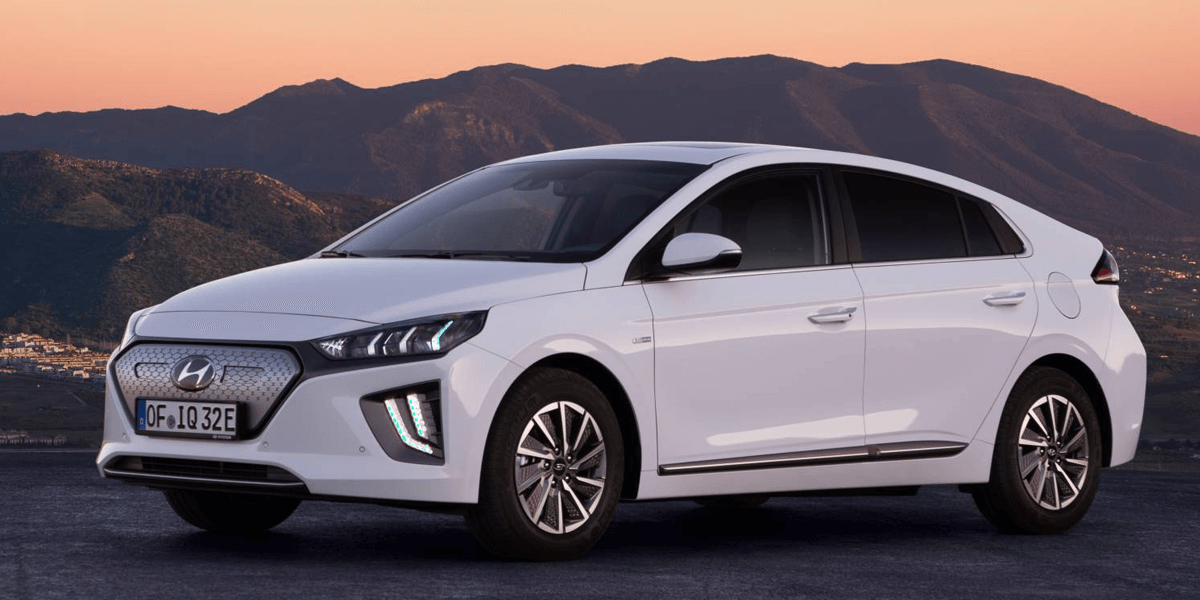
2020 Hyundai IONIQ (Image: Hyundai)

Hyundai develops V2X technology to stabilize the power grid

With V2X, BEVs can feed electricity back into the public power grid

At IAA Mobility 2021, Hyundai announced that it will become climate-neutral by 2045. From 2035, the South Korean brand will only offer zero-emissions vehicles (ZEV, zero-emissions vehicle) in Europe. The cornerstone of this company’s strategy is to develop clean mobility solutions and technologies. This also includes “combined to everything” technology, or “V2X” for short. It summarizes a number of technological innovations that could stabilize the power grid and support the use of renewable energy sources – using power from pure battery electric vehicles (BEV, Battery Electric Vehicle).

Hyundai Ioniq 5 (Image: hyundai.co.uk)

Stabilizing the electricity grid and supporting renewable energies

An applied example of V2X is Vehicle to Network (V2G). This technology enables electricity from BEVs to be fed into the public power grid (English: grid). The energy landscape benefits from the use of BEVs as electricity suppliers, because e-model owners can actively contribute to the stability of their local electricity grid.

Read more: TechNewsInsight

It’s Time to Go Green!

If you would like to know more about Solar Panels and the PowerBanx range of home battery systems, and get a free instant quote, please complete our online form:

BP Chargemaster Rapid Charger at Milton Keynes Charging Hub (Image: T. Larkum)

Government EV charging plan a ‘missed opportunity’ for drivers

The Department for Transport (DfT) has published plans outlining how it seeks to significantly increase the UK’s electric vehicle charging capacity.

Funding for the £1.6 billion Electric Vehicle Infrastructure Strategy has previously been announced. The DfT has now detailed exactly how the allocated money will be used.

At its core is the aim to have 300,000 public charging devices available by 2030. This represents a tenfold increase from the 30,000 currently installed across the country.

Rapid-charging roll-out

Tackling electric vehicle charging for the millions without access to off-street parking is a key part of the strategy.

Some £450 million will be used by the Local Electric Vehicle Infrastructure fund. This allows for local authorities to apply for money to deliver EV hubs and innovative on-street charging solutions.

Solar EV Charging Hub on Princes Street, Dundee (Image: eVolt)


An existing £950 million Rapid Charging Fund is intended to support the installation of fast-charging devices at motorway services. It expects to deliver 2,500 rapid-charging points by 2030, and 6,000 by 2035.

Charging operators will be mandated to provide customers with real-time data about the status of charge points. A 99 percent reliability rate for charging devices will also be expected.

Read more: MotoringElectric

It’s Time to Go Green!

If you would like to know more about Solar Panels and the PowerBanx range of home battery systems, and get a free instant quote, please complete our online form:

BP Chargemaster Rapid Charger at Milton Keynes Charging Hub (Image: T. Larkum)

Electric cars: Positive news for EV owners as plan to boost number of public charge points unveiled

Electric vehicle owners will have access to 300,000 public charge points by the end of the decade, the government has said.

Some £500m will be invested to hit the target, according to the Department for Transport, which represents a 10-fold increase on the current 30,000 public charge points across the UK.

The 2030 deadline is the same date the government aims to ban the sale of new petrol and diesel vehicles, as motorists are encouraged to go electric to help the UK hit net zero by 2050.

Read more: Every key policy in UK’s plan to reach net zero

Helping drivers without access to off-street parking will be a focus when rolling out the new charge points.

The plan, part of the government’s wider Electric Vehicle Infrastructure Strategy, also highlights the need to ensure readily accessible fast charging for longer journeys.

At least 6,000 superfast charge points will be installed across England’s motorways by 2035 as part of an existing £950m commitment.

Read more: SkyNews

It’s Time to Go Green!

If you would like to know more about Solar Panels and the PowerBanx range of home battery systems, and get a free instant quote, please complete our online form:

Petrol prices are driving us to electric cars, and surging utility bills are no deterrent

EV sales are rising way beyond forecasts, indicating that most of us are more than ready to make the switch

The net zero transition is really a big invest-to-save plan. Saving the planet is obviously the main goal, but there are purely financial savings too if you take the long view: we pay upfront in the next few decades for the infrastructure for lower carbon travel, heating and production, which saves us money over time because it’s cheaper to run.

Electric vehicles (EVs) are where the big savings come from. A year’s petrol or diesel typically costs well over £1,000, but if you can charge an electric car at your home overnight the annual fuel cost can be under £150.

Making the EV switch is a big job – we’ve got 32m cars to replace. But the turnover has recently gone up several gears, with EV sales outpacing all forecasts: they now account for one in five new car purchases.

Interesting new research digs into how sensitive are drivers pondering the switch to the savings that come from moving from petrol to electric vehicles. Using data from California, it shows the obvious: EV sales respond both to electricity prices (falling as they rise) and to petrol prices (rising as pump prices increase).

The interesting bit is that sales respond to petrol prices at around four to six times the rate of electricity prices. Why? Consumers are just less aware of electricity prices than petrol prices. I definitely am, having watched petrol pump prices rise by 40p a litre over the past year.

So if you want a (small) silver lining to today’s catastrophic energy price surge, it’s that bonkers pump prices should encourage more people to buy electric vehicles while nuts electricity prices won’t put them off much.

Read more: TheGuardian


It’s Time to Go Green!

If you would like to know more about Solar Panels and the PowerBanx range of home battery systems, and get a free instant quote, please complete our online form:
Electric car particulate pollution myths busted by RAC report

A new report casts doubt on claims that EV tyres and brakes produce more particulates than those of petrol and diesel cars

Motoring organisation the RAC has commissioned an expert report from leading battery electrochemist Dr Euan McTurk to address what it calls ‘negative myths surrounding electric cars’, specifically those around non-exhaust emissions from brake and tyre wear.


The report addresses the quantities of toxic fine particulate matter (also known as PM 2.5s) generated from an electric car’s tyres and brakes, which are often said to be much worse than for an equivalent internal combustion-engined car. That’s because it’s commonly believed the extra weight of an EV’s battery increases the wear on these two items during normal driving.

Government Environment Secretary George Eustice recently spoke to MPs during a select committee session on the subject. “There is scepticism,” the cabinet minister said. “Some say that just wear and tear on the roads and the fact that these vehicles are heavier means that the gains may be less than some people hope, but it is slightly unknown at the moment.”

However, the RAC says Dr McTurk’s findings based on real-world use show that electric car brakes in fact wear much more slowly than those in conventional cars, because EVs rely so heavily on regenerative braking where the motor works in reverse to charge the battery, slowing the car without the brakes being applied. Dr McTurk said: “Dundee Taxi Rentals says that brake pads on its 11 Nissan Leaf taxis have a lifespan of 80-100,000 miles – four times that of their diesel taxis. Discs tend to be changed due to warping rather than wear unlike on a conventionally fuelled vehicle, and last twice as long as those on diesel taxis.

Read more: Auto Express


It’s Time to Go Green!

If you would like to know more about Solar Panels and the PowerBanx range of home battery systems, and get a free instant quote, please complete our online form: