Category Archives: Energy and Climate Change

News and articles on climate change, vehicle pollution, and renewable energy.

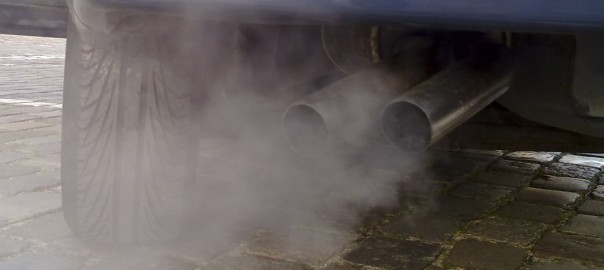
Car exhaust (Image: BBC)

‘Chelsea tractors are the most polluting cars in Britain’

The gas guzzling cars driven in the west London spiritual home of the “Chelsea tractor” are the most polluting in Britain, official figures reveal today.

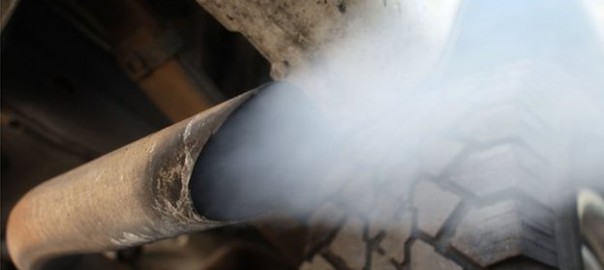
Car exhaust pollution (Image: Wikipedia)

The 44,732 cars registered in Kensington & Chelsea belch an average of 177.7 grams of carbon dioxide for every kilometre driven, far higher than the London average of 163.5 grams.

The data – obtained from the DVLA through a Freedom of Information request – also reveal that more than a quarter of cars in the country’s most affluent local authority area exceed the 200g/km level.

This is [the] threshold of the three highest vehicle tax bands for the most polluting cars including the Land Rover Defender, Porsches, Ferraris and the BMW X5,.

Other wealthy central London boroughs where residents are more likely to afford sports cars or large SUV 4x4s also appeared near the top of the list. The City of Westminster was second with 173.6g followed by City of London on 168.4g.

The least polluting cars are driven in more suburban areas with Hillingdon at the bottom of the league table.

Its 142,455 cars only emitted 152.9 grams of the gas linked with global warming and climate change.

Fewer than 10 per cent of the borough’s cars fall into the tax brackets for the most polluting cars, according to the data, which was obtained by mapping software company Esri UK.

Simon Birkett, Founder and Director of campaign group Clean Air in London, said:

“These numbers show that Boris’ ‘car is king’ policy has protected his richest friends driving gas guzzlers.

“But we don’t need to punish people just because they want a big car sitting in the driveway. Instead we need Emissions-Based Road Charging that hammers or bans those wanting to drive large diesel cars, long distances in the most polluted parts of London at the busiest times of day.

“The next Mayor must embrace smart charging as better, fairer and essential to get London moving and clean its air.”

Read more: Standard
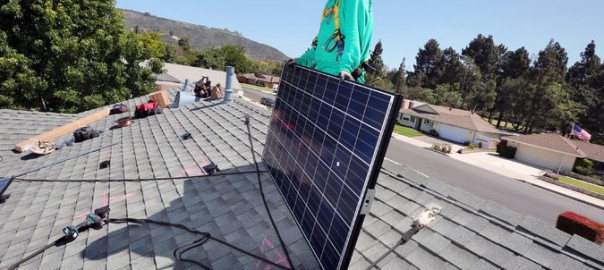
A solar panel being installed at a home in Camarillo, Calif. The state aims to get 50 percent of its energy from renewable sources by 2030. (Image: J.E. Flores/NYT)

Many Homebuyers Are Searching For Solar

FAIRFIELD, Conn. — Environmental experts addressed the Greater Fairfield Board of Realtors Wednesday, explaining what sorts of sustainable bells and whistles the savvy homebuyer is looking for these days.

“Solar is the new granite countertop,”

said Bob Wall, associate director of marketing and outreach at Clean Energy Finance and Investment Authority, or CEFIA.

Workers for SolarCity installing solar panels (Image: JE Flores/NYTimes)

Homes on the market with existing solar panels, modern insulation and sustainable landscaping are getting noticed by a new breed of buyers, he and others said.

About 300 homes in Fairfield currently use some form of solar cells, said Scott Thompson, chairman of the town’s Clean Energy Task Force. When the town announced its Solarize Fairfield initiative recently, about 75 homeowners signed up to learn more.

“It’s really incredible what’s happening,” he said.

Last year, an AP environmental science class at Fairfield Warde High School studied about 16,300 rooftops in town — via Google — to see which would be good candidates for solar cells. The town sent letters to about 5,500 homes that fit the criteria, Thompson said.

The next informational workshop will be held at 7 p.m., April 28, at the Fairfield Public Library.

Elizabeth DiSalvo is an architect at Trillium Architects, which won the 2016 CT Green Building Council’s Award of Excellence. She said her firm focuses on building homes that are energy efficient, sustainable and healthy.

She promoted the idea of “greening” the multiple listings services by letting buyers know if a home boasts state-of-the-art water, heating, cooling and air-quality features.

“We care passionately about this,” she said.


Read more: Daily Voice

The Disruption In Oil Markets Is Just Beginning

The near-term outlook for oil markets is a mess.

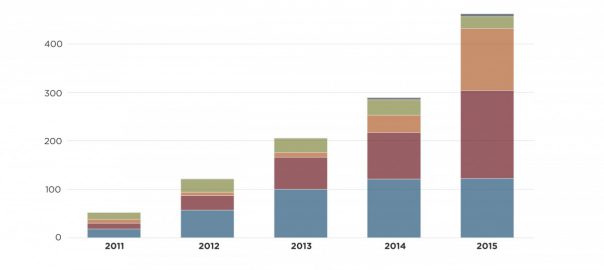
Forbes-blog_EV-chart_1200x698_Forbes

Price volatility recently reached its highest level since the global financial crisis as traders, investors and the industry as a whole try to sort through the significance of two big changes: the rapid rise of the upstart U.S. shale industry, which grew from essentially nothing in 2010 to being the world’s sixth largest source of oil supplies in 2015; and Saudi Arabia’s decision to abandon its role as market manager.

These are important issues for the near term, but they pale in comparison to a much bigger set of long-term issues. Two mega-trends are gaining steam that together have the potential to truly upend the energy industry.

First, signs of serious competition to oil in its most important market—transportation—are beginning to emerge. In the United States, more than 70% of the oil we consume is burned in our cars, trucks, ships and aircraft. The figure globally is only slightly less, at 64%. And for at least the past 100 years, oil has been the only game in town when it comes to mobility fuel.

But based on a slew of data emerging over the past few weeks, that might be about to change. According to a new report from the Frankfurt School, global electric vehicle (EV) sales surged by nearly 60% last year, bringing the total number sold since 2011 to just over 1.1 million. That’s right—despite their higher purchase price, limited range and longer refueling times, electric vehicles took a massive step forward in 2015 even as oil prices collapsed. Incredibly, most of the growth came from China, where sales almost quadrupled compared to 2014.

Read more: Forbes

London parents see toxic air as ‘the biggest health threat to their children’

Mothers revealed their fear over toxic air in London today with seven out of 10 admitting they worry about its impact on their children.

A YouGov poll found that parents in the capital now see air pollution as the biggest health threat.

The stark findings are published as the Standard launches Clean London — a series of hard-hitting reports on dirty air and ways to tackle it.

Experts now blame air pollution for a death toll of more than 9,000 a year in the capital.

The survey, commissioned by environmental lawyers ClientEarth, shows 68 per cent of London parents are worried about their children breathing in dirty air.

More women than men highlighted their fears — 71 per cent against 64 per cent. Mothers have told of their concern that as they push buggies along the street, their young children are sitting at the same level as filthy fumes being spewed out by many diesel cars and other vehicles.

Read more: Standard

India floats ambitious goal: 100 percent electric cars

India has a grandiose vision for its 1.2 billion people to drive only electric vehicles by 2030. And that’s not even the most ambitious part — the government thinks it can do it without spending a dime.
india_car_problem_unk

“We are trying to make this program self-financing,” Power Minister Piyush Goyal said at a youth conference this week, according to The Times of India. “We don’t need one rupee of support from the government. We don’t need one rupee of investment from the people of India.”

Goyal noted that a small working group of politicians will meet in early April to hammer out the details of the goal, which could include a program to incentivize buying electric cars by making them zero-down investments. Later on, the money the car owners would have spent on gas could go to paying off the price of the vehicle, according to Goyal.

As far as number of cars owned per household, India ranks low on the list, with just 6 percent of households reporting they own a car. But that number is expected to grow exponentially as the economy expands.

It’s not the first time India has announced sweeping sustainability plans under Prime Minister Narendra Modi, sometimes to mixed results. Last October, the world’s third biggest greenhouse gas polluter announced its new climate plan, promising to obtain 40 percent of its electricity from renewable sources (primarily solar) by 2030. But earlier this year, the World Trade Organization ruled that provisions of Modi’s solar plan shut out international companies, particularly the U.S., from India’s burgeoning solar market. Most recently, the country levied a 4 percent “green” tax on new passenger vehicle sales, part of an effort to fight air pollution and traffic congestion.

India has no time to waste to tackle its pollution problem as its capital, New Delhi, already has worse air quality than Beijing.

Source: Grist

Tesla Discontinues 10-Kilowatt-Hour Powerwall Home Battery

Tesla has quietly removed all references to its 10-kilowatt-hour residential battery from the Powerwall website, as well as the company’s press kit. The company’s smaller battery designed for daily cycling is all that remains.

Tesla Powerwall home battery storage system (Image: Tesla)

The change was initially made without explanation, which prompted industry insiders to speculate. Today, a Tesla representative confirmed the 10-kilowatt-hour option has been discontinued.

“We have seen enormous interest in the Daily Powerwall worldwide,” according to an emailed statement to GTM. “The Daily Powerwall supports daily use applications like solar self-consumption plus backup power applications, and can offer backup simply by modifying the way it is installed in a home. Due to the interest, we have decided to focus entirely on building and deploying the 7-kilowatt-hour Daily Powerwall at this time.”

Read more: Greentech Media

Electric vehicles are the only solution

Speaking at the New York Auto Show, Ghosn explains why we need EVs

ghosn_nissan_speech_unk

We’ve heard it all before, but that doesn’t mean we don’t enjoy listening to Nissan CEO Carlos Ghosn explain why he’s still in favor of electric vehicles. Plus, if we’ve heard it a few times, imagine how many times he’s had to say it. It happened again this morning at the opening breakfast for the New York Auto Show, and it was as clear and concise an explanation as you can imagine.

When asked why people aren’t buying more electric vehicles, Ghosn said that there were a few factors working against EVs right now, but that, “I still think it’s just a temporary slow down.” He then listed the reasons why.

Ghosn started with the two-degree agreement that came out of COP21, the climate change conference in Paris last year. As the UN explained (PDF):

The goal of limiting global temperature rise to 2 degrees Celsius (3.6 degrees Fahrenheit) by the end of this century was first agreed to in Copenhagen and then by all countries at the Cancun Climate Conference in 2010. It recognizes that climate change is already occurring, but that if we act now, we can avoid the worst impacts of a changing climate.

So, with COP22, which will take place in Morocco this November, not that far away, it’s time to get busy. Transportation makes up 17 percent of all CO2 emissions, Ghosn said, and

“there is no way – no way – we’re going to reach anything around two degrees without the substantial reduction in CO2 from the transportation system. And the only obvious, known technology which allows that is electrification.”

Read more: Autoblog

Drought-hit land in Thailand (Image: EPA/R. Yongrit)

February breaks global temperature records by ‘shocking’ amount

Warnings of climate emergency after surface temperatures 1.35C warmer than average temperature for the month

Drought-hit land in Thailand (Image: EPA/R. Yongrit)

February smashed a century of global temperature records by a “stunning” margin, according to data released by Nasa.

The unprecedented leap led scientists, usually wary of highlighting a single month’s temperature, to label the new record a “shocker” and warn of a “climate emergency”.

The Nasa data shows the average global surface temperature in February was 1.35C warmer than the average temperature for the month between 1951-1980, a far bigger margin than ever seen before. The previous record, set just one month earlier in January, was 1.15C above the long-term average for that month.

“Nasa dropped a bombshell of a climate report,” said Jeff Masters and Bob Henson, who analysed the data on the Weather Underground website. “February dispensed with the one-month-old record by a full 0.21C – an extraordinary margin to beat a monthly world temperature record by.”

“This result is a true shocker, and yet another reminder of the incessant long-term rise in global temperature resulting from human-produced greenhouse gases,” said Masters and Henson. “We are now hurtling at a frightening pace toward the globally agreed maximum of 2C warming over pre-industrial levels.”

Read more: The Guardian

Car exhaust pollution (Image: Wikipedia)

Britain’s diesel drivers ‘should pay up to £800 more in road tax’

Study shows that large number of diesel vehicles exceed emissions limits; pressure to reduce environmental impact spurs support for new tax structure

The first year rate of Vehicle Excise Duty (VED) for new diesel cars should be raised by up to £800 to help reduce emissions, according to Policy Exchange.

Car exhaust pollution (Image: Wikipedia)

The think tank is proposing HM Treasury increase the first year VED rate for new diesels to reflect the greater air pollution caused, in a bid to encourage people to buy lower emission alternatives such as petrol, hybrid or electric cars, instead. Based on a 50% decrease in diesel car sales, the increase in VED would raise around £500 million a year in additional taxes.

A study launched in January as part of a response to the VW ‘dieselgate’ scandal, found that a large number of diesel vehicles were breaking official emissions limits, despite actually following testing processes.

Richard Howard, head of environment and energy at Policy Exchange, said:

“Air pollution is overwhelmingly a diesel problem. The CO2 advantage of diesels has now been eliminated with data from the Society of Motor Manufacturers and Traders showing that, in 2013, CO2 emissions from new petrol cars were lower than those of diesel cars (on a sales-weighted basis).

“Euro 5 diesel cars sold as recently as 2014 perform no better in terms of NOx emissions than Euro 1 diesels sold in the 1990s. Despite this, Government policies continue to promote diesel vehicles. Consequently, diesel cars have increased from 14% of the car fleet in Britain in 2001, to 36% today. While the latest Euro 6 diesel cars show some improvement over Euro 5, on average they still emit six times more NOx than the latest petrol vehicles.”

A diesel scrappage scheme is also being proposed to provide grants for drivers who trade in their old diesel car or van for a lower emission vehicle.

Read more: Autocar

On Pretending That What’s Happening Isn’t Actually Happening

In December I found myself sliding into a state of extreme unwillingness to take on new projects, to continue work on those in hand, to write, or do much of anything else, really, at work or at home. I found myself prodded awake in the night by worries about global warming, the tides of war and migration, the ramifications of random, dismal environmental facts come upon during the course of a day’s work, or of social justice problems encountered in the news and on the streets of Chicago; about any of which I can do very little to help. There were too many meetings with environmental groups, and no time for walks. I could not look at a tree without wondering how its species would fare in coming, climate disrupted years. I had reached a state of incipient burnout.

144222931-638x425_global_warming_shutterstock
Thus, for a few weeks–a month and more, actually–after the solstice, I went into a state of semi-retreat. I did this by allowing myself to hope that COP21 would help bend the climate curve, and by pretending that our ongoing environmental catastrophe, of which climate change, is, after all, only a pernicious, deadly symptom, isn’t happening. I also attempted to pay less attention to the ever increasing spate of bad news, from war, to race relations, to migration, to the grim presidential race—and on and on and on, much of which is at least partly related to said catastrophe, with some industrial civilizational collapse, resource depletion and overpopulation thrown in.

Read more: Ecological Gardening