Category Archives: Energy and Climate Change

News and articles on climate change, vehicle pollution, and renewable energy.

Severe Flooding, Against a Background of Wind Turbines: November 2012, Tyringham, Bucks. (Image: T. Larkum)

A Climate Change Economist Sounds the Alarm

Some people who study climate change believe that addressing it later — when economic growth has made humanity wealthier — would be better than taking drastic measures immediately. Now, though, one of this group’s most influential members appears to have changed his mind.

In the early 1990s, Yale’s William Nordhaus was among the first to examine the economics of reducing carbon emissions. Since then, he and colleagues have mixed climate physics with economic modeling to explore how various policies might play out both for global temperatures and growth. The approach attempts to weigh, in present-value terms, the costs of preventative measures against the future benefit of avoiding disaster.

Nordhaus has mostly argued for a small carbon tax, aimed at achieving a modest reduction in emissions, followed by sharper reductions in the medium and long term. Too much mitigation now, he has suggested, would damage economic growth, making us less capable of doing more in the future. This view has helped fossil fuel companies and climate change skeptics oppose any serious policy response.

Severe Flooding, Against a Background of Wind Turbines: November 2012, Tyringham, Bucks. (Image: T. Larkum)
Severe Flooding, Against a Background of Wind Turbines (Image: T. Larkum)

In his latest analysis, though, Nordhaus comes to a very different conclusion. Using a more accurate treatment of how carbon dioxide may affect temperatures, and how remaining uncertainties affect the likely economic outcomes, he finds that our current response to global warming is probably inadequate to prevent temperatures from rising more than 2 degrees Celsius above their pre-industrial levels, a stated goal of the Paris accords.

Worse, the analysis suggests that the required carbon-dioxide reductions are beyond what’s politically possible. For all the talk of curbing climate change, most nations remain on a business-as-usual trajectory. Meanwhile, further economic growth will drive even greater carbon emissions over coming decades, particularly in developing nations.

Nordhaus deserves credit for changing his mind as the results of his analyses have changed, and for focusing on the implications of current policies rather than making rosy assumptions about the ability of new technologies to achieve emission reductions in the future. Many other analyses — including those of the Intergovernmental Panel on Climate Change — don’t demand such realism.

Nonetheless, the shift in his assessment is stark. For two decades, the advice has been to do a little but mostly hold off. Now, suddenly, the message is that it’s too late, that we should have been doing a lot more and there’s almost no way to avoid disaster.

Perhaps the main lesson is that we shouldn’t put too much trust in cost-benefit calculations, the standard economic recipe for making policy decisions. In the case of climate change, they are inherently biased toward inaction: It’s easy to see the costs of immediate emissions reductions, and much harder to quantify the benefits of avoiding a disaster likely to materialize much farther in the future. By the time the nature and impact of that disaster become clear, it may be too late to act.

Source: Bloomberg
Ten ways the electric car revolution will transform the global economy

The world has begun a rapid switch to electric vehicles. In the first half of this year, worldwide sales were up 57 per cent to 285,000, despite low oil prices, and there are now more than 1m electric cars on the world’s roads for the first time ever.

Last February, Bloomberg New Energy Finance (BNEF) forecast that electric vehicles would account for 35 per cent of new car sales by 2040, and perhaps more under certain scenarios.

The reason for this bullishness is not just that battery costs are plummeting – down 65 per cent in the past five years – it is also that electric vehicles outperform internal combustion cars in so many key areas. They drive more smoothly and accelerate better; they can be charged without a trip to the petrol station; they require less maintenance; they help solve air quality problems; and they increase the autonomy of oil-importing countries.

The rapid uptake of electric vehicles has given established car companies a huge shock. Tesla, the upstart technological leader, expected to produce 85,000 vehicles this year, has a market value of $32bn. That’s more than half of the value of General Motors, which makes nearly 120 times as many vehicles.

All of the incumbent car companies are racing to adjust their strategies, putting electric vehicles at their heart. Volkswagen, still reeling from the “Dieselgate” scandal, is intending to invest $11.2bn over the next decade to push electric vehicles to 25 per cent of its sales.

Read the full list of ten: LinkedIn

A new UK diesel car and van scrappage scheme could be launched in the 2017 Budget

Ministers plan HUGE scrappage scheme for diesel cars and vans

A DIESEL car scrappage scheme could soon see Brits earn up to £8,500 for their clapped-out old vehicles.

Anyone in the UK with a diesel car or van more than 10 years old is likely to be eligible to get whopping discounts off a low-emission replacement.

The Government is keen to rid Britain’s roads of diesel cars by 2030 and officials are considering copying an extremely successful French scheme, where drivers of the worst polluting cars are effectively handed up to €10,000 to switch to a new, super-clean model. More than 100,000 people in France now drive all-electric cars, which are now more popular in the country than hybrids.

A new UK diesel car and van scrappage scheme could be launched in the 2017 Budget

Officials from the Departments for Transport and the Environment are in advanced talks about the plan, which could be announced by Chancellor Philip Hammond as soon as the Budget on March 22.

Ministers are conscious that successive governments encouraged drivers to buy diesel until recently, wrongly believing they were better for the environment. As a result, the new scheme will incentivise diesel drivers to switch, rather than punish them.

It follows a hugely successful scrappage scheme for old cars introduced in 2009 which saw 300,000 drivers replace their car in the first year. Under that programme, designed to boost the car industry in the wake of the recession, motorists were given £1,000 from the Government – matched by car manufacturers – to change their vehicle. It boosted new car sales by as much as 26%.

The new scheme would be far more ambitious by seeking to replace the most-polluting cars in Britain with the very cleanest, with punchy discounts to match.

Read more: Express

Oil Decline (in million barrels of crude oil per day)

How EVs are Driving the Next Oil Crisis

When Bloomberg published a story under a version of the above headline at around this time last year, it was based on data predicting that by 2040, 35 per cent of new cars worldwide “would have a plug.”

Last week, a new graph based on new data by Bloomberg New Energy Finance has updated the details on how such a global shift electric vehilces might play out for the oil sector.

Oil Decline (in million barrels of crude oil per day)

According to the graph, featured below, some 13 million barrels of oil per day will be displaced by electric vehicles by the year 2040 – an amount, BNEF says, that is equivalent to 14 per cent of the Energy Information Agency’s estimated global crude oil demand in 2016.

On the same trajectory, BNEF says, electric vehicles will displace 1.1 million barrels per day by 2025. For the record, that’s slightly down on what BNEF forecast last year: that electric vehicles could displace oil demand of 2 million barrels a day as early as 2023. But we will leave you with Tom Randall’s closing comments on the February 2016 BNEF analysis:

“One thing is certain: Whenever the oil crash comes, it will be only the beginning. Every year that follows will bring more electric cars to the road, and less demand for oil. Someone will be left holding the barrel.”

Source: Renew Economy

Arctic sea ice under the midnight sun (Image: Solent News/Rex/Shutterstock)

Could a £400bn plan to refreeze the Arctic before the ice melts really work?

Temperatures are now so high at the north pole that scientists are contemplating radical schemes to avoid catastrophe

Arctic sea ice under the midnight sun (Image: Solent News/Rex/Shutterstock)

Physicist Steven Desch has come up with a novel solution to the problems that now beset the Arctic. He and a team of colleagues from Arizona State University want to replenish the region’s shrinking sea ice – by building 10 million wind-powered pumps over the Arctic ice cap. In winter, these would be used to pump water to the surface of the ice where it would freeze, thickening the cap.

The pumps could add an extra metre of sea ice to the Arctic’s current layer, Desch argues. The current cap rarely exceeds 2-3 metres in thickness and is being eroded constantly as the planet succumbs to climate change.

“Thicker ice would mean longer-lasting ice. In turn, that would mean the danger of all sea ice disappearing from the Arctic in summer would be reduced significantly,” Desch told the Observer.

Desch and his team have put forward the scheme in a paper that has just been published in Earth’s Future, the journal of the American Geophysical Union, and have worked out a price tag for the project: $500bn (£400bn).

It is an astonishing sum. However, it is the kind of outlay that may become necessary if we want to halt the calamity that faces the Arctic, says Desch, who, like many other scientists, has become alarmed at temperature change in the region. They say that it is now warming twice as fast as their climate models predicted only a few years ago and argue that the 2015 Paris agreement to limit global warming will be insufficient to prevent the region’s sea ice disappearing completely in summer, possibly by 2030.

“Our only strategy at present seems to be to tell people to stop burning fossil fuels,” says Desch. “It’s a good idea but it is going to need a lot more than that to stop the Arctic’s sea ice from disappearing.”

The loss of the Arctic’s summer sea ice cover would disrupt life in the region, endanger many of its species, from Arctic cod to polar bears, and destroy a pristine habitat. It would also trigger further warming of the planet by removing ice that reflects solar radiation back into space, disrupt weather patterns across the northern hemisphere and melt permafrost, releasing more carbon gases into the atmosphere.

Read more: The Guardian

SolarCity System With Tesla Powerwall

Springtime May Be Coming Early for Britain’s Energy Storage Market

The U.K. government is on the verge of making structural changes to the energy market that will benefit storage

Powervault Energy Storage System (Image: Powervault.co.uk)

Last fall, the U.K. government reached out to players across the electricity industry for suggestions on how to reform the grid. Now industry observers are expecting the country’s energy storage market to take a major leap forward if legislation is enacted this spring.

The U.K. is set to become “the world’s best market for scaling up storage,” said Simon Daniel, CEO of energy storage developer Moixa.

“There’s a perfect storm on its way,”

thanks to a combination of new government promotion programs, a deregulated electricity market and a high adoption of solar, said Daniel.

The legislative changes should be implemented after the government finishes mulling over the results of a recent industry consultation on how to make the grid smarter and more flexible.

Joe Warren, managing director of storage developer Powervault, said the laws will

“focus on removing barriers and opening up access to electricity markets through smart tariffs and more stable network charging regimes.”

U.K. government officials have been warming to storage, most recently announcing funding for £9 million (USD $11 million) worth of projects. Storage advocates remain hopeful that the government will integrate their suggestions for market reform.

David Capper, deputy director and head of future electricity networks at the U.K.’s newly created department of Business, Energy and Industrial Strategy (BEIS), has expressed the need to encourage markets for flexibility services.

Removing the regulatory barriers for storage are a major priority for BEIS, Capper said. He also believes developers should be allowed to stack revenues.

Some regulatory changes boosting the prospects for storage are already underway. The regulator Ofgem is planning to separate management of the distribution system from National Grid’s management of the U.K. transmission system in order to encourage competition and improve flexibility.

The new distribution system operator role will allow for greater coordination with the regional network operators to help speed up the grid connection process for new projects, according to the Renewable Energy Agency.

Read more: Greentech Media

My Electric Valentine

“What I actually found from the minute I first took her for a spin, was the very modern run around punched above its weight on looks, equipment & costs”

I find myself in a strange dichotomy at this time of year when pledging love to your nearest & dearest is the thing to do. Just two years ago my new love affair started with a ‘newer, younger model’ named ZOE. She came with all the whistles & bells that would normally only be associated with an uptown high-end model, but I have to say it was love at first sight.

my other love is electric

To set the record straight, I am a 40+ year old biker who works through the week to get to the weekend to take my Harley Davidson out on the open road. A true petrol head, raised on a diet of high octane & V twins so you would be surprised at my reaction to living with an Electric Vehicle.

I was a total sceptic at first, all the usual urban myths of “it will be a faff to charge”, “the car will look like a bubble car” & “I won’t want to be seen driving it”. What I actually found from the minute I first took her for a spin, was the very modern run around punched above its weight on looks, equipment & costs, which took me by surprise. With benefits including cheap running costs, free parking in designated areas, and looks that rival any Cleo or Fiesta to name a few, you would be mad not to consider an Electric Vehicle when the time comes.

On balance, I will always love the thump of a V-twin, but if owning an Electric Vehicle helps me do my part for the environment, keeps my costs low to keep me in the saddle, then I will choose electric every time. I would do your research on Electric Vehicles; trust me there are some fantastic deals out there already and you could be part of a revolution that shapes the way motoring will ultimately go. Check out FuelIncluded.com also for the latest advice and steer on your new love affair.

Submitted by Jay Little – Fuel Included customer

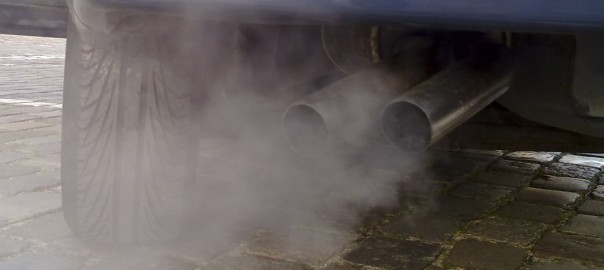
Car exhaust pollution (Image: Wikipedia)

The Solution to Air Pollution is Already Here

The overwhelming cause of air pollution in large cities is vehicle emissions (see DEFRA Website), and the answer is already here. Accelerate adoption of Electric Vehicles (EVs), including cars, buses and ancillary vehicles.

For any EV driver, you will already know that traffic jams are much less stressful than in a petrol or diesel car. Each time you stop, you just stop. You don’t produce any emissions or waste any further energy. This was a delightful and unexpected insight to me when I got my first EV; that part of the stress of a traffic jam for me was the sheer sense of waste – not only was I burning fuel but it was achieving nothing.

Car exhaust pollution (Image: Wikipedia)

A government genuinely committed to delivering clean air could achieve an enormous amount by designing fiscal “carrots” to allow serious growth of EVs to actively reduce air pollution. For example:

Come on Theresa. I know you are busy, but this is too important to leave to chance.

Source: LinkedIn

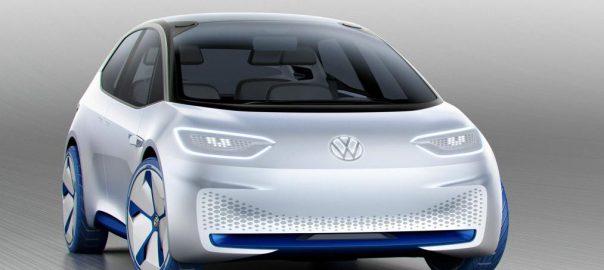
Volkswagen ID Concept electric car (Image: VW)

Hybrids ‘likely to be a passing phase’ as EV technology advances quickly

Hybrids are likely to be a passing phase in car technology that will be surpassed by electric vehicles in a matter of a few years, predicts Glass’s.

The vehicle data provider says that EV technology is advancing so quickly that a new hybrid vehicle being bought today could be effectively obsolete by the time it reaches the end of its normal life.

Volkswagen ID Concept electric car (Image: VW)

Rupert Pontin, director of valuations, said:

“Hybrids are designed to solve two of the problems that EVs have faced in recent years – high cost and low range.

“However, there are very clear signs that these issues are being resolved very quickly. For example, the revised Renault Zoe announced at Paris Motor Show has a 250-mile range and costs £17,000.

“Similarly, the new battery in the BMW i3 lasts around 190 miles and Volkswagen is claiming that its ID, which will come to market in 2020, will go up to 373 miles between charges and be priced competitively.

“The fact is that vehicles such as this effectively remove the rationale for hybrids. Within a few years, hybrids could be seen as little more than a curiosity and this will undoubtedly affect their values.”

Read more: Fleet News

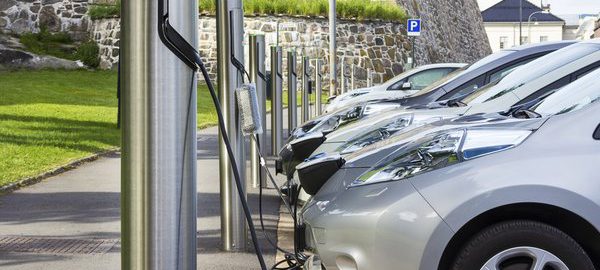
Charging points will be upgraded and up to 20 new outlets will be installed

EV charge points to boost Westminster air quality

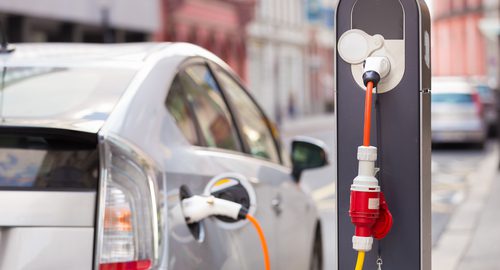
The City of Westminster is to offer a greater number and variety of electric vehicle (EV) charging points available to drivers in the borough from early 2017.

The council announced yesterday (30 November) that from January 2017, charging points will be upgraded and up to 20 new outlets will be installed, including some rapid chargers.

The smart grid technology company BPL, under the Source London network, is putting in place a new model for electric charging, while Chargemaster is rolling out public charging network ‘Polar’.

PodPoint will be upgrading the equipment and the council will be working with new operators to increase provision for EV users across the borough. A new range of tariffs tailored for different users of different types of EV technology is being introduced by the operators.

Charging points will be upgraded and up to 20 new outlets will be installed

Westminster city council was the first local authority in the UK to launch on-street charging points for electric vehicles. It now has over 60 on-street charging points, with an additional 200 available off-street.

The council claims that the expansion of the EV network will also help its Marylebone Low Emission Neighbourhood and other air quality hotspots in the borough by reducing the emission of harmful pollutants.

Cllr Heather Acton, Cabinet Member for Sustainability and Parking, said:

“Poor air quality is a continuing problem for us in Westminster, but we’re doing all we can to help improve our environment through our Greener City Action Plan. This includes encouraging a switch away from diesel vehicles, with easy parking for electric vehicles and improving electric vehicle infrastructure, encouraging car club use as an alternative to a private car, reducing freight and waste vehicle movement, promoting more cycling and walking, eliminating vehicle engine idling and reducing emissions from buildings.”

Cllr Acton also explained that the authority is also trialling new measures within its Marylebone Low Emission Neighbourhood which “will help make real improvements to air quality in central London.” And, she added:

“Electric vehicles can help by cutting reliance on more polluting cars. The expansion of the EV network offers an improved service for those who need a vehicle.”

Read more: Air Quality News