Category Archives: Energy and Climate Change

News and articles on climate change, vehicle pollution, and renewable energy.

Canada’s oil industry ponders its fate as the threat of electric cars looms in the rearview mirror

CALGARY – Canada’s energy industry gathered at a petroleum museum Monday to consider how electric cars threaten oil, the country’s biggest export, especially if battery-powered cars make up 50 per cent of vehicles on the road by 2050 as projected.

Peter Tertzakian, executive director of ARC Energy Research Institute — which organized the event — said even a slow or modest adoption rate for electric vehicles over petroleum-burning vehicles could cause pain for oil producers because

“when demand moves, the price of oil moves,”

which could result in large losses for higher cost oil producers.

An impediment to electric vehicle adoption is car dealerships.

Oil and gas companies have attempted to forecast the rise of electric vehicles in recent years to determine the threat to their market. ExxonMobil Corp, for example, issued one of the more conservative estimates that 10 per cent of cars on the road in 2040 will be electric, but analysts at the conference say the transition may be quicker.

Keynote speaker Steve Koonin, former under secretary at the U.S. Department of Energy and New York University professor, predicts that 50 per cent of the vehicles on the road in 2050 would be electric, meaning the threat to the conventional oil and gas business is large but not immediately imminent.

The adoption rate for electric vehicles is relatively slow, but is projected to ramp up over time and with regulations.

“It takes a long time to penetrate the fleet,”

Koonin said, adding that the pace of adoption of electric vehicles will depend on battery technology.

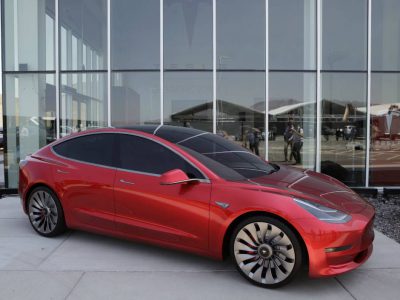
A Tesla Motor Inc. Model 3 vehicle is displayed outside the company’s Gigafactory in Sparks, Nevada, U.S.

Larry Burns, a former General Motors executive who has consulted for energy producer Hess Corp. and Alphabet Inc.’s self-driving car subsidiary Waymo, said the threat to the oil and gas industry is more near-term.

“If you’re not prepared for this inevitability, I think you’re in trouble,”

he told conference attendees.

Burns said fuel efficiency regulations in the U.S. could hamper the demand for petroleum in North America by between 30 and 45 per cent by 2025.

Read more: Vancouver Sun

Thousands of British children exposed to illegal levels of air pollution

Exclusive: More than 2,000 schools and nurseries close to roads with damaging levels of diesel fumes, joint investigation by Guardian and Greenpeace reveals

Hundreds of thousands of children are being exposed to illegal levels of damaging air pollution from diesel vehicles at schools and nurseries across England and Wales, a joint investigation by the Guardian and Greenpeace’s investigations unit has revealed.

The analysis of the most recent government data exposes how dangerous levels of nitrogen dioxide (NO2) pollution from diesel traffic are not limited to large metropolitan centres, but threaten the health of children and young people in towns and cities from Newcastle to Plymouth.

The research shows more than 1,000 nurseries which look after 47,000 babies and children are in close proximity to roads where the level of nitrogen dioxide from diesel traffic exceeds the legal limit of 40µg/m3 (micrograms per cubic metre of air).

The findings come as the government is under pressure to dramatically improve its strategy to clean up the nation’s air, after the high court said its plans to reduce illegal levels of harmful emissions were so poor as to be unlawful. Ministers have to produce new draft measures to tackle air pollution by 24 April.

Chris Griffiths, professor of primary care and public health at Bart’s and the London School of Medicine, said the findings were very important and called for a dramatic change in attitudes within society and from government.

“The research on exposure to traffic fumes and children’s lung growth is pretty consistent. It shows that such exposure reduces lung growth, produces long term ill health and can cause premature death. We should be outraged that we are exposing our developing children to these obvious problems.”

Read More: The Guardian

Renault Zoe vs rivals – cost analysis

We’re all pretty clued-up about the benefits to zero-emission driving these days. Not only do electric cars help to improve air quality, lower your SMR costs and bring a reduction in BIK tax bills, they also deliver huge savings by not relying on fuel.

According to many experts, we are now getting very close to mass adoption of electric cars here in the UK. But they’re still a niche choice for many fleets because higher P11D prices and anxieties over range remain key stumbling blocks.

A whole-life cost approach is essential and, as discussed in the previous pages, they have to be fit for purpose to provide enough savings to outweigh the initial cost. But technology is improving at a considerable rate and battery ranges are increasing with every update.

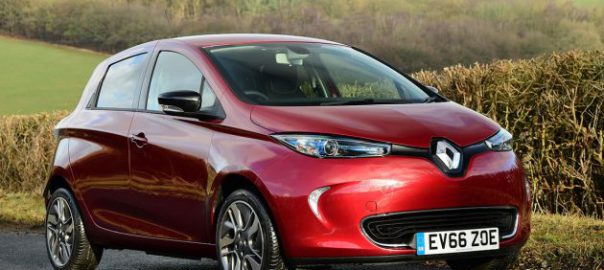
The Renault Zoe

Refreshed in 2016, now offers an official 250-mile range – the best the sector has to offer, Tesla aside.

According to the French carmaker, if you use the most efficient means possible, like charging at night, running a Zoe could cost as little as 2p per mile in warmer weather, rising to 3ppm when the nights draw in. As well as offering the best range of our four cars here, the Zoe is also the cheapest to buy with P11D prices starting as low as £18,440. Despite some disappointing residual values, which are a common theme for most electric cars currently, the Zoe is the cheapest per mile too, costing 52.9p.

Renault Zoe Dynamique Nav 41kWh R90 – 52.2p CPM
P11D: £27,890
CO2 (tax): 0g/km (7%)
BIK 20/40% per month: £33/£65
Official range: 250 miles
National Insurance: £1,116
Boot space: 338 litres
Battery size/power: 41kW/92hp
0-62mph: 13.5 seconds
Residual value: 18.7%/£5,225
Fuel costs: £600
SMR: £890

Nissan Leaf

The biggest-selling electric car here in the UK by some margin, the Nissan Leaf also had a battery upgrade in 2016, which saw its range increase up to 155 miles.

Not only is the Leaf the most popular of our models here, it’s also the most practical, offering a 355-litre boot and the most interior space. The Nissan is also easy to drive and comfortable over longer distances.

Nissan Leaf Acenta 30kWh
P11D: £30,235
CO2 (tax): 0g/km (7%)
BIK 20/40% per month: £35/£71
Official range: 153 miles
National Insurance: £1,210
Boot space: 355 litres
Battery size/power: 30kW/111hp
0-62mph: 11.5 seconds
Residual value: 16.9%/£5,100
Fuel costs: £980
SMR: £1,029

BMW i3

First launched in 2013, the i3 not only marked the start of BMW’s EV model range, it also moved the game forwards considerably for electric car technology as a whole. It was a game-changer in every sense, and although it’s struggled to gain momentum in sales against its rivals, the i3 has remained one of the most desirable and technologically advanced electric cars on the market.

A battery update in 2016 doubled the car’s range to 195 miles officially on one charge, although the carmaker believes 125 miles is more realistic in real-world conditions, plus the i3 is also fitted with a new charging system that is 50% faster.

BMW i3 94ah eDrive
P11D: £32,485
CO2 (tax): 0g/km (7%)
BIK 20/40% per month: £38/£76
Official range: 195 miles
National Insurance: £1,300
Boot space: 260 litres
Battery size/power: 33kW/170hp
0-62mph: 7.3 seconds
Residual value: 30.2%/£9,825
Fuel costs: £1,200
SMR: £1,216

Hyundai IONIQ

The first car to be available in hybrid, plug-in hybrid and electric forms, the Ioniq moved Hyundai into new territory when the car was launched last year. It’s all part of the firm’s plans to have as many as 28 eco-friendly models on sale by 2020.

Arguably the most eye-catching of the four cars, the Ioniq also has one of the biggest boots, and its official 174-mile range is one of the best on offer here too. RVs, as we explained earlier, leave a lot to be desired for EVs in general; however, the Ioniq still manages to better both the Zoe and Leaf at 20.3%, and only the Renault is cheaper per mile for whole-life costs.

Hyundai Ioniq Premium
P11D: £28,940
CO2 (tax): 0g/km (7%)
BIK 20/40% per month: £34/£68
Official range: 174 miles
National Insurance: £1,158
Boot space: 350 litres
Battery size/power: 28kW/120hp
0-62mph: 10.2 seconds
Residual value: 20.3%/£5,875
Fuel costs: £862
SMR: £1,222

Read more: Business Car
VW diesel cheating produced 1,200 premature deaths: MIT study

In September 2015, the U.S. Environmental Protection Agency revealed Volkswagen’s use of illegal “defeat device” software in its diesel cars.

The software routines allowed cars to pass emissions tests while still producing up to 35 times the legal limits of nitrogen oxides in real-world driving, setting off a scandal that is still being dealt with.

Volkswagen is proceeding with buybacks and modifications of affected cars, both in North America and Europe, but the excess pollution may have already had a significant public-health effect.

Excess emissions generated by Volkswagen diesel cars between 2008 and 2015 will cause 1,200 premature deaths in Europe, according to a new MIT study (via ScienceDaily).

Published in the journal Environmental Research Letters, the study looked only at the emissions from affected cars sold in VW’s home market of Germany, which researchers pegged at 2.6 million.

That number includes cars sold under the main Volkswagen brand, as well as Audi, Seat, and Skoda.

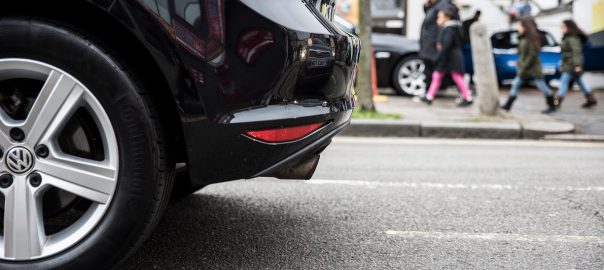
Volkswagen Golf TDI 2010

It also dwarfs the roughly 560,000 cars in the U.S. confirmed to have illegal “defeat device” software, and that are subject to settlements mandating buybacks, modifications, and restitution for owners.

While the diesel vehicles studied were sold only in Germany, their emissions affected people in other European countries, according to the study.

Of the 1,200 premature deaths predicted by the study, 500 were in Germany, while the rest were in other countries.

Read more: Green Car Reports

Tesla exec explains new sustainable energy vision

‘You have solar, battery pack, EV and you control everything on your phone’

Since Tesla’s acquisition of SolarCity, the company’s mission slightly changed from “accelerating the advent of electric transport” to “accelerating the advent of sustainable energy”. The company wants to offer solutions throughout the entire energy production and consumption process.

At a conference last week, a Tesla executive explained the company’s vision for managing all that energy across all their products.

Kurt Kelty, Tesla’s longtime director of battery technology, was in Florida last week to give a keynote address at the International Battery Seminar.
During his presentation, he explained Tesla’s vision of energy management in future houses (transcript via evannex):

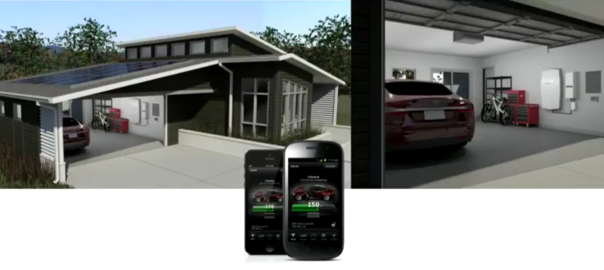
“Where we see the future [is] in houses [and] we want to be your EV provider. Put your EV in your garage and you charge it up with one of our chargers, you have a powerwall… [and] a solar product [solar roof] that we’ll be introducing this summer. You [can] see how this could integrate well in your house. You have solar, battery pack, the EV and you’ve got all the controls on your cell phone and you could control everything. This is the kind of future we see for [your] house.”

That’s similar to the vision shared by CEO Elon Musk when he first suggested Tesla’s acquisition of SolarCity in order to have a single company offering electricity generation, through solar products, storage, through Powerwall and Powerpacks, and consumption, through Tesla’s electric vehicles.

Read more: electrek

Severe Flooding, Against a Background of Wind Turbines: November 2012, Tyringham, Bucks. (Image: T. Larkum)

Northern hemisphere sees in early spring due to global warming

Spring is arriving ever earlier in the northern hemisphere. One sedge species in Greenland is springing to growth 26 days earlier than it did a decade ago. And in the US, spring arrived 22 days early this year in Washington DC.

The evidence comes from those silent witnesses, the natural things that respond to climate signals. The relatively new science of phenology – the calendar record of first bud, first flower, first nesting behaviour and first migrant arrivals – has over the last three decades repeatedly confirmed meteorological fears of global warming as a consequence of the combustion of fossil fuels.

Severe Flooding, Against a Background of Wind Turbines: November 2012, Tyringham, Bucks. (Image: T. Larkum)

Researchers say the evidence from the plant world is consistent with the instrumental record: 2016 was the hottest year ever recorded, and it was the third record-breaking year in succession. Sixteen of the hottest years ever recorded have happened in the 21st century.

The most dramatic changes are observed in the high Arctic, the fastest-warming place on the planet, according to a study in Biology Letters. As the polar sea ice retreats, the growing season gets ever longer and arrives earlier.

The pattern is not consistent: grey willow sticks to its original timetable, and dwarf birch growth has advanced about five days earlier for each decade. But the sedge, almost four weeks ahead of its timetable in a decade, holds the record, according to a study that observed one plot at a field site in west Greenland, 150 miles inland, for 12 years.

“When we started studying this, I never would have imagined we’d be talking about a 26-day per decade rate of advance,”

says Eric Post, a polar ecologist at the University of California, Davis, department of wildlife, fish and conservation biology, who has been studying the Arctic for 27 years.

“That’s almost an entire growing season. That’s an eye-opening rate of change.”

Read More: The Guardian

85% of drivers ‘more seriously’ considering EV thanks to Government investment

The majority (85%) of respondents to a survey by Venson Automotive Solutions say they are now ‘more seriously’ considering buying an electric vehicle (EV) or choosing one as a company car in light of investment from the motor industry, Government and major oil companies.

The Government recently announced that it is putting in place new measures to improve provision of EV charge points as part of the Vehicle Technology and Aviation Bill, and oil supermajors Total and Shell have said that they will be making charging points a standard feature at fuel stations.

Although the commitment by industry and Government to remove purchasing barriers is having a positive influence, the survey also highlights that a focus on educating motorists on the ownership benefits – over and above the environmental benefits – is still needed.

Around two-fifths (41%) of the 100 drivers that responded to the survey said their general lack of knowledge about the total cost or convenience of owning such a vehicle impacted their decision making so Venson is urging fleet managers to arm employees with the tools needed to make an informed company car ownership choice.

Venson’s survey findings reported that the lack of charge points across the UK has been the biggest deterrents for motorists (69%), when it comes to buying or choosing an electric vehicle. Limited mileage range came second (61%), with the cost of charging the vehicle (42%) in third place.

Women (31%) were more reluctant than men (15%) to consider buying or leasing an EV because of the lack of opportunity to ‘try before you buy’.  The cost of insuring an EV is one of the lowest concerns, with only 19% of motorists seeing this as a deterrent and battery safety fears the least of motorists’ EV worries.

Alison Bell, marketing director of Venson Automotive Solutions, said:

“It’s really encouraging to see that public attitudes to electric vehicles are significantly shifting, as the industry invests in the necessary infrastructure. Clearly, Total and Shell’s move to install more charging points is critical in giving motorists the confidence when it comes to choosing EV or hybrid.”

Source: FleetLeasing


Climate Change Impact in Africa (Image: iPhoto)

Record-breaking climate change pushes world into ‘uncharted territory’

Earth is a planet in upheaval, say scientists, as the World Meteorological Organisation publishes analysis of recent heat highs and ice lows

The record-breaking heat that made 2016 the hottest year ever recorded has continued into 2017, pushing the world into

“truly uncharted territory”,

according to the World Meteorological Organisation.

The WMO’s assessment of the climate in 2016, published on Tuesday, reports unprecedented heat across the globe, exceptionally low ice at both poles and surging sea-level rise.

Climate Change Impact in Africa (Image: iPhoto)

Global warming is largely being driven by emissions from human activities, but a strong El Niño – a natural climate cycle – added to the heat in 2016. The El Niño is now waning, but the extremes continue to be seen, with temperature records tumbling in the US in February and polar heatwaves pushing ice cover to new lows.

“Even without a strong El Niño in 2017, we are seeing other remarkable changes across the planet that are challenging the limits of our understanding of the climate system. We are now in truly uncharted territory,”

said David Carlson, director of the WMO’s world climate research programme.

“Earth is a planet in upheaval due to human-caused changes in the atmosphere,” said Jeffrey Kargel, a glaciologist at the University of Arizona in the US. “In general, drastically changing conditions do not help civilisation, which thrives on stability.”

The WMO report was “startling”, said Prof David Reay, an emissions expert at the University of Edinburgh:

“The need for concerted action on climate change has never been so stark nor the stakes so high.”

The new WMO assessment also prompted some scientists to criticise Donald Trump.

“While the data show an ever increasing impact of human activities on the climate system, the Trump administration and senior Republicans in Congress continue to bury their heads in the sand,”

said Prof Sir Robert Watson, a distinguished climate scientist at the UK’s University of East Anglia and a former head of the UN’s climate science panel.

Read more: The Guardian

How I’m saving a small fortune on my commute with an Electric Car

Receiving my monthly bill from Chargemaster makes me happy. Let me explain….

Chargemaster Plc is the company that provides the majority of Milton Keynes electric car charging points and since I only charge publicly I am billed by them for all of my ‘fuel’ consumption.

Working in Central Milton Keynes, I am lucky to have a vast network of charging points available to me, I charge mostly during my working day, as and when I need to. I also benefit from free parking under the Green Permit Scheme which covers all standard bays (purple) and some premium bays (red), both can be found across the city centre area.

Last month’s bill really did highlight to me the huge cost savings owning an Electric Car has given me, and why every commuter in Central Milton Keynes should consider getting one.

Check this out…

Petrol Car

Electric Car

Fuel cost per day

£3 (approx.)*

£0.71**

Parking

£18 (£2 per hr x9)

£0

Total cost per day for parking & fuel

£21

£0.71

Total for the period

(11 working days)


£231

Estimated

£17.20

Actual cost billed by Chargemaster PLC

(inclusive of Polar subscription fee)

Averaged over a working year (261 days)

£5,481

£408.11

*Based on my 15 mile round trip commute @ 20p per mile.

** Averaged daily cost from bill, includes ALL mileage not just commutable distance.

f

Hitachi Starts U.K. Project to Mix Clean Power and Electric Cars

Hitachi Ltd. will work on a smart-grid project in Southwest England that seeks to combine renewable energy, battery storage and electric vehicles to balance power output and usage.

Hitachi’s European unit will develop a so-called Internet-of-things platform for the 10.8 million-pound ($13.13 million) project in the Isles of Scilly, in Cornwall, according to a statement Wednesday. It’s partly funded by the European Union’s Regional Development Fund.

Electric cars can be a very effective way to save you money on motoring (Image: Go Ultra Low)
Electric cars (Image: Go Ultra Low)

PassivSystems Ltd. will supply home energy management systems, and Moixa Energy Holdings Ltd. will contribute systems that allow home and electric vehicle batteries to respond to changing demand.

“This is a key investment area for Hitachi Europe Ltd. and puts us in an ideal position to build IoT engineering capabilities in the U.K. to deploy digital solutions globally,”

Andres Larriera, head of Hitachi’s smart cities energy group, said in the statement.

Source: Bloomberg