Category Archives: Energy and Climate Change

News and articles on climate change, vehicle pollution, and renewable energy.

Tesla to build world’s biggest lithium ion battery in South Australia

Elon Musk’s company Tesla will partner with French utility Neoen to deliver the lithium ion battery designed to improve the security of electricity network.

Elon Musk, the billionaire founder of Tesla, will build the world’s largest lithium ion battery to store renewable energy in South Australia in partnership with French energy utility Neoen.

The 129MWh battery, which is paired with a wind farm, is designed to improve the security of electricity supplies across South Australia.

On Friday the state’s premier, Jay Weatherill, confirmed the deal, which forms a key part of the government’s $550m energy plan.
The state government said Musk had confirmed his pledge made on Twitter in March that he could deliver the battery within 100 days of signing the contract or it would be delivered free.

Romain Desrousseaux, the deputy chief executive of Neoen, said that at 129MWh the South Australian lithium ion battery would become the largest in the world. The battery will be built near Jamestown, in the state’s mid-north, and will be paired with Neoen’s Hornsdale windfarm to provide stability for renewable power being fed into the grid.

Musk told reporters in Adelaide on Friday the project was not without technical challenges, given it would be the largest battery installation in the world “by a significant margin”.

“When you make something three times as big, does it still work as well? We think it will, but there is some risk in that,” he said. “We’re confident in our techniques and the design of the system.”

He anticipated it would help stabilise the grid and help bring down prices for consumers.

Read more: The Guardian

The Uninhabitable Earth

Famine, economic collapse, a sun that cooks us: What climate change could wreak — sooner than you think

I. ‘Doomsday’

Peering beyond scientific reticence.

It is, I promise, worse than you think. If your anxiety about global warming is dominated by fears of sea-level rise, you are barely scratching the surface of what terrors are possible, even within the lifetime of a teenager today. And yet the swelling seas — and the cities they will drown — have so dominated the picture of global warming, and so overwhelmed our capacity for climate panic, that they have occluded our perception of other threats, many much closer at hand. Rising oceans are bad, in fact very bad; but fleeing the coastline will not be enough.

Indeed, absent a significant adjustment to how billions of humans conduct their lives, parts of the Earth will likely become close to uninhabitable, and other parts horrifically inhospitable, as soon as the end of this century.

Even when we train our eyes on climate change, we are unable to comprehend its scope. This past winter, a string of days 60 and 70 degrees warmer than normal baked the North Pole, melting the permafrost that encased Norway’s Svalbard seed vault — a global food bank nicknamed “Doomsday,” designed to ensure that our agriculture survives any catastrophe, and which appeared to have been flooded by climate change less than ten years after being built.

The Doomsday vault is fine, for now: The structure has been secured and the seeds are safe. But treating the episode as a parable of impending flooding missed the more important news. Until recently, permafrost was not a major concern of climate scientists, because, as the name suggests, it was soil that stayed permanently frozen. But Arctic permafrost contains 1.8 trillion tons of carbon, more than twice as much as is currently suspended in the Earth’s atmosphere. When it thaws and is released, that carbon may evaporate as methane, which is 34 times as powerful a greenhouse-gas warming blanket as carbon dioxide when judged on the timescale of a century; when judged on the timescale of two decades, it is 86 times as powerful.

Read more: New York Mag

China just built a 250-acre solar farm shaped like a giant panda

The Panda Power Plant in Datong, China. China Merchants New Energy/Panda Green Energy

The Panda Power Plant in Datong, China.

Most solar farms align their solar arrays in rows and columns to form a grid.

A new solar power plant in Datong, China, however, decided to have a little fun with its design. China Merchants New Energy Group, one of the country’s largest clean energy operators, built a 248-acre solar farm in the shape of a giant panda.

The first phase, which includes one 50-megawatt plant, was completed on June 30, according to PV magazine. The project just began delivering power to a grid in northwestern China, and a second panda is planned for later this year.

Called the Panda Power Plant, it will be able to produce 3.2 billion kilowatt-hours of solar energy in 25 years, according to the company. That will eliminate approximately million tons of coal that would have been used to produce electricity, reducing carbon emissions by 2.74 million tons.

China Merchants New Energy Group worked with the United Nations Development Program (UNDP) to make the Panda Power Plant a reality. The project is part of a larger effort to raise awareness among young people in China about clean energy, the UNDP wrote in a statement.

The Panda Power Plant in Datong, China will stretch 1,500 acres when complete.

The groups hope to build more panda-shaped solar plants throughout China in the next five years.

Source: Business Insider

Volvo and the allure of EVs

Times are changing for drivers

Volvo’s announcement on 5 July that from 2019 it would be making only EVs is not a statement about demand now, but about demand that manufacturers want to create.

For now, penetration of EVs is low. The global stock doubled from 1m units in 2015 to 2m last year, says the International Energy Agency—but that’s still less than 1% of the world’s fleet.

One percent seems a small market to pin your future on. But if Volvo, Tesla and the others have their way, the S-curve for EVs will deal with the rest. Marketing will too. Be ready for the spiel that forever renders the internal-combustion engine something akin to a Nokia 3310 handset and the battery-powered car like the iPhone 6: yesterday’s technology versus today’s.

Back to the future

In short, whatever the size of the market now, carmakers sniff an opportunity to revive their industry by selling not just another tired diesel or gasoline model but something that genuinely feels like it belongs in the same century as a smartphone. Scores of new models will be offered in the next two years—with longer ranges and smaller price tags.

Volvo is too small in most of the world to be anything but a symbol of this. As EV sceptic Cüneyt Kazokoglu, an analyst at Facts Global Energy, wrote on Twitter , despite the company’s “cheap marketing trick”, Volvo’s market share in Europe is just 1.8% and globally only 0.7%.

Still, since 2010, Volvo has been owned by Zhejiang Geely Holding Group, a Chinese conglomerate, and the announcement reflects the proprietor’s priorities. Chinese companies, like their government, are serious about EVs. Purchases there are soaring, thanks in part to subsidies. Beijing wants to increase annual sales tenfold in the next decade, to 7m units a year by 2025. Bloomberg New Energy Finance reckons EVs will account for all new-vehicle sales growth in the next eight years.

It’s hard to overstate how big a problem this is for the oil industry. First the obvious: real EV take-off from consumers has the potential to wipe millions of barrels of daily oil demand from forecasts, especially if trucks start plugging in too.

It would be a problem—though it might not be imminent. A mainstay of industry conferences are the speakers who line up to assure their audience of oil’s longevity, the developing world’s thirst for more crude, the resurgence of SUVs and the statistically peripheral position of EVs in the market. They’ve been right in the past (remember the peak oil threat?) and might be this time too.

If the oil industry’s best answer to EVs is a belief that consumers will resist their urge to buy shinier, more advanced, more efficient and, eventually, more economical technology, then investors will punish them. Pinning a business on hopes that drivers will stick with older, dirtier technology is risky.

Read more: Petroleum Economist

France will ‘ban all petrol and diesel vehicles by 2040’

Environment minister unveils five-year-plan to fulfil country’s commitments under Paris Agreemen.

France plans to ban all petrol and diesel vehicles by 2040, the country’s new environment minister has announced.

Nicolas Hulot made the announcement as he unveiled a series of measures as part of newly elected President Emmanuel Macron’s plan to make the country carbon neutral by 2050.

Mr Hulot said he recognised the target would put pressure on France’s car manufacturers, but he said they currently had projects which

“can fulfil that promise”.

As part of the plan, poorer households will receive a premium so they can swap their polluting vehicles for clean alternatives.

The announcement comes after Volvo said on Wednesday it planned to build only electric and hybrid vehicles from 2019.

Speaking at a press conference, Mr Hulot told reporters France would stop using coal to produce electricity by 2022 and that up to €4bn of investments will help to boost energy efficiency.

The announcements are part of a five-year-plan to encourage clean energy and fulfil the country’s commitments under the Paris Agreement.

Mr Hulot said the government wanted to maintain the country’s “leadership” in climate policy.

“We want to demonstrate that fighting against climate change can lead to an improvement of French people’s daily lives,”

he said.

France is not the only country which aims to ban combustion-powered cars. The Netherlands and Norway previously said they wanted to get rid of petrol and diesel vehicles by 2025 and Germany and India announced similar plans ahead of 2030.

Reacting to the news, ClientEarth CEO James Thornton said: “This is a huge statement of intent from the French government and an example of how we’re likely to see exponential change in the coming years as governments grapple with the necessary changes we have to make for air quality and our climate.

“Coming hot on the heels of Volvo’s announcement yesterday, the outlook for the internal combustion engine is bleak. This is now clearly the direction of travel and industry players who are not on board will find themselves struggling before long.

“These moves should be heeded by other governments and industry, who need to act to protect us from air pollution in our towns and cities and help mitigate climate change.”

Read more: Independent

Carbon in Atmosphere Is Rising, Even as Emissions Stabilize

CAPE GRIM, Tasmania — On the best days, the wind howling across this rugged promontory has not touched land for thousands of miles, and the arriving air seems as if it should be the cleanest in the world.

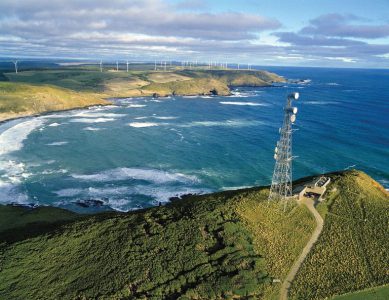
The Cape Grim Baseline Air Pollution Station in Tasmania.
Credit Commonwealth Scientific and Industrial Research Organization

But on a cliff above the sea, inside a low-slung government building, a bank of sophisticated machines sniffs that air day and night, revealing telltale indicators of the way human activity is altering the planet on a major scale.

For more than two years, the monitoring station here, along with its counterparts across the world, has been flashing a warning: The excess carbon dioxide scorching the planet rose at the highest rate on record in 2015 and 2016. A slightly slower but still unusual rate of increase has continued into 2017.

Scientists are concerned about the cause of the rapid rises because, in one of the most hopeful signs since the global climate crisis became widely understood in the 1980s, the amount of carbon dioxide that people are pumping into the air seems to have stabilized in recent years, at least judging from the data that countries compile on their own emissions.

That raises a conundrum: If the amount of the gas that people are putting out has stopped rising, how can the amount that stays in the air be going up faster than ever? Does it mean the natural sponges that have been absorbing carbon dioxide.

“To me, it’s a warning,”

said Josep G. Canadell, an Australian climate scientist who runs the Global Carbon Project, a collaboration among several countries to monitor emissions trends.

Scientists have spent decades measuring what was happening to all of the carbon dioxide that was produced when people burned coal, oil and natural gas. They established that less than half of the gas was remaining in the atmosphere and warming the planet. The rest was being absorbed by the ocean and the land surface, in roughly equal amounts.

In essence, these natural sponges were doing humanity a huge service by disposing of much of its gaseous waste. But as emissions have risen higher and higher, it has been unclear how much longer the natural sponges will be able to keep up.

Read more: The New York Times 

White Tesla Model S (Image: T. Larkum)

Tesla Showroom Opens in Central Milton Keynes

Milton Keynes is probably the leading city in the UK for its support for electric vehicles (EVs). Today I went into the main shopping centre to have a look at the progress on the forthcoming EV Experience Centre.

The new Tesla showroom in the Intu shopping centre (Image: T. Larkum)

On the way I checked out the new Tesla showroom (in the Intu centre) which I hadn’t visited before.

Red Tesla Model S in the new MK showroom (Image: T. Larkum)

I was impressed to see that in the fairly small space they had fitted in a red and a white Model S, and further in a black Model X.

White Tesla Model S (Image: T. Larkum)

Also there was a display of the Powerwall home battery energy storage system, a technology that we are very keen to promote.

Tesla Powerwall display (Image: T. Larkum)

f

Tesla install to bring Europe’s largest community battery to Nottingham

What is expected to be Europe’s largest community battery is set to be installed at an innovative regeneration scheme in Nottingham, with a 2MWh Tesla battery to be deployed in September as part of a housing scheme alongside community solar.

The £100 million Trent Basin project is a new housing development built at the site of an inland dock previously derelict for around two decades. It is expected to deliver 500 homes over five phases with 375kW of rooftop and ground mounted solar and the Tesla battery to be installed by EvoEnergy.

Representatives of the energy consortium behind Trent Basin gather to mark the launch of the pilot scheme. Image: Blueprint

In an innovative use of the solar farm, planning permission has been granted on the basis that the site shall be cleared by 28 February 2020. By this time, the panels from the ground mounted installation will be removed and installed on new homes built as part of the development.

With the addition of the battery storage facility and ground source heat pumps which will also be used on site, Trent Basin is intended to provide a new way to use renewable energy sources by generating, storing and distributing all at a neighbourhood level. A local energy company, Trent Basin ESCO, has already been set up to facilitate the local energy services.

According to project lead Blueprint, the battery will store energy from the local renewable generation to be used on site while also performing grid arbitrage and smoothing out the peaks and troughs of supply and demand.

Read more: Solar Power Portal

Solar pioneer David Mills’ life in the burbs – with PV, two EVs, and battery storage

Solar pioneer David Mills says if he can do it, almost anyone can. And by doing “it”, he means powering his suburban house and his two electric vehicles largely through rooftop solar, and storing excess output in battery storage.

For the last two years, Mills  has been been working on integrating solar PV with battery storage, a hot water system and two EVs – a Tesla Model S85 and a BMW i3 – all in a conventional grid-connected home.

And, he admits, it is not a particularly energy efficient home, or even very well placed for solar. His home is angled about 45°C from the north, and one of his two solar arrays is shaded by trees, particularly in winter.

The house – built in 1921 – has no special seals, window coatings or double glazing. In other words, it is not particularly energy efficient. And it is not exactly low usage either. Apart from the demands of the EVs, there are five adults and three of them are young “profligate” users of electricity.

But here is his cheerful and re-assuring message, particularly for the many people in the suburbs looking at how they can reduce their soaring electricity bills.

“If our home can do it, then any home can do it.”

Mills estimates that if solar PV was being installed today, then almost 2/3 of the energy could be supplied for this house and the two EVs. Were the site less shaded by trees, it had better insulation, and if higher quality solar PV panels were included, then solar could provide a lot more.

“The impact of storage is also likely to be significant,”

he says.

“It can almost eliminate peak and shoulder period imports on many days, even in rainy and cloudy weather if the storage draws from the grid during off-peak periods. Such storage should make the grid more stable, especially in hot weather as experienced in eastern Australia in February.”

Read more: One Step Off The Grid

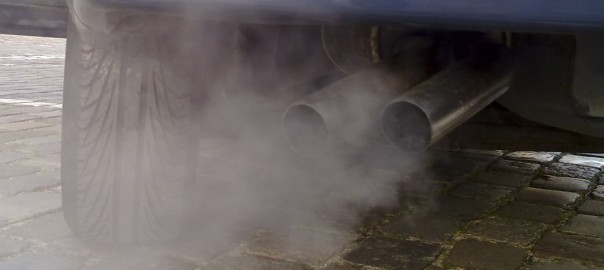
Car exhaust pollution (Image: Wikipedia)

Latest diesel car models remain highly polluting, tests show

Six new vehicles including Land Rover and Suzuki are adding to air pollution crisis, despite stricter rules coming in months.

Car exhaust pollution (Image: Wikipedia)

The latest diesel car models are failing to meet pollution limits when on the road, just three months ahead of stricter new tests, independent tests have found. Results show that none of six new 2017 diesel cars met the EU standard for toxic nitrogen oxides (NOx) pollution in real-world driving.

The updated Equa Index, produced by the testing firm Emissions Analytics, shows that 86% of all diesel models put on to the British market since the 2015 Volkswagen emissions scandal failed to meet the official limit on the road, with 15% producing at least eight times more NOx emissions.

Levels of NOx, emitted mostly by diesel vehicles, have been illegally high in 90% of the UK’s urban areas since 2010. The toxic fumes are estimated to cause 23,500 early deaths a year and the problem has been called a public health emergency by a cross-party committee of MPs.

Ministers have already lost twice in the courts over the adequacy of government air quality plans and are being sued again over their latest proposals, which were published on 5 May but widely condemned as inadequate. The government’s own analysis shows clean air zones in urban centres, where charges deter the most polluting vehicles, are the most effective way to cut pollution quickly. But Nick Molden, CEO of Emissions Analytics, said the wide variation in real-world performance of diesel cars undermines such plans.

Read more: The Guardian