Category Archives: Energy and Climate Change

News and articles on climate change, vehicle pollution, and renewable energy.

Big Oil Starting To Take Notice Of Rise Of EVs

It was really only a matter of time, and now the world’s top oil companies are seeing EVs as a viable and permanent threat.
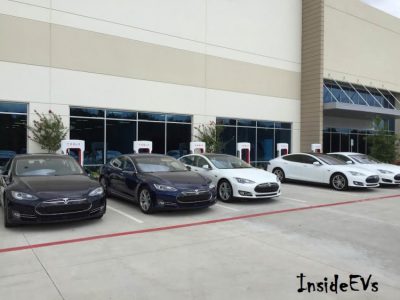
Tesla continues to lead the pack with U.S. plug-in sales, but the Chevrolet Volt and Bolt, Toyota Prius Prime, and Nissan LEAF are all faring well, and the outlook for EVs continues to improve. (via Josh B/InsideEVs)

Though makers of EVs are still much more bullish about the timeline for mass adoption, several oil producers are taking note, and many are beginning to change their initial conclusions. BP and Exxon Mobil have bumped up their estimates this year, and OPEC has quintupled its future sales forecast for plug-in EVs.

Bloomberg New Energy Finance (BNEF ) believes that EVs will sell better than ICE vehicles by 2040, totalling 530 million plug-ins on the road at that time, which will account for one-third of the world’s vehicles. According to a study by BNEF, by 2040 EVs will lower the global oil demand by eight million barrels. Chief of advanced-transport analysis at BNEF in London, Colin McKerracher, shared in a note to clients:
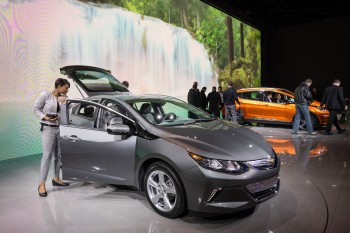
The Chevrolet Volt and Chevrolet Bolt EV on display Friday, February 12, 2016 at the Chicago Auto Show in Chicago, Illinois. (Photo by Steve Fecht for Chevrolet)

“The number of EVs on the road will have major implications for automakers, oil companies, electric utilities and others. There is significant disagreement on how fast adoption will be, and views are changing quickly.”

“What oil companies and car companies are saying is diverging. This is a trillion dollar question, and somebody is going to be wrong.”

Though these estimates will continue to diverge, the truth is that both sides of the equation are seeing that the popularity of EVs is and will continue to increase, which will drop the demand for fossil fuels. While oil companies may be attempting to make it seem like they aren’t concerned, multiple recent forecasts sing a vastly different tune.

  • OPEC’s previous 2040 estimate was 46 million EVs, and now the group representing 14 nations is forecasting 266 million.
  • Exxon Mobil initially predicted 65 million electric cars by 2040, but has now upped it to 100 million.
  • Norwegian-based Statoil ASA sees an electric vehicle market share of 30 percent by 2030.
  • The International Energy Agency raised its 2030 EV fleet size from 23 million to 58 million.
  • BP bumped its future outlook up by a whopping 40 percent, to 100 million plug-ins on the road by 2035.

Obviously, these estimates are markedly different, but the trend is the same. OPEC’s recent oil market report shows that due to EV sales, oil demand in Asia could see significant declines as soon as next year.

There are many variables, which make these type of estimates difficult. Fuel cost and battery costs are two of the most obvious, but another gray area lies in government support and subsidies (or lack thereof).

According to BNEF, top world automakers combined plans show estimated sales of six million EVs per year as soon as 2025, and eight million by 2030, and these estimates continue to rise.

Source: Inside EVs

New battery technology could cut energy bills by up to £40bn by 2050, says Ofgem

The new rules will help households generate and store electricity and sell it back to the National Grid.

File photo dated 24/11/10 of electricity pylons as a Parliamentary report has found that electricity prices have soared because of constant intervention in the energy sector by successive governments.

The first phase of a four-year £246m Government investment into battery technology has been launched in a move that could help bring down household electricity bills.

The long-term vision includes creating giant battery facilities around the National Grid to store excess wind and solar energy for when demand rises.

In addition, new rules will help households with solar panels to generate and store their own electricity with new battery technology and sell it back to the Grid when they do not need it. They will also reduce costs for people and businesses who power down appliances at peak times and use electricity at cheaper times.

The Government and Energy regulator Ofgem estimate that consumers could save between £17bn and £40bn by 2050.

Business and Energy Secretary Greg Clark unveiled details of the first phase, known as the Faraday Challenge, on Monday.

This includes a £45m competition to establish a centre for battery research which he said would help make the UK a world leader in the design, development and manufacture of electric batteries. This will be spearheaded by the Engineering and Physical Sciences Research Council (EPSRC) to bring the best minds and facilities together to create a ‘battery institute’ to make products more accessible and affordable.

A three-month consultation earlier this year on an industrial strategy to increase UK productivity and growth attracted more than 1,900 written responses from businesses and organisations.

A shift to cleaner energy and technologies such as electric cars has made the design, development and manufacture of batteries a top industrial priority.  Mr Clark said:

“A smarter energy system will create new businesses and high-skilled jobs, while making sure our infrastructure is able to cope with demand.”

Gareth Redmond-King, head of climate and energy at WWF, said battery storage was a “game-changer” in the ability to produce clean power from renewables.

“These technologies give us flexibility to run on solar when the sun isn’t shining, and be powered by wind when it is still.

“It will support the transition to electric cars and enable our homes to be more efficient – which means cheaper, as well as cleaner and greener energy.”

Read more: Sky News

Household batteries will be key to UK’s new energy strategy

UK to pioneer energy innovation through batteries in homes as energy department announces £246m research funding

Renewables will be able to provide more of the UK’s energy when companies are able to store it more efficiently. Photograph: Danny Lawson/PA

Batteries and renewable power sources are on the verge of bringing about an “epochal transformation” of the UK that could make energy clean, abundant and very cheap, according to a cabinet minister.

As the government unveiled plans for a more flexible energy system and £246m of funding for battery research, Greg Clark told the Guardian that a smarter grid would “radically” bring down bills.

“Energy, for the last 100 years, for good reasons, we’ve rationed the consumption of [because] it’s been very expensive and environmentally-damaging to consume fossil fuels. [But] given the possibilities we are on the cusp of at the moment, we might move to a world where energy is clean and abundant,”

said the business secretary.

Storing intermittent renewable power in batteries so it was ready when the grid needed it would bring down costs for everyone, including vulnerable and low income energy consumers, he said.

“If only we can capture it [power from the sun and wind] then we can go from energy being a worrying cost to people, to being, if not free, then very cheap,”

Clark said, speaking in Birmingham on Monday as he put energy at the centre of the government’s industrial strategy.

Read more: The Guardian

Drop in wind energy costs adds pressure for government rethink

Tories urged to look at onshore windfarms which can be built as cheaply as gas plants and deliver the same power for half the cost of Hinkley Point, says Arup

Building windfarms in the windiest places, such as Whitelee in East Renfrewshire, would cut opposition from Tory heartlands in the English shires, says Arup. Photograph: Danny Lawson/PA

Onshore windfarms could be built in the UK for the same cost as new gas power stations and would be nearly half as expensive as the Hinkley Point C nuclear plant, according to a leading engineering consultant.

Arup found that the technology has become so cheap that developers could deliver turbines for a guaranteed price of power so low that it would be effectively subsidy-free in terms of the impact on household energy bills.

France’s EDF was awarded a contract for difference – a top-up payment – of £92.50 per megawatt hour over 35 years for Hinkley’s power, or around twice the wholesale price of electricity.

By contrast, Arup’s report found that windfarms could be delivered for a maximum of £50-55 per MWh across 15 years.

ScottishPower, which commissioned the analysis, hopes to persuade the government to reconsider its stance on onshore windfarms, which the Conservatives effectively blocked in 2015 by banning them from competing for subsidies and imposing new planning hurdles.

Keith Anderson, the firm’s chief operating officer, told the Guardian that onshore wind could help the UK meet its climate targets, was proven in terms of being easy to deliver, and was now “phenomenally competitive” on price.

“If you want to control the cost of energy, and deliver energy to consumers and to businesses across the UK at the most competitive price, why would you not want to use this technology? This report demonstrates it’s at the leading edge of efficiency,”

he said.

The big six energy firm believes that with a cap on top-up payments so close to the wholesale price, onshore windfarms would be effectively subsidy-free – but the guaranteed price would be enough to de-risk projects and win the investment case for them.

Read more: The Guardian

UK’s ‘largest solar carport’ – with additional storage – planned for St Ives Park & Ride

Cambridgeshire County Council has received planning permission for what it claims will be the UK’s largest solar carport.

The installation, which will be developed at the site of St Ives’ Park & Ride, is anticipated to be 948kW in size and combined with a battery storage system as part of a wider demonstrator project with collaboration from distribution network operator UK Power Networks (UKPN).

Planning documents associated with the proposals do not include any prospective size of the storage unit.
The council is combining with central government, St Ives town council, UKPN and local businesses in a bid to turn the scheme into a replicable model for future smart grid deployment. Should it prove successful, it is hoped that further systems of similar size and scope could be deployed elsewhere.

The £3 million cost of the project is to be supported by European Regional Development funds, which will provide half, while the council will invest the remaining funds.

The car park will be covered by three main canopies fitted with solar modules. Generated electricity will be used first and foremost to power LED lighting and adjacent electric vehicle charging points.

Any surplus will be stored using the battery system and sold to local customers, helping to finance the project’s development.

Read more: Solar Power Portal

CitiPark is to lower fees for electric vehicles

Drivers of petrol and diesel cars will face higher charges to use private car parks under a plan to tackle pollution.

CitiPark, which operates car parks across Britain, announced yesterday that it would impose a levy on all but the most fuel-efficient vehicles as part of a national drive to cut emissions.

Under the system, cars emitting 75g or less of carbon dioxide per kilometre — typically only electric cars and some hybrid vehicles — would qualify for a “green tariff”.

This would give them an automatic discount of up to 20 per cent of the price charged for petrol and diesel vehicles.

The change has initially been applied to the company’s Clipstone Street underground car park in Fitzrovia, central London.

Read more: The Times

A Brighter Future for Electric Cars and the Planet

There is simply no credible way to address climate change without changing the way we get from here to there, meaning cars, trucks, planes and any other gas-guzzling forms of transportation.

That is why it is so heartening to see electric cars, considered curios for the rich or eccentric or both not that long ago, now entering the mainstream.

A slew of recent announcements by researchers, auto companies and world leaders offer real promise. First up, a forecast by Bloomberg New Energy Finance said that electric cars would become cheaper than conventional cars without government subsidies between 2025 and 2030.

At the same time, auto companies like Tesla, General Motors and Volvo are planning a slate of new models that they say will be not only more affordable but also more practical than earlier versions. And officials in such countries as France, India and Norway have set aggressive targets for putting these vehicles to use and phasing out emission-spewing gasoline and diesel cars.

Skeptics may see these announcements as wishful thinking. After all, just 1.1 percent of all cars sold globally in 2016 were electrics or plug-in hybrids. And many popular models still cost much more than comparable fossil-fuel cars.
The skeptics, however, have consistently been overly pessimistic about this technology. Electric cars face challenges, yet they have caught on much faster than was thought likely just a few years ago. There were two million of them on the world’s roads last year, up 60 percent from 2015, according to the International Energy Agency.

The cost of batteries, the single most expensive component of the cars, fell by more than half between 2012 and 2016, according to the Department of Energy. Tesla has indicated that it can produce batteries for about $125 per kilowatt-hour. Researchers say the cost of electric cars will be at parity with conventional vehicles when battery prices reach $100 per kilowatt-hour, which experts say is just a few years away. Electric cars are more efficient, of course, but they also require less maintenance, which should make them cheaper to own over time.

Read more: The New York Times

Combustion engines: high emissions from short commutes a huge challenge

Drivers in the U.S. have longer commutes than those in Europe and Asia, on average.

In the U.K., short commutes in vehicles with combustion engines—whether gasoline or diesel—pose particularly tough emission problems.

That’s because the exhaust aftertreatment systems have to warm up fully before they cut emissions to the levels required under EU regulations.

The problem has been highlighted by the British consultancy Emission Analytics, which routinely analyzes the data from its various EQUA Index sectors to highlight different emission statistics and challenges.

The company’s trenchant analyses of real-world emission and fuel-consumption data has gotten considerable attention, and it has now expanded into the U.S. as well.

This week, it noted that according to British government data, the average distance of a car journey in inner London was just 1.5 miles.

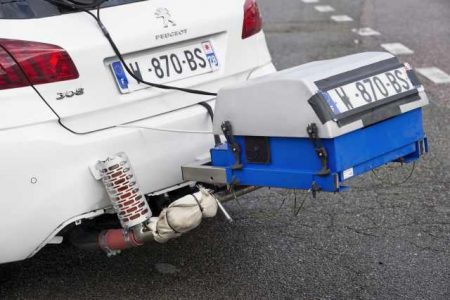
Portable Emissions Measurement Systems (PEMS) on a Peugeot 308

The implications of that figure, as well as the fact that more than half of all vehicle trips in the U.K. are under 5 miles, are dire for limiting emissions of nitrogen oxides (NOx). As the company wrote:

The average daily distance driven in [U.K.] passenger cars is not sufficient for a vehicle’s pollution control system to warm up and become fully functional.

The resultant high levels of cold start NOx emissions, from both gasoline and diesel engines, could provide an additional challenge for urban air quality initiatives such as the proposed Clean Air Zones in the UK.

Read more: Green Car Reports

More than two thirds of UK interested in EVs

New research shows 69% of people in the UK would consider switching to an electric vehicle (EV).

Charge point provider NewMotion surveyed more than 3,000 consumers to gain insight into their understanding of EVs and the issues surrounding them.

When asked why they would buy an EV, 59% of respondents said they wanted to reduce pollution.

Around 57% of people also suggested they wanted to reduce the money they’re spending – existing owners claim they are saving 15% of the cost associated with fuelling a traditional car.

However, the survey also illustrated a lack of understanding from the general public.

More than three quarters of respondents did not know what ‘EV’ stood for and roughly a quarter didn’t know how an electric car would be charged.

They were also unclear on how far an EV can travel, with the majority of people guessing an average of 63 miles range on a fully charged battery, far less than a car such as the Nissan Leaf, which can travel 107 miles on a full battery.

Sander van der Veen, UK Country Manager of NewMotion, said:

“There’s definitely an appetite from consumers to move away from the traditional petrol/diesel model of transport.

“Not only are costs increasingly prohibitive, consumers are concerned about the environmental impact of driving with petrol and diesel.”

This opposes suggestions higher insurance premiums are putting drivers off from switching to hybrids and EVs.

Source: Energy Live News

Electric cars are the key to ending our addiction to oil

A shift of emphasis to electric cars will raise supply challenges for both components suppliers and talent managers.

Last orders’ has been called for the internal combustion engine.

Volvo hybrid car concept

Just a day after Volvo announced plans to include an electric motor element in all its cars, the new French government said it will legislate to phase out non-electric vehicles.

This will not be an overnight transformation. Volvo has said that all new cars from 2019 will be either fully electric, hybrid or what it calls “mild hybrid”.

The French government’s 2040 deadline is sensibly long-term, given that in France only 1.1% of new car registrations last year were for fully electric vehicles and in the whole of the EU the number was just 0.6%.

But make no mistake – this is a big shift. Other countries will follow France’s lead; other car makers will follow Volvo in the footsteps of Toyota, Tesla and others.

Manufacturers of electric cars seek talent

For the electronics sector, it’s a big deal too. The automotive industry is already a major employer for electronics engineers as in-car electronics become increasingly sophisticated.

Jaguar Land Rover’s recent campaign to recruit 1,000 engineers is testament to how hard they have to work to recruit already, but as the market shifts more to electric vehicles it will surely soak up even more of the talent pool.

Growing demand for components from tier one automotive firms has been mooted as one cause of strong sales and extending lead times in the market. This is before the shift to electric really takes hold, so expect massive changes as the market adapts.

How stakeholders in the electronics supply chain adapt to the challenge will be a defining factor in our attempts to break our addiction to oil.

Source: Electronics Weekly