Category Archives: Energy and Climate Change

News and articles on climate change, vehicle pollution, and renewable energy.

CORONAVIRUS LOCKDOWN GIVES US A TASTE OF A FULLY ELECTRIC FUTURE

More people are considering switching to electric vehicles thanks to improved air conditions during the pandemic.

With less air pollution being documented due to the COVID-19 lockdown, more people are realising the benefits of moving away from petrol and diesel cars according to a study by Venson Automotive Solutions.

Of the participants surveyed by Venson, 45 per cent agreed that the vast improvement in air quality at the current time had made them reconsider owning an electric car (EV) in the future. Another 17 per cent said that it had reaffirmed their decision to buy an electric car.

“Reducing emissions has been a hot topic and a clear government, business and personal target for several years now, but still the growth of electric vehicle (EV) ownership has been slow,” says Alison Bell, Marketing Director at the company. “This is despite evidence that transport is responsible for 23% of global emissions, and driving petrol and diesel fuelled vehicles contributes 72% of the transport sector’s greenhouse gas emissions.”

The global pandemic has given us a taste of the future we could achieve if emissions targets were reached. Urban centres like New York have seen a “sharp reduction” in carbon dioxide, carbon monoxide and methane emissions. With more than half of the world’s population in lockdown, the coronavirus lockdown has even cleared the air in India’s megacities where air pollution often reaches dangerously high levels.

Read more: Euro News

It’s Time to Go Green!

If you would like to know more about Solar Panels and the PowerBanx range of home battery systems, and get a free instant quote, please complete our online form:

Coronavirus lockdown sees air pollution plummet across UK

Air pollution levels in the UK have dropped significantly in the two weeks since the country went into lockdown to stop the spread of coronavirus.

Some cities have seen nitrogen dioxide (NO2) levels fall by up to 60% on the same period last year, analysis shows.

NO2, released from car exhausts, is a serious air pollutant and also indirectly contributes to the warming of the planet.

Campaigners said they hoped it would lead to a permanent change.

Jenny Bates, a Friends of the Earth clean air campaigner, said:

“Seeing this drop in air pollution shows that less traffic can quickly lead to cleaner air.

“Once this dreadful situation is over, we don’t want to rush to go back to where we were or worse, and we can’t have an accelerated return to business as usual.

“We can have a better, cleaner future for ourselves and the planet.”

Read more: BBC

It’s Time to Go Green!

If you would like to know more about Solar Panels and the PowerBanx range of home battery systems, and get a free instant quote, please complete our online form:
Motorists reconsider electric cars amid lockdown

Government-enforced lockdowns around the world, due to Covid-19, are without doubt making life difficult for many, but they are also having a dramatic positive impact on people’s awareness of the benefits to the environment, reports Venson Automotive Solutions.

45% of people surveyed by Venson confirmed that the radical improvement on air pollution across the globe as a result of the demobilisation of transport, has made them reconsider their electric vehicle (EV) ownership plans. A further 17% said it reaffirmed the decision they had already made to make the switch to an EV.

Of the 45% of motorists who are now reassessing their EV options, 19% said their next company car or private purchase would be an EV, with the remaining 26% confirming they intend to become an EV driver in the next 5 years. In an EV attitudes survey conducted by Venson in July 2019, 41% of people said they were considering moving to an EV, but 31% said that wouldn’t for another 10-15 years, confirming the intention by many to play their part in protecting the environment has since accelerated.

“Reducing emissions has been a hot topic and a clear government, business and personal target for several years now,” Alison Bell, Marketing Director at Venson Automotive Solutions commented, “but still the growth of electric vehicle (EV) ownership has been slow. This is despite evidence that transport is responsible for 23% of global emissions, and driving petrol and diesel fuelled vehicles contributes 72% of the transport sector’s greenhouse gas emissions*.”

Read more: KCW Today

It’s Time to Go Green!

If you would like to know more about Solar Panels and the PowerBanx range of home battery systems, and get a free instant quote, please complete our online form:

Petrol stations may close due to low demand, warns trade body

Petrol Retailers Association warns dramatic dive in sales during pandemic will make businesses “unviable”

Petrol stations could be the next victim of the coronavirus pandemic, after warnings that a dearth of business will force many to close in the coming weeks.

The Petrol Retailers Association (PRA), which represents the independent fuel retailers that make up the majority of UK forecourts, cites a government survey claiming sales of petrol have fallen by an average of 75% across the UK, with diesel down 71%.

“Many petrol stations will have to close in the coming weeks, as sales of fuel dry up and their businesses become unviable,”

the PRA said in a statement.

Stations in hardest-hit rural areas will be most at risk, it claims. Motorists are advised to check that their local station is actually open before leaving the house.

Read more: Autocar

It’s Time to Go Green!

If you would like to know more about Solar Panels and the PowerBanx range of home battery systems, and get a free instant quote, please complete our online form:

Climate change: ‘Gob-smacking’ vision for future UK transport

People in the UK need to shift from cars to public transport to address the challenge of climate change, the government says.

Transport Secretary Grant Shapps said: “Public transport and active travel will be the natural first choice for our daily activities.

“We will use our cars less and be able to rely on a convenient, cost-effective and coherent public transport network.”

Transport campaigners have been astonished by his comments.

They are made in the foreword to the government’s De-Carbonising Transport consultation.

The document has been quietly published without notifying the media, and the veteran cycling campaigner Roger Geffen told BBC News:

“It’s absolutely amazing.

“This makes Grant Shapps the first government minister in the UK to talk about traffic reduction since John Prescott tried (and failed) to achieve this aim in the late 1990s.

“There are some holes in the document, but it suggests that the government really does seem to be taking climate change seriously.”

Read more: BBC

It’s Time to Go Green!

If you would like to know more about Solar Panels and the PowerBanx range of home battery systems, and get a free instant quote, please complete our online form:

Electric car emissions myth ‘busted’

Fears that electric cars could actually increase carbon emissions are a damaging myth, new research shows.

Media reports have questioned if electric cars are really “greener” once emissions from manufacture and electricity generation are counted.

The research concludes that in most places electric cars produce fewer emissions overall – even if generation still involves fossil fuels.

Other studies warn that driving overall must be reduced to hit climate targets.

The new research from the universities of Exeter, Nijmegen – in The Netherlands – and Cambridge shows that in 95% of the world, driving an electric car is better for the climate than a petrol car.

The only exceptions are places like Poland, where electricity generation is still mostly based on coal.

Lifetime emissions

The researchers say average “lifetime“ emissions from electric cars are up to 70% lower than petrol cars in countries like Sweden and France (where most electricity comes from renewables and nuclear), and around 30% lower in the UK.

They say the picture for electric cars will become steadily more favourable as nations shift to clean electricity.

Read more: BBC

It’s Time to Go Green!

If you would like to know more about Solar Panels and the PowerBanx range of home battery systems, and get a free instant quote, please complete our online form:

PM confirms 2035 ICE ban, but must be followed with ‘real action’ industry warns

The phase-out of petrol and diesel cars is to be brought forward from 2040 to 2035, Prime Minister Boris Johnson today confirmed.

The ban is also now set to include hybrids for the first time, with the potential for an earlier phase-out date than 2035 subject to a consultation.

The PM confirmed the new date in a speech at a launch event for COP26, which is to be held in Glasgow later this year.

Transport secretary Grant Shapps said the government is bringing forward the “already ambitious target” as it wants to go “further than ever before”.

Shapps first announced plans to consult on an earlier phase-out date in October 2019, suggesting 2035 as the date the government should aim for.

The commitment to a new date has been welcomed, with OVO Energy’s director of EVs Tom Pakenham saying it “indicates how the government is serious in” leading the world in transport electrification.

“The new 2035 deadline will accelerate the supply and uptake of electric vehicles, but also give enterprises and the grid enough time to create the solutions needed to effectively manage them.”

However, Helen Clarkson, CEO of The Climate Group, which runs the EV100 scheme, said the date “could still be sooner”, suggesting that 2030 is required to be a global leader or else the UK risks “being out of step with our international peers”.

Read more: Current News

It’s Time to Go Green!

If you would like to know more about Solar Panels and the PowerBanx range of home battery systems, and get a free instant quote, please complete our online form:

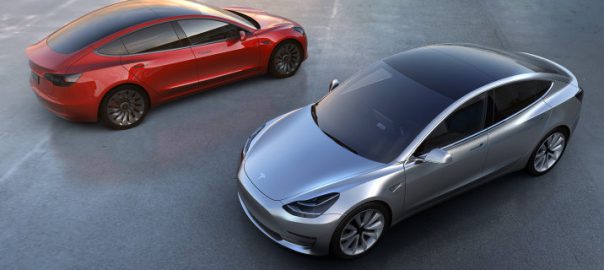
Tesla Model 3 Unveil (Image: Tesla)

How a Tesla Model 3 became safe haven in Australian bushfires

Cooler conditions have dampened the devastating bushfires that have ravaged Australia this summer, even though some areas are still under threat.

But an uplifting story has emerged of how one family’s experience was made easier thanks to owning an electric vehicle.

Rather than being an impediment in a fire emergency and at risk of running out of driving range, electric vehicle owner Garry Thorpe says his Tesla Model 3 was “brilliant”.

Tesla Model 3 Unveil (Image: Tesla)
Tesla Model 3 (Image: Tesla)

Evacuating residents and holidaymakers told tales of fuel, food and water shortages during the bushfire crisis – but this wasn’t the case for Thorpe and his family of 18, including 10 grandchildren.

“Tesla was brilliant. In a disaster, both power and petrol are rapidly unavailable. When power is restored, fuel is hard to come by,” Thorpe said, recounting the experience in Facebook group “Electric Vehicles for Australia“.

“My experience was that I could get a “full tank” before the crisis arrived, and as soon as the power was back on, could get a “full tank” easier than petrol. The car AC (air conditioning) was brilliant, you can run it for hours with hardly any power drain.”

Read more: The Driven

It’s Time to Go Green!

If you would like to know more about Solar Panels and the PowerBanx range of home battery systems, and get a free instant quote, please complete our online form:

Nissan supplies discounted Leaf EVs to Uber in London

Mobility service plans for all 45,000 of its London drivers to use electric vehicles by 2025

Nissan will supply 2000 Leaf EVs to Uber in London, as part of the mobility service’s goal to make its fleet in the capital fully electric by 2025.

Supplied in entry-level 40kWh guise, the Sunderland-built Leaf offers Uber drivers 168 miles of range per charge. Nissan is supplying the electric hatch to the ride-hailing firm at a ‘dedicated transaction price’, offering drivers around £4500 off the car’s £26,345 list price, depending on the number of miles they have driven.

The company has added a 15p ‘Clean Air Fee’ to all journeys made in London, which will be used to help its employees pay for the new Nissan models.

Uber hopes that all 45,000 Uber cars operating in London will be fully electric by 2025, and has so far raised £80 million to “support drivers transitioning to electric vehicles”. After switching into an EV, the Clean Air Fee will go towards the driver’s ongoing operating costs.

Uber’s ‘Clean Air Plan’ to reduce emissions came into effect in January 2019. The company claims 900,000 trips across the capital have been made in electric vehicles since then – a 350% increase over 2018 – and that more than 500 drivers per week are using fully electric cars.

Read more: Autocar

It’s Time to Go Green!

If you would like to know more about Solar Panels and the PowerBanx range of home battery systems, and get a free instant quote, please complete our online form:

Electric car sales are rising, but so are emissions. What’s going on?

More of us are buying electric cars than ever before, but our emissions are still going up. Falling diesel and rising SUV sales are to blame

Here’s a misleading statistic: UK electric car sales doubled in 2019. According to market insights firm LMC Automotive, battery electric vehicles made up 1.6 per cent of UK sales in 2019, about double the year before. But this doesn’t mean the UK’s automotive emissions are heading in the right direction. The reality is far more murky.

Last year, the average carbon dioxide (CO2) emissions of cars sold in the UK rose for the third year in a row. And for every electric car purchased in 2019, we bought 37 SUVs. Our growing interest in bigger, heavier vehicles, plus the sudden decline in diesel car sales, has pulled the UK further away from its looming transport emissions targets.

It’s a big step backwards, at exactly the wrong moment. The average CO2 emissions per kilometre for UK cars now stands at 127.9 grams – well past the EU’s new target of 95g of CO2 per kilometre for new cars. If auto manufacturers don’t hit the target, they’ll be hit with big fines.

“It’s going to be a tough couple of years,” says Al Bedwell, head of powertrain forecast at LMC. “At the moment the gap between where CO2 is now and where it needs to be at the end of next year, for some car makers, is pretty big. So there’s a real dilemma.” Car brands may need to start selling electric vehicles at a loss in order to meet the goals, he says. “There is definitely a risk that some of them will miss the target and will end up paying quite big fines to the commission.”

Read more: Wired

It’s Time to Go Green!

If you would like to know more about Solar Panels and the PowerBanx range of home battery systems, and get a free instant quote, please complete our online form: