Category Archives: Oil

Electric cars are the key to ending our addiction to oil

A shift of emphasis to electric cars will raise supply challenges for both components suppliers and talent managers.

Last orders’ has been called for the internal combustion engine.

Volvo hybrid car concept

Just a day after Volvo announced plans to include an electric motor element in all its cars, the new French government said it will legislate to phase out non-electric vehicles.

This will not be an overnight transformation. Volvo has said that all new cars from 2019 will be either fully electric, hybrid or what it calls “mild hybrid”.

The French government’s 2040 deadline is sensibly long-term, given that in France only 1.1% of new car registrations last year were for fully electric vehicles and in the whole of the EU the number was just 0.6%.

But make no mistake – this is a big shift. Other countries will follow France’s lead; other car makers will follow Volvo in the footsteps of Toyota, Tesla and others.

Manufacturers of electric cars seek talent

For the electronics sector, it’s a big deal too. The automotive industry is already a major employer for electronics engineers as in-car electronics become increasingly sophisticated.

Jaguar Land Rover’s recent campaign to recruit 1,000 engineers is testament to how hard they have to work to recruit already, but as the market shifts more to electric vehicles it will surely soak up even more of the talent pool.

Growing demand for components from tier one automotive firms has been mooted as one cause of strong sales and extending lead times in the market. This is before the shift to electric really takes hold, so expect massive changes as the market adapts.

How stakeholders in the electronics supply chain adapt to the challenge will be a defining factor in our attempts to break our addiction to oil.

Source: Electronics Weekly

Big Oil Just Woke Up to Threat of Rising Electric Car Demand

  • OPEC quintupled forecast for battery powered cars in last year
  • Oil majors and automakers diverge on outlook for EVs

The world’s biggest oil producers are starting to take electric vehicles seriously as a long-term threat.

OPEC quintupled its forecast for sales of plug-in EVs, and oil producers from Exxon Mobil Corp. to BP Plc also revised up their outlooks in the past year, according to a study by Bloomberg New Energy Finance released on Friday. The London-based researcher expects those cars to reduce oil demand 8 million barrels by 2040, more than the current combined production of Iran and Iraq.

Growing popularity of EVs increases the risk that oil demand will stagnate in the decades ahead, raising questions about the more than $700 billion a year that’s flowing into fossil-fuel industries. While the oil producers’ outlook isn’t nearly as aggressive as BNEF’s, the numbers indicate an acceleration in the number of EVs likely to be in the global fleet.

“The number of EVs on the road will have major implications for automakers, oil companies, electric utilities and others,”

Colin McKerracher, head of advanced-transport analysis at BNEF in London, wrote in a note to clients.

“There is significant disagreement on how fast adoption will be, and views are changing quickly.”

BNEF expects electric cars to outsell gasoline and diesel models by 2040, reflecting a rapid decline in the cost of lithium-ion battery units that store power for the vehicles. It expects 530 million plug-in cars on the road by 2040, a third of worldwide total number of cars.

Read more: Bloomberg

It’s a world of worry for oil companies

Volvo Cars CEO Hakan Samuelsson announced last week that all Volvo cars will be electric or hybrid within two years. The Chinese-owned automotive group plans to phase out the conventional car engine.

India hopes to sell only electric vehicles by 2030. China is offering incentives to buy electric cars and investing heavily in renewable technologies. Volvo will scrap the pure internal combustion engine in favor of hybrids and electric cars.

And on Thursday, France announced it plans to ban the sale of diesel and gasoline-fueled cars by 2040.

The world’s major oil companies might disagree when global demand for petroleum will peak, but the news of the past seven months suggests that they should be worried, if they aren’t already. Nations, states and private companies are demanding cleaner energy, leaving the world’s oil producers to face a reckoning that many haven’t yet accepted.

European companies, analysts say, are at the forefront of recognizing this new reality.

Royal Dutch Shell and the Norway’s Statoil foresee peak demand hitting by 2030; others, like the French oil major Total and the British company BP, predict 2040. In contrast, American companies such as Chevron and Exxon Mobil don’t foresee oil demand peaking anytime soon, if ever.

Even as U.S. demand wanes with more efficient cars and changing commuting patterns, companies like Chevron and Exxon Mobil are banking on the rising middle classes of China, India and other emerging nations to buy more cars, demand more consumer goods and suck up the juice that the companies sell.

But recent developments show they may be disappointed. In January, China, already offering incentives for electric vehicles, said it would spend $360 billion on renewable energy. That news was followed by India setting an ambitious goal of electric-only car sales in a little more than a decade.

Around the world, more car manufacturers are offering electric-only models. Last week, Volvo became the first company to plan a complete phase-out of traditional cars.

To be sure, Volvo’s goal of 1 million electric vehicles by 2025 would only cut 20,000 barrels a day in gasoline demand, and it will likely be years beyond that for electric vehicles to make big impact on global petroleum consumption.

Read more: Houston Chronicle

This is how Big Oil will die

Big Oil is perhaps the most feared and respected industry in history.

Oil is warming the planet — cars and trucks contribute about 15% of global fossil fuels emissions — yet this fact barely dents its use. Oil fuels the most politically volatile regions in the world, yet we’ve decided to send military aid to unstable and untrustworthy dictators, because their oil is critical to our own security. For the last century, oil has dominated our economics and our politics. Oil is power.

Yet I argue here that technology is about to undo a century of political and economic dominance by oil. Big Oil will be cut down in the next decade by a combination of smartphone apps, long-life batteries, and simpler gearing. And as is always the case with new technology, the undoing will occur far faster than anyone thought possible.

To understand why Big Oil is in far weaker a position than anyone realizes, let’s take a closer look at the lynchpin of oil’s grip on our lives: the internal combustion engine, and the modern vehicle drivetrain.

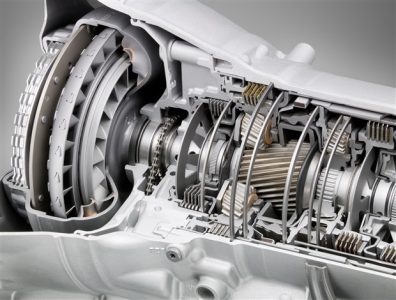
BMW 8 Speed Automatic Transmission

Cars are complicated.

Behind the hum of a running engine lies a carefully balanced dance between sheathed steel pistons, intermeshed gears, and spinning rods — a choreography that lasts for millions of revolutions. But millions is not enough, and as we all have experienced, these parts eventually wear, and fail. Oil caps leak. Belts fray. Transmissions seize.

None of these failures exist in an electric vehicle.

The point has been most often driven home by Tony Seba, a Stanford professor and guru of “disruption”, who revels in pointing out that an internal combustion engine drivetrain contains about 2,000 parts, while an electric vehicle drivetrain contains about 20. All other things being equal, a system with fewer moving parts will be more reliable than a system with more moving parts.

And that rule of thumb appears to hold for cars. In 2006, the National Highway Transportation Safety Administration estimated that the average vehicle, built solely on internal combustion engines, lasted 150,000 miles.

Current estimates for the lifetime today’s electric vehicles are over 500,000 miles.

Read more: NewCo Shift

Is Big Oil planning its own funeral?

The end of the Oil Age is within sight. Everyone who follows the news should be able to see this by now, although people have vastly different ideas about the timeline.

Above: Internal Combustion Engine vs. Battery Electric Vehicle (Instagram: cars217mph / gunthersahagun)

Consultancies, investment analysts and think tanks around the world produce a constant stream of predictions about the future impact of new technologies on the auto and oil industries. Despite the pundits’ painstaking perusal of primary sources, including economic data and interviews with industry insiders, their conclusions do not agree, to say the least.

The oil industry itself, along with mainstream investment banks, tends to foresee a gradual, decades-long transition. BP’s 2017 Energy Outlook predicts that electric vehicle (EV) sales will grow to a mere 6% of the global auto market by 2035 (from around 1% today). A recent report by Goldman Sachs is a bit more adventurous, predicting that pure EVs will capture 5% of the market by 2025. The US Department of Energy’s Energy Information Administration (EIA) has doubled its forecast from last year, but still predicts that EVs will account for only 8% of the US market in 2025.

Sign of the times: Emirates National Oil Company just opened the first solar-powered gas station in Dubai (Source: CleanTechnica)

Organizations of a more greenish hue are more sanguine: Greentech Media Research expects EVs to score 12% of the US market in 2025, and Bloomberg New Energy Finance predicts 35% globally by 2040. A study from the Carbon Tracker Initiative argues that EVs could capture 33% of the global market by 2035, and that reductions in battery costs

“could halt growth in global demand for oil from 2020.”

To those who follow the EV industry, none of this is really news. Lately, however, there have been signs that at least some in the oil industry are reassessing the threat to their empire, and preparing for a “peak oil” scenario that may come much sooner than they have been predicting.

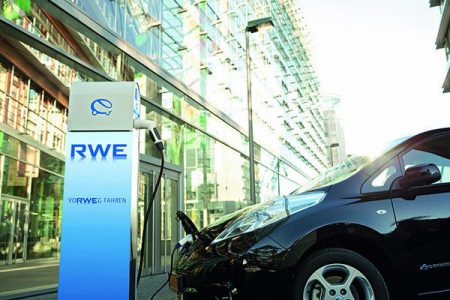
Another sign of the times: RWE, Germany’s biggest gas and energy provider, just launched hundreds of electric vehicle charging stations (Source: Trustnodes)

Read more: Evannex

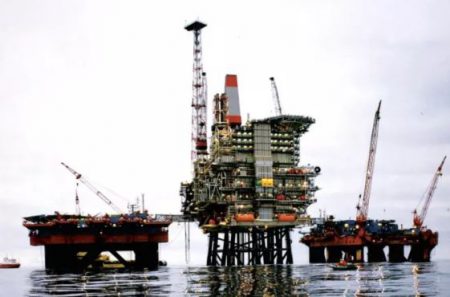
North Sea oil revenue turns negative for the first time

Scotland’s geographical share of North Sea oil revenues was negative for the first calendar year on record in 2016, Scottish Government figures show.

The latest quarterly national accounts reveal the amount received in tax receipts fell to minus £338 million over the 12-month period.

When a geographical share of UK offshore and overseas economic activity is included, Scottish gross domestic product (GDP) is estimated at £159 billion during the year, or £29,554 per person, amounting to growth of 1.7%.

North Sea oil revenue has fallen to minus �338m, the latest accounts show.

Growth in onshore GDP was mostly driven by consumer spending, with positive contributions also made by government, capital investment and exports.

However, a widening of the onshore trade deficit due to the increasing value of imports had a negative impact.

Economy Secretary Keith Brown said the latest statistics

“highlight the challenges facing the Scottish economy”.

He said:

“Current headwinds relating to the oil and gas sector and Brexit uncertainty are continuing to weigh on growth.

“Despite this, recent business survey evidence shows positive signals for manufacturing and other sectors whilst Scotland’s onshore output per head continues to be higher than the UK average excluding London. This demonstrates that our economic fundamentals remain strong.

“The Scottish Government is taking action to support the labour market, particularly surrounding the oil and gas sector.

“Whilst the statistics also show that recent growth was mostly driven by consumer spending, we are doing all we can to support growth across the wider economy through initiatives such as our £500 million Scottish Growth Scheme to stimulate investment in new and early-stage businesses, and investing in our £6 billion infrastructure plan.”

Read more: Scotsman

Could Electric Vehicles Kill Alberta Oil Sands Industry?

A new study from author and Stanford University lecturer Tony Seba has raised eyebrows in the Canadian oil patch. He forecasts that by 2030, electric vehicles will account for 95% of the miles traveled in the U.S., which is the sole market for Canadian oil exports.

As if that prediction isn’t remarkable enough, Seba said global oil production will fall from 100 million barrels per day (MMbbl/d) to 70 MMbbl/d, which, if true, would possibly devastate the high-cost 2.7 MMbbl/d Alberta oil sands industry.

The trigger for what Seba calls

“one of the fastest, deepest, most consequential disruptions of transportation in history”

will be the perfection of electric vehicle (EV) self-driving technology. Companies such as Uber and Lyft will buy fleets of autonomous cars and charge users to ride, a business model known as “transportation as a service.”

After more than a century of private auto ownership, families and businesses will give up their cars because transportation costs will simply fall off a cliff, said Seba, who co-authored “Rethinking Transportation 2020-2030: The Disruption of Transportation and the Collapse of the ICE Vehicle and Oil Industries” with Bryan Hansel and James Arbib.

The new way of getting around town will be 4x to 10x cheaper per mile than a new car, and 2x to 4x cheaper than a paid-off vehicle, with the average American household saving a whopping $5,600 annually.

In an interview, Seba said that under the right conditions, he can even foresee

“free transportation” supported by advertising revenue:“There is nothing magical about it. This is driven by the economics.”

The economics are that at present, Americans use their vehicles only 4% of the time. The study estimates transportation-as-a-service companies will have their EVs on the road earning money at least 40%—and maybe even 50% to 80%—of the time.

And EVs will seemingly run forever, lasting 500,000 miles while requiring far less maintenance and repair than internal combustion engine (ICE) autos, whose life on average is only 140,000 miles.

“Many automakers are working on million-mile electric vehicles, which drives down costs even lower,”

Seba said.

As fewer cars travel more miles, the number of passenger vehicles on American roads will drop from 247 million to 44 million.

Read more: E&P

Oil Majors Can No Longer Ignore The Electric Car Threat

Many carmakers, and not just Tesla, have been developing electric vehicles, betting on the expected continuous rise of battery-powered cars in the future. Now it’s not only carmakers that predict that EVs will make up a substantial part of new vehicle sales in a decade or two—oil majors are admitting it too.

France’s Total SA expects EVs to account for up to 30 percent of new car sales by 2030, which could lead to oil-based fuel demand peak in the 2030s, Total’s Chief Energy Economist Joel Couse said at Bloomberg New Energy Finance conference earlier this week.

Couse reckons that after 2030, fuel demand “will flatten out” and “maybe even decline”, in what Colin McKerracher, head of advanced transport analysis at Bloomberg New Energy Finance, described as the “most aggressive” projection by an oil major about the rise of EVs.

Other oil majors have their projections about peak oil demand as well, ranging anywhere from as early as the next decade, to nowhere in sight. At the same time, analysts believe that EV sales will only rise, but the pace will greatly depend on incentives and government policies. Meanwhile, many carmakers are preparing for the EV surge and entering the battery-powered car market.

France’s Total sees that growth as potentially leading to peak oil-based fuel demand in the 2030s. Other majors also have ideas about the impact of EVs on global oil demand.

Shell’s chief executive Ben van Beurden said in March that oil demand could peak as early as in the next decade.

“We have to acknowledge that oil demand will peak, and it could already be in the next decade. It could happen. There are people who believe it will grow forever but I don’t subscribe to that,”

van Beurden told the CERAWeek energy forum, as quoted by The Telegraph.

BP, in its Energy Outlook 2017, said that an extra 100 million battery EVs could lower oil demand by around 1.4 million bpd. Still, the UK oil major sees oil demand peak in the mid-2040s, with many drivers to factor in, including global GDP growth, efficiency trends, and climate policy. According to BP, the penetration of the EVs will depend on how fast battery costs would continue to drop; the size and durability of government incentives; how conventional cars’ efficiency would improve; and how consumer preference towards EVs would shift.

Read more: Oilprice.com

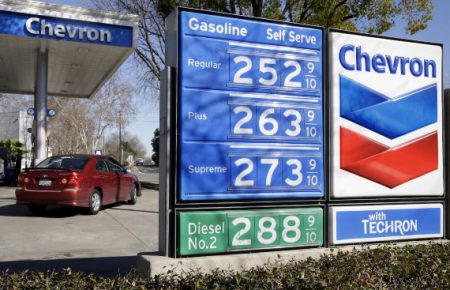
Chevron is first oil major to warn investors of risks from climate change lawsuits

Big Oil’s lies about the existential risk posed by its product are now catching up with the industry and threatening profits.

For the first time, one of the major publicly owned fossil fuel companies admitted publicly to investors that climate change lawsuits poses a risk to risk to its profits.

You’re probably thinking that seems like an obvious admission. After all, 190 nations unanimously agreed in the December 2015 Paris climate deal to leave most fossil fuels in the ground because of the existential threat they pose to human civilization.

But this is Big Oil — the industry that has been denying or pretending to deny the existence of climate change for over half a century.

In the “risk factors” section of Chevron’s 2016 10-K financial performance report to the Securities and Exchange Commission (SEC) — amid a discussion of how those pesky climate rules governments are enacting might hurt demand for its product — is this sentence:

“In addition, increasing attention to climate change risks has resulted in an increased possibility of governmental investigations and, potentially, private litigation against the company.”

Naomi Ages, Greenpeace USA’s climate liability project lead, said this is the first time a major oil company admitted that such investigations and private litigation were

“a material risk to the company and its shareholders.”

Red more: Think Progress

The Oil junkies and The moral panic over pollution

Every trainee journalist is taught about a model of behaviour exhibited by the general public called ‘moral panics’. In a moral panic the media pumps out stories like it has bad guts after a curry and people get enraged over the issue. Currently there’s a swirl of stories going out on pollution killing us and our children. The BBC is running a series of stories called So I can breathe and even the fossil fuel loving Telegraph has stooped to tell its high Tory readership that the air is foul. I smell a moral panic somewhere…

But hold on, wasn’t it bad before the media storm?

Traffic congestion has got steadily worse over the years on nearly every major British road, and energy demand has rocketed. No matter what they tell you, a car pumping out 130g/km of carbon emissions would kill you in about five minutes if you sat in an airtight room with it. Energy supply has to come from somewhere and generally that’s coming from coal, gas and even oil powered power plants.

We are at a tipping point with Global Warming. Even if Donald Trump hadn’t got into power we would be in a dire climate emergency and, guess what? That’s the same pollution that’s choking us.


Oil Junkies

Let’s start a new name for climate change deniers and those who can’t get their heads away from fossil fuels. Let’s call them oil junkies. Junkies freak out and get sick without heroin, and given the US and UK governments’ somewhat less than rational stance on renewable energy, you wonder if they need to be locked in a room for a month with 24 hour medical care if they stopped using fossil fuels central to their energy policy.

Forget Trump – our oil junkies have been in for almost a decade now. Only last week the UK Chancellor of the Exchequer said he would give more tax breaks to oil companies working in the North Sea. A 2015 LinkedIn blog by energy expert Simon Ede says simply: “As it now stands, local communities will have veto power to stop new wind turbines being constructed but should those communities resist or delay the development of Shale gas projects they’ll risk their case being fast tracked to Ministers in Whitehall for decision.”

The air looks clean…

The UK, US and Europe have all got ‘clean air’ legislation that prevents the smogs that choke Beijing, Kolkata and other developing countries’ cities. These clean air acts and regulations ensure at least some semblance of cleanliness in the pollution that our power stations, cars and factories belch out.

Even so it is estimated that 2,500 people in London died due to pollution in 2016. Though people can smell the fumes of cars, vans and lorries they can’t see the stuff. Much of this has been put down to diesel?

The diesel red herring

The focus of the moral panic is turning towards diesel engines. London’s Mayor Sadiq Khan has started a campaign to get rid of diesel engine vehicles in his city. His campaign seems to be gaining traction and there is talk of a ‘diesel scrappage scheme’ to get rid of the most polluting older diesel engine cars.

Read more: Electric Car Test Drives