Category Archives: Energy Storage

Renault-Nissan to build energy storage plant from EV batteries to rival power stations

The Renault-Nissan Alliance is planning to build a 100MW energy storage plant big enough to power 120,000 homes, which can replace a gas or coal-fired power station, sources told Reuters. It is widely seen as a pilot project that could lead to a major new business opportunity for OEMs.

Following trialling using electric vehicle (EV) batteries for home energy storage, this is a further sign the Alliance is planning to establish an energy storage division. The energy storage plant intentions highlight the Alliance’s growing confidence in the powerful position OEMs will find themselves in following the upcoming electric vehicle revolution.

Energy storage plants – essentially gigantic batteries – help save costs and emissions by charging up in times of cheap excess electricity supply. This is when, for example, wind farms generate too much electricity than needed on a windy day. The storage plants then sell the electricity back to the grid at peak times, when the high demand means the electricity commands a higher price.

This helps solve two key problems holding back efficiency in the energy sector: the need to smooth out the variable energy generated from wind and solar, and the desire to remove the need for gas- or coal-fired power plants to be idling on standby for most of the day, and switched on ad hoc in order to meet times of peak electricity demand.

The Renault-Nissan project both aims to cultivate this demand for a second-hand battery market, as well as encouraging the development of energy infrastructure (which can have 10-year lead times) that will synergise with booming EV sales over the next decade. If successful, the expected high demand for these second hand EV batteries would help drive down the costs of electric vehicles (and raise residual values), and also provide an attractive mechanism for recycling the power cells which contain environment-harming heavy metals.

Read more: Autovista Group

Tesla In-Car App To Soon Offer Solar Roof & Powerwall Monitoring

Soon Tesla owners will be able to check solar roof and powerwall status, as well as manage settings via an in-car app.

Elon musk went on a bit of a Tweetstorm again recently, and out of it came some new information. Being that Musk believes that eventually most customers will also go solar, and invest in a Powerwall, the company has already taken steps to further integrate the products.

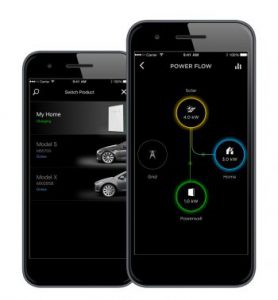
The updated mobile app allows those with solar roofs and Powerwalls to check power status and adjust settings via their devices. This is simply on par with many of the new home management systems in which users can mobily adjust their thermostat, engage or disengage alarms, monitor energy usage, etc.

Basically, with access to the app, Tesla owners can check how their home system is using power. Is the power coming from the Powerwall, or the solar system, or from the local grid? This way, you can see exactly what is happening at any given time.

We recently reported about YouTuber, DeRage, tapping into Tesla’s API to create a program that shows vehicle and home data all in once place. He used a program called Splunk to design dashboards for such information.

Mobile App now shows Powerwall and Solar energy flow

Soon, if you own a Tesla vehicle and a home solar system, you will be able to do this yourself, using the car’s touch screen. Being able to see vehicle energy consumption, along with home energy consumption, and especially being able to tie them together, will be a helpful tool. If you happen to have a non-Tesla home system, something like DeRage designed would be the next best thing.

This is just another way for Tesla and Musk to further tie all products together, in hopes that consumers will come to Tesla for all their needs, instead of a third party.

Source: InsideEVs

Renault Enters Smart Home Energy Market

Renault has launched a smart energy system, which looks to make use of second-life EV batteries for domestic and commercial energy storage.

Partnering with Powervault, the system will undergo trials with customers who already have solar panels installed. A total of 50 units will be involved in the trial, which will involve eligible M&S Energy customers along with social housing tenants and schools in the South East.

The system stores energy generated by the solar panels for use when the demand is greatest. It also allows owners to charge from the grid at off-peak rates, for use during peak times.

Powervault will use batteries that have come to the end of their usable EV life from Renault, as the French manufacturer enters the home energy storage market like its group partner Nissan, and other plug-in manufacturers Tesla, BMW, and Mercedes Benz.

Nicolas Schottey, Program Director, EV batteries and infrastructures at Renault, said:

“Thanks to this home energy storage partnership with Powervault, Renault is adding a new element into its global strategy for second life batteries, which already covers a large number of usages from industrial to residential building and districts.

“The second life use not only gives additional life to electric vehicle batteries before they are recycled, but also allow consumers to save money. It’s a win-win-win: for EV owners, home-owners and the planet.”

Read more: Zap-Map

Charging ahead: Welsh battery scheme may aid growth of green energy

One of the UK’s largest battery storage schemes, built next to a windfarm, will offer vital services to the National Grid.

Nestling alongside rows of conifers and wind turbines in a Welsh valley, a pioneering project will materialise this summer that could prove a blueprint for unlocking Britain’s renewable energy potential.

The Upper Afan Valley near Swansea is already home to the biggest windfarm in England and Wales, but in July work will begin there on one of the UK’s largest battery storage schemes.

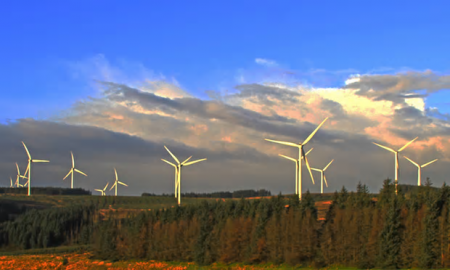
The Pen y Cymoedd wind energy project near Swansea. Photograph: Vattenfall

Built by Swedish energy company Vattenfall, the facility will involve six shipping containers stuffed with lithium-ion batteries made by BMW’s electric car division.

The project is seen as a crucial part of the jigsaw for helping wind, solar and other renewable sources go from the 25% of UK power they provide today, to the much greater share the government needs to hit its climate change targets.

The batteries will not store the electricity generated by the Pen y Cymoedd windfarm with which they share a site, but will offer vital services to the National Grid to cope with the fluctuations that come from renewable power.

Colocating the plant with the windfarm was key to making the economics of the scheme work. Vattenfall said that the site’s existing infrastructure, such as connections to the grid’s transmission network to take power around the UK, meant it was about £5m cheaper than building it on a standalone site.

“To connect a battery project to the transmission network would be prohibitively expensive, but because we have the windfarm already in place, we can share the assets. It’s a huge cost-saving,”

said Frank Elsworth, who is managing construction of the 22MW plant, the battery equivalent of 450 BMW i3 electric cars.

Read more: The Guardian

Tesla Energy Storage Turns To Aggregation

Tesla is now expanding its energy storage business from simply supplying the battery systems, to also remote control of installed storage systems to make the grid cleaner and more efficient.

Tesla calls it aggregation – the next step in energy storage.

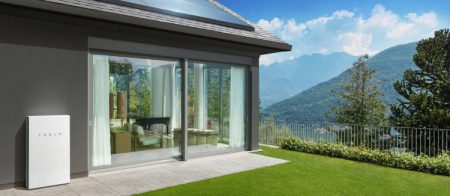
Tesla Powerwall

The idea is to enable Powerwall owners to give utilities access to the battery – for use when energy demand is at its highest. Naturally, in turn owners would gain compensation for the extra capacity.

The first Tesla partner with the project is Green Mountain Power in Vermont.

Tesla and Green Mountain Power are excited to announce a program where you can get a Powerwall to back up your home with reliable energy for only $15/month.

In some ways, it’s similar to renting autonomous car, as Tesla would also build a platform joining those who have product, with those who are in need of using a product.

Read more: Inside EVs

LG CHEM OFFICIALLY LAUNCHES HOME BATTERIES IN NORTH AMERICA

The lithium-ion battery manufacturer LG Chem has officially launched its residential battery systems line in the North American market. This news follows the completion of UL certification.

The company’s residential battery systems line in North America is comprised of a variety of AC- and DC-coupled solutions, with system capacities ranging to up to 9.8 kilowatt-hours (kWh).

There are two different voltage options available (which are paired with compatible inverters). These are a low-voltage 48V option and a high-voltage 400V option. The low-voltage option is available in system capacities of 3.3 kWh, 6.5 kWh, and 9.8 kWh. The high-voltage option is available in system capacities of 7 kWh and 9.8 kWh.

The press release provides more:

“The 400V RESU10H (9.8 kWh) product is compatible with SolarEdge’s StorEdge, which is a DC coupled storage solution based on a single inverter for both PV and storage. Additional inverter compatibility options will become available later in 2017 to provide homeowners with a range of pre-tested solutions from the industry’s leading suppliers.”

The LG Chem lineup of residential energy storage products will, according to that pares release, be “available via a number of leading solar/storage providers in North America. Following last year’s announcement of a partnership with LG Chem, Sunrun — one of the leading US-based residential energy system providers — will be supplying LG Chem’s RESU systems. Sunrun already has installed initial systems in both Hawaii and California.”

In addition, LG Chem is reportedly in “advanced negotiations” for further distribution channels. The company claims that it will be offering the systems in all US states and Canadian provinces.

Briefly showing the company’s wide range of work in the automotive and stationary battery field, LG Chem notes that it

“has been awarded 82 projects from 28 global automotive OEMs as of September 2016, and deployed Gigawatt-hours of global stationary battery projects.”

Read more: Powur

Nissan launches British-made home battery to rival Tesla’s Powerwall

Batteries that have powered electric cars around the UK will get a second life providing energy storage for households, with the launch this week of a British-made home battery to rival the one made by Elon Musk’s Tesla.

Nissan has partnered with US power firm Eaton to produce home energy storage systems.

The cells will be made by the Japanese car-maker Nissan in Sunderland, where its popular Leaf electric car is built, and sold in partnership with the US power firm Eaton. Buyers will be able to choose cheaper, used batteries that are no longer fit for electric car use, or pricier new ones.

They are believed to be the first British-made household batteries pitched to the embryonic UK home storage market.

The batteries inside the Tesla Powerwall were previously made in Japan by Panasonic, but since January have been produced at its vast Gigafactory in Nevada. Sonnen, a German storage company, builds its European and Australian home batteries in Wildpoldsried, Germany.

With falling costs, home storage is seen as increasingly attractive in the UK, particularly to early adopters and the 850,000 homes with solar panels.

Solar owners can make the electricity they generate more valuable by storing it in the battery and using it later instead of exporting it to the grid – Eaton and Nissan estimate such customers will be about £43 better off each month.

Batteries also make it easier for people to take advantage of “time of day” energy deals, which charge consumers less if they avoid periods when energy demand peaks, for example at 4-7pm on weekdays. Such tariffs are expected to proliferate as every UK home is fitted with a smart meter by the end of 2020.

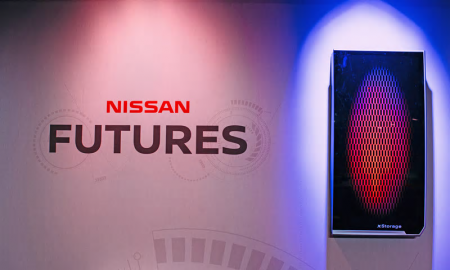
Nissan has partnered with Eaton, a US power management company with revenues of $20bn (£15.5bn), to sell the XStorage Home systems, which are about the size of a conventional boiler.

The lithium-ion batteries will be priced from £5,000 and up, depending on the home, with installations carried out by a nationwide network of electricians beginning in July.

Read more: The Guardian

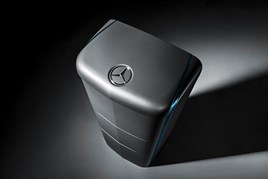
Mercedes-Benz ready to deliver home energy storage units

Mercedes-Benz Energy is ready for the delivery of the first energy storage units for residential use to homeowners in the UK.

The energy storage units are lithium-ion batteries based on the technology used by Daimler since 2012, in more than 80,000 hybrid and full electric vehicles.

By using the storage units, households with their own solar energy systems can store surplus power with virtually no losses. By combining renewable energy sources with a battery storage unit, households can increase their self-consumption of generated energy to as much as 65%.

Mercedes-Benz’s franchised dealer network will not be called upon to retail the systems, however.

Distribution is taken care of by a network of qualified partners such as Alternergy, Innasol and Wind & Sun, as well as with partners who offer a complete system installation, such as Solar Frontier.

“There is tremendous interest in our energy storage units in the UK. We’re very pleased to be able to offer Mercedes-Benz Energy Storage Home to customers here,” said Marc Thomas, managing director of Mercedes-Benz Energy.

Source: AM Online

Tesla Powerwall display (Image: T. Larkum)

How Batteries Could Revolutionize Renewable Energy

All over California, there’s evidence of the state’s goal to lead the country in renewable energy. Enormous farms of shiny solar panels have popped up across southern California, and gigantic wind turbines dot the landscape outside nearly all the major cities.

There are less flashy—and less visible—investments in renewables going on, too. Tucked away in warehouses, trailers and industrial parks are lithium ion batteries that, if all goes well, will play a critical role in helping California hit its ambitious target: to have 50% of all electricity come from renewables by 2050.

Tesla Powerwall display (Image: T. Larkum)

Some green energy sources come with a built-in challenge: the wind and the sun can’t be turned on and off at will. When it’s windy and sunny, an abundance of energy may be harnessed—but any excesses go to waste. That’s where batteries, the most common type of energy storage, come in. Batteries solve that problem by allowing utility companies to collect excess electricity and store it for times when the sun may not be shining or the wind not blowing.

“Networks care about reliability,”

says Logan Goldie-Scot, an energy-storage analyst at Bloomberg New Energy Finance. “Energy storage is being viewed by network operators as a potential tool in their toolbox, and that hasn’t been the case up until now.”

Batteries will also change the power sector as homeowners and businesses install their own products. Batteries at homes, offices and other commercial buildings allow customers to save electricity collected by their solar panels and use it at times when electricity prices are highest. One in four businesses with more than 250 employees has already deployed batteries to help with their electricity management, according to a Deloitte study. Regulatory changes that encourage battery owners to sell back stored electricity when it’s in high demand could increase interest in batteries, analysts say.

Batteries installed in electric vehicles, for instance, will also affect the electric grid as automakers continue to expand their offerings. Experts say the impact will both stress and help utilities manage their electricity supply. The stress comes as vehicles create a new demand for energy, but at the same time, batteries in those vehicles act as a storage unit of their own that may offer new flexibility. The largest battery in a Tesla, as one example, can store enough electricity to power the average American home for more than three days. Utilities have begun exploring programs to encourage electric vehicle owners to charge their cars when there is extra power on the grid.

Read more: Time

Tesla exec explains new sustainable energy vision

‘You have solar, battery pack, EV and you control everything on your phone’

Since Tesla’s acquisition of SolarCity, the company’s mission slightly changed from “accelerating the advent of electric transport” to “accelerating the advent of sustainable energy”. The company wants to offer solutions throughout the entire energy production and consumption process.

At a conference last week, a Tesla executive explained the company’s vision for managing all that energy across all their products.

Kurt Kelty, Tesla’s longtime director of battery technology, was in Florida last week to give a keynote address at the International Battery Seminar.
During his presentation, he explained Tesla’s vision of energy management in future houses (transcript via evannex):

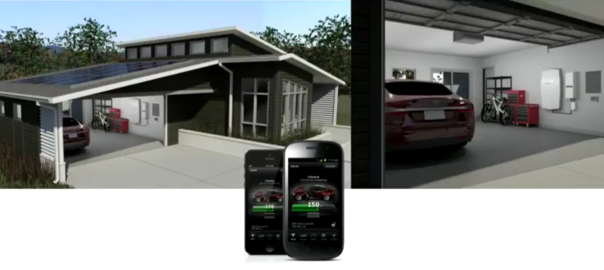
“Where we see the future [is] in houses [and] we want to be your EV provider. Put your EV in your garage and you charge it up with one of our chargers, you have a powerwall… [and] a solar product [solar roof] that we’ll be introducing this summer. You [can] see how this could integrate well in your house. You have solar, battery pack, the EV and you’ve got all the controls on your cell phone and you could control everything. This is the kind of future we see for [your] house.”

That’s similar to the vision shared by CEO Elon Musk when he first suggested Tesla’s acquisition of SolarCity in order to have a single company offering electricity generation, through solar products, storage, through Powerwall and Powerpacks, and consumption, through Tesla’s electric vehicles.

Read more: electrek