Category Archives: Economy

Blades Being Installed on Turbine 5, Yelvertoft Wind Farm (Image: T. Larkum)

Low carbon drive ‘cuts household bills’

Britain’s low carbon energy revolution is actually saving money for households, a report says.

Blades Being Installed on Turbine 5, Yelvertoft Wind Farm (Image: T. Larkum)
Blades Being Installed on a Wind Turbine at Yelvertoft Wind Farm (Image: T. Larkum)

Households make a net saving of £11 a month, according to analysis from the Committee on Climate Change.

It calculates that subsidies to wind and solar are adding £9 a month to the average bill, but that rules promoting energy efficiency save £20 a month.

Savings

The trend is being driven by government and EU standards for gas boilers and household appliances like fridges and light bulbs. These bring down carbon emissions and bills at the same time.

It means households don’t need to try specially hard to reduce energy usage – it just happens when they replace their old freezer.

The report says bills are about £115 lower in real terms since the Climate Change Act in 2008, having risen around £370 from 2004 to 2008 as international gas prices rose.

Gas and electricity use have been cut by 23% and 17% respectively, saving the average household £290 a year.

Many of the easy savings on highly inefficient devices have already been made, but the committee says it has been assured by manufacturers that more can be done.

The authors predict an annual bill reduction of £150 by 2030, driven by a mass switch to LED lights, and full take-up of more efficient condensing gas boilers.

This, they say, would more than compensate for another £100 a year rise from increased renewables deployment.

“What’s interesting, is that people aren’t having to strive to make these savings. They could save much more energy if they consciously set about it.”

said the committee chair Lord Deben

Read more: BBC News

Electric cars are set to arrive far more speedily than anticipated

Carmakers face short-term pain and long term gain

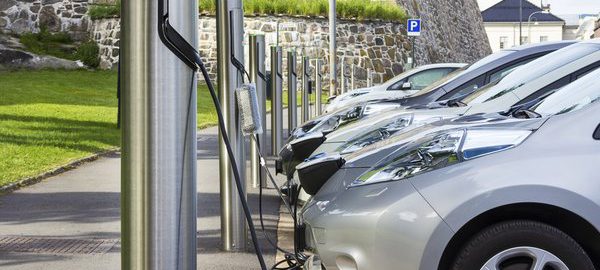
Electric cars ready for free test drives in Milton Keynes (Image: T. Larkum)

THE high-pitched whirr of an electric car may not stir the soul like the bellow and growl of an internal combustion engine (ICE). But to compensate, electric motors give even the humblest cars explosive acceleration. Electric cars are similarly set for rapid forward thrust.

Improving technology and tightening regulations on emissions from ICEs is about to propel electric vehicles (EVs) from a niche to the mainstream. After more than a century of reliance on fossil fuels, however, the route from petrol power to volts will be a tough one for carmakers to navigate.

The change of gear is recent. One car in a hundred sold today is powered by electricity. The proportion of EVs on the world’s roads is still well below 1%. Most forecasters had reckoned that by 2025 that would rise to around 4%. Those estimates are undergoing a big overhaul as carmakers announce huge expansions in their production of EVs.

Morgan Stanley, a bank, now says that by 2025 EV sales will hit 7m a year and make up 7% of vehicles on the road. Exane BNP Paribas, another bank, reckons that it could be more like 11%. But as carmakers plan for ever more battery power, even these figures could quickly seem too low.

Ford’s boss is bolder still. In January Mark Fields announced that the

“era of the electric vehicle is dawning”

and he reckons that the number of models of EVs will exceed pure ICE-powered cars within 15 years. Ford has promised 13 new electrified cars in the next five years. Others are making bigger commitments. Volkswagen, the world’s biggest carmaker, said last year that it would begin a product blitz in 2020 and launch 30 new battery-powered models by 2025, when EVs will account for up to a quarter of its sales. Daimler, a German rival, also recently set an ambitious target of up to a fifth of sales by the same date.

Read more: The Economist

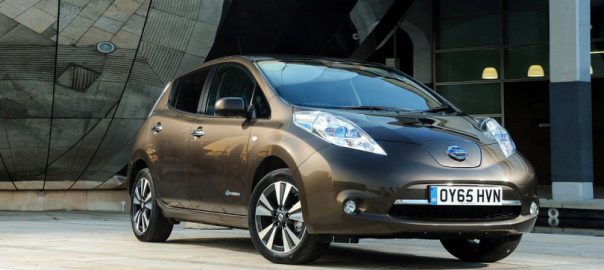
Nissan Leaf

Car Tax, the new VED rules explained

An overhaul of UK car tax rules will increase the cost of motoring – but not if you’re buying a Nissan LEAF

On April 1, the system for taxing new cars in the UK, known as Vehicle Excise Duty (VED), is being radically overhauled (click here for details). The revamp will make it more expensive to run certain types of low-emissions cars – but the Nissan LEAF, the world’s best-selling electric car, will remain exempt from tax.

Nissan Leaf

If you’re confused by the changes, or uncertain of what they mean if you’re considering buying a new car, here’s a quick guide.

How car tax works now

The amount of VED you currently pay is based on your car’s CO2 emissions. There are 13 VED bands: vehicles that emit between 0 and 130g/km of CO2 (think electric vehicles and certain hybrids) don’t pay any VED in their first year. After that, vehicles that emit 101-120g/km of CO2 have to pay between £10 and £30. The duty jumps from there, to at least £100 for cars that emit 121g/km of CO2 or more.

What’s changing

From April 1, only vehicles that produce no emissions while driving, such as the Nissan LEAF, will be exempt from VED in year one. Vehicles that produce 1-50 g/km of CO2 pay £10; those that emit 51-75 g/km pay £25. VED then leaps to £100 for vehicles that emit 76-90 g/km. From year two on, CO2-producing vehicles costing less than £40,000 pay an annual rate of £140 – with a £310 premium for cars that cost more than £40,000.

Zero emissions, zero tax

Cars that produce 0g/km of CO2 and cost less than £40,000 will remain exempt from VED for their lifetime. The fully-equipped, five-seat electric Nissan LEAF falls into that category – and it’s also exempt from congestion charges. So as well as fuel costs of as little as 2p a mile, buying a safe and reliable LEAF could save you hundreds of pounds in tax.

When it comes to fuel efficiency, the British-built Nissan LEAF remains ahead of the pack – because it uses no combustible fuel at all.

Read more: What Car?


‘The shelves looked wonderful, perfect, almost clinical, as though invented in a lab in my absence; but there was no smell.’ (Image: A. Britton/PA)

The Supermarket Food Gamble May Be Up

Brexit, migration and climate pressures mean our ‘too big to fail’ global food chain could unravel

The UK’s clock has been set to Permanent Global Summer Time once more after a temporary blip. Courgettes, spinach and iceberg lettuce are back on the shelves, and the panic over the lack of imported fruit and vegetables has been contained. “As you were, everyone,” appears to be the message.

But why would supermarkets – which are said to have lost sales worth as much as £8m in January thanks to record-breaking, crop-wrecking snow and rainfall in the usually mild winter regions of Spain and Italy – be so keen to fly in substitutes from the US at exorbitant cost?

Why would they sell at a loss rather than let us go without, or put up prices to reflect the changing market? Why indeed would anyone air-freight watery lettuce across the whole of the American continent and the Atlantic when it takes 127 calories of fuel energy to fly just 1 food calorie of that lettuce to the UK from California?

‘The shelves looked wonderful, perfect, almost clinical, as though invented in a lab in my absence; but there was no smell.’ (Image: A. Britton/PA)

The answer is that, in the past 40 years, a whole supermarket system has been built on the seductive illusion of this Permanent Global Summer Time. As a result, a cornucopia of perpetual harvest is one of the key selling points that big stores have over rival retailers. If the enticing fresh produce section placed near the front of each store to draw you in starts looking a bit empty, we might not bother to shop there at all.

But when you take into account climate change, the shortages of early 2017 look more like a taste of things to come than just a blip, and that is almost impossible for supermarkets to admit.

Add the impact of this winter’s weather on Mediterranean production, the inflationary pressures from a post-Brexit fall in the value of sterling against the euro, and the threat of tariffs as we exit the single market, and suddenly the model begins to look extraordinarily vulnerable.

Read more: The Guardian

Ten ways the electric car revolution will transform the global economy

The world has begun a rapid switch to electric vehicles. In the first half of this year, worldwide sales were up 57 per cent to 285,000, despite low oil prices, and there are now more than 1m electric cars on the world’s roads for the first time ever.

Last February, Bloomberg New Energy Finance (BNEF) forecast that electric vehicles would account for 35 per cent of new car sales by 2040, and perhaps more under certain scenarios.

The reason for this bullishness is not just that battery costs are plummeting – down 65 per cent in the past five years – it is also that electric vehicles outperform internal combustion cars in so many key areas. They drive more smoothly and accelerate better; they can be charged without a trip to the petrol station; they require less maintenance; they help solve air quality problems; and they increase the autonomy of oil-importing countries.

The rapid uptake of electric vehicles has given established car companies a huge shock. Tesla, the upstart technological leader, expected to produce 85,000 vehicles this year, has a market value of $32bn. That’s more than half of the value of General Motors, which makes nearly 120 times as many vehicles.

All of the incumbent car companies are racing to adjust their strategies, putting electric vehicles at their heart. Volkswagen, still reeling from the “Dieselgate” scandal, is intending to invest $11.2bn over the next decade to push electric vehicles to 25 per cent of its sales.

Read the full list of ten: LinkedIn

“You Can’t Handle the Truth!”

Movie buffs will recognize this title as the most memorable line from “A Few Good Men” (1992), spoken by the character Colonel Jessep, played by Jack Nicholson (“You can’t handle the truth!” is #29 in the American Film Institute’s list of 100 top movie quotes).

I hereby propose it as the subtext of the recently concluded Republican and Democratic national conventions.

At this point most people appear to know that something is terribly, terribly wrong in the United States of America. But like the proverbial blind man describing the elephant, Americans tend to characterize the problem according to their economic status, their education and interests, and the way that the problem is impacting their peer group.

blind_menelephant-itcho

So we hear that the biggest crisis facing America today is:

  • Corruption
  • Immigration
  • Economic inequality
  • Climate change
  • Lack of respect for law enforcement
  • Institutionalized racism
  • Islamic terrorism
  • The greed and recklessness of Wall Street banks
  • Those damned far-right Republicans
  • Those damned liberal Democrats
  • Political polarization

The list could easily be lengthened, but you get the drift. Pick your devil and prepare to get really, really angry at it.

In reality, these are all symptoms of an entirely foreseeable systemic crisis. The basic outlines of that crisis were traced over 40 years ago in a book titled The Limits to Growth. Today we are hitting the limits of net energy, environmental pollution, and debt, and the experience is uncomfortable for just about everyone. The solution that’s being proposed by our political leaders? Find someone to blame.

The Republicans really do seem to get the apocalyptic tenor of the moment: their convention was all about dread, doom, and rage. But they don’t have the foggiest understanding of the actual causes and dynamics of what’s making them angry, and just about everything they propose doing will make matters worse. Call them the party of fear and fury.

The Democrats are more idealistic: if we just distribute wealth more fairly, rein in the greedy banks, and respect everyone’s differences, we can all return to the 1990s when the economy was humming and there were jobs for everyone. No, we can do even better than that, with universal health care and free college tuition. Call the Democrats the party of hope.

But here’s the real deal: a few generations ago we started using fossil fuels for energy; the result was an explosion of production and consumption, which (as a byproduct) enabled enormous and rapid increase in human population. Burning all that coal, oil, and natural gas made a few people very rich and enabled a lot more people to enjoy middle-class lifestyles. But it also polluted air, water, and soil, and released so much carbon dioxide that the planet’s climate is now going haywire. Due to large-scale industrial agriculture, topsoil is disappearing at a rate of 25 billion tons a year; at the same time, expanded population and land use is driving thousands, maybe millions of species of plants and animals to extinction.

Read more: Post Carbon Institute

The Pain You Feel is Capitalism Dying

1-pPDKvJZiZH5uEz3QTkSSUg_hang_head_unk

It can be very confusing to know that you won’t find a decent job, pay off student loans or put in a down payment on a house in the next few years — even though you may have graduated from a top-tier university or secured glowing references from all those unpaid internships that got you to where you are today.

Even if you are lucky enough to have all of this going for you, you’ll still be one among hundreds of applicants for every job you apply for. And you’ll still watch as the world becomes more unequal, with fewer paid opportunities to do what you feel called to do in your work or for your life path.

What’s more, you won’t find much help from your friends because most (if not all) of them are going through the same thing. This is a painful and difficult time that is impacting all of us at once.

There will be people who tell you it’s your fault. That you aren’t trying hard enough. But those people are culprits in perpetuating a great lie of this period in history. The standard assumptions for how to be successful in life a few decades ago simply do not apply anymore. The guilt and shame you feel is the mental disease of late-stage capitalism. Embrace this truth and set yourself free.

To see how broken things have become you’ll have to think systemically. Take note of the systems built up to create this situation and understand how it came to be — so you’ll see why it cannot possibly continue on its current path.

First, a diagnosis of the problem:

A Global Architecture of Wealth Extraction has been systematically built up to rig the economic game against you. This is why a tiny number of people (current count is 62) have more wealth amongst them than half the human population.

Read more: Medium

Severe Flooding, Against a Background of Wind Turbines: November 2012, Tyringham, Bucks. (Image: T. Larkum)

Parliamentary group warns that global fossil fuels could peak in less than 10 years

British MPs launch landmark report on impending environmental ‘limits’ to economic growth

Severe Flooding, Against a Background of Wind Turbines: November 2012, Tyringham, Bucks. (Image: T. Larkum)
Severe Flooding, Against a Background of Wind Turbines (Image: T. Larkum)

A report commissioned on behalf of a cross-party group of British MPs authored by a former UK government advisor, the first of its kind, says that industrial civilisation is currently on track to experience “an eventual collapse of production and living standards” in the next few decades if business-as-usual continues.

The report published by the new All-Party Parliamentary Group (APPG) on Limits to Growth, which launched in the House of Commons on Tuesday evening, reviews the scientific merits of a controversial 1972 model by a team of MIT scientists, which forecasted a possible collapse of civilisation due to resource depletion.

The report launch at the House of Commons was addressed by Anders Wijkman, co-chair of the Club of Rome, which originally commissioned the MIT study.

At the time, the MIT team’s findings had been widely criticised in the media for being alarmist. To this day, it is often believed that the ‘limits to growth’ forecasts were dramatically wrong.

But the new report by the APPG on Limits to Growth, whose members consist of Conservative, Labour, Green and Scottish National Party members of parliament, reviews the scientific literature and finds that the original model remains surprisingly robust.

Authored by Professor Tim Jackson of the University of Surrey, who was Economics Commissioner on the UK government’s Sustainable Development Commission, and former Carbon Brief policy analyst Robin Webster, the report concludes that:

“There is unsettling evidence that society is tracking the ‘standard run’ of the original study — which leads ultimately to collapse. Detailed and recent analyses suggest that production peaks for some key resources may only be decades away.”

Read more: Medium

Inception the Movie (Image: Warner Bros)

Britain’s property market is on the cusp of a crash as household finances reach breaking point

Britain’s property prices are skyrocketing but household earnings and savings can’t keep up.

Couple this with the amount of debt Britons are taking on and it looks like the UK’s property market is heading for a crash.

Why? — Because getting a mortgage is possibly the most debt you’ll take on in one go and rates can’t stay low forever. Eventually they’ll rise and so will monthly payments.

If household wages fail to keep pace as payments rise, they’ll be stretched further and further.

The average price to buy a house in Britain now stands at £291,504, according to the Office for National Statistics. Meanwhile, the average London property price is at a huge £551,00o.

Analysts say that the fundamental supply and demand balanced is so skewed that the only direction houses will go is up.

Research from the Royal Institution of Chartered Surveyors, estate agent Savills, the Council of Mortgage Lenders, and bank analysts has said prices will continue to rise over the next five years. Even a study published by Santander showed average house prices across the country will more than double to around £500,000 over the next 15 years.

Technically, this should be correct. There is way too many people looking to buy a home and way too little to go around.

But there are three key charts from the latest note from Citi FX’s strategy note entitled “UK’s increasing dependence and increasing vulnerability” which demonstrate how household finances can be considered being at breaking point.

And if rates do rise soon then more people will fall behind with payments which will trigger a real-estate fire sale and increasing defaults.

Read more: Business Insider