All posts by Trevor Larkum

Tesla Powerwall display (Image: T. Larkum)

Mercedes-Benz turns coal power plant into energy storage system with electric car batteries

Daimler, through its subsidiary Mercedes-Benz Energy and with partners, is turning a coal power plant into a large energy storage facility using over a thousand modules from its electric car battery packs.

Like Tesla and its ‘Tesla Energy’ division, Mercedes-Benz is leveraging its experience with battery packs for electric cars into making stationary energy storage projects.

They created a ‘Mercedes-Benz Energy’ subsidiary and launched several projects.

One of them was a residential battery pack to compete with Tesla’s Powerwall.

Tesla Powerwall display (Image: T. Larkum)


Earlier this year, the company killed the project after admitting that their product was too expensive and overengineered for its application.

While they got out of the residential market, they are still going strong with bigger-scale projects.

Their latest project was unveiled today and it consists of a 8.96 MW/9.8 MWh project using a total of 1,920 battery modules installed in Elverlingsen on the site of the former coal-fired power station that was built in 1912 and recently shut down.

Read more: Electrek

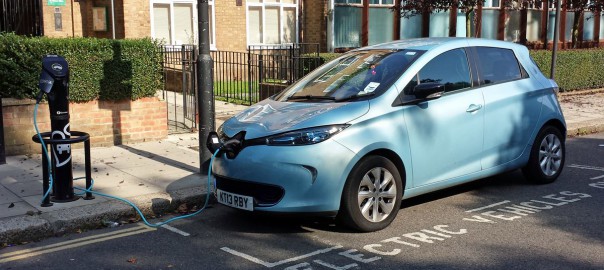
Slow Charging the ZOE at Highgate (Image: T. Larkum)

‘Milton Keynes Promise’ underway with first charge point installed for on-street charging

Milton Keynes has delivered the first charging point under the council’s ‘MK Promise’, which sets out to provide overnight electric vehicle (EV) charging within a short walk of a new EV owner without off-street parking facilities.

The Chargemaster Fastcharge unit has been installed at Wavendon House, a 17th-century Grade II-listed former outpost of Bletchley Park, following an application on behalf of the residents by John Zlotnicki.

“Whilst it is important to us to preserve and maintain our buildings, landscape and grounds in their historical setting, we recognise the need to ensure that our residents have the opportunity to choose to have environmentally-friendly vehicles.

“The MK Promise scheme enables us to look to the future whilst retaining the best of the past,” he said.

Slow Charging the ZOE at Highgate (Image: T. Larkum)
Slow Charging a ZOE on the street (Image: T. Larkum)

Funded partly through the £9 million Go Ultra Low investment awarded to Milton Keynes by the government in 2016, the ‘MK Promise’ sets out to provide charging solutions to drivers without a dedicated off-street location to charge, such as a driveway or garage.

Milton Keynes residents can submit their application once the process of purchasing or leasing an electric car is underway, at which point the council identifies potential locations within walking distance of their homes.

Read more: Current News

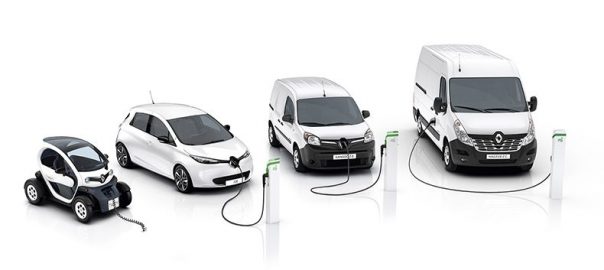
The Renault Electric Z.E. Range (Image: Renault)

Renault expands its electric vehicle-only stores to another location

Some of the legacy automakers who are really serious about electric vehicles are also trying to address the issues that come with selling both electric and gas-powered cars at dealerships.

Renault is exploring electric vehicle-only stores and after a successful pilot project in Stockholm, it is now opening a second location in Germany.

It can be difficult for dealerships to sell both electric cars and gas-powered vehicles at the same time since the strengths of one are often the weaknesses of the other.

Car dealers are incentivized to sell what they have on their lots and since that’s currently mostly gas-powered vehicles, they don’t put a lot of effort into selling EVs.

Renault lineup – from left Twizy, ZOE, Kangoo Z.E., Master Z.E.

That’s partly why Tesla decided to bypass the dealership model and operate its own stores.

They were proven right by a few different studies of the electric vehicle buying experience. Most recently, one found that electric car adoption is slowed down by ‘dismissive and deceptive car dealerships’.

Now Renault is trying an approach similar to Tesla’s in Europe.

Earlier this year, they opened a ‘Renault Electric Vehicle Experience Center’ in Stockholm, Sweden.

The program was apparently quite successful as Renault reports that it attracted “more than 14,000 visitors in the first three months.”

The French automaker is now announcing that it is expanding the program to a second location – this time in Berlin, Germany.

Read more: Electrek

Scotland: More funds to support electric vehicles and A9 ambitions

The Scottish government has increased funding to schemes that support its ambition to phase out the need for new petrol and diesel vehicles by 2032.

The overall budget for the Low Carbon Transport Loan has risen from £8m to £20m for 2018/19.

The scheme encourages businesses and consumers to switch to electric vehicles.

Another fund, Switched on Fleets, has been increased from £1.2m to £4.8m.

Read more: BBC

Cheapest electric car uk

Renault invests over $1 billion to accelerate electric vehicle production in France

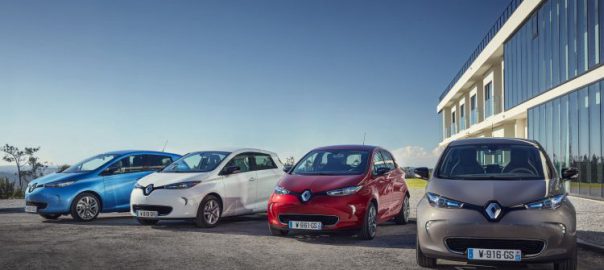
With the success of the Zoe, Renault has become a leader in electric vehicles in Europe.

Now the French automaker wants to keep the momentum going with an investment of over 1 billion euros to accelerate electric vehicle production in France.

Cheapest electric car uk

The new plan includes several initiatives.

Renault listed them in a press release today:

  • Introduce a new Alliance electric platform in Douai to create a second Renault electric vehicle production site;
  • Double ZOE production capacity and the launch of a new ZOE at Flins, the only ZOE production site in the world;
  • Triple electric motor production capacities at Cleon and introduce a new generation electric motor from 2021.
  • Invest in Maubeuge for the production of the next generation of the Kangoo family, including the electric utility vehicle Kangoo Z.E.

Carlos Ghosn, Chairman and CEO of Renault, said about the announcement:

“The acceleration of our investments in France for electric vehicles will increase the competitiveness and attractiveness of our French industrial sites. Within the framework of its Drive the Future strategic plan and with the Alliance, Groupe Renault is giving itself the means to maintain its leadership in the electric vehicle market and to continue to develop new sustainable mobility solutions for all.”

Read more: Electrek

Nissan LEAF Takes European Sales Crown From Renault ZOE

It didn’t take long after the second-generation Nissan LEAF entered the European market in February for it to take the lead among all-electric cars in Europe.

It just knocked the Renault ZOE from its pedestal.

According to EagleAID, Nissan LEAF sales in Western Europe amounted to 11,441 in the first four months of 2018 (up 48% year-over-year) and that was enough for it to overtake the Renault ZOE.

5,790 delivered in March (Western Europe) and another 3,309 in April. The LEAF is of course the best-selling plug-in model in all of Europe as the Western part represents almost all sales.

Read more: Inside EVs

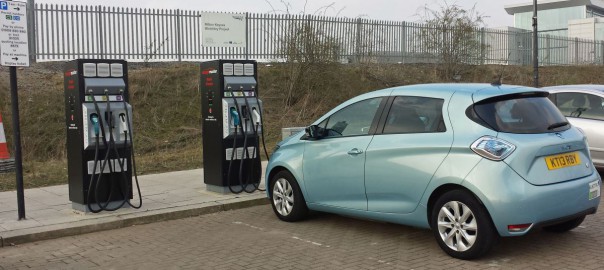
Rapid Chargers next to Milton Keynes Central railway station parking (Image: T. Larkum)

Green light for ultra-fast electric car charging innovation

New technologies to create safer, high-powered electric car batteries have been supported by £22 million of industrial strategy funding.

A new pioneering technology to ensure a next generation of safer, high-powered electric car batteries can be charged by drivers in ultra-fast time is just one of 12 innovation projects to receive the green light from the government’s Faraday Battery Challenge.

Rapid Chargers next to Milton Keynes Central railway station parking (Image: T. Larkum)

The PowerDrive Line project being led by Southampton-based company Ilika is focusing on sold state battery cell development, in particular how to manufacture at scale in the UK and how to build in ultra-fast charging technology of less than 25 minutes for a vehicle as is seen in some current battery systems.

In total £22 million grants are being rewarded to consortia across the UK as part of the latest round of funding through the Faraday Battery Challenge, part of the government’s Industrial Strategy Challenge Fund.

The funding is key to realising the government’s ambitions for innovative energy solutions as set out in our modern Industrial Strategy. The Faraday Battery Challenge brings together world-leading research and business to accelerate the research needed to develop battery technologies.

Read more: Gov.UK

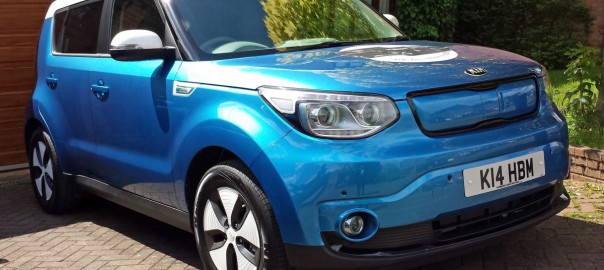
Kia Soul EV (Image: T. Larkum)

Kia to offer Soul in Europe as electric car only

Kia wants to keep its Soul lineup exclusively electric in Europe. The decision was made against the backdrop of falling sales of the fossil-fuelled versions of their little car. A turbo Soul called the Final Edition marks the change.

Kia have made up their mind and so there will be no other Soul but the Soul EV be available at dealerships across Europe. For the Koreans the switch reflects the reality of a market, where most people opted for the all-electric version, particularly at a time when there were not many EVs on sale.

Kia Soul EV (Image: T. Larkum)

But also today, sales are strong. In Germany for example, of those 2,245 Kia Soul sold this year so far, 1,899 had an electric drive.

Moreover, Kia is about to release the next generation, this time sitting on the same platform also used for the Kona and Niro plug-ins.

Read more: Electrive

New Octopus Energy tariff aims to slash charging cost for electric vehicle owners

Octopus Energy has launched a new “time of use” energy tariff especially designed for bringing down the charging cost for electric vehicle (EV) owners.

The new tariff, called Octopus Energy Go, lets EV owners charge their cars for only 5p per kilowatt hour for four hours each night, which could make owning an EV 10 times cheaper than having a car running on fossil fuels.

Other existing initiatives to bring down the power cost for EV owners include the Economy 7 tariff, also known as the differential tariff, which has reduced rates for seven hours per night. However, the Go tariff could be up to 25 per cent cheaper.

Rebecca Dibb-Simkin, director of product for Octopus Energy, said:

“Octopus is passionate about driving the UK’s switch to electric vehicles.”

“We’re delighted to use our innovative tech both to offer the cheapest kWh charge in the market and enable your car to automatically charge itself, a brilliant way to unlock those electric car savings.”

Read more: City AM

Electric vehicles roar up Britain’s sales rankings

EV sales are rising in the UK as political changes in Europe help fuel the transition away from fossil-fuel engines

Sales of hybrid and electric vehicles in the UK hit a record high in May as buyers turned their back on diesel cars.

Data for May released by the Society of Motor Manufacturers and Traders (SMMT) this week showed that 11,240 units were sold last month, a 38% increase on 2017, while the market share for EVs and hybrids also increased to 5.8% on the previous year’s figure of 4.4%. So far, in the first five months total sales are at 57,000, representing a rise of 19.5%.

Political shifts in Western Europe in recent weeks are also expected to support momentum towards faster adoption of electric vehicles.

The populist Five Star Movement that has become the majority partner in a new Italian coalition government has been strongly supportive of a reduction in the use of vehicles powered by diesel and petrol engines. The new socialist-led government in Spain’s radical demands for more ambitious EU renewable energy transition targets suggest it will also likely push Brussels for faster adoption of EV transition targets.

Under the Paris Agreement and air quality rules, Europe needs to achieve total emissions cuts of 40% by 2030.

Globally, the sales picture is similarly bullish, with new electric car registrations rising more than 50% in 2017, the International Energy Agency said in its flagship EV report at the end of May.

China, the world’s biggest market for electric vehicles, saw sales grow by about half – although the market share remained small at 2.2%.

“Looking ahead, the strongest current policy signals emanate from electric car mandates in China and California, as well as the European Union’s recent proposal on carbon dioxide (CO2) emissions standards for 2030,” wrote the IEA.

Beijing wants 7 million electric vehicles by 2025, while California wants 5 million by 2030. The EU is yet to produce a mandate, but has targeted a 30% fall in emissions from the EU fleet of new cars from 2021 to 2030.

The IEA sees EV adoption gathering speed in the years ahead towards those targets, as government initiatives start to bite. “Supportive policies and cost reductions are likely to lead to significant growth in the market uptake of (electric vehicles) in the outlook period to 2030,” the report said.

Read more: Petroleum Economist