All posts by Trevor Larkum

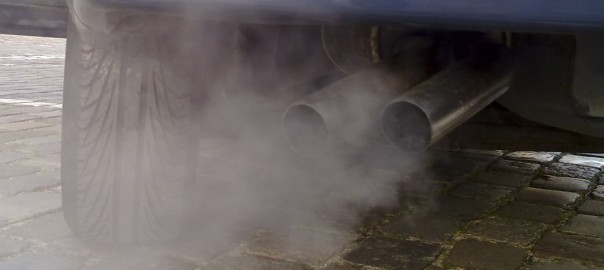
Car exhaust pollution (Image: Wikipedia)

Renault considers killing off diesel engines

Renault, the French car maker, may stop offering diesel engines in most of its cars sold in Europe.

Pollution in Paris

The move is a reaction to the cost of ensuring that diesel engines comply with tighter emissions regulations.

The crackdown follows last year’s diesel emissions scandal involving German car maker Volkswagen.

Renault’s move was reported by Reuters and has not yet been officially announced.

Senior Renault executive Thierry Bollore has said that tougher emissions standards and testing methods would make diesel engines uneconomic to make.

He told a meeting of Renault bosses in July that diesel engines had already been removed from the company’s smallest cars, such as the Twingo, even before the Volkswagen scandal.

By 2020, when more stringent EU emissions standards come into force, larger Renault cars such as the Clio and the Megane are unlikely to have diesel engine variants.

More than 60% of the 1.6 million cars Renault sold in Europe last year were diesels.

Volkswagen’s chief executive, Matthias Mueller, said in June that his company was now wondering

“whether it still makes sense to invest a lot of money in further developing diesel”.

Read more: BBC

Oil Discoveries at 70-Year Low Signal Supply Shortfall Ahead

  • New finds at lowest since 1947 and headed even lower: WoodMac
  • Explorers replacing just 6% of resources they drill: Rystad

Explorers in 2015 discovered only about a tenth as much oil as they have annually on average since 1960. This year, they’ll probably find even less, spurring new fears about their ability to meet future demand.

1x-1_oil_discoveries_bloomberg

With oil prices down by more than half since the price collapse two years ago, drillers have cut their exploration budgets to the bone. The result: Just 2.7 billion barrels of new supply was discovered in 2015, the smallest amount since 1947, according to figures from Edinburgh-based consulting firm Wood Mackenzie Ltd. This year, drillers found just 736 million barrels of conventional crude as of the end of last month.

That’s a concern for the industry at a time when the U.S. Energy Information Administration estimates that global oil demand will grow from 94.8 million barrels a day this year to 105.3 million barrels in 2026. While the U.S. shale boom could potentially make up the difference, prices locked in below $50 a barrel have undercut any substantial growth there.

New discoveries from conventional drilling, meanwhile, are “at rock bottom,” said Nils-Henrik Bjurstroem, a senior project manager at Oslo-based consultants Rystad Energy AS.

“There will definitely be a strong impact on oil and gas supply, and especially oil.”

Read more: Bloomberg

Evolt wins first Go Ultra Low City contract to install EV Charge Points across Dundee

 Evolt, the SWARCO Group’s eMobility brand, has received the first phase of works estimated at £1.8 million by Dundee City Council to support three new charging ‘hubs’ in the city, along with an additional regional charging infrastructure. This follows its success in being awarded a place on a Framework and aims to boost the number of plug-in cars on Scottish roads.

15112016_raption-charge-point_go-ultra-low_evolt

The contract confirms Evolt as the dominant supplier to the Scottish market, having installed over 1,000 charge points and been selected to the Energy Saving Trust’s national framework to deliver public and private EV charging.

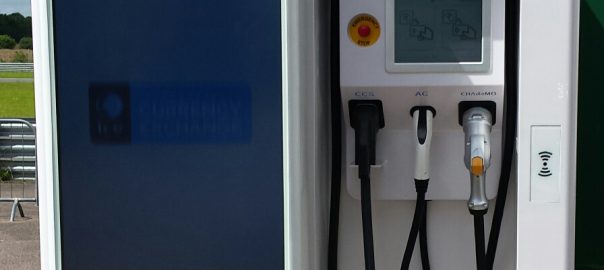
As one of the Go Ultra Low Cities, Dundee is creating three new charging ‘hubs’ that will become dedicated areas for the charging of electric vehicles. Each hub will be equipped with Evolt’s well proven charging technology, including a combination of Rapid and Fast charging units that can charge two EVs simultaneously to 80% battery life within 30 minutes and an hour respectively.

To harness the benefits of renewable energy, each hub will have solar panels installed to feed Evolt’s energy storage solution, which harnesses the power of second life EV and hybrid battery packs. Storing energy for future use reduces the heavy demand placed on the power grid when EVs are charging simultaneously.

A further four Rapid chargers and 14 Fast chargers will be installed at additional locations outside of the City centre to provide a wide network that supports existing EV users and to encourage further take up. All of Evolt’s units will be connected to the national ChargePace Scotland network

Dundee is the first of the eight Go Ultra Low Cities to award a contract following the announcement of £40 million of Government funding earlier this year. Evolt was successful with its bid following a competitive tender exercise, and is working with British Gas as its installation partner.

Fraser Crichton, Transport Manager for Dundee City Council, says:

“We have worked with Evolt for the last five years on charging infrastructure within Dundee and are delighted to continue our relationship to develop some exciting and innovative charging hubs across the city and surrounding area.”

Justin Meyer, General Manager for Evolt, says this Framework Contract is a key win for the company and builds upon Evolt’s successes in Scotland:

“The quality and proven reliability of our hardware coupled with dedicated local servicing expertise makes us a driving force within the Scottish eMobility marketplace,” he explains.

“We are very pleased to be playing a part in the Go Ultra Low initiative, and with more Evolt chargers in key locations across Dundee we hope to see the take up of EVs continue to increase.”

Among the 14 Rapid chargers delivered, Dundee has chosen six of Evolt’s next generation Raption 50 model that includes a 47-inch LCD screen to offer the council a further revenue generating opportunity. The Raption 50 Rapid was unveiled in September at the Cenex-LCV exhibition, and this will be the first time the new units have been installed in the UK, with multiple units already installed across Europe.

Evolt has supplied 24 of Scotland’s 32 local authorities, with its model for continued success based on the provision of highly reliable hardware combined with a strong and localised after-sales service.

Flooding in the village of Aberfeldy, Perthshire, Scotland, 2015. Critical infrastructure, such as water and telecoms, are at serious risk from floods (Image: C. Webster/PA)

Flooding: UK government plans for more extreme rainfall

National review prompted by severe flooding in recent winters anticipates 20-30% more extreme downpours than before

Flooding in the village of Aberfeldy, Perthshire, Scotland, 2015. Critical infrastructure, such as water and telecoms, are at serious risk from floods (Image: C. Webster/PA)

The UK’s new flood defence plans anticipate significantly higher extreme rainfall, after new research was published as part of the government’s National Flood Resilience review.

The government, which had been criticised for not taking full account of the impact of climate change in driving up flood risk, will now plan for 20-30% more extreme downpours than before.

The review, prompted by severe flooding in recent winters, also found that 530 critical infrastructure sites, such as water and telecoms, are at serious risk from floods, each potentially affecting at least 10,000 people. Utility companies have pledged to have new protection in place by the end of the year.

The government’s official climate change advisers recently warned that flooding could cause a cascade of emergencies by knocking out energy, transport, water and communications links.

The review allocates £12.5m for more temporary defences, such as barriers and pumps, at strategic locations around the country. By this winter, the government said, four times more temporary barriers will be available.

“Last winter we saw just how devastating flooding can be. This review sets out clear actions so we are better prepared to respond quickly in the event of future flooding and can strengthen the nation’s flood defences,” said the environment secretary, Andrea Leadsom.

Ben Gummer, Cabinet Office minister, said:

“The government has made clear that we expect water and telecoms companies to work ever closer together to improve their preparation and response to flooding, making sure lifelines such as mobile phone masts and water treatment works continue to function.”

Bob Ward, policy director at the Grantham Research Institute on Climate Change at the London School of Economics and Political Science, said:

“This review was launched because the government was caught out by [recent] flooding. It deserves credit for admitting that ministers have previously misunderstood and significantly underestimated the probability of flooding.

“However, it is disappointing that the government chose to ignore surface water flooding during the review, even though it poses a threat to more properties in the UK than does coastal and river flooding.”

Read more: The Guardian

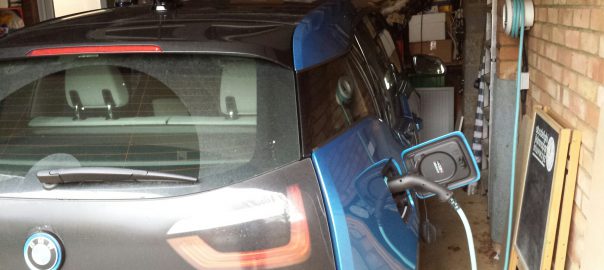
Solar charging a BMW i3 electric car

One feature of the i3 that wasn’t available on my previous Renault ZOE is the ability to change at very low powers. Of course that means charging can be very slow.

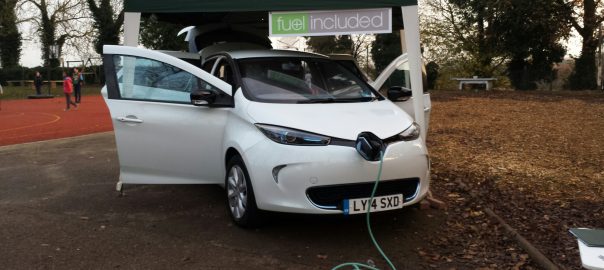
The benefit of this option, which may not be obvious, is that it means the current draw is a good match for solar panels. In other words the car can be entirely charged by solar with nothing being drawn from the grid. Free fuel!

Hurricane Sandy flooded huge parts of Lower Manhattan and downtown Brooklyn (Image: J. Countess/Redux)

New York will be flooded due to climate change

Klaus Jacob, a German professor affiliated with Columbia’s University’s Lamont-Doherty Earth Observatory, is a geophysicist by profession and a doomsayer by disposition.

Hurricane Sandy flooded huge parts of Lower Manhattan and downtown Brooklyn (Image: J. Countess/Redux)

I’ve gotten to know him over the past few years, as I’ve sought to understand the greatest threat to life in New York as we know it. Jacob has a white beard and a ponderous accent: Imagine if Werner Herzog happened to be a renowned expert on disaster risk. Jacob believes most people live in an irrational state of “risk denial,” and he takes delight in dispelling their blissful ignorance. “If you want to survive an earthquake, don’t buy a brownstone,” he once cautioned me, citing the catastrophic potential of a long-dormant fault line that runs under the city. When Mayor Bloomberg announced nine years ago an initiative to plant a million trees, Jacob thought, That’s nice — but what about tornadoes?

For the past 15 years or so, Jacob has been primarily preoccupied with a more existential danger: the rising sea. The latest scientific findings suggest that a child born today in this island metropolis may live to see the waters around it swell by six feet, as the previously hypothetical consequences of global warming take on an escalating — and unstoppable — force. “I have made it my mission,” Jacob says, “to think long term.” The life span of a city is measured in centuries, and New York, which is approaching its fifth, probably doesn’t have another five to go, at least in any presently recognizable form. Instead, Jacob has said, the city will become a

“gradual Atlantis.”

The deluge will begin slowly, and irregularly, and so it will confound human perceptions of change. Areas that never had flash floods will start to experience them, in part because global warming will also increase precipitation. High tides will spill over old bulkheads when there is a full moon. People will start carrying galoshes to work. All the commercial skyscrapers, housing, cultural institutions that currently sit near the waterline will be forced to contend with routine inundation. And cataclysmic floods will become more common, because, to put it simply, if the baseline water level is higher, every storm surge will be that much stronger. Now, a surge of six feet has a one percent chance of happening each year — it’s what climatologists call a “100 year” storm. By 2050, if sea-level rise happens as rapidly as many scientists think it will, today’s hundred-year floods will become five times more likely, making mass destruction a once-a-generation occurrence. Like a stumbling boxer, the city will try to keep its guard up, but the sea will only gain strength.

Read more: NY Mag

2016 BMW i3 94Ah review

The new BMW i3 94Ah adds more electric range to what’s arguably the most distinctive everyday electric vehicle

A battery upgrade for the BMW i3 sees range almost doubled

The BMW i3 94Ah has just had its first major upgrade since this radical all-electric model was launched two and a half years ago.

The unusual 94Ah name refers to the car’s brand new lithium ion battery pack, which allows the i3 to travel longer distances between charges. Mounted under the cabin floor, the new battery is the same physical size as the original i3’s battery, which means there’s no reduction in boot space, but the energy density of the unit has been improved by 50% to 33kWh.

What’s the 2016 BMW i3 94Ah like to drive?

The biggest change you’ll notice when driving the new i3 is the extra range. Although the official EU testing regime rates the new i3 as having a 195-mile range, even BMW acknowledges this is not indicative of its real-world capability.

Instead, it claims the 94Ah has a realistic range of 124 miles, a figure that can even be achieved in more extreme weather conditions. Electric vehicles usually suffer a range reduction in cold, winter weather, when the car’s heating and headlights are in use. Summer range can also suffer if the energy-hungry air-con is being used. However, BMW promises the i3 will deliver that 124-mile range whatever the weather.

Read more: What Car

Evolt smart chargers selected for major nationwide trial

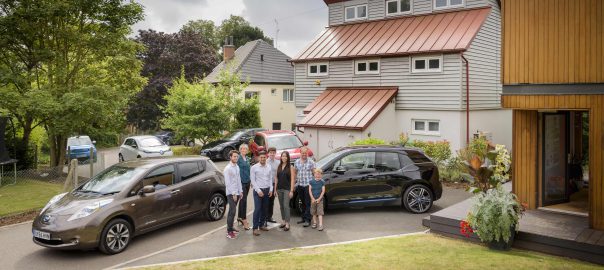
 Evolt, the SWARCO Group’s eMobility brand, has been selected to provide its smart electric vehicle (EV) chargers for Electric Nation, a nationwide trial that is seeking to better understand the demand and impact that ‘at-home charging’ places on the local power distribution networks.
03112016_electric-nation-smart-charger_western-power-distribution-1_evolt

Greater demand is being placed on power networks as the take up of EVs widens, EV battery sizes increase, and charging times get faster. This demand is particularly noticeable when EVs in the same local network are charging simultaneously.

The Electric Nation project aims to implement a prototype smart charging solution that will better manage power distribution at a local level at peak times.

Evolt, which is a brand of the SWARCO Group, is providing its smart charging unit to 50% of the 500 – 700 members of the public that are being recruited for Electric Nation.

Its units will be subsidised by OLEV* and Western Power Distribution (WPD), which is funding the project. Initially, the project will take place within the bounds of WPD (the South West, South Wales, and the Midlands), but has the ability to be rolled out nationally.

A previous project, My Electric Avenue (which was smaller in scale and used only one type of EV and charger), found that 32% of the UK’s supply cables would require upgrading when 40% – 70% of a network’s customers have EVs. This is estimated to cost £2.2 billion. Electric Nation is now trialling a smart charging solution that monitors the level of power going to many different makes and models of EV via a variety of charge points; in effect managing the distribution of power at a local level.

“Electric Nation’s scope is far broader than the previous My Electric Avenue project, and is the world’s largest trial of its kind,”

says Gill Nowell, Senior Consultant – Smart Interventions at EA Technology, which is responsible for developing the demand control technology, as well as the customer research, marketing and learning dissemination for the project.

“Evolt’s capability to provide smart chargers that stream information via the cloud was key to its selection,” she adds. “It also provides well-known, easy to use and reliable products that are installed throughout the length and breadth of the UK. Having proven systems that are trustworthy was also a central aspect to its selection.”

Justin Meyer, General Manager of Evolt, says the EV industry is constantly adapting:

“We need to ensure that our local power distribution networks can cope with the increasing demands of EV charging,” he says. “We know that when everyone charges at the same time there is increased pressure on the grid. But by working together we can find the right way of optimising the grid’s availability and protect the future of EV charging as demand continues to rise.”

Electric Nation is the customer-facing brand of CarConnect, a WPD and Network Innovation Allowance funded project. WPD’s collaboration partners in the project are EA Technology, DriveElectric, Lucy Electric GridKey and TRL.

To check your eligibility for the Electric Nation project visit www.ElectricNation.org.uk.