All posts by Trevor Larkum

nuTonomy beats Uber to launch first self-driving taxi

In the cutthroat world of technology, if you’re not first, you’re last. With this in mind, it shouldn’t come as a surprise to see tech companies and automakers clawing to be first in line to release self-driving cars.


Uber recently partnered with Volvo in a $300-million project that should result in a self-driving fleet as early as next month. But amazingly, a 3-year-old company called nuTonomy has beat Uber to the punch by launching the world’s first self-driving taxi in Singapore.

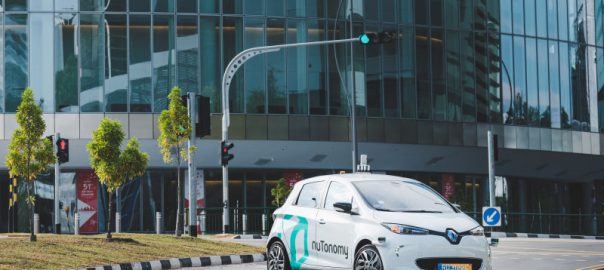
Cambridge, MA,-based nuTonomy has been privately testing self-driving vehicles in Singapore since April and is now allowing select residents in the city’s one-north business district to be driven around in its self-driving taxis for free. Customers will be able to summon one of nuTonomy’s self-driving taxis through the company’s app and will be picked up in a Renault Zoe or Mitsubishi i-MiEV electric car modified for autonomous driving.

While the taxi will drive itself, an engineer from nuTonomy will ride in the vehicle to ensure that the car is operating properly and will take over if needed. There’s no word on how many self-driving taxis nuTonomy put on the road, but the trials take the company one step closer to launching its fully autonomous fleet by 2018.

The Wall Street Journal’s Jake Watts managed to get a ride in one of nuTonomy’s self-driving taxis and, while it went well, he claims human cabdrivers may not go extinct any time soon. According to Watts, the self-driving Mitsubishi lacked Tesla’s polish and was overly cautious. The car did a fine job of avoiding jaywalkers, parked cars, and pedestrians on the short drive, but hesitated often, which could gives riders motion sickness, Watts said.

nuTonomy CEO Karl Iagnemma will be speaking at Autoblog’s UPSHIFT 2016 conference on transportation technology on October 6 in Detroit.

Source: Autoblog
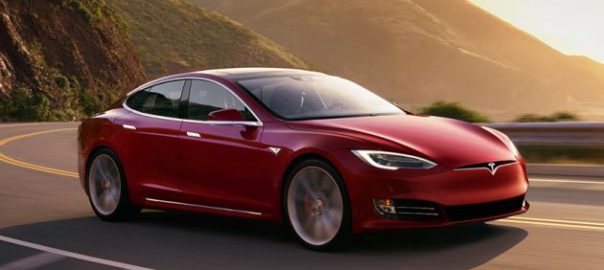
The Model S P100D Ludicrous can cover more than 300 miles on a charge

New Tesla Model S claims fastest and longest range titles

Tesla has launched a new version of its all-electric Model S saloon, which can now be specified with a 100kWh battery.

The Model S P100D Ludicrous can cover more than 300 miles on a charge

This – in high-performance P100D with Ludicrous mode guise – makes the Model S the third fastest accelerating production car ever; and the quickest that can be bought new.

Tesla cites Ferrari’s LaFerrari and the Porsche 918 Spyder as the models to top the Model S in the fastest accelerating production car stakes, but both hybrid hypercars were made in limited numbers and cost hundreds of thousands of pounds. The Tesla can seat up to seven, has four doors, and produces zero-tailpipe emissions.

More usefully than being able to dominate the traffic light Grand Prix though is the 100kWh battery ability to let the Model S cover around 315 miles on the American EPA test cycle – thought to be reasonably accurate – and 380 miles on the less accurate European NEDC tests. Either way, the Model S will comfortably cover more than 300 miles and has the longest range of any production EV by some way.

The larger battery pack will also be made available on the Model X SUV and, in top of the range P100D with Ludicrous mode spec, will take 2.9 seconds to compete the 0-60mph sprint. Range is quoted at 289 miles (EPA) and customers who have ordered P90D Ludicrous models of either the Model S or Model X can upgrade to the 100 kWh pack at a reduced price if they haven’t received their car yet.

The extra to pay in the US is $10,000, or $20,000 for those who want to retro-fit the 100kWh battery on models already owned, since Tesla will have to recycle the existing 90kWh battery.

The cost of a new P100D in the UK is £114,200 – or £109,700 after the UK Government’s Plug-in Car Grant (PiCG) has been applied. This keeps the flagship model’s pricing roughly in line with those of US models. Those placing an order for their car now can expect to receive it around December.

Tesla has stated that it realises the new models are expensive but reminds potential customers that each vehicle sold helps pay for the development of the smaller Model 3. Company boss Elon Musk said at the launch of the new battery pack:

“These are very profound milestones and I think will help convince people around the world that electric is the future.”

Source: Next Green Car

Electric cars can be a very effective way to save you money on motoring (Image: Go Ultra Low)

Diesel reliance reducing faster than expected

Contracthireacar.com customers are reducing their reliance on diesel models faster than expected, says the leasing company.

Electric cars can be a very effective way to save you money on motoring (Image: Go Ultra Low)

It carried out analysis of its own risk fleet following the research published by Arval for its 2016 Corporate Vehicle Observatory Barometer, which points to a 5% overall reduction in UK fleets’ use of diesel by 2021.

Arval’s study forecasts a 12% reduction in diesel use for larger fleets and a 1% reduction for smaller fleets of 40 or fewer vehicles, the latter accounting for the majority of Contracthireacar.com’s client base.

During the period January to July 2015, diesel made up 86% of car leasing deals written by the firm, with petrol on 12.57%. Alternative vehicle fuels such as hybrid and electric accounted for 1.42% of orders.

A year on, Contracthireacar.com data covering the period January to July 2016 stands at 79.29% diesel usage, with petrol having risen to 17.61% and alternative fuels having increased to 3.10%.

Craig Davy, business development manager for Contracthireacar.com, said: “With influencing factors ranging from the Volkswagen headlines, fuel price trends, advancements in turbocharged petrol engines and the EU leave result, to new London Mayor Sadiq Khan likely to introduce a T-Charge to deter older diesels and bring forward the city’s ULEZ, it’s no surprise that we’re seeing the switch to petrol and particularly hybrids and electrics accelerate.

“ULEV and EV orders doubling is to be expected but the 5% switch back to petrol within just a year is somewhat surprising.”

Read more: Fleet News

2016 BMW i3

1 in 6 cars sold in 2020 must be electric to meet fuel-economy rules

Several nations have enacted strict fuel economy standards but, for the most part, they have not required automakers to sell electric cars.

2016 BMW i3
2016 BMW i3

In the U.S., only the state of California has a zero-emission vehicle mandate that puts such a requirement on carmakers.

Yet even without mandates, automakers may soon be forced to sell large numbers of electric cars just to meet fuel-economy rules.

That’s the conclusion of a study published in June by the World Energy Council (WEC), which argues that automakers will need quite a lot of electric cars indeed.

Among the major the points in the full study (pdf) is a prediction that 16 percent of cars sold in 2020 will have to be electric in order to meet emissions standards.

The study compares emissions-reductions targets for the U.S., China, and the Europe Union—the world’s three largest car markets, with anticipated fuel-economy improvements that can be achieved with internal-combustion engines alone.

By the WEC’s estimation, larger volumes of electric-car sales will be needed to plug an “EV Gap” between fuel-economy targets and the improvements that can be realistically expected from internal-combustion engines.

Read more: Green Car Reports

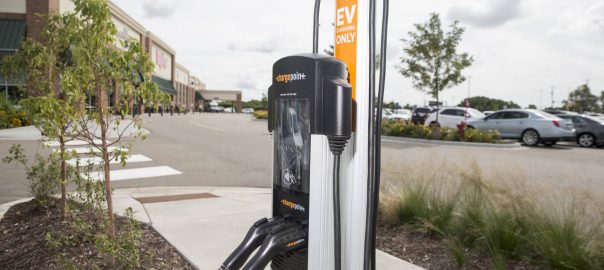
Hy-Vee, a Midwestern grocery chain, installs charging stations at all its new locations. The number of commercial charging stations is growing quickly. (Image: A+G/WSJ)

Why Electric Cars Will Be Here Sooner Than You Think

Adoption of electric vehicles will not be gradual, because the factors required to unlock demand for them are in place

Hy-Vee, a Midwestern grocery chain, installs charging stations at all its new locations. The number of commercial charging stations is growing quickly. (Image: A+G/WSJ)

In 2015, about one in every 150 cars sold in the U.S. had a plug and a battery. But mass adoption of electric vehicles is coming, and much sooner than most people realize.

In part, this is because electric cars are gadgets, and technological change in gadgets is rapid.

One big leap is in batteries. A typical electric vehicle today costs $30,000 and will go about 100 miles on a charge, if that. Within a year, you’ll be able to get double that range for just a little more money.

Tesla Motors Inc. is the standard-bearer, promising a Model 3 vehicle meant to appeal to the masses at $35,000 without incentives and more than 200 miles of range. By comparison, the average new car in the U.S. today sells for about $33,000.

But Tesla is hardly alone. Later this year, Chevrolet will roll out its $37,500 Bolt EV. It, too, boasts more than 200 miles of range, which appears to be the new goal for eliminating “range anxiety”—the fear that a vehicle will run out of juice—among potential electric-vehicle buyers.

And that is just the start. Pasquale Romano, chief executive of ChargePoint Inc., the world’s largest maker of electric-car charging stations, says he works with, and talks to, most major car companies.

“We have seen their internal plans to just electrify everything,” he said.

In the short run, many of these cars will be plug-in hybrids, with both electric motors and gasoline engines. It makes sense to lump them with electric vehicles because most new models have enough battery power to get the average U.S. commuter to work and back without using any gasoline.

Steve Majoros, a marketing director at General Motors Co.’s Chevrolet unit, says that 90% of trips and 65% of miles driven in its Volt plug-in hybrid are on electric-only mode. The Volt can go 53 miles on a charge.

Every plug-in hybrid is effectively an electric car that is carrying a “range extender,” just in case. They will help electrify a large share of the miles Americans drive. They’ll also help ease consumers into electric vehicles, overcoming any remaining fear about being stranded after running out of juice.

Competition among electric vehicles and plug-in hybrids will be intense, which will drive down prices. Volkswagen AG has pledged to make every model available as a plug-in hybrid by 2025. BMW AG has made the same promise. Hyundai Motor Co. promises eight plug-in hybrid models by 2020, plus two all-electric vehicles. Toyota Motor Corp.’s overhaul of the plug-in Prius, boasting twice the range, arrives before the year is out.

Read more: Wall Street Journal

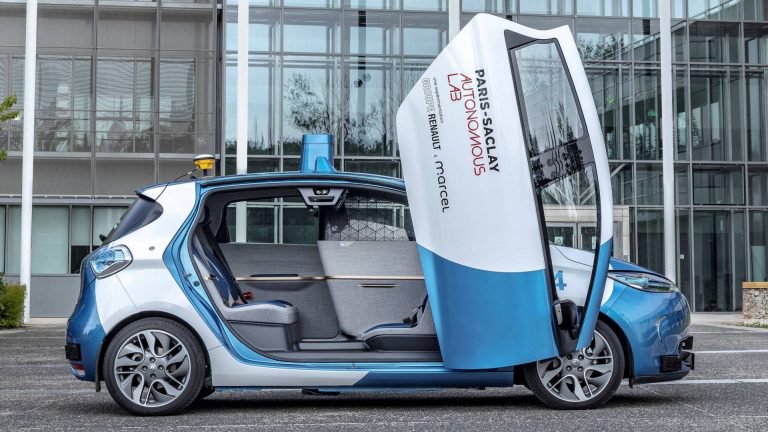
ZOE Cab autonomous vehicle (Image: Renault)

Why most self-driving cars will be electric

As our urban transportation landscape becomes automated over the next decade, it could spark an electric car revolution.

Spend enough time around these early self-driving vehicles and you notice that nearly all are hybrids or pure electric vehicles. They include Ford’s automated Fusion, the similarly equipped Fusion hybrids that Uber is deploying in Pittsburgh, the Google cars bopping around the peninsula of northern California, the Chevrolet Bolts being tested in San Francisco and suburban Phoenix.

ZOE Cab autonomous vehicle (Image: Renault)

Today, hybrids, plug-ins and pure electrics are a marginal piece of the U.S. market, accounting for a scant 2.8% of all new vehicles sold in the U.S. through the first eight months of 2016, according to hybridcars.com.

But a decade from now, electric cars will appeal far beyond the granola-eating, tree-hugging, climate-change evangelizing base that has sustained them thus far. You may not own one, but you will have ridden in them. The change won’t be instant, but it will be steady.

So why will our autonomous future likely be an electric one?

First are the regulatory reasons, namely gas mileage requirements. Then there are engineering reasons — electric vehicles are easier for computers to drive. And, of course, ride-hailing services will increasingly make up a higher percentage of daily miles driven, and it will be easier, cheaper and safer to recharge an unmanned car than to gas one up.

“One of the biggest changes will be in the growing difference in cost of ownership between electrified and internal combustion engines,”

Ford CEO Mark Fields said last week, repeating his company’s pledge to spend $4.5 billion to introduce 13 new electric vehicle nameplates by 2020.

A competition, of sorts, between Silicon Valley and Detroit has been ongoing in the past decade for the engineering and computer programming talent needed to create the next generation of smart, connected and ultimately self-driving vehicles.

The two sides will likely have to work together — either through mergers and acquisitions or strategic partnerships — and electric cars will be the platform.

The federal government’s corporate average fuel economy (CAFE) standards will vary depending on the mix of trucks, SUVs and passenger cars a manufacturer sells, but a substantial portion of electrified vehicles will be needed to achieve the goals.

And then there are the engineering reasons.

“There are a lot fewer moving pieces in an electric vehicle. There are three main components — the battery, the inverter and the electric motor,”

said Levi Tillemann-Dick, managing partner at Valence Strategic in Washington, D.C., and author of “The Great Race: The Global Quest for the Car of the Future.”

“An internal combustion engine contains 2,000 tiny pieces that have to be kept lubricated and they break every once in a while.”

Read more: USA Today

Many car brands emit more pollution than Volkswagen, report finds

Diesel cars by Fiat, Suzuki and Renault among makers emitting up to fifteen times European standard for nitrogen oxide

Car exhaust pollution (Image: Wikipedia)

A year on from the “Dieselgate” scandal that engulfed Volkswagen, damning new research reveals that all major diesel car brands, including Fiat, Vauxhall and Suzuki, are selling models that emit far higher levels of pollution than the shamed German carmaker.

The car industry has faced fierce scrutiny since the US government ordered Volkswagen to recall almost 500,000 cars in 2015 after discovering it had installed illegal software on its diesel vehicles to cheat emissions tests. But a new in-depth study by campaign group Transport & Environment (T&E) found not one brand complies with the latest “Euro 6” air pollution limits when driven on the road and that Volkswagen is far from being the worst offender.

“We’ve had this focus on Volkswagen as a ‘dirty carmaker’ but when you look at the emissions of other manufacturers you find there are no really clean carmakers,” says Greg Archer, clean vehicles director at T&E.

“Volkswagen is not the carmaker producing the diesel cars with highest nitrogen oxides emissions and the failure to investigate other companies brings disgrace on the European regulatory system.”

Read more: The Guardian

Revealed: Exxon’s Lobbying Against Electric Vehicles in the UK

“Switching transportation from petroleum to renewable or alternative fuels is not the most cost-effective way to reduce GHG [greenhouse gas] emissions.”

This is the message that ExxonMobil has delivered to the UK Department for Transport (DfT) in three separate presentations since the Paris climate deal was agreed last December, reveal documents obtained by DeSmog UK.

exxon_dftev_slide5_desmoguk

Exxon appears to be the only major fossil fuel company currently heavily lobbying the British government against greener transport policies, according to the DfT’s response to DeSmog UK’s Freedom of Information (FOI) request.

The presentations by Exxon and correspondence between Peter Clarke, a director at Exxon, and the Department Secretary Patrick McLoughlin show the oil giant lobbying on biofuels, transport and carbon reduction, and the Fuels Quality Directive – all policy issues that impact the decarbonisation of our transport system and up-take of electric vehicles.

The document release comes as the government’s environmental audit committee warned the UK is “falling behind” on its electric vehicle targets.

The committee criticised ministers for failing to implement the proper incentives and infrastructure needed to encourage the growth of the sector. Increasing the number of electric vehicles is critical if the UK is to tackle both climate change and harmful air pollution.

Read more: DeSmog Blog

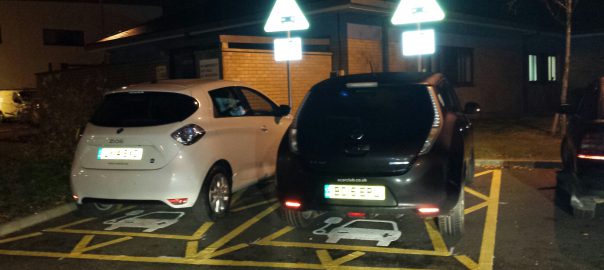
Renault ZOE from eCar Club

The event yesterday went well, after which it was time to head back north. There was just about enough charge to get back home but I called in to Newport Pagnell services for a 10 minute top-up rather than take a chance .

Since my i3 was damaged in an accident last week, I had booked the ZOE from E-Car Club so that we would have something to show. I had previously made use of their Nissan Leafs a couple of times, but not a ZOE before. Anyway it was very easy and I recommend them.

It was interesting to drive a ZOE again after a few months in the i3. While the ZOE doesn’t have the range or performance of the i3, it certainly does some things better – like the touchscreen multimedia system and satnav, and having a reversing camera as standard.

Anyway I got the ZOE back to its home (Berrywood Hospital in Northampton) with no problem. It was a simple matter to unload it, lock it up with the eCar card, and put it to bed (on charge).