All posts by Repost

Tesla Model3 (Image: Wikimedia/Carlquinn)

Battery electric cars driven 26% further than petrol models, finds RAC Foundation

Electric cars are driven for 26% more miles in their first three years on the road than petrol models, research from the RAC Foundation has found.

The analysis, which pre-dates the steep fall in road traffic seen since the start of the coronavirus pandemic, is based on the MOT data for 516,936 vehicles.

It found battery electric cars cover an average of 9,435 miles per year over their first three years, compared to a petrol car’s 7,490.
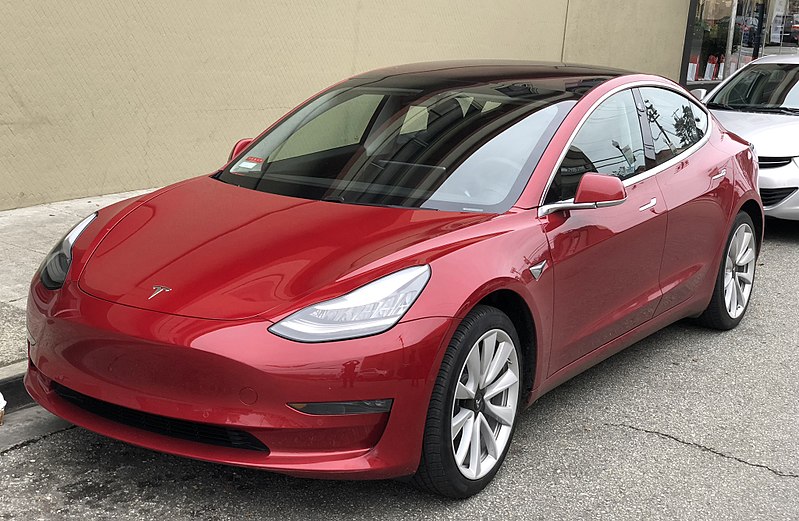
Tesla Model3 (Image: Wikimedia/Carlquinn)

Diesel cars are driven the most, and cover an average of 12,496 miles in each of their first three years.

Steve Gooding, director of the RAC Foundation, said:

“Unsurprisingly people with diesels have been doing most mileage, probably seeking better long-distance fuel economy, but this study is also evidence that battery-electric powered cars are not just trophy vehicles signalling their owners’ green credentials but prior to the lockdown were racking up the miles as everyday transport.

“Tens of millions of people still drive petrol and diesel-powered cars, but this data suggests that owners of electric cars have found them to be a practical proposition, running up the sort of big annual mileages that many of us need to do, challenging preconceptions about their range and the ease of re-charging.”

Read more: Fleet News

It’s Time to Go Green!

If you would like to know more about Solar Panels and the PowerBanx range of home battery systems, and get a free instant quote, please complete our online form:

Drive Energi 50kW Tritium Veefil-RT chargers (Image: Drive Energi)

SSEN to trial portable EV chargers in £320,000 LEVEL project

Scottish and Southern Electricity Networks (SSEN) is looking at portable electric vehicle (EV) chargers in a new project.

The £320,000 Local Electric Vehicle Energy Loop (LEVEL) project, which has secured funding from Ofgem’s Network Innovation Allowance (NIA), is to scope out the design and capabilities of portable EV charging devices.

The project is to last 18 months, starting this month, with the aim of identifying ways to improve network and charging resilience to meet short term demand.

Drive Energi 50kW Tritium Veefil-RT chargers (Image: Drive Energi)
Rapid charge points (Image: Drive Energi)

Future applications of the technology include deployment in advance of bad weather, such as in remote locations across Scotland that experience power cuts as a result of adverse weather.

LEVEL will also investigate the feasibility of positioning charging devices in public car parks during the summer months, boosting local capacity.

The project will develop the standard and specification of the temporary chargers and will include a demonstration of a device in SSEN’s licence area in the north of Scotland.

It will consider the customer interface, such as the development of an app to display the charger locations, as well as what the best ownership model for the devices would be, which SSEN said may be public bodies.

The role of the chargers in vulnerable communities and the implications for metering and settlement from temporary connections will also be considered.

“A portable charging device could be a valuable tool to help us manage short-term and short-notice surges in demand, whilst avoiding costly network reinforcement,” said Kate Jones, project manager for LEVEL at SSEN.

Read more: Current News

It’s Time to Go Green!

If you would like to know more about Solar Panels and the PowerBanx range of home battery systems, and get a free instant quote, please complete our online form:

Number of hybrid and electric vehicles on UK roads reaches all-time high

Nearly 20 per cent of all new cars that joined UK roads last year were either fully electric or plug-in hybrid vehicles, an all-time record, new figures from the Society of Motor Manufacturers and Traders (SMMT) show.

While the number of vehicles on UK roads surpassed 40 million for the first time, CO2 emissions fell to the lowest on record.

The UK now has more than three quarters of a million low, ultra-low and zero-emission cars, although this makes up only around 2 per cent of all vehicles.

The number of these cars grew by 26 per cent last year, with 532,603 hybrids, 144,335 plug-in hybrids and 92,913 battery electric vehicles now in use.

Meanwhile the number of diesel cars in use fell marginally by -0.9 per cent to 13,723,299, accounting for 39 per cent of the parc, while petrol cars grew by 1.2 per cent to 20,657,838.

Diesel vehicles have seen declining sales ever since VW was caught using emissions-cheating software in its vehicles, coupled with rising concerns about their impact on air pollution.

SMMT chief executive Mike Hawes said the figures highlight the “essential role” the UK’s vehicle fleet plays in keeping vital goods and workers moving during the coronavirus pandemic.

It also illustrates that investment in cleaner, safer and more reliable vehicle technology is paying off as “demand for mobility grows”, he claimed.

“To ensure this trend continues, we must get the right support for businesses and their workers in place now so that when this crisis is over, the sector can help get the whole country and our economy back on the move,” he added.

Read more: IET

It’s Time to Go Green!

If you would like to know more about Solar Panels and the PowerBanx range of home battery systems, and get a free instant quote, please complete our online form:

Nissan Leaf 3.Zero e+ (Image: Nissan)

The car firm will loan 100 free cars to NHS workers working on the frontline to battle coronavirus

Nissan has announced it will provide 100 free cars to NHS workers in need of mobility during the coronavirus pandemic.

The vehicles allocated for the initiative include the Micra, Juke, Qashqai and all-electric Leaf.

Nissan Leaf 3.Zero e+ (Image: Nissan)

The initiative has been coordinated by Nissan GB to support frontline NHS workers, with more than 30 dealer sites taking part.

Originally shared by a member of deals site hotukdeals.com, the offer is ideal for NHS frontline workers who are avoiding public transport during the crisis. It will also help them get to the supermarket if they live far from their nearest store.

Each of the vehicles will be provided free of charge and include complimentary insurance and roadside assistance. The recipient only needs to cover the cost of fuel or charging.

For insurance cover, the NHS worker needs to be over 25 with less than six points on their license.

Those who are offered a Nissan Leaf will be given free access to a charging facility.

Read more: Mirror

It’s Time to Go Green!

If you would like to know more about Solar Panels and the PowerBanx range of home battery systems, and get a free instant quote, please complete our online form:

Why EV battery recycling is set to take off

Today we look at the matter of recycling batteries – covering why nervousness about their life cycle is overlooking other opportunities, how new efficiencies are being found, and which emerging technologies may influence its future.

Zero to hero

While EV battery recycling is still in its infancy, the industry is projected to be worth over $500 billion by 2050 as the electric car revolution takes off.

In fact, in the past year alone, a number of major global vehicle manufacturers have announced their own recycling schemes alongside the roll-out of their first forays into the EV market, as they understand the potential of this emerging sector. For example, VW’s plant is due to come online in 2020 and will churn out 1,200 tonnes of recovered parts – enough for about 3,000 new batteries, with the potential for greater capacity as EV take-up grows.

59210374 – isometric design of energy efficient house using renewable energy and home energy storage

At present just 5% of all lithium ion-batteries are recycled, and as such the car industry has the potential to revolutionise the way that we recycle everything from smartphones to laptops – with 1.56 billion lithium-ion powered smartphones sold worldwide in 2018 alone, that could have a major impact on reducing mining efforts and supporting a more sustainable, circular economy.

Making gains

As the first generation of EV batteries come to the end of their projected 10-year life cycle, most retain around 70-80% of their capacity. While manufacturers recommend that these are replaced in vehicles, due to the workload that they face and reducing returns for range, these batteries still offer a wealth of capacity which can be used to store solar energy for homes, power streetlights, and as back-up power sources for elevators or data centres.

“A lithium-ion battery never actually dies, it’s just like you can take an alkaline battery out of your flashlight and put it into a remote control, and it’ll still be good enough,” explains Hans Eric Melin, Founder of Circular Energy Storage Research and Consulting.

In short retired EV batteries can immediately begin a second, useful life immediately and offer years more service.

Read more: Fully Charged

It’s Time to Go Green!

If you would like to know more about Solar Panels and the PowerBanx range of home battery systems, and get a free instant quote, please complete our online form:

Electric Car Line-up (Image: Go Ultra Low)

Norway and the A-ha moment that made electric cars the answer

A country fuelled by hydropower has become the world’s electric vehicle leader

In 1995, the lead singer of the 1980s band A-ha and the head of the Norwegian environmental group Bellona climbed improbably into a converted electric Fiat Panda they had imported from Switzerland and set off on a road trip.

Electric Car Line-up (Image: Go Ultra Low)

They drove around Oslo refusing to pay the city’s sky-high road tolls, parking illegally wherever they could, and ignoring every penalty notice they were given. Eventually, the authorities impounded their car and auctioned it off to cover the fines.

But the stunt attracted massive media attention, and the point was made. Soon after, electric vehicles were exempted from road tolls, one of a large raft of incentives that have, over the years, helped make Norway the country with the world’s highest per capita electric vehicle ownership.

Last month, in an economy hit by the coronavirus crisis, fully electric cars accounted for just under 60% of Norway’s new car market, and plug-in hybrids just over 15% – meaning three in four of all new cars sold were either wholly or partly electric.

It still has some way to go, but the country looks on course to meet a government target – set in 2016, with full cross-party parliamentary support – of phasing out the sale of all new fossil-fuel based cars and light commercial vehicles by 2025.

“It’s actually quite amazing how fast the mindset’s changed,” said Christina Bu of the Norwegian EV Electric Vehicle Association. “Even in 2013 or 2014, people were sceptical. Now, a majority of Norwegians will say: my next car will be electric.”

Read more: The Guardian

It’s Time to Go Green!

If you would like to know more about Solar Panels and the PowerBanx range of home battery systems, and get a free instant quote, please complete our online form:

Volkswagen ID.3 electric car (Image: Volkswagen.com)

Electric Cars Fight Off Coronavirus Attack In Europe As Regular Auto Sales Tank

Battery-electric car sales in Europe are holding up well, even as regular internal combustion engine (ICE) demand crashes around them, but forecasters are scaling back much stronger pre-coronavirus predictions.

Projections may yet take a hit if the year’s most important battery electric vehicle (BEV) launch – Volkswagen’s designed-from-the-ground-up to be electric ID.3 – is delayed beyond its promised summer debut date. Delays in software development had threatened that launch, but VW said it still expects an August start to sales.

Volkswagen ID.3 electric car (Image: Volkswagen.com)

And there is a variation on the old adage at work here – it’s an ill-wind that blows nobody any good.

Manufacturers like Audi and Porsche had whipped up a formidable demand for their new electric cars, but shortages of batteries would have led to failures to deliver on time. The fact that the edge has been taken off new BEV demand has spared manufacturers the embarrassment of disappointing these well-heeled customers.

2020 was supposed to be the year when European BEV demand finally accelerated into an unstoppable high gear. These sales are crucial because of European Union (EU) regulations, forcing manufacturers to ratchet up the number of electric cars, with massive fines for those failing to do this. But despite the horrendous market conditions in Europe, where sales of regular ICE vehicles in April might be barely perceptible and most forecasts now reckon overall sales for the year may be down about 20%, BEVs are holding up well.

Read more: Forbes

It’s Time to Go Green!

If you would like to know more about Solar Panels and the PowerBanx range of home battery systems, and get a free instant quote, please complete our online form:

CORONAVIRUS LOCKDOWN GIVES US A TASTE OF A FULLY ELECTRIC FUTURE

More people are considering switching to electric vehicles thanks to improved air conditions during the pandemic.

With less air pollution being documented due to the COVID-19 lockdown, more people are realising the benefits of moving away from petrol and diesel cars according to a study by Venson Automotive Solutions.

Of the participants surveyed by Venson, 45 per cent agreed that the vast improvement in air quality at the current time had made them reconsider owning an electric car (EV) in the future. Another 17 per cent said that it had reaffirmed their decision to buy an electric car.

“Reducing emissions has been a hot topic and a clear government, business and personal target for several years now, but still the growth of electric vehicle (EV) ownership has been slow,” says Alison Bell, Marketing Director at the company. “This is despite evidence that transport is responsible for 23% of global emissions, and driving petrol and diesel fuelled vehicles contributes 72% of the transport sector’s greenhouse gas emissions.”

The global pandemic has given us a taste of the future we could achieve if emissions targets were reached. Urban centres like New York have seen a “sharp reduction” in carbon dioxide, carbon monoxide and methane emissions. With more than half of the world’s population in lockdown, the coronavirus lockdown has even cleared the air in India’s megacities where air pollution often reaches dangerously high levels.

Read more: Euro News

It’s Time to Go Green!

If you would like to know more about Solar Panels and the PowerBanx range of home battery systems, and get a free instant quote, please complete our online form:

IONITY rapid charge points at Leeds Skelton Lake Services (Image: IONITY)

IONITY completes first high-power charging site of Extra MSA deal

IONITY is continuing its rollout of high-power charging (HPC) with the completion of its latest site.

The station – the fourth to be open to the public in Great Britain – is located at Leeds Skelton Lake Services. It is the first UK station to have six of IONITY’s new 350kW chargers, which feature a new design and improved functionality.

IONITY rapid charge points at Leeds Skelton Lake Services (Image: IONITY)

The new chargers use halo lighting to provide customers with information about the charging status of the battery, with illumination to make use in darkness easier. They also have a new position and design of charging cable to make attaching to the car easier than the current units.

IONITY ordered 324 of the chargers from manufacturer ABB in January, with plans to roll them out across 24 countries by the end of 2020.

IONITY also plans to open a further seven HPC facilities with Extra MSA – which operates parts of the UK’s motorway network – during 2020, with the deal between the two announced last year. The other locations have already been selected, with two being the M40 J2 Beaconsfield and M25 J9-J10 Cobham Services.

Read more: Current News

It’s Time to Go Green!

If you would like to know more about Solar Panels and the PowerBanx range of home battery systems, and get a free instant quote, please complete our online form:

Climate crisis: Demand for electric cars triples, as wait times for new vehicles fall

Electric vehicle registrations were up almost 200% year-on-year in March

The demand for electric vehicles is rising dramatically in the UK and the wait time for new electric cars to be made available by manufacturers has fallen significantly.

The findings, from What Car magazine, come after the Society of Motor Manufacturers and Traders (SMMT) announced that new car registrations in Britain fell by 44.4 per cent in March due to the effects of the coronavirus shutdown.

But despite this, electric vehicle registrations were up by 197.4 per cent year-on-year in March, reflecting a surge in interest.

The growing market for electric vehicles comes as the government plans to implement a ban on selling new petrol, diesel or hybrid cars in the UK. In February the government said the ban will be brought forward from 2040 to 2035 “at the latest”.

Experts warned the government 2040 would be too late if the UK wants to achieve its target of net zero greenhouse gas emissions by 2050.

Read more: Independent

It’s Time to Go Green!

If you would like to know more about Solar Panels and the PowerBanx range of home battery systems, and get a free instant quote, please complete our online form: