All posts by Repost

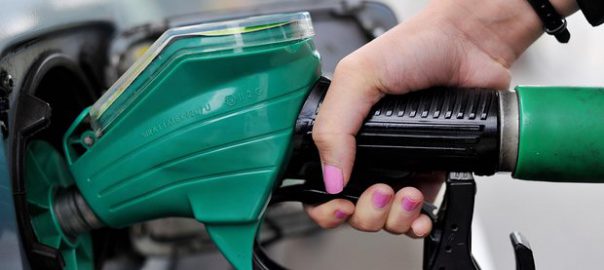
Fuel prices have risen as oil recovers to $40 per barrel (Image: N. Ansell/PA)

Why did we use leaded petrol for so long?

Leaded petrol was safe. Its inventor was sure of it.

Facing sceptical reporters at a press conference in October 1924, Thomas Midgley dramatically produced a container of tetraethyl lead – the additive in question – and washed his hands in it.

“I’m not taking any chance whatever,” Midgley declared. “Nor would I… doing that every day.”

Midgley was – perhaps – being a little disingenuous. He had recently spent several months in Florida, recuperating from lead poisoning.

Some of those who’d made Midgley’s invention hadn’t been so lucky, which is why reporters were interested.

On the Thursday of the week before Midgley’s press conference, at a Standard Oil plant in New Jersey, a worker named Ernest Oelgert started hallucinating. By Friday, he was running around the laboratory, screaming in terror.

On Saturday, with Oelgert dangerously unhinged, his sister called the police. He was taken to hospital and forcibly restrained. By Sunday, he was dead. Within the week, so were four of his colleagues – and 35 more were in hospital.

Only 49 people worked there.

‘The loony gas building’
None of this surprised workers elsewhere in Standard Oil’s facility. They knew there was a problem with tetraethyl lead.

As Gerald Markowitz and David Rosner note in their book Deceit and Denial: The Deadly Politics of Industrial Pollution, the lab where it was developed was known as “the loony gas building”.

Nor should it have shocked Standard Oil, General Motors or the DuPont Corporation, the three companies involved with adding tetraethyl lead to gasoline.

Fuel prices have risen as oil recovers to $40 per barrel (Image: N. Ansell/PA)

The first production line in Ohio had already been shut down after two deaths. A third plant elsewhere in New Jersey had also seen fatalities. Workers kept hallucinating insects – the lab was known as “the house of butterflies”.

Better working practices could make tetraethyl lead safe to produce. But was it really sensible to add it to petrol, when the fumes would be belched out on to city streets?

About a century ago, when General Motors had first proposed adding lead to petrol – in order to improve performance – scientists were alarmed. They urged the government to investigate the public health implications.

Midgley breezily assured the surgeon general that “the average street will probably be so free from lead that it will be impossible to detect it or its absorption”, although he conceded that “no actual experimental data has been taken”.

General Motors funded a government bureau to conduct some research, adding a clause saying it had to approve the findings.

Risky, but useful?
The bureau’s report was published amid the media frenzy over Oelgert’s poisoned workmates. It gave tetraethyl lead a clean bill of health and was met with some scepticism.

Under pressure, the government organised a conference in Washington DC in May 1925. The debate there exemplified the two extremes of approach to any new idea that looks risky, but useful.

In one corner: Frank Howard, vice-president of the Ethyl Corporation – a joint venture between General Motors and Standard Oil. He called leaded petrol a “gift of God”, arguing that “continued development of motor fuels is essential in our civilization”.

In the other corner: Dr Alice Hamilton, the country’s foremost authority on lead.

She argued leaded petrol was a chance not worth taking. “Where there is lead,” she said, “some case of lead poisoning sooner or later develops, even under the strictest supervision.”

Hamilton knew that lead had been poisoning people for thousands of years. In 1678, workers who made lead white – a pigment for paint – were described as suffering ailments including “dizziness in the head, with continuous great pain in the brows, blindness, stupidity”.

The Romans used lead in water pipes. Lead miners often ended up mad or dead – and some correctly intuited that low-level, long-term exposure was also unwise.

“Water conducted through earthen pipes is more wholesome than that through lead,” wrote the civil engineer Vitruvius, 2,000 years ago. “This may be verified by observing the workers in lead, who are of a pallid colour.”

Read more: BBC News

It’s Time to Go Green!

If you would like to know more about Solar Panels and the PowerBanx range of home battery systems, and get a free instant quote, please complete our online form:

Dacia Spring 2021 (Image: Dacia.co.uk)

The Major Problems Blocking America’s Electric Car Future

The electric future is coming. But how quickly is less certain.

Just a decade and a half ago, the then-CEO of General Motors Co. Rick Wagoner observed to Larry Burns, at the time GM’s head of research and strategy, that not many industries stay the same for a century. But the automobile industry, Wagoner added with some anxiety, had so far been the exception. Its business model remained that pioneered by Henry Ford with the Model T a century earlier — “gas-fueled, run by an internal combustion engine, rolling on four wheels.” “What’s the car of the next hundred years going to look like?” Wagoner asked.

Recently, I asked Wagoner about that conversation. “The focus then was on making the internal combustion engine better,” he replied. “I was asking, ‘If we were starting the industry today, what would be different?’”

A pretty clear answer about how different came earlier this month from President Joe Biden when he issued an executive order setting out the goal that “50 percent of all new passenger cars and light vehicles sold in 2030” should be electric. In the order, he instructed government agencies to implement regulatory policies to achieve that goal. “There’s a vision of the future that is now beginning to happen,” said the president. This vision clearly does not involve making the internal combustion engine better.

In response to government policies, automakers are committing many tens of billions of dollars over the next 10 years to EV development. Targets may be motivating. But no matter how much money is spent, shifting such a vast industrial and consumer ecosystem that is so basic to the economy faces big challenges, with the result that the share of new car sales that are EVS by 2030 will more likely be about 25 percent. The challenges still have to be met.

It was in 2008 that an initial glimmer of what is now Biden’s vision appeared with the arrival on the road of the first commercial electric car of modern times — the Tesla Roadster. At the time, the all-electric Roadster looked like a novelty. Moreover, its appearance was somewhat accidental. Five years earlier, a young electric vehicle enthusiast, J.B. Straubel, had lunch at a fish restaurant in Los Angeles with Elon Musk, trying to convince him about the potential of an electric plane. When Musk showed no interest, Straubel switched to an electric car. It was an idea originally championed by Thomas Edison more than a century ago, but which had failed in the face of the Model T. But in 2008, Musk jumped at the idea. Some years later, Musk said that without that lunch, “Tesla wouldn’t exist, basically.”

Dacia Spring 2021 (Image: Dacia.co.uk)

The Roadster, starting at over $100,000, was not exactly a mass market car. But there soon were other early entrants. Nissan, where engineers had been working on an electric car for more than two decades, introduced the Nissan Leaf in 2010, the same year that General Motors came out with the Chevy Volt. GM followed up in 2016 with the Bolt, a major project accomplished in double-time under the then-head of development and now-CEO Mary Barra.

Now let us fast forward just a few years. Today, automakers around the world are racing to catch up with Tesla and bring out a full slate of electric vehicles. General Motors has set the goal of going all-electric by 2035. Mercedes just leapfrogged with a goal of being all-electric for light vehicles by 2030. “The EV shift is picking up speed. … The tipping point is getting closer,” Mercedes CEO Ola Källenius said last month. “This step marks a profound reallocation of capital.”

The No. 1 factor speeding the shift to EVs is governments putting an increasingly heavy foot on the accelerator. The European Union is proposing tough regulations on carbon dioxide emissions from cars made or sold in Europe that would effectively ban the sale of new cars with internal combustion engines after 2035. California and Massachusetts similarly have announced ambitions to ban new cars with internal combustion engines by 2035. Biden has now upped the ante by pressing automakers for that 50 percent electric goal by 2030. Governments around the world are also fueling consumers’ purchases of EVs with generous tax incentives and subsidies, and emission standards are becoming ever more stringent. Just this month, the Biden administration proposed tougher fuel efficiency standards in the U.S. This will drive up the cost of conventional cars with the aim of pushing more new car buyers to switch to electric instead. In Shanghai, China, the city offers free license plates for what Beijing calls “new energy vehicles,” while consumers must go through an auction to get a license plate for a car with a traditional engine.

Read more: POLITICO

It’s Time to Go Green!

If you would like to know more about Solar Panels and the PowerBanx range of home battery systems, and get a free instant quote, please complete our online form:

Tesla Model 3 (Image: Tesla.com)

Self-Driving Electric Cars Could Mean The End Of Short Haul Flights

One of the worst forms of transport for CO2 emissions is domestic and short haul flying. Research from the BBC via BEIS/Defra in 2019 revealed that flights on routes of 700km (438 miles) or less produce 29% more CO2 per person per km or mile travelled than longer flights. But self-driving battery-electric vehicles could drastically reduce the need for this form of transport, or even render it obsolete, and slash emissions in the process.

The BBC research argued that a domestic flight would produce 254 g/km of CO2 per passenger, compared to 195 g/km for long haul. In contrast, even a diesel car emits just 171 g/km on average. Stick a family of four in it and that drops to 43 g/km. People don’t choose their transportation based on carbon footprint that much yet, though, even if that is changing. The reason short haul flights are popular is speed.

A flight from London to Edinburgh takes around 1.5 hours. Even if you factor in another 1.5 hours to check in, an hour to get to the airport, and another hour at the end to reach your final destination, that is still only 5 hours in total. Driving it yourself, it would take 7.5-8 hours if you’re lucky, and you’d probably have to stop halfway for a break. You would also be tired when you arrived, so this would not be a good solution if you plan to spend a day in meetings once you reach your destination.

Tesla Model 3 (Image: Tesla.com)

Of course, trains can be extremely low carbon, but they are generally slower than flying. Going back to that BBC report, domestic rail is 41 g/km per passenger and the Eurostar from London to Paris an incredible 6g/km. But in the UK and in other parts of the world, trains are an expensive form of transport – often more than flying – and you still have the inconvenience of having to go to a station to take a train. That probably won’t take as long as going to an airport, but it can add a couple of hours to the trip. So the 4.5-hour train journey from London to Edinburgh might take about the same time door-to-door as driving, and a few hours more than flying.

This is where self-driving electric cars could dramatically alter the balance. In theory, a BEV emits 0 g/km, although that entails using entirely renewable energy sources. Let’s say we’re sticking with the UK and that London to Edinburgh journey but using the average UK grid balance. Last year, the UK national grid averaged 181g of CO2 per kWh – its greenest year yet. Most BEVs manage at least 3 miles per kWh, and some more than 4 miles per kWh. But let’s assume the worst and say 3. That gives us 60g of CO2 per mile, or 37.5 g/km. Put four people in the car, and it drops to 9.4 g/km per person – in other words, much better than UK domestic rail or coach travel, and getting close to the electrified Eurostar.

Read more: Forbes

It’s Time to Go Green!

If you would like to know more about Solar Panels and the PowerBanx range of home battery systems, and get a free instant quote, please complete our online form:

Honda E 2021 (Image: honda.co.uk)

Ten myths around electric vehicles

Pamela Barbato, founder of Action Net Zero Bristol, shatters myths around driving electric vehicles. She is working with partners across the city and the South West to educate and inform residents and businesses about the positives of being green

With COP26 around the corner and the IPCC report scientists announcing our planet’s temperature is definitely rising due to human behaviour, Pamela Barbato, the creator of Action Net Zero Bristol and its partners are urging people and businesses to switch to greener, cleaner transport. This includes switching to electric vehicles to reduce air pollution and cut emissions.

Pamela, who set up Action Net Zero Bristol to encourage and support the city’s residents and businesses to transition to greener behaviour, said: “Even with the alarming evidence that the climate emergency is upon us, it can be difficult to make changes in our own lives.

“However, we have to move towards net zero and the government wants all new domestic vehicles to be powered by renewable sources of power by 2030. Petrol and diesel vehicles are on their way out. This will involve making different choices around things like transport, power and food.

“Often these changes can actually save us money so our current campaign, ‘Bristol’s Driving Change’, backed by experts Good Energy, ALD Automotive, Rightcharge, Co Charger, Edwards and supported by TLT, Elmtronics and Business West are collectively exploding some myths around choosing an electric vehicle.”

Honda E 2021 (Image: honda.co.uk)

Electric vehicles are increasing in popularity with around 260,000 in the UK according to the latest available data. Between 2016 and 2020, there has also been a 220 per cent increase in public charging points as the infrastructure continues to grow. It’s now far more common to see charging points in public car parks, large supermarket cars parks and motorway service stations and you can now share your neighbour’s charger too (with their permission of course).

Pam wants to explode some of the myths around driving electric vehicles, ie EVs:

Cannot do long journeys: There will not be enough charge for long journeys. The average mileage we all do each day is 20 miles. For longer journeys, you can open your EV app and plan a charging stop en route, usually to tie in with a comfort break.

EVs are unaffordable: EVs can be more expensive to buy outright if you are used to driving a smaller car however the running costs in tax, servicing, insurance and fuel are much lower. There are many leasing options and the car sector believes leasing will become increasingly common any way.

Electricity bills will rocket: On average to charge an EV overnight for a month will cost less than one tank of traditional petrol or diesel fuel. Also many renewable electricity providers offer “smart energy” tariffs where you charge up at optimum times of the day and night. These can save up to £500 a year on fuel bills.

The batteries are dangerous and could catch fire: The batteries are designed to be safe and are positioned in a place which is less vulnerable if a collision occurs. Also they are far less dangerous than having litres of highly flammable fuel in a fuel tank.

Read more: journalism.co.uk

It’s Time to Go Green!

If you would like to know more about Solar Panels and the PowerBanx range of home battery systems, and get a free instant quote, please complete our online form:

Nissan's e-NV200 Electric Ice Cream Van (Image: Nissan)

Electric vans: Six of the best on sale today

THE electric van segment is expanding at an impressive rate. Vans make excellent platforms for electric powertrains, with their long wheelbases and relatively square dimensions ensuring that batteries and motors fit snugly and without any intrusions into the all-important payload.

But with a bigger selection than ever, which one do you opt for? Let’s take a look at some of the best electric vans available today…

1. Peugeot e-Expert

The entirety of the PSA Group is on a real electric endeavour at the moment. It’s particularly noticeable in its range of vans, which spread wide across the group’s various brands. One particular standout is the Peugeot e-Expert, which arrives with a range of 205 miles – one of the best in the business. Practical and well-made inside, and the cab features a clever central touchscreen with plenty of functions.

2. Citroen e-Berlingo

Citroen’s Berlingo has been one of the go-to compact vans for some time now, so it’s only natural that an electric powertrain would be added to it. In the e-Berlingo you get a range of up to 171 miles from a single charge, thanks to a 50kWh battery pack, while a 100kW motor provides sprightly performance. Plus, thanks to 100kW rapid charging, the e-Berlingo’s batteries can be taken to 80% in 30 minutes.

3. Nissan e-NV200

Nissan’s e-NV200 was one of the early adopters of electric power. This compact van brings a range of up to 124 miles during mixed driving – though Nissan says you could see up to 187 miles from a single charge if you’re doing predominantly city driving. As well as the conventional panel van, you can also get a passenger-focused version in the e-NV200 Combi. It only adds another string to the van’s bow.

Nissan's e-NV200 Electric Ice Cream Van (Image: Nissan)
Nissan’s e-NV200 Electric Ice Cream Van (Image: Nissan)


4. Mercedes eVito

The Vito is an ever-popular van from Mercedes, providing the same high level of fit-and-finish you get from the firm’s road cars, but with a great level of flexibility and practicality. The eVito aims to bring the same positive factors but with an efficient electric powertrain. Though its 92-mile range might mean it’s better suited to short journeys, it’s still available in two lengths – helping it to be more flexible to a variety of buyers.

Read more: The Herald

It’s Time to Go Green!

If you would like to know more about Solar Panels and the PowerBanx range of home battery systems, and get a free instant quote, please complete our online form:

Ubitricity Electric Avenue project lamppost charging (Image: Siemens)

Volunteers sought for electric vehicle charging trials in Oxfordshire

A project that will aim to break down the barriers that people face in charging electric vehicles at home has been given the green light after grant funding was awarded to Oxfordshire County Council and ODS.

The project will test a new solution to help people who don’t have access to a driveway to charge an electric car using their own home power supply. Funding has been awarded by Innovate UK and the Office for Zero Emission Vehicles. Volunteers from Oxford City and Cherwell are being sought to take part in the trial.

“The new administration at the County Council is determined to tackle climate change and make the county an acknowledged centre of innovation in the process. Dealing with practical day to day obstacles that prevent people from being able to confidently purchase electric vehicles is one area where we would like to see progress.

“This project will support the delivery of our recently adopted Oxfordshire Electric Vehicle Infrastructure Strategy, and the vision of the zero carbon transport system by 2050. We are on the lookout for residents to come forward as volunteers in Oxford City and Cherwell to take part in this trial with us.

“Oxfordshire is ahead of the UK curve in its transition from petrol and diesel vehicles to cleaner, greener electric vehicles, with over 6000 electric and ‘ultra-low emissions vehicles’, currently on our roads. We know that electric vehicle uptake is going to increase in the next five years in Oxfordshire, but a lack of suitable charging can be a barrier, especially for the estimated 30-40 per cent of Oxfordshire residents who have no access to off-street parking and can’t install a home charger. This trial will have those people especially in mind. I look forward to seeing them begin.”

Ubitricity Electric Avenue project lamppost charging (Image: Siemens)

Councillor Pete Sudbury, Oxfordshire County Council’s Cabinet Member for Climate Change Delivery and Environment.

The project is the continuation of a successful 2020 scheme that ran in partnership with ODS, the Local Authority Trading Company, owned by Oxford City Council. ODS has a mission of ‘doing good business that’s good for everyone’, by finding innovative ways to deliver profitable and sustainable growth that brings genuine benefits to people, communities and the planet.

The University of Oxford predicts that sales of electric vehicles is likely to reach approximately 90 per cent of new vehicle sales by 2025 and 100 per cent before 2030. This means by 2025, there could be up to 40,000 electric vehicles on Oxfordshire’s roads and 100,000 by 2035.

The new project will test on-street electric vehicle charging using a specially designed ‘gully’ or channel, installed into the pavement. The gully allows residents to safely connect their electric vehicle to their home electricity supply when parked outside their home. The channel is seamlessly integrated into the pavement and has been designed so that cables will not cause a trip or slip hazard. Compared to installing electric charger bollards on the street, the arrangement causes less street clutter, especially where pavements are narrow, and it is much cheaper to install.

Connecting to a household’s own electricity supply means charging is cheaper and more convenient than using an on-street chargepoint, and also means that residents with solar panels can charge their EVs directly from their own renewable energy supply. The design builds on the learnings of the Go Ultra Low Oxford – a project led by Oxford City Council in partnership with Oxfordshire County Council, and funded by the Office for Low Emission Vehicles (OLEV).

The trial, which was described as being of ‘global significance’, trialled five different charging technologies for 18 residents across Oxford. Phase 1 of the trial found that there is no ‘one size fits all’ solution for on-street charging, but that the combination of a home charger and simple cable gully solution was the cheapest and most highly utilised solution.

Read more: Oxford City Council

It’s Time to Go Green!

If you would like to know more about Solar Panels and the PowerBanx range of home battery systems, and get a free instant quote, please complete our online form:

KIA EV6 (Image: kia.com)

New Kia EV6 2021 review

The Hyundai Ioniq 5 is our reigning car of the year, so can the closely related Kia EV6 live up to expectation?

Verdict
The Kia EV6 stakes a strong claim as a sportier electric crossover. The ride may just be a little too firm for some, but it is liveable, and the trade-off is a slightly more engaging drive. All-wheel-drive versions have very strong performance, while the claimed range and charging tech make the EV6 a very versatile machine, but it doesn’t come cheap.

Kia can certainly stake a claim to being a market leader in all things electric cars. It cottoned on to the hybrid trend early with cars like the Niro, adding a fully electric e-Niro model that had the class sewn up until relatively recently.

But the Korean firm hasn’t rested on its laurels, and now it’s aiming to push a level further with this: the EV6. It’s Kia’s first purpose made electric car, based on the E-GMP architecture developed in conjunction with sister brands Hyundai and Genesis. The Hyundai Ioniq 5 is the only other car we’ve driven on this platform up to now, and as our reigning car of the year expectations are high for E-GMP’s second outing under the EV6.

KIA EV6 (Image: kia.com)

Kia is aiming for something a little sportier and more dynamic with the EV6, and straight away the styling sets the tone, with a swoopier, curvier coupe look to its profile than the boxier, more angular Ioniq 5 crossover.

Like the Ioniq 5, it’s bigger in the metal than it looks in pictures. It’s just under 4.7 metres long, with a 2.9-metre-long wheelbase. Sandwiched in the floor between the axles is a 77.4kWh battery – the only option the UK market will get, although a 58kWh version is offered elsewhere.

The battery gives a claimed range of 314 miles in this AWD dual-motor car. It feeds a pair of motors for a total of 321bhp and 605Nm of torque, which is enough for a 5.2-second 0-62mph time.

It feels rapid too, with strong punch up to motorway speeds, and enough instant power for easy, even relaxing overtakes on country roads. If it still isn’t enough for you then there’s a high performance 577bhp GT version coming soon.

With no combustion engine to drown out other noises the car’s refinement is laid bare, but it’s fundamentally sound in the EV6; there’s not much wind noise at high speed on the motorway, while tyre noise is also kept at bay well.

The ride has a slightly firm, busy edge to it, only over jarring bumps that would upset other cars, but this slightly more sporting profile to its dynamic repertoire is in keeping with the Kia’s positioning – especially relative to its Hyundai Ioniq 5 sibling.

The EV6 feels slightly sharper to turn, while clever frequency selective suspension dampers mean that at lower speed when there’s less energy going through the suspension (either over bumps or as you turn in and the car rolls) the damping forces are lower, so the ride is softer.

It firms up as the energy fired back at the dampers increases – usually with speed or how aggressively you work the steering. It’s a subtle alteration in character, but a perceptible one nonetheless that means the EV6 is as comfortable as it can be when you want it. It’s especially strong on the motorway, where it flows nicely, but you can seek out that little bit more support and firmness in corners when desired.

Read more: AutoExpress

It’s Time to Go Green!

If you would like to know more about Solar Panels and the PowerBanx range of home battery systems, and get a free instant quote, please complete our online form:

Ubitricity Electric Avenue project lamppost charging (Image: Siemens)

West Midlands overtakes London in UK’s electric car charger revolution

Region has fastest-growing network with number of electric vehicles in Coventry alone tripling in three years

The West Midlands has overtaken London as the region with the fastest-growing network of electric car chargers, thanks to a push by Coventry to rapidly move away from petrol and diesel cars.

The number of electric car chargers in the West Midlands rose by a fifth between April and July, according to data from Zap-Map and the Department for Transport. That compared with growth of 12.6% in the east of England.

London still attracted the most new charge points in absolute terms, with 309 additions, but the West Midlands, which has a much smaller population, was close behind, with 272.

The Climate Change Committee in June described improving the UK’s charging network as a priority for the government before the 2035 ban on new petrol and diesel engines. It said the government should aim for about 150,000 public charge points operating by 2025, “widely available across all regions of the UK”. However, London – with 13% of the population – still accounts for 31% of public chargers as charging companies cater for its wealthier citizens.

Ubitricity Electric Avenue project lamppost charging (Image: Siemens)

The UK had 24,400 public chargers in July, up from 15,000 in October 2019 when the DfT first started publishing comparable data. The chargers already outnumber the country’s 8,400 filling stations. However, the 7% quarterly growth rate between April and July would barely get the UK even a third of the way towards the CCC’s 2025 target.

Coventry has mostly used government funding to install chargers, with a quarter of the investment coming from private charge-point operators, who expect to make back their money in about seven years. It is part of a programme to embrace electric vehicles that also includes hosting the UK Battery Industrialisation Centre and securing preemptive planning permission for a “gigafactory” to build electric car batteries.

Shamala Evans-Gadgil, the programme manager in Coventry city council’s transport and innovation department, said she hoped their model for improving charger networks could show the way for the rest of the country. “We know that the ban is coming. We know that the infrastructure is necessary. It can’t just be Coventry. It needs to be across the board.”

The number of electric cars registered in the city has almost tripled to more than 1,000 in the past three years as the charging infrastructure has been rolled out. During 2021, the usage of chargers has also increased rapidly, Evans-Gadgil said.

Read more: The Guardian

It’s Time to Go Green!

If you would like to know more about Solar Panels and the PowerBanx range of home battery systems, and get a free instant quote, please complete our online form:

Renault Zoe gets new £32,295 Riviera Limited Edition

Just 300 limited-run Zoes will make it to the UK.

Renault has revealed a new high-end version of the Zoe E-Tech electric hatchback called the Riviera Limited Edition. Just 300 examples of the top-level supermini will be built for the UK market, with each costing £32,295 after the government’s Plug-In Car Grant has been applied.

Based on the currently range-topping GT Line trim – the best-selling version of the Zoe E-Tech – the Riviera Limited Edition comes with a host of internal and external upgrades. Midnight Blue Metallic I.D paint is standard, along with 16-inch alloy wheels and painted white body stripes.

Inside, the Riviera Limited Edition gets all the equipment found on the GT Line, but it adds ‘hands-free’ parking – a semi-autonomous parking aid that steers you into a space. Also included as standard are full LED headlights, a digital instrument display and a 9.3-inch touchscreen infotainment system.

2018 – Renault ZOE

Satellite navigation, automatic air conditioning and part-recycled cloth, part-synthetic leather upholstery are also thrown in. And you get the Apple CarPlay and Android Auto smartphone connectivity systems included in the list price.

Along with all that equipment, the Riviera Limited Edition also comes with a host of safety gadgets. Front and rear parking sensors are included, alongside a rear-view camera and cruise control. Equally high-tech additions include the lane departure warning system, blind spot monitoring and the automatic emergency brake system that can brake for you if you fail to respond to an impending collision.

Under the high-specification skin, the Zoe E-Tech Riviera Limited Edition comes with the standard Zoe’s 52 kWh battery pack, which allows it to cover up to 238 miles on a full charge. Charging the battery to 80 percent takes an hour and 10 minutes, while the 134 bhp electric motor gets the car to a top speed of 87 mph.

The new Zoe E-Tech Riviera Limited Edition is available to order from Renault dealerships now, with prices starting at £32,295 after the government’s £2,500 Plug-In Car Grant has been applied. That makes the new model just £200 more expensive than the existing GT Line trim level, although it’s almost £5,000 more expensive than the basic Zoe E-Tech Play version.

Read more: Motor1

It’s Time to Go Green!

If you would like to know more about Solar Panels and the PowerBanx range of home battery systems, and get a free instant quote, please complete our online form:

Electric cars: Do ministers put their motor where their mouth is?

Boris Johnson wants us all to live greener lives, but his own minister leading on climate change has admitted he is yet to swap his diesel car for an electric alternative. So how many politicians are actually putting their motors where their mouths are?

As part of its plan to lower carbon emissions, the government wants to ban the sale of new petrol and diesel cars by 2030, and hybrids by 2035.

So, in theory, by 2050 most cars on the road should either be electric, use hydrogen fuel cells, or some other non-fossil fuel technology.

Mr Johnson has said the move towards electric cars is part of a “green revolution”, but is he leading by example?

Well, not really. The one-time keen cyclist is now driven around in government cars, which the prime minister says run on “hydrocarbons” – ie fossil fuels.

Electric vehicle sales outpace diesel again
Electric car charging prices ‘must be fair’
Service station namesake has big motorway plans
However, he has promised he was trying to phase them out as “conveniently and economically” as possible.

The most recent figures from the Department for Transport show that currently nearly 65% of vehicles in the government’s car service – which ferries ministers from place to place – are electric or hybrid. The service’s old cars are put up for auction.

Another minister who aspires to do better is Alok Sharma – the man leading the COP26 climate change conference, due to be held in Glasgow this November.

On Monday, he told the BBC’s Newsnight programme that he “along with millions of other people” owned a diesel car.

“I don’t drive it very much,” he quickly added and sought to assure viewers his next car “would certainly be electric”.

Hybrid and electric, what’s the difference?
Both hybrids and electric cars are capable of driving on electric energy alone. It’s just a matter of battery size
Hybrid cars have a small battery under the rear seats which stores power as the car comes to a stop. This is done using regenerative braking
Plug-in hybrids have a slightly larger battery, are quick to charge using a standard power socket and can usually hold enough charge to travel around 30 miles. After this, the conventional petrol engine kicks in
Both hybrids and plug-in hybrids still need to be filled with petrol or diesel
Full electric vehicles have huge batteries which make up the whole floor of the vehicle – some can get over 400 miles on a single charge
“Mild hybrids” have the smallest batteries, and these simply power components in the car that would have otherwise run off the engine
They don’t provide enough power to run the car on electric power alone.

Read more: BBC

It’s Time to Go Green!

If you would like to know more about Solar Panels and the PowerBanx range of home battery systems, and get a free instant quote, please complete our online form: