All posts by Repost

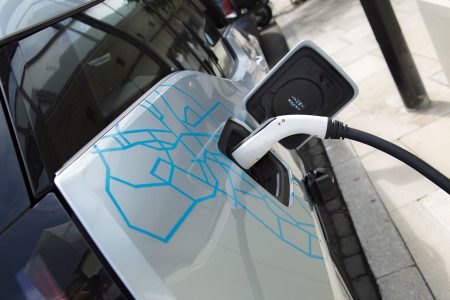
BP Chargemaster Rapid Charger at Milton Keynes Charging Hub (Image: T. Larkum)

Electric cars: Positive news for EV owners as plan to boost number of public charge points unveiled

Electric vehicle owners will have access to 300,000 public charge points by the end of the decade, the government has said.

Some £500m will be invested to hit the target, according to the Department for Transport, which represents a 10-fold increase on the current 30,000 public charge points across the UK.

The 2030 deadline is the same date the government aims to ban the sale of new petrol and diesel vehicles, as motorists are encouraged to go electric to help the UK hit net zero by 2050.

Read more: Every key policy in UK’s plan to reach net zero

Helping drivers without access to off-street parking will be a focus when rolling out the new charge points.

The plan, part of the government’s wider Electric Vehicle Infrastructure Strategy, also highlights the need to ensure readily accessible fast charging for longer journeys.

At least 6,000 superfast charge points will be installed across England’s motorways by 2035 as part of an existing £950m commitment.

Read more: SkyNews

It’s Time to Go Green!

If you would like to know more about Solar Panels and the PowerBanx range of home battery systems, and get a free instant quote, please complete our online form:

Petrol prices are driving us to electric cars, and surging utility bills are no deterrent

EV sales are rising way beyond forecasts, indicating that most of us are more than ready to make the switch

The net zero transition is really a big invest-to-save plan. Saving the planet is obviously the main goal, but there are purely financial savings too if you take the long view: we pay upfront in the next few decades for the infrastructure for lower carbon travel, heating and production, which saves us money over time because it’s cheaper to run.

Electric vehicles (EVs) are where the big savings come from. A year’s petrol or diesel typically costs well over £1,000, but if you can charge an electric car at your home overnight the annual fuel cost can be under £150.

Making the EV switch is a big job – we’ve got 32m cars to replace. But the turnover has recently gone up several gears, with EV sales outpacing all forecasts: they now account for one in five new car purchases.

Interesting new research digs into how sensitive are drivers pondering the switch to the savings that come from moving from petrol to electric vehicles. Using data from California, it shows the obvious: EV sales respond both to electricity prices (falling as they rise) and to petrol prices (rising as pump prices increase).

The interesting bit is that sales respond to petrol prices at around four to six times the rate of electricity prices. Why? Consumers are just less aware of electricity prices than petrol prices. I definitely am, having watched petrol pump prices rise by 40p a litre over the past year.

So if you want a (small) silver lining to today’s catastrophic energy price surge, it’s that bonkers pump prices should encourage more people to buy electric vehicles while nuts electricity prices won’t put them off much.

Read more: TheGuardian


It’s Time to Go Green!

If you would like to know more about Solar Panels and the PowerBanx range of home battery systems, and get a free instant quote, please complete our online form:
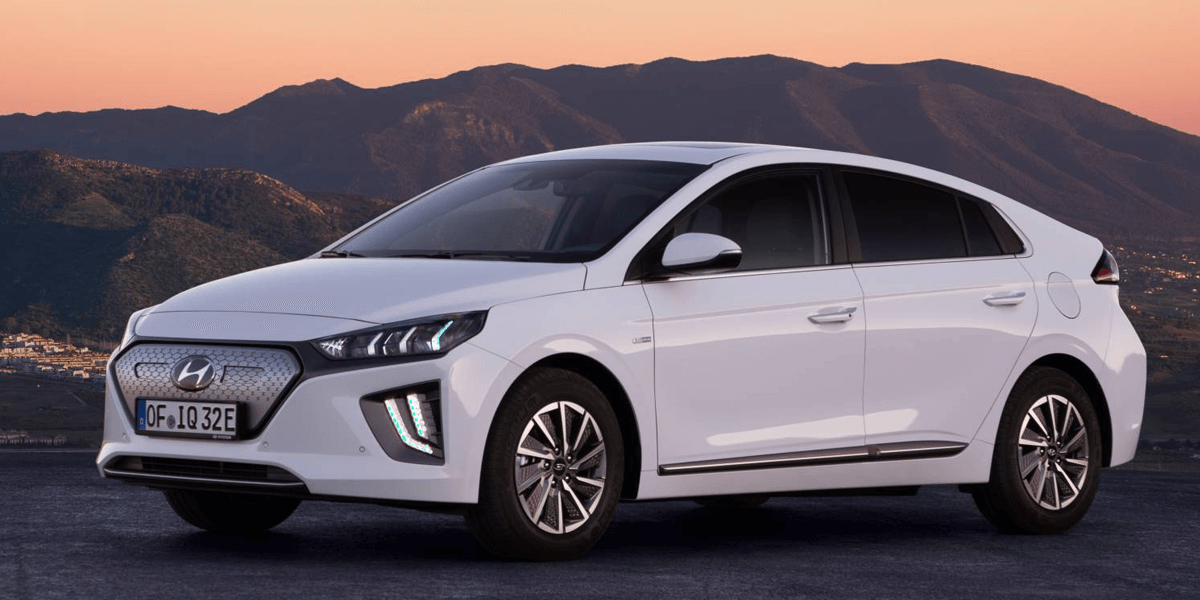
2020 Hyundai IONIQ (Image: Hyundai)

2022 World Car of the Year – top 3 finalists are all EVs

The top three finalists in the running to be named as the 2022 World Car of the Year have been announced, and all are electric vehicles, rather symbolic of where things are heading. Whittled down from the previous round, the final showdown will see the Ford Mustang Mach-E duking it out with the Hyundai Ioniq 5 and Kia EV6, the 2022 European Car of the Year winner, for the coveted title.

The Ioniq 5 is also in contention to grab wins in two other categories, the first being in the World Electric Vehicle of the Year segment, which is a new addition to the awards this year. Here, the Korean offering is going up against the Audi e-tron GT and the Mercedes-Benz EQS.

Hyundai IONIQ Electric 2020 (Image: Hyundai)


It’s also in the running to bag the World Car Design of the Year award, although it will have to edge out another two EVs, the Audi e-tron GT and Kia EV6, for the gong. Now, if you’re thinking that the tentacles of electrification end there, think again, because two of the three final competitors in the World Luxury Car category are also electrics – will either the BMW iX and Mercedes-Benz EQS edge out the Genesis GV70 for that particular crown?

It doesn’t end there, because the Audi e-tron GT appears once more, this time in the World Performance Car category – challenging it for the win will be the BMW M3/M4 and Toyota GR86 / Subaru BRZ twins. As for the final three competing for the World Urban Car title, they are the Opel MokkaToyota Yaris Cross and Volkswagen Taigun.

Read more: paultan


It’s Time to Go Green!

If you would like to know more about Solar Panels and the PowerBanx range of home battery systems, and get a free instant quote, please complete our online form:
Electric car particulate pollution myths busted by RAC report

A new report casts doubt on claims that EV tyres and brakes produce more particulates than those of petrol and diesel cars

Motoring organisation the RAC has commissioned an expert report from leading battery electrochemist Dr Euan McTurk to address what it calls ‘negative myths surrounding electric cars’, specifically those around non-exhaust emissions from brake and tyre wear.


The report addresses the quantities of toxic fine particulate matter (also known as PM 2.5s) generated from an electric car’s tyres and brakes, which are often said to be much worse than for an equivalent internal combustion-engined car. That’s because it’s commonly believed the extra weight of an EV’s battery increases the wear on these two items during normal driving.

Government Environment Secretary George Eustice recently spoke to MPs during a select committee session on the subject. “There is scepticism,” the cabinet minister said. “Some say that just wear and tear on the roads and the fact that these vehicles are heavier means that the gains may be less than some people hope, but it is slightly unknown at the moment.”

However, the RAC says Dr McTurk’s findings based on real-world use show that electric car brakes in fact wear much more slowly than those in conventional cars, because EVs rely so heavily on regenerative braking where the motor works in reverse to charge the battery, slowing the car without the brakes being applied. Dr McTurk said: “Dundee Taxi Rentals says that brake pads on its 11 Nissan Leaf taxis have a lifespan of 80-100,000 miles – four times that of their diesel taxis. Discs tend to be changed due to warping rather than wear unlike on a conventionally fuelled vehicle, and last twice as long as those on diesel taxis.

Read more: Auto Express


It’s Time to Go Green!

If you would like to know more about Solar Panels and the PowerBanx range of home battery systems, and get a free instant quote, please complete our online form:

Smart charge point regulations explained

EV charging is changing in June 2022

On 30th June 2022 the way we charge electric vehicles is going to change. That’s when The Electric Vehicles Smart Charge Point Regulations 2021 come into force  (catchy title isn’t it!).

Charging with an Ohme smart charging cable

Hang on. Don’t you just plug in and charge?

Well in theory, yes. Charging your EV at home or work is really simple – although you can charge from a standard (13A) socket – you ideally need to have a suitable charge point installed for topping up your battery.

Currently charge points simply need to be ‘internet connected’ – which often means some nice visual tools in a mobile app – with some charge points also allowing you to set schedules so that you charge overnight when the electricity prices from some energy suppliers are lower.


Great for EV drivers, but what happens if every EV starts charging at the same time? 

There are lots of people who enjoy spreading doom and gloom about EV’s and the electricity supply. According to the National Grid who manage the electricity transmission network, there’s plenty of capacity to meet the future electricity demand – but not if everyone charges at the same time.  That’s the what the new smart charge point regulations are aiming to solve.

Read more: myenergi

It’s Time to Go Green!

If you would like to know more about Solar Panels and the PowerBanx range of home battery systems, and get a free instant quote, please complete our online form:

BP Chargemaster Rapid Charger at Milton Keynes Charging Hub (Image: T. Larkum)

Fuel price crisis re-ignites EV demand

Demand for electric vehicles (EVs) is increasing as fuel prices spike, according to Auto Trader.

The proportion of electric cars viewed on its marketplace had dropped from a high of 26% in late September 2021 when the petrol crisis took hold, to just 16% in February. But since prices at the pumps started to rocket, so has consumer interest. In the past week alone, Auto Trader says car buyers are conducting 27% more advert views for new EVs than they were the previous week, and now account for 20% of all advert views.

Dacia Spring 2021 (Image: Dacia.co.uk)

Ian Plummer, Auto Trader’s commercial director, said: “At a time when consumers are facing increasing financial pressure, it’s perhaps no surprise that even the more affluent motorist may be hesitating to make the switch to EVs.”

Plummer believes there’s a clear opportunity for the industry to highlight the lower running costs of EVs.

“Our analysis shows that EV owners can save £140 every 1,000 miles, which is up on the £100 we recorded just a few months ago – it’s this level of detail on cost savings that will be key to softening the impact of the green premium and bringing EVs into line with their petrol or diesel equivalents” he added.

Last year, EVs accounted for 11.6% of all new car sales, up from 6.6% in 2020, driven, in part, by manufacturers offering more choice than ever before, with four times as many new electric models available on Auto Trader compared to 2020. Auto Trader believes the headline figures tell a misleading story, however. It says the UK will “run out” of people rich enough to buy electric cars.

Read more: AMonline

It’s Time to Go Green!

If you would like to know more about Solar Panels and the PowerBanx range of home battery systems, and get a free instant quote, please complete our online form:

Eco-warriors deflate SUV tyres in Chelsea, Primrose Hill and Dulwich

Vehicles were targeted in Primrose Hill, Kensington and Chelsea, Dulwich and Notting Hill

Climate action activists have said they “will not stop” after deflating the tyres of “planet-wrecking” Sports Utility Vehicles (SUVs) in wealthy London neighbourhoods.

More than 40 4x4s were targeted in the dead of night in Primrose HillKensington and Chelsea, Dulwich, and Notting Hill by a group calling themselves The Tyre Extinguishers.

The group declared they want SUVs banned in urban areas, pollution levies to tax SUVs out of existence and investment in public transport.

London Climate March - the Rally (Image: T. Larkum)
London Climate March – the Rally (Image: T. Larkum)

SUVs have already been “disarmed” in Paris, Bristol, Bordeaux, Glasgow, New Jersey and now London where Last Gasp vowed to make it “impossible to own one”, Extinction Rebellion claimed on Twitter.

In a manifesto on their website, The Tyre Extinguishers said the vehicles “exist purely for the vanity of their owners, who see them as a status symbol” and “SUV drivers tend to be richer and therefore tend to be white”.

A Dulwich Society spokesperson, a community group representing the leafy south London neighbourhood, said: “Several cars were vandalised in Dulwich last night with tyres deflated and this poster left on windscreens.

“We are environmentally friendly but this is not who we are as a community.”

Andy Meyer, a councillor for the City of London, called the activists “narcissists”.

He added: “Vandalising vehicles that may include doctors on call. Just pathetic and dangerous.”

Read more: Evening Standard

It’s Time to Go Green!

If you would like to know more about Solar Panels and the PowerBanx range of home battery systems, and get a free instant quote, please complete our online form:

Renault K-ZE electric supermini (Image: Autocar)

RENAULT MÉGANE E-TECH ELECTRIC 2022 REVIEW: FUNCTION, FORM AND EFFICIENCY

Renault has produced a diamond

With six billion kilometres (3.7bn miles) covered by its more than 400,000 electric cars sold to date, it’s fair to say that Renault has some experience with electric vehicles. However, for most of the last 10 years the French brand has only had one main model — the Zoe — to showcase its EV expertise.

All that changes later this year with the arrival of the Mégane E-Tech Electric (quite a mouthful, isn’t it?). As familiar as the Mégane name is, this is an all-new and electric-only model that targets a segment led by the Nissan LeafKia e-Niro and Volkswagen ID.3.

Renault electric SUV (Image: Auto Express/Playback)

Renault will offer buyers a choice of two battery sizes and two power outputs, with the most efficient capable of up to 292 miles between charges. The crossover-influenced design, upmarket interior and one of the most capable onboard charging systems on the market are all sure to make it a desirable choice and give its competitors a headache.

Exterior design and rivals 

Just like a concept car you might see at a motor show (remember those?), the Mégane E-Tech Electric has striking proportions that make it look larger than it actually is. Measuring 4.2 metres long, it’s actually slightly shorter than a Ford Focus, but with up to 20in wheels pushed out to the Mégane’s extremities, it has the presence of a bigger car.

Nonetheless, as Renault has managed to produce a battery that is only 110mm thick, the Mégane isn’t that tall; its roofline is lower than the Zoe’s.

A high bonnet and beltline provide crossover styling cues, as do the black wheel arch surrounds and sills. The front door handles retract to sit flush with the bodywork while the rear handles are integrated into the door frame.

Read more: Driving

It’s Time to Go Green!

If you would like to know more about Solar Panels and the PowerBanx range of home battery systems, and get a free instant quote, please complete our online form:

Zappi 2018 EV Charge Point (Image: myEnergi)

Huge law changes will see electric vehicle chargers installed on new homes – ‘fantastic’

A MAJOR law change which is set to be introduced this year will see all new homes and buildings equipped with electric car chargers have been hailed as “really effective”.

It is expected that a law will be passed this year which will require all new houses and buildings to have electric vehicle charging stations. The Government said the move will see up to 145,000 charging points installed across England each year, in the hopes it will make charging an EV as easy as “refuelling a petrol or diesel car today”.

The changes will also require all newly-built and refurbished non-residential buildings with more than 10 on-site parking spaces to have at least one charge point – as well as cable routes for at least one in five spaces.

Zappi 2018 EV Charge Point (Image: myEnergi)

Meanwhile, blocks of flats undergoing major renovation with more than 10 on-site parking spaces will need to provide residents with chargers.

For each dwelling with associated parking, there should be at least one charge point, as well as cable routes in all spaces without charge points.

The Government had previously announced that all new-build homes could be fitted with an electric car charge point in 2019.

Ian Johnston, CEO of Osprey Charging, spoke of how newly built car parks and retail developments will benefit from the EV charger law.

Speaking exclusively to Express.co.uk, he said: “The changes in the planning regulations have been really quite effective in making sure that any new build car park not only has a day one installation of charging infrastructure but is also future proofed for more.

“That is great. We’ve had a number of leads coming to us with people saying they were building a new retail park and they’ve got to have electric chargers, so let’s talk.

“That’s fantastic because it’s forcing people to open the conversation.

Read more: Express

It’s Time to Go Green!

If you would like to know more about Solar Panels and the PowerBanx range of home battery systems, and get a free instant quote, please complete our online form:

Charge Port Door (Image: T. Heale)

Fiat 500 Action review: Electric car is the most affordable option for now

The electric Fiat 500 is not related to the regular petrol 500 that’s been on our streets since 2007. For starters it is 60mm longer and the same measurement in extra width

Dacia is looking likely to bring its Spring electric car to the UK. I applied thumbscrews to a Dacia spokesman at the recent launch of the Jogger seven-seater – and although he manfully didn’t crack under torture, his body language suggested it.

I hope it does because with Dacia’s fantastic value pricing structure it’ll be very affordable.


Most European countries have far more generous EV grants than us, but even so the Spring could cost under £15,000.

I mention it because this week we’re testing the Fiat 500, which in the specification we’re driving, is currently the cheapest electric car you can buy in the UK.

It’s fitted with a 24kWh hour battery. If you’ve got your head around this EV malarkey you’ll know a 24kWh battery doesn’t give you a huge range. The official figure for the car is 115 miles. Fine if you use it for city driving and local journeys, but tremendous patience and a lot of spare time is required if you want to cross the country in it.

Best mention the price. With the PICG deducted, our Action trim level 500 with no options costs £22,335. The next most affordable EVs are MG’s ZS crossover and MG5 estate, and Renault’s Zoe. All of those are around 27 grand but do have significantly longer ranges. You can also buy a Fiat 500 with a 42kWh battery that will give a range of just under 200 miles but that car is similar money to the Zoe and MG models.

The electric Fiat 500 is not related to the regular petrol 500 that’s been on our streets since 2007 (we owned two of them, first a hatchback and second a convertible). For starters it is 60mm longer and the same measurement in extra width.

It’s still a diddy car, though. A bit more spacious in the back than the petrol models but still better suited to kids than adults.

Read more: Mirror

It’s Time to Go Green!

If you would like to know more about Solar Panels and the PowerBanx range of home battery systems, and get a free instant quote, please complete our online form: