All posts by Repost

All-new Renault Zoe spied looking a lot like today’s model

Should be significantly more powerful though.

After taking a look at Motor1.com UK’s homepage this week, one could assume the death of the internal combustion engine is right around the corner. That’s not entirely true but it’s more than obvious that nearly every automaker is embracing electrification under full power these days. And the latest to show progress is Renault which is now testing the second-generation Zoe on public roads.

2018 – Renault ZOE

Seen here is a heavily masked prototype of the all-electric car undergoing cold winter evaluations in Northern Europe. Interestingly, the shape of the trial car is almost completely identical to the Zoe that’s still on sale today. The camouflage is not letting us see many details of the body, but it appears that the EV will be slightly larger than its predecessor.

The resemblance to the current Zoe is especially striking at the back where even the light clusters seem to have an identical shape. Up front, we notice a larger Renault logo flanked by sleeker headlights probably using LED technology. Of course, at this early stage of testing, some of our assumptions might not be completely correct.

Read more: Motor1

Volkswagen e-Up charging outside the Experience Centre (Image: T. Larkum)

Volkswagen Predicts EVs Will Go Mainstream In 2022

Unlike Tesla, it plans to consistently make money from EVs.

Volkswagen may have been a little late to the game for crossovers in the US, but it’s done a commendable job of catching up with offerings like the new Atlas and redesigned Tiguan. But the automaker has no intention of falling behind when it comes to electric vehicles.

We sat down with Volkswagen Group North American CEO Scott Keogh at Geneva to discuss a wide range of topics, among them VW’s upcoming EV lineup launch. Keogh believes that 2022 will be the “sweet spot” on the market when there’ll be enough EV products out there for them to become mainstream. But there’s work to be done beforehand.

VW e-Golf (Image: Volkswagen.co.uk)

“Profitability, let’s make no mistake, comes from scale. In my mind this is an opportunity to take the scale of the (VW) Group with the (all-electric MEB) platform and be one of the first to push aggressively into the volume side,” Keogh said.

Read more: Car Buzz

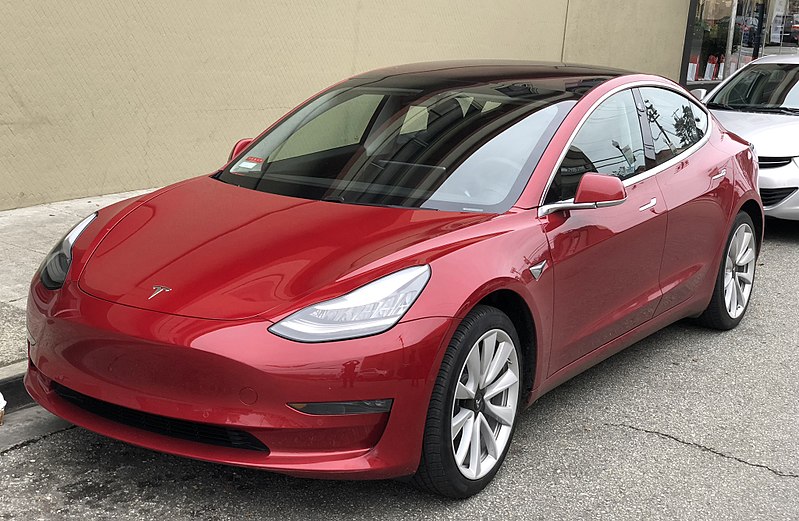
Tesla Model3 (Image: Wikimedia/Carlquinn)

Tesla Model 3 takes over Europe

A few weeks after its arrival on the old continent, the Tesla Model 3 is already becoming the best-selling electric car in several European markets.

It has now been a month since Tesla officially started Model 3 deliveries in Europe and the automaker has already delivery thousands of units in Several markets.

In Norway, Tesla delivered hundreds of Model 3 vehicles last month, but March is proving to be the month during which the Model 3 is taking over the automotive market in the country.

In the first week of March, over a thousand new Model 3 vehicles were registered in Norway — three times more than any other car.

Tesla Model3 (Image: Wikimedia/Carlquinn)

Considering that there’s another shipment of over one thousand Model 3’s expected in Norway any day now, the new electric vehicle is going to become the best-selling car in the country by a wide margin.

In Germany, which is a market where Tesla had difficulties in the past, the automaker delivered almost 1,000 Model 3 cars last month — increasing its sales by over 500% in the market.

The Netherlands has also been an important market for Tesla and with 472 Model 3’s delivered last month, it was enough for the vehicle to become the best-selling EV in the country – beating other newcomers like the Kona EV and Niro EV as well as longtime bestsellers, like the Nissan Leaf.

Read more: Electrek

Hyundai Kona Electric (Image: Hyundai)

Kia e-Niro versus Hyundai Kona EV: which of these ostensibly similar electric cars is the best?

The modern history of electric cars can be defined by five crucial models.

First came the G-Wiz in 2001, a slow and unsafe contraption which everybody laughed at but which nevertheless cemented the plausibility of EVs in Britain’s collective consciousness.

Next came the Nissan Leaf, and with it the notion that battery-electric cars could actually be quite good. And then came the Tesla Model S, which confirmed all of the above, but added the sort of desirability we had previously only expected from large-displacement petrol engines.

Then, a few months ago, came the Hyundai Kona EV and the Kia e-Niro. Eighteen years after the G-Wiz whirred into our world, the electric car has come of age.

Obviously there have been other electric cars – I particularly like the Jaguar I-Pace and the BMW i3 – but the Hyundai and the Kia offer a specific mixture of affordability, practicality and versatility that make them family-friendly in a mainstream sense.

The number of households that could rely on one of these cars as their primary vehicle is much higher than the pricey Jag or the tiny i3.

We discuss these cars in the same breath because they’re so similar. Hyundai and Kia are closely related, and the mechanical underpinnings of the e-Niro and the Kona EV are very similar.

Their performance is comparable, and the logistics of their electric powertrains is almost the same; they can travel roughly the same distance before needing to be recharged, and that process takes the same amount of time for the Kia as it does for the Hyundai.

Read more: MSN

Ultra-low emission registrations up 386% on first quarter of 2014 (Image: OLEV)

Automakers Retool Marketing Machines as They Go Electric

Geneva — After years of promising electric cars, established carmakers are actually starting to build them.

But manufacturers are realizing that a shift to battery power also requires them to retool their sales machinery. The old come-ons are obsolete. Range is the new horsepower. Connectivity replaces cylinder count. And sustainability is the new status symbol. Volvo’s Polestar 2 electric car, unveiled last week, even comes with a leather-free “vegan” interior.

The need for carmakers to win over a public still hesitant about buying a car that needs half an hour or more to recharge is becoming more urgent as electric vehicles move closer to mass production.

Battery-powered rides like the BMW i3, Nissan Leaf and Tesla’s lineup have been available for years. But this once-niche category is now expanding at a breakneck pace.

Ultra-low emission registrations up 386% on first quarter of 2014 (Image: OLEV)
Electric cars (Image: OLEV)

There are dozens of new electric cars on display at the Geneva International Motor Show, which opened to the public on Thursday and continues through March 17. These are not concept cars that may never be for sale, as tended to be the case at previous shows. They are vehicles with familiar brand names that you will be able to buy this year or next.

An electric Porsche is coming at the end of this year. Volkswagen is refitting a German factory to build a battery-powered car that, beginning in 2020, will sell for about the same price as a Golf.

Audi, a unit of Volkswagen, showed nothing but battery-powered vehicles and hybrids at the Geneva show. Renault, one of the first companies to offer electric cars, is renewing its lineup. Volvo skipped the show in order to leave the stage to its all-electric Polestar.

“2019 will be a decisive year for electromobility,” Herbert Diess, the Volkswagen chief executive, said at a company event in Geneva.

Read more: NY Times

MINI Cooper Concept (Image: MINI)

Mini Cooper SE 2019 review: first drive of electric Mini

It has taken a decade but at last there’s an electric Mini that we can buy. Or there will be soon.

Our drive of this prototype is a prelude to the launch of the finished article at the end of this year. That car is called the Mini Cooper SE, the S implying equivalence to the 189bhp petrol Cooper S and the E that it’s electric. Its motor puts out 181bhp and 199lb ft of torque, the latter slightly adrift of the S’s 221lb ft, but they’re comparable.

It has taken a decade but at last there’s an electric Mini that we can buy. Or there will be soon.

MINI Cooper Concept (Image: MINI)
MINI Cooper Electric Concept (Image: MINI)

Our drive of this prototype is a prelude to the launch of the finished article at the end of this year. That car is called the Mini Cooper SE, the S implying equivalence to the 189bhp petrol Cooper S and the E that it’s electric. Its motor puts out 181bhp and 199lb ft of torque, the latter slightly adrift of the S’s 221lb ft, but they’re comparable.

Although there was a 2013 electric Mini concept, the 2009 Mini E project was a more substantial undertaking, being part of a test programme in which more than 500 vehicles were publicly trialled. This full-production electric Mini shares plenty of characteristics with the 2009 Mini E, among them brisk-to-rapid, instantly available acceleration, notable deceleration when you release the throttle and a pleasingly easy drive.

But there are also substantial differences, not the least of them being the restoration of the rear seats and a boot. Both of these spaces had been sacrificed to bulky battery and power electronics in the experimental car. The new version’s battery occupies the tunnel running the length of the cockpit and the area previously taken up by the fuel tank to occupy a T-shaped space, requiring almost no changes to the Mini’s body-in-white.

That there have been any at all is because BMW, Mini’s parent company, did not anticipate that the power density of batteries would improve fast enough to allow a viable pack to be installed in the current Mini hatch. In fact, the battery pack has slightly fewer cells than the BMW i3’s, offering 92Ah rather than 94Ah of stored energy, and its protrusion below the floor has necessitated a slight ride height rise. Despite this, the SE’s centre of gravity is lower than the Cooper S’s, promising sharp handling.

Read more: Autocar

Renault Celebrates 200,000 Electric Vehicle Sales Across Europe

  • Renault has sold 200,000 electric vehicles in Europe since its Z.E. range was launched in 2011
  • In France, the fourth biggest global market, Renault has registered 100,000 electric vehicles
  • Renault is number one in electric vehicle sales in Europe for the fourth consecutive year
  • ZOE and Kangoo Z.E. remain the flagship models in the group’s electric offensive

Renault has topped the 200,000 mark for sales of electric vehicles in Europe. At the same time, it has crossed a symbolic milestone in France with 100,000 vehicles registered. This double achievement underlines Renault’s position as leader in the European electric vehicle market, with steady growth in sales.

2018 – Renault ZOE

Almost one electric vehicle in every three sold in Europe is a Renault

A pioneer in electric vehicles with a range launched in 2011, Renault continues to lead the European electric vehicle market for the fourth consecutive year. Almost one electric vehicle in every three on European roads is a Renault. In 2018, Renault sales of electric vehicles in Europe surged by 36%, accelerating strongly in the second half-year to + 62%. In France, Renault holds a 56.8% share of the electric vehicle market, in both passenger cars and LCVs.

“Today, we are proud to say that over 200,000 customers in Europe have chosen Renault to make electric driving part of their everyday lives! And of course this is just a step on a far longer journey. Our clearly stated aim for the past ten years has been to make electric mobility available to everybody. Groupe Renault’s ambition is for electric vehicles to account for 10% of sales by 2022. To achieve this, it will build on the eight electric vehicles that will make up the range by this date,” says Gilles Normand, Senior Vice President, Electric Vehicles, Group Renault.

Read more: Renault Press

Highways England announces £2.8m electric vehicle deal

Highways England has awarded two contracts worth a total a £2.8m to install 50 electric vehicle charging points across the country over the next nine months.

The deal is part of Highways England’s aim to ensure 95% of its motorways and major A roads are within 20 miles of a charge point.

The contracts have been awarded to BP Chargemaster to carry out work in the north of the country and Swarco UK Ltd in the south and include initial installation and commissioning of facilities followed by ongoing operation and maintenance for a seven-year period.

Highways England’s Mark Collins, Environmental Designated Fund (Carbon) portfolio manager and project lead said:

‘To help improve air quality and reduce carbon emissions we’re introducing more electric charging points, at locations near to the network, for example at nearby town centres. This shows that we are looking ahead to meet the future demand for this facility.

‘This contract is about supporting drivers of electric vehicles using our network. It will give them additional charging facilities just off England’s motorways and major A roads to help them make longer journeys and reduce the anxiety of potentially running out of power. We look forward to the benefits this will provide drivers on our roads.’

Read more: Transport Network

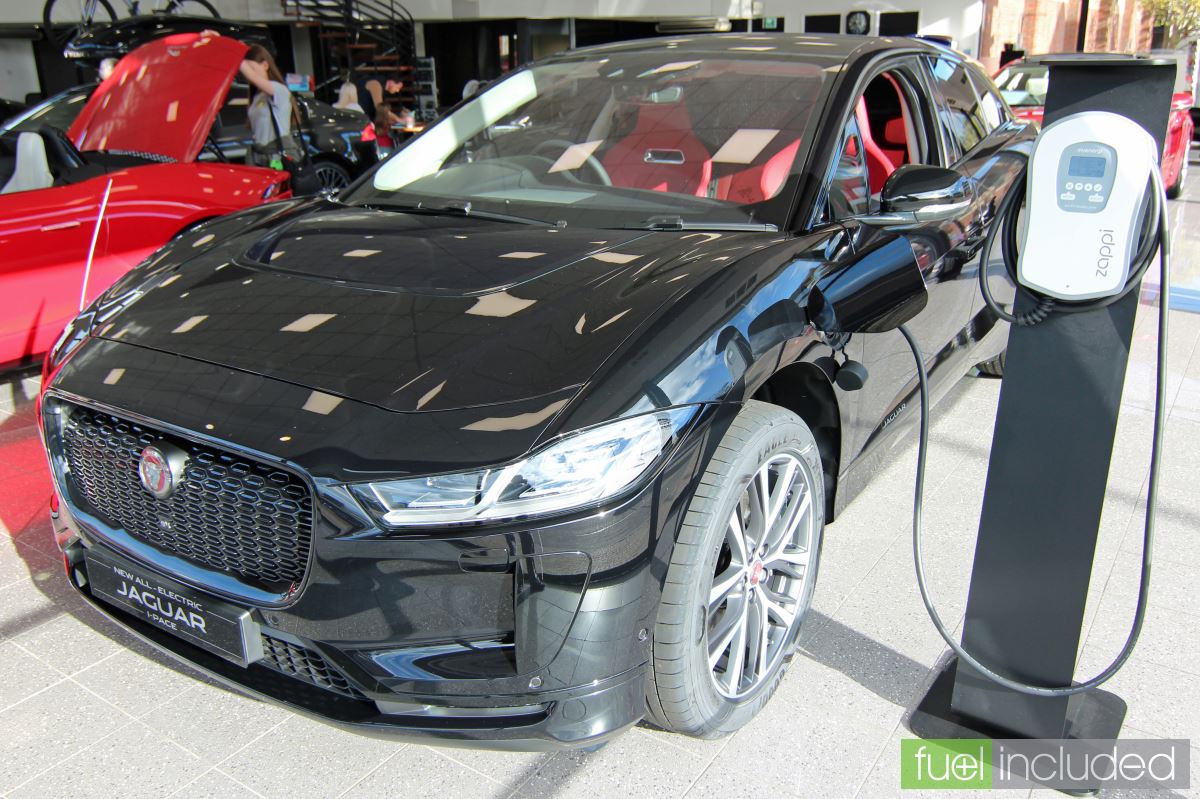
Jaguar I-PACE Electric Car (Image: T. Larkum)

Jaguar I-Pace wins 2019 European Car of the Year

The electric Jaguar I-Pace has claimed a narrow victory in the European Car of the Year award, edging out the Alpine A110.

The British firm’s electric SUV finished level on points with the A110 in the jury voting and was declared the winner after a tie-break based on how many judges had given a first-place vote to each car. The I-Pace received 18 first-place votes, compared with 16 for the A110.

It is the first time in the history of the event that two cars have finished tied after the main jury vote and the first time a Jaguar has won the award.

Jaguar I-PACE Electric Car (Image: T. Larkum)

Jaguar design boss Ian Callum said: “Why are people still surprised that electric cars win these awards? This is the future. We’d better all accept that.”

He added: “This was a wonderful car for the team to design and work on, because it’s a unique new car on a unique platform. For me, after 40 years in the business, this is the most exciting car I’ve ever had the chance to work on.”

Read more: Autocar

Electric cars charging in Milton Keynes (Image: T. Larkum)

Good Energy accelerates EV push with £1 million Zap-Map deal

Clean power supplier Good Energy has taken a 12.9% stake in the parent company of EV charging app Zap-Map, bolstering its nascent position in the EV sector.

And the firm has also reserved the option to take a majority stake in the firm within the next two years.

Zap-Map, which has around 70,000 monthly users, has been described as “go-to app” for EV drivers in the UK and helps consumers locate charge points, plot routes, check charger availability and, crucially for Good Energy, share power.

Good Energy said the investment reflected the evolution of the power sector towards a more localised nature, insisting it was the company’s intent to be at the forefront of that transition.

The firm expects EVs to play a “crucial role” in that development by helping enable a “new energy sharing economy”.

Electric cars charging in Milton Keynes (Image: T. Larkum)

A crucial factor in Good’s decision to take the stake in Zap-Map is the app’s ‘Zap-Home’ feature, which essentially opens up private household and business EV chargers to be used publically by other Zap-Map registered drivers. The charge point owner sets the access times and charging costs, with peer-to-peer payments able to be processed in-app.

The investment is intended to help fund further product development at Zap-Map, with the duo’s respective teams aiming to collaborate on “broader applications” for its proprietary platform.

Good is to pay a total consideration of just over £1 million for the stake in a structured deal which sees it acquire the 12.9% share for a cash consideration of £280,000. In addition, a maximum further consideration of £720,000 is to be payable upon certain product milestones and financial targets being reached by July 2020 and December 2021 respectively.

A further investment of £800,000 is to be made through secured convertible loan notes comprising three tranches. Good has the right to exercise the convertible into additional shares in Zap-Map up until the end of 2021.

Read more: Current News