All posts by Repost

2020 Hyundai IONIQ (Image: Hyundai)

Prices are out for Hyundai’s new all-electric Ioniq

Hyundai has now released the prices for the revamped all-electric Ioniq, a few weeks after the hybrid and plug-in hybrid versions.

The upgraded all-electric model will hit markets in the second half of this year.

The Ioniq Electric is priced in Germany at 34,900 euros, in the UK, prices for the all-electric Ioniq start at £27,250. In the USA, the all-electric hatch-back is on sale initially in California, with prices starting at around $30,700 (around $20,700 in California after rebates) with a top price of just over $37,300, making it less expensive than the Nissan Leaf and the Chevy Bolt.
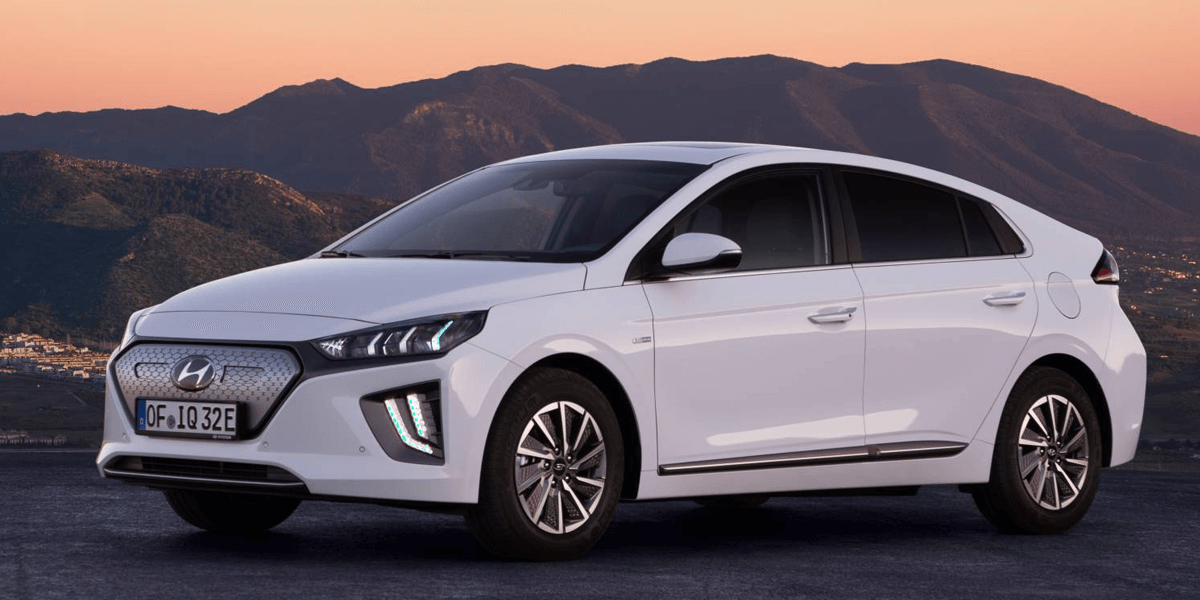
2020 Hyundai IONIQ (Image: Hyundai)

In May last year, Hyundai stopped taking orders for the previous all-electric Ioniq, due to battery shortages. A year later, the South Korean company released details of its revamped all-electric model without pricing details. Hyundai’s hybrid and plug-in hybrid versions were revealed in January this year, and cost less than the all-electric version, for example, the Hyundai Ioniq Hybrid is available in Germany from 25,800 euros, and the Ioniq Plug-in Hybrid from 32,000 euros – meaning the fully electric car will cost 1,600 euros more than its hybrid counterparts.

The new all-electric model, which will be hitting markets in the second half of this year, differs optically from its predecessor with the new headlights and above all the pattern on the closed radiator grille (which is reminiscent of the Kona Electric). The LED daytime running lights and the aluminium wheels have also been redesigned.

The most important new feature of the purely electric Ioniq is an increased battery capacity from 28 to 38.3 kWh, which should enable a WLTP range of 294 kilometres. In addition, the onboard charger of the electric motor will be upgraded from currently 6.6 to 7.2 kW. The AC charging process should take around six hours to 80 per cent.

Read more: Electrive

Cheapest Electric Cars UK (Image: Fuel Included)

Increase in residual value of electric cars boosted by greater range

Sales of fully electric cars are growing rapidly, which in the long term will also lead to a larger supply of used electric cars. ING expects a quarter of the used car market to favour electric cars by 2025.

The demand for used electric cars will outstrip supply, resulting in rising used car prices.

Cheapest Electric Cars UK (Image: Fuel Included)
Cheapest Electric Cars in the UK (Image: Fuel Included)

This means that electric cars will keep their value better than petrol and diesel models. ING estimates that new electric cars will keep 40% to 50% of their value after five years – more than petrol vehicles (35% to 42.5%) and diesel vehicles (27.5% to 35%).

Read report: ING

Car industry faces ‘petrolgate’ as CO2 figures don’t stack up

The automotive industry could be facing a new ‘petrolgate’ emissions scandal as Emissions Analytics uncovers discrepancies in new petrol car CO2 figures.

Following the fallout of of ‘dieselgate’, which led to a considerable decline in sales of diesel vehicles across Europe, experts believe the same emissions cheating techniques may be being used on petrol vehicles.

Results from the latest WLTP-certified vehicles show that average CO2 emissions for petrol cars are falling, but real-world testing carried out by Emissions Analytics paints a different picture.

“While our real-world test results for diesel cars are in line with WLTP data, indicating that manufacturers have got their house in order over diesel, the same cannot be said for petrol,” explained Nick Molden, CEO of Emissions Analytics.

Read more: AM Online

New Renault ZOE spotted testing

Revised model will feature similar styling but a range of interior and tech upgrades

The upcoming facelifted Renault ZOE has been caught testing by spy photographers. It’s likely to be revealed later this year, and will sport a similar look to the current model but is expected to be refreshed revised styling, and interior and tech updates.

2018 – Renault ZOE

Underneath the camouflage wrap, there appears to be a lot of design details carried over from the current ZOE, like the slim headlights, diamond-shaped tail-lights and the overall body shape. However, there are a few minor changes including a redesigned grille, new plastic mouldings that look like air intakes and a restyled rear windscreen. We would expect the ZOE to keep its kinked rear windows, but the camouflage hides these areas. A more aerodynamic shark-fin aerial will also be fitted to the roof.

No pictures of the interior have surfaced yet, but it’s expected that the revised model will offer a very different cabin to the current car. It’s likely to follow the new Clio by having a large touchscreen in the centre of the dashboard. This would be adapted to show driving range and charging information, and the locations of nearby charging points. Other features carried over from the new Clio should include LED headlights, a digital instrument cluster and wireless smartphone charging.

Read more: Car Buyer

Electric Car Line-up (Image: Go Ultra Low)

Electric Vehicle Sales Up 70% In Europe

The European passenger plug-in vehicle market scored some 37,000 registrations in April, growing 30% compared to the same period last year, a good performance considering that the overall market is still in the red (-1% in April).

In April, fully electric vehicles (BEVs) jumped 70% year over year (YoY), to some 24,000 deliveries, and were responsible for 65% of all plug-in sales in the month. The BEV share of the overall auto market was 1.8%. Adding plug-in hybrids (PHEVs) to the tally, the share jumps to 2.8%, and that makes the 2019 plug-in vehicle (PEV) share 3.0% so far (2.0% for BEVs alone), above the 2.5% result of 2018.

Electric Car Line-up (Image: Go Ultra Low)

Looking at other fuels, diesel sales continue their never-ending slide, dropping 12% YoY. Their share dropped from 36% to the current 33%.

The big news in April was the Renault Zoe beating the Tesla Model 3, while the BMW i3 rounded out the spots on the podium.

Interestingly, except for the waiting-for-the-62kWh-version Nissan Leaf and the recently added Tesla Model 3, all the remaining top 5 best sellers had +50% growth rates, which is good news and proof that, unlike the USA, the Model 3 isn’t drying up sales from other EVs.

Read more: Clean Technica

Electric cars can be a very effective way to save you money on motoring (Image: Go Ultra Low)

Pure electric vehicles wanted by company car drivers

One-in-five company car drivers are ready to switch to a pure electric vehicle (EV), but that move may not come soon enough for some of Europe’s carmakers who face big fines for failing to meet CO2 targets from 2020.

A Fleet News poll suggests significant interest in electric powertrains, with 43.8% of respondents saying they will choose either a mild hybrid (12.2%), a plug-in hybrid (10.2%) or a pure EV (21.4%) as their next company car.

Diesel remains the powertrain of choice for 42.6% and one-in-nine (11.2%) said they will opt for petrol.

Electric cars can be a very effective way to save you money on motoring (Image: Go Ultra Low)

In the retail market, the interest in electric motoring is even greater. A little fewer than two-in-five drivers (39%) say they are considering an EV as their next purchase, approaching three times the 15% who said the same in 2017, according to research from Close Brothers Motor Finance.

Its Britain Under the Bonnet report also found a drop in concerns about the cost, range and charging time of EVs, in comparison to last year.

Read more: Fleet News

EZ-FLEX Electric LCV (Image: Renault)

Renault Unveils EZ-FLEX Electric Concept For Last Mile Delivery System

The new Renault EZ-FLEX concept showcased at Viva Tech 2019, was first revealed in April, as an experimental, electric and connected LCV that is compact and easy to handle and features a modular rear design.

Groupe Renault has unveiled an all-new electric light commercial vehicle (LCV) concept, Renault EZ-FLEX, at the recently concluded Viva Tech 2019, in Paris. Designed to be an improved and efficient mobility solution for urban delivery system, the new Renault EZ-FLEX concept was revealed in April 2019, as an experimental, electric and connected LCV that is compact and easy to handle and features a modular rear design, for different applications. In fact, Renault has partnered with La Poste Group, the postal service company in France, for an experimental run and they will work together to develop and further improve this urban delivery ecosystem.

EZ-FLEX Electric LCV (Image: Renault)

Talking about Renault EZ-FLEX, Denis Le Vot, Alliance Director of the Renault-Nissan Commercial Vehicles Division, said,

“With traffic congestion in cities and the rise of e-commerce, urban deliveries are transforming. As a European leader in vans and light commercial vehicles, Groupe Renault is duty bound to continue proposing disruptive solutions. Renault EZ-FLEX, an experimental light commercial vehicle, gives us the opportunity to join forces with La Poste Group, through an innovative and collaborative approach designed to develop and anticipate future practices in urban deliveries.”

Read more: Car and Bike

Automakers fight to rescue small cars from extinction as EU rules bite

The U.S. buys big but relatively unsophisticated cars, while Europe prefers sophisticated small cars.

That truism is about to be rewritten in Europe, however, as automakers start to question their small-car strategy in response to costly new European Union legislation covering safety and tailpipe emissions, in particular the output of CO2.

“New CO2 rules will require automakers to fit thousands of euros of tech to each car,” Max Warburton, an analyst at research and brokerage firm Sanford C. Bernstein wrote in an April report. “Big cars have the price points and margins to cover these costs. Small cars simply do not. These segments may soon be abandoned by many manufacturers.”

Automakers across Europe are axing their smallest cars or preparing to do so.

  • Opel will drop its Karl and Adam minicars, while fellow PSA Group brands Peugeot and Citroen said their 108 and C1 minicars are unlikely to survive. A source at Ford confirmed that it will stop exporting the Indian-built Ka+ small car to Europe.
  • Volkswagen executives have said privately that the automaker is preparing to drop combustion-engine versions of the Up minicar, which would almost certainly mean the fuel-powered Seat Mii and Skoda Citigo would also disappear.
  • Daimler, meanwhile, has begun the process of shifting production and development of its Smart brand to China, where the small cars will be built exclusively starting in 2022 as part of a joint venture with Zhejiang Geely Holding. That decision raises a question mark over Renault’s Twingo minicar, which was developed alongside the current Smart model range.

It won’t just be minicars affected, Warburton said. VW Group could be forced to axe the Polo small car as well as the related Audi A1, Skoda Fabia and Seat Ibiza, he said. ”

This is a very big volume platform, but it will face an increasingly tough economic challenge,” Warburton said. He also flagged up the size of BMW’s task with Mini. “BMW will need to rethink or reduce the size of the Mini business. We are not convinced it’s ever made proper money,” he said.

These cars are at risk because tougher EU rules for CO2 start to take effect next year. The industry has to reduce its fleet average to 95 grams per kilometer, down from an average of 120.5g/km last year, according to JATO Dynamics. The problem is that most current minicars cannot get to below the 95g/km average without including some form of electrification (for example, the Citroen C1 achieves 95g/km).

Read more: Automotive News

The future of electric vehicles

Are we on the cusp of an electric revolution?

Electric vehicles (EVs) have been around for well over 150 years – considerably longer than their petrol and diesel fuelled cousins. But it’s only in the last couple of years or so that drivers and car-makers have begun to realise the potential for an electric car revolution. Technological advances in battery construction and rapid charging mean that, for the first time since the 1870s, electricity has the chance to displace fossil fuels as the driving force behind the world’s transport systems.

Is an all-electric future likely?

Replacing billions of petrol cars with electric vehicles obviously won’t happen overnight, but many analysts are predicting that an all-electric future is becoming increasingly inevitable. Many European countries have signed ambitious EV targets into law, with France and the UK both aiming to ban the sale of fossil-fuelled cars by 2040. And sales of EVs are booming around the world, with 70% growth in 2018 alone.

For years, electric cars were available from only a handful of companies – Tesla of course, plus the BMW i3, the Nissan Leaf or Toyota’s Prius being the most famous examples. But now almost every car company on the planet is stepping into the ring.

At the 2019 Geneva Motor Show, electrification was everywhere. Dozens of new electric models were on display as big-name brands ramp up production for mass markets, including Volkswagen, Porsche, Volvo and Audi. Mercedes’ parent company, Daimler, has announced that they too would have electric versions of its entire fleet by 2022, including popular models like the newly introduced smart car.

“ Exhaust emissions from fossil fuel transport cause 53,000 premature deaths per year in the US alone, and are especially harmful to children, the elderly, and low-income communities.”

Electric vehicles are going mainstream in a big way. But will they truly be able to topple the might of the petrol engine? And why might consumers be persuaded that their next car should fill up at a wall plug rather than a petrol pump?

Read more: Green Economy Coalition

Milton Keynes 'Mushrooms' Charging Hub (Image: T. Larkum)

Electric revolution: There are MORE UK public charge points for plug-in vehicles than petrol stations for the first time ever

  • New figures show there are 8,471 charging locations across the UK as of 22 May
  • In comparison there are currently 8,400 petrol stations in the country

The electric car revolution is well and truly taking shape as new stats reveal there are more public charging locations for plug-in vehicles than there are fuel stations in the UK for the first time in history.

New figures from Zap-Map revealed that – as of 22 May – there are 8,471 charging locations across the UK with a total of 13,613 individual plug-in points.

In comparison there are currently 8,400 petrol stations in the country.

While more charge point locations are being added by the week, petrol station numbers are in decline.

Milton Keynes 'Mushrooms' Charging Hub (Image: T. Larkum)
Milton Keynes ‘Mushrooms’ Charging Hub (Image: T. Larkum)

In fact, the charge-point website says there has been a 57 per cent increase in EV charge points across the UK in the last 12 months alone.

‘Charging points can now be found across the length and breadth of the country, from the Shetland Islands to the Cornish Riviera, from Giant’s Causeway to the White Cliffs of Dover,’ it said.

The growing infrastructure is much needed if the network is to cope with the growing demand for charge points.

Uptake of electric vehicles has been rapid in recent years, increasing from only 3,500 cars on the road in 2013 to more than 210,000 examples currently.

Analysts have forecast that there will be 1 million EVs in use in the UK by the end of 2022, a figure backed by government policy that looks to electrify all new cars and vans by 2040.

Read more: This is Money