All posts by Jo

Petrol-diesel car ban: Government plan dismissed as ‘smokescreen’ after key air pollution policies dumped

The Government’s plan to ban new petrol and diesel vehicles from 2040 has been dismissed as a “smokescreen”, with ministers accused of condemning people to living with killer air for years to come.

Green groups and opposition politicians united in criticism after it emerged that key policies to cut the estimated 40,000 premature deaths from toxic air every year had been dumped.

A plan for a Government-led “scrappage scheme” – to get diesel cars off Britain’s roads quickly – has been rejected as poor value for money, it emerged.

Michael Gove, the Environment Secretary, also shelved proposals to charge drivers to enter the most-polluted towns and cities, shifting the responsibility on to local councils and imposing tests.

The missing elements of the long-awaited air quality plan became clear after Mr Gove grabbed the headlines with a repeated announcement that new petrol and diesel cars and vans will be outlawed in 23 years’ time.

Areeba Hamid, a clean air campaigner at Greenpeace UK, said:

“We cannot wait nearly a quarter of a century for real action to tackle the public health emergency caused by air pollution.

“It means that children across the UK will continue to be exposed to harmful air pollution for years to come, with potentially irreversible impacts.”

Anna Heslop, a lawyer for ClientEarth, said:

“They need to be doing things in the coming weeks and months that are going to fix the problem of polluted air in towns and cities around the UK.”

Hinting at future court action, she added:

“We will be holding the Government to account on this. They have been in breach of these limits for seven years – and we will continue to do that.”

Ed Miliband, the former Labour leader, tweeted:

“Fear that new car petrol/diesel ban in 23 years time is smokescreen for weak measures to tackle 40,000 deaths a year from air pollution now.”

And Jenny Randerson, the Liberal Democrat transport spokeswoman, accused ministers of “betrayal”, calling for all new diesel sales to end much faster, by 2025.

Read more: The Independent

Diesel and petrol car ban: Plan for 2040 unravels as 10 new power stations needed to cope with electric revolution

Plans to ban the sale of new diesel and petrol cars by 2040 in a bid to encourage people to buy electric vehicles are a “tall order” and will place unprecedented strain on the National Grid, motoring experts have warned.

Michael Gove, the Environment Secretary, has warned that Britain “can’t carry on” with petrol and diesel cars because of the damage that they are doing to people’s health and the planet.

“There is no alternative to embracing new technology,”

he said.

However the AA warned that the National Grid would be under pressure to

“cope with a mass switch-on after the evening rush hour”,

while Which? Car magazine warned that electric cars are currently more expensive and less practical.

According to a National Grid report, peak demand for electricity could add around 30 gigawatts to the current peak of 61GW – an increase of 50 per cent.

The extra electricity needed will be the equivalent of almost 10 times the total power output of the new Hinckley Point C nuclear power station being built in Somerset.

National Grid predicts Britain will become increasingly reliant on imported electricity, which will rise from around 10 per cent of total electricity to around one third, raising questions about energy security.

Just 4 per cent of new car sales are for electric vehicles, and concerns have also been raised about whether Britain will have enough charging points for the new generation of cars.

Diesel drivers on congested roads in towns and cities across the UK face new pollution taxes and could also be barred from travelling at rush hour.

Ministers have identified 81 major roads in 17 towns and cities where urgent action is required because they are in breach of EU emissions standards, putting people’s health at risk.

The air quality strategy urges local authorities to first try to reduce emissions by retrofitting the most polluting diesel vehicles, changing road layouts and removing speed humps.

However it concedes that as a last resort councils will be allowed to impose tough restrictions on the most polluting diesel vehicles as soon as 2020 to bring down the levels of harmful nitrogen dioxide emissions.

The strategy stops short of meeting the demands of motoring groups for a diesel scrappage scheme, under which diesel drivers would receive compensation for trading in their polluting vehicles.

Read more: The Telegraph

Londoners are much more geared up for the rise of electric vehicles than the rest of Britain

Londoners are much more enthusiastic about moving to electric cars than the rest of Britain, according to new research from Baringa Partners.

The majority of those in the capital (77 per cent) believe that pure electric cars will replace their petrol/diesel counterparts as the preferred type of car in the UK, while nationwide 68 per cent of people feel the same.

Government offers grants, incentives to businesses wanting greener fleets.

There is still work to be done to convince drivers of electric vehicles’ mainstream capabilities though, as while considerably more London residents were likely to consider an electric car next time they get a car, that was still just over a third at 36 per cent.

The national average was 18 per cent, while the lowest interest was in the East of England where 10 per cent of people said they would consider an electric car as their next vehicle.

As for what the concerns were regarding electric cars, 37 per cent of Londoners pointed to difficulties installing a home charger while 62 per cent expressed range anxiety, worrying they would not be able to travel far enough on a single charge.

Baringa surveyed a nationally representative sample of 2,005 UK adults.

Oliver Rix, partner at Baringa, said this was good news for “the critical problem” of air qualities in cities.

He said:

These findings are hugely encouraging as they run counter to the prevailing wisdom that urban areas will be reluctant to embrace electric cars. It’s clear the capital is a ripe market for electric car manufacturers, with Londoners more optimistic about how long it will take for electric vehicles to become the car of choice than most industry predictions.

Just under a third of those in the capital said they thought electric cars offered better overall value for money than petrol and diesel cars, while a fifth of London residents said they felt electric cars were more stylish than traditional options, compared to the national average of eight per cent.

Source: City A.M

Case study: What’s it like to run an electric fleet?

It’s not always easy being green, especially where business is concerned.

If you’re a business considering an alternatively fuelled fleet, you aren’t alone. In fact, more than half of fleets (56%) are already operating at least one alternative to traditional petrol and diesel models or are planning to do so in the next three years, according to new research from Arval.

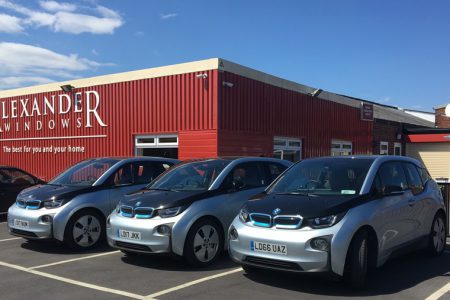
We’ve been in touch with a business that’s already taken the plunge and decided to replace its fleet of ageing Volvo V40s with all-electric BMW i3s. Was it a smart move?

BMW i3

Alexander Windows is one of the north west’s biggest supplier of windows, doors and conservatories, and as such has a team of sales people and surveyors travelling all over Manchester all-day, everyday.

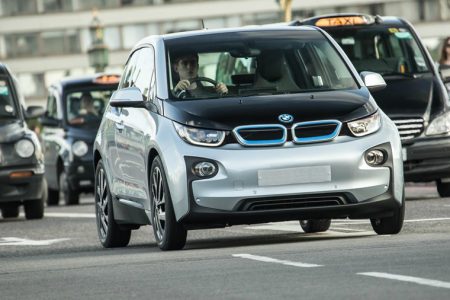
The BMW i3 hatchback makes up part of the company’s range of electric and hybrids – which includes the supercar-esque i8 – and is fast becoming a go-to choice as an eco-friendly fleet vehicle.

BMW i3

We asked Lauren Tutton, director of Alexander Windows, about how the BMWs have been received:

“They have a decent range (120 miles), which is very important because our field sales representatives and technical surveyors travel all over, and we don’t want them getting caught out.

“We still have a need for small vans, but the i3 is more than adequate for day-to-day survey appointments.”

Lauren also drives the stunning BMW i8 plug-in hybrid sports car, which boasts an official average fuel consumption rating of 134.5mpg, and CO2 of 49g/km. Ticking plenty of boxes when it comes to a directors’ car.

Like lots of businesses, Alexander Windows’ fleet is part of a wider eco-friendly initiative, and when it comes to windows, going green is far more involved than simply improving a home’s insulation.

“We’ve had a very positive response from everyone to the new fleet. They’re very quiet, have good acceleration and the standard specification of the vehicle is great. The initial scepticism that people expressed about driving an electric car soon disappeared once they began driving them.”

Read more: Contract Hire and Leasing

Enquiries: Fuel Included Fleet Deals

V2G found to improve the lifetime of electric vehicle batteries

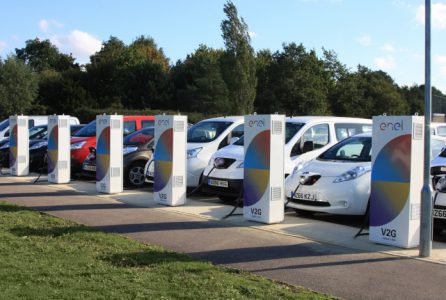
Intelligent use of vehicle to grid (V2G) technology can improve the battery life of electric vehicles according to a new study from the University of Warwick, potentially disproving a key criticism levelled at the technology.

Working with the Energy and Electrical Systems group of the university’s research division WMG and Jaguar Land Rover, Dr Kotub Uddin analysed advanced lithium ion batteries used in commercially available EVs over a two year period.

This allowed him to create what is thought to be one of the most accurate battery degradation models existing in the public domain to predict battery capacity and power fade over time, under various ageing acceleration factors including temperature, state of charge, current and depth of discharge.

Using this model, Dr Uddin developed a ‘smart grid’ algorithm to calculate how much energy a vehicle requires to carry out daily journeys, and how much energy can be taken from its battery without negatively affecting it, or even improving its longevity.
This algorithm was then applied to WMG’s International Digital Laboratory to see if energy from EVs parked on the University of Warwick campus could power the multi-use building.

The study concluded that the number of EVs parked on the campus (around 2.1% of cars, in line with the UK market share of EVs) could spare the energy to power this building. In doing so, capacity fade in participant EV batteries would be reduced by up to 9.1%, and power fade by up to 12.1% over a year.

Dr Uddin said:

“These findings reinforce the attractiveness of V2G technologies to automotive original equipment manufacturers; not only is V2G an effective solution for grid support – and subsequently a tidy revenue stream – but we have shown that there is a real possibility of extending the lifetime of traction batteries in tandem.

“The results are also appealing to policy makers interested in grid decarbonisation.”

Until now a general consensus had been in place that the increased cycles imposed on a battery by V2G would lead to more rapid degradation. However, the new study suggests that this process is more complex than thought and that in fact, it can be exploited to improve a battery’s lifetime.

Read more: Clean Energy News

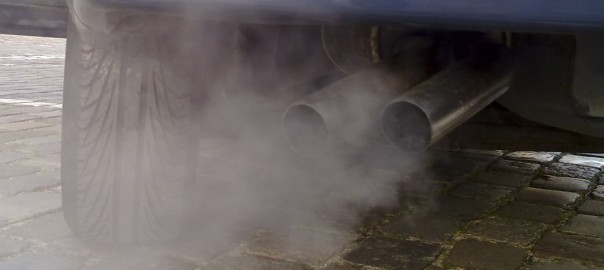
Car exhaust pollution (Image: Wikipedia)

Britain to ban sale of all diesel and petrol cars and vans from 2040

Plans follow French commitment to take polluting vehicles off the road owing to effect of poor air quality on people’s health

Britain is to ban all new petrol and diesel cars and vans from 2040 amid fears that rising levels of nitrogen oxide pose a major risk to public health.

Car exhaust pollution (Image: Wikipedia)

The commitment, which follows a similar pledge in France, is part of the government’s much-anticipated clean air plan, which has been at the heart of a protracted high court legal battle.

The government warned that the move, which will also take in hybrid vehicles, was needed because of the unnecessary and avoidable impact that poor air quality was having on people’s health. Ministers believe it poses the largest environmental risk to public health in the UK, costing up to £2.7bn in lost productivity in one recent year.

Ministers have been urged to introduce charges for vehicles to enter a series of “clean air zones” (CAZ). However, the government only wants taxes to be considered as a last resort, fearing a backlash against any move that punishes motorists.

“Poor air quality is the biggest environmental risk to public health in the UK and this government is determined to take strong action in the shortest time possible,”

a government spokesman said.

“That is why we are providing councils with new funding to accelerate development of local plans, as part of an ambitious £3bn programme to clean up dirty air around our roads.”

The final plan, which was due by the end of July, comes after a draft report that environmental lawyers described as “much weaker than hoped for”.

The environment secretary, Michael Gove, will be hoping for a better reception when he publishes the final document on Wednesday following months of legal wrangling.
A briefing on parts of the plan, seen by the Guardian, repeats the heavy focus on the steps that can be taken to help councils improve air quality in specific areas where emissions have breached EU thresholds.

Measures to be urgently brought in by local authorities that have repeatedly breached EU rules include retrofitting buses and other public transport, changing road layouts and altering features such as roundabouts and speed humps.

Reprogramming traffic lights will also be included in local plans, with councils being given £255m to accelerate their efforts. Local emissions hotspots will be required to layout their plans by March 2018 and finalise them by the end of the year. A targeted scrappage scheme is also expected to be included.

Some want the countrywide initiative to follow in the footsteps of London, which is introducing a £10 toxic “T-charge” that will be levied on up to 10,000 of the oldest, most polluting vehicles every weekday.

Read more: The Guardian

Ubitricity | Fully Charged

The simple and very commonplace lamp post will soon become a ubiquitous charge point for electric cards.

They charge at about 5 kW, or 16 amps, not super fast but overnight charging is all most drivers need.

Ubitricity is a German based company who’ve come up with a simple, cheap to install and well managed system for more people on more streets to adopt electric cars.


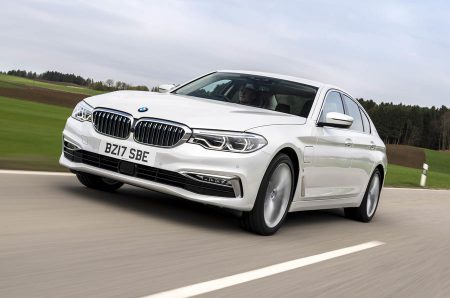
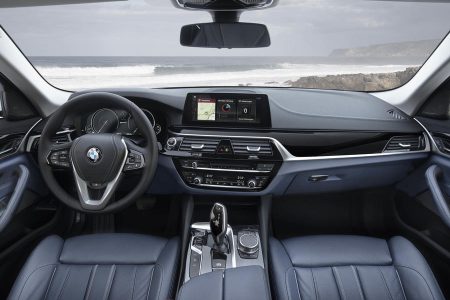
BMW 530e iPerformance SE 2017 review

Plug-in hybrid version of BMW’s 5 Series is well-placed to take sales away from its higher-end diesel siblings. Strong performance and handling with favourable running costs.

BMW 530e iPerformance

What is it?

This is the first plug-in hybrid 5 Series. It’s not the first hybrid 5 Series, that being the ActiveHybrid 5 available with the last-generation model range. Less than one percent of the 15,000 or so Fives BMW sells here yearly have been part-electric. The ActiveHybrid 5 was expensive, equipped with six cylinders and 302bhp, 149g/km CO2 performance to suit the US, which is why it made little ground here.

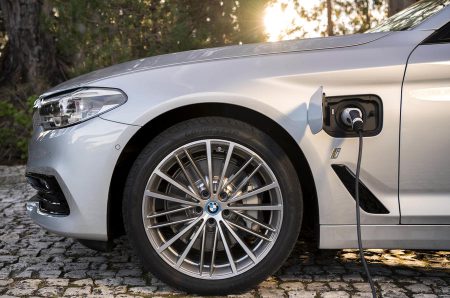
BMW hopes that will change, dramatically, with this new 530e iPerformance hybrid, which is a plug-in propelled by a 181bhp 2.0 litre TwinPower Turbo petrol engine and a 112bhp electric motor. The crucial difference lies in some key numbers: the 530e’s £44,765 list price is £770 more than for a 530d SE and £7405 more than for a 520d Efficient Dynamics, while its 46g/km CO2 emissions score it a 9% BIK rating compared to the 520d ED’s 23% and the 530d’s 26%. That’s vastly more competitive than for the ActiveHybrid 5 and enough, BMW thinks, to see it selling around 5000 plug-in 5 Series in a full year.

BMW 530e

What’s it like?

Start your trip with a fully charged battery and it’s on electric power that you’ll initially travel unless you’ve heavy with the throttle, in which case the petrol engine momentarily assists.

The 9.2kWh lithium-ion battery will realistically allow a 22-mile range, and in near total silence, the only sound being the tyres’ hum. The car remains tranquil even when the petrol engine kicks in, although the four-pot produces a pleasing internal combustion rasp if you ask plenty of it. The transition from one to the other is tremor-free, as you’d expect, and it’s easy to forget that you’re in a hybrid car at all, the ‘Auto eDrive’ driving mode enabling the car to select the optimum mix of power sources depending on the driver’s demands and the terrain advice supplied by the sat-nav. And while it may be saving fuel, the 530e is not slow, breaking 62mph in 6.2sec: pretty rapid for a car that’s partly about economy.

BMW 530e

This twin-engined zest is complemented by a lithe, confident chassis that delivers a supple and sophisticated ride that’s as pleasing as this car’s quiet agility. Only the steering lets it down, the weight at the rim feeling curiously mushy, although it points the car accurately. As always with hybrids, there’s diversion to be had from monitoring the car’s energy usage and the game of trying to see how far you can go on amperes alone.

Read more: Autocar

AA Trust launches free EV driving course

The AA Trust is launching the first ever free of charge EV driving course in collaboration with Chargemaster.

AA Trust’s chairman Edmund King

The course was launched following an AA Populus survey of 16,239 drivers, of which 32% said they want to learn to drive in an EV.

Drivers were asked, to what extent would you be interested in a free one-hour electric vehicle driving lesson – aimed to show you how to get the best out if an EV – in your local area?

  • 32% were interested (16% extremely interested, 16% interested)
  • 33% males interested, 30% females
  • 35% younger drivers (18-24, 25-34) interested as opposed to 31% older drivers (65+)
  • Drivers in London were more interested (35%) followed by those in West Midlands and South West (34%)
  • Drivers in North East least interested (26%) followed by those in eastern region (28%)
  • Those in Scotland, Wales and Northern Ireland also showed high levels of interest.

AA Driving School and Drive Tech trainers developed the experience in conjunction with Chargemaster and will be piloted in Milton Keynes with a view to be rolled out nationally.

AA Trust’s chairman Edmund King said: “We are approaching a tipping point as more and better electric cars come on stream.

“We want to help drivers understand this exciting new technology at the EV experience centre but we also want to help them get the most out of their electric cars.

“Drive electric sessions, conducted by AA instructors, can either be carried out in the driver’s own electric car, or in one of the EV experience centre’s test drive fleet. The EV Experience and Drive Electric experiences be really put Milton Keynes on the map as the most go-to EV City in the world.”

Chargemaster’s chief executive David Martell said: “The number of electric vehicles in the UK is continuing to grow, and we recently marked the 100,000th plug-in car registration in the UK.

“To get more people driving electric vehicles, getting them behind the wheel is key. The EV experience centre aims to do exactly that, and the drive electric experience sessions from the AA Trust will be a great way to help consumers better understand electric vehicles and how easy they are to live with and how to get the best out of them when driving.”

Source: AM Online

Big Oil Starting To Take Notice Of Rise Of EVs

It was really only a matter of time, and now the world’s top oil companies are seeing EVs as a viable and permanent threat.

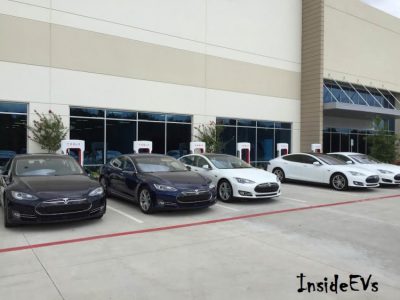
Tesla continues to lead the pack with U.S. plug-in sales, but the Chevrolet Volt and Bolt, Toyota Prius Prime, and Nissan LEAF are all faring well, and the outlook for EVs continues to improve. (via Josh B/InsideEVs)

Though makers of EVs are still much more bullish about the timeline for mass adoption, several oil producers are taking note, and many are beginning to change their initial conclusions. BP and Exxon Mobil have bumped up their estimates this year, and OPEC has quintupled its future sales forecast for plug-in EVs.

Bloomberg New Energy Finance (BNEF ) believes that EVs will sell better than ICE vehicles by 2040, totalling 530 million plug-ins on the road at that time, which will account for one-third of the world’s vehicles. According to a study by BNEF, by 2040 EVs will lower the global oil demand by eight million barrels. Chief of advanced-transport analysis at BNEF in London, Colin McKerracher, shared in a note to clients:

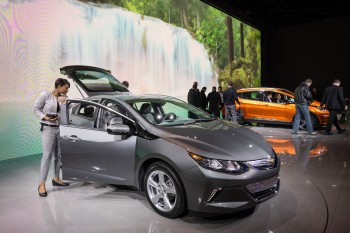
The Chevrolet Volt and Chevrolet Bolt EV on display Friday, February 12, 2016 at the Chicago Auto Show in Chicago, Illinois. (Photo by Steve Fecht for Chevrolet)

“The number of EVs on the road will have major implications for automakers, oil companies, electric utilities and others. There is significant disagreement on how fast adoption will be, and views are changing quickly.”

“What oil companies and car companies are saying is diverging. This is a trillion dollar question, and somebody is going to be wrong.”

Though these estimates will continue to diverge, the truth is that both sides of the equation are seeing that the popularity of EVs is and will continue to increase, which will drop the demand for fossil fuels. While oil companies may be attempting to make it seem like they aren’t concerned, multiple recent forecasts sing a vastly different tune.

  • OPEC’s previous 2040 estimate was 46 million EVs, and now the group representing 14 nations is forecasting 266 million.
  • Exxon Mobil initially predicted 65 million electric cars by 2040, but has now upped it to 100 million.
  • Norwegian-based Statoil ASA sees an electric vehicle market share of 30 percent by 2030.
  • The International Energy Agency raised its 2030 EV fleet size from 23 million to 58 million.
  • BP bumped its future outlook up by a whopping 40 percent, to 100 million plug-ins on the road by 2035.

Obviously, these estimates are markedly different, but the trend is the same. OPEC’s recent oil market report shows that due to EV sales, oil demand in Asia could see significant declines as soon as next year.

There are many variables, which make these type of estimates difficult. Fuel cost and battery costs are two of the most obvious, but another gray area lies in government support and subsidies (or lack thereof).

According to BNEF, top world automakers combined plans show estimated sales of six million EVs per year as soon as 2025, and eight million by 2030, and these estimates continue to rise.

Source: Inside EVs