All posts by Jo

Tesla’s used car sales ecosystem growing rapidly

As part of its progress towards becoming a fully-fledged OEM, Tesla is now quickly adding considerable scale towards its used car business cash flow.
As part of its progress towards becoming a fully-fledged OEM, Tesla is now quickly adding considerable scale towards its used car business cash flow.

Its nascent used car operation in the first six months of this year has already well surpassed sales from 2016 – and if the pace continues would result in a tripling of the size of the business in just a year. Total 2016 sales reached $117.4m (€99.8m), and sales recorded so far this year have topped $154.1 million (€131.0m).

Tesla says the sales jump is down to more used Tesla vehicles being in circulation, as well as due to the support of various Tesla trade-in programmes. It is now itself also listing its stock of used cars online on Cars.com following owners having listed their own vehicles on the website for some time.

In the second quarter of 2017, Tesla’s total business – including Tesla cars on the way to the consumer, vehicles in Tesla showrooms, used Tesla vehicles and energy storage products – reached $1.47 billion (€1.25 billion). After a falling out over how to treat existing clients, Tesla CEO Elon Musk ousted executive Klaus Grohmann in March, meaning Grohmann’s Prüm, Germany-based firm Tesla Grohmann Automation, which gave Tesla fundamental engineering expertise, will be playing an increasingly small role going forwards, with more development being done in-house.

As part of its Q2 filing, Tesla said:

‘In future periods, we do not anticipate meaningful revenue from sales of powertrain or other vehicle systems and components to third parties.

‘However, we anticipate that revenue from sales of pre-owned vehicles will continue to increase as the volume of pre-owned vehicle sales increases and that revenue from services by Grohmann will decrease as we primarily consume internally its services.’

Read more: Autovista Group

Greener electricity generation makes EVs cleaner than ever

The electricity going into electric cars is made by ever-cleaner sources

Nissan Leaf

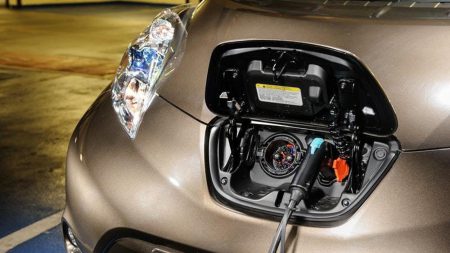
Electricity used to charge electric vehicles (EVs) is now cleaner than ever before, a study has revealed.

The Electric Insights report, which was produced by Imperial College London researchers and Drax Power, found that electricity generation between April and June this year contained 199g of CO2 per kilowatt hour – 10 per cent less than last year’s minimum set.

This decarbonisation of electricity generation in the UK means that EVs are now cleaner than ever, as the energy used to charge them is increasingly coming from greener sources.
Dr Iain Staffell from Imperial College London said:

“It is widely accepted that electric cars dramatically reduce air pollution in cities, but there is still some debate about how clean they actually are – it varies depending on where the electricity to charge them with comes from.

“According to our analysis, looking at a few of the most popular models – they weren’t as green as you might think up until quite recently, but now, thanks to the rapid decarbonisation of electricity generation in the UK, they are much better.

“For example, producing the electricity to charge a Tesla Model S back in 2012 would have created 124g of carbon per km driven. Nowadays emissions from charging the same car have halved to 74g per km driven in winter and just 41g per km in summer – thanks to the decarbonisation of electricity generation in the UK.

“Smaller electric cars like the Nissan Leaf and BMW i3 can be charged for less than half the CO2 of the cleanest non-electric car on the market – the Toyota Prius hybrid.”

The UK is now home to more than 100,000 electrified vehicles, which now count for 1.8 per cent of new car registrations.

Electric cars are going to become an increasingly common sight on roads around the UK over the next few years. Last month, the government announced that the sale of new petrol and diesel vehicles will be banned by the year 2040 – meaning motorists will have to look to other means of powering their vehicles.

Source: Shorpshire Star

Recent research shows unrivalled value of electric and hybrid cars

Buying a car can be fun but also a little overwhelming. It’s easy to get swept up in choosing makes, models, colours, and added extras for your car. However, in the rush to find something you like in the moment, you can often overlook long-term costs.

There are certain things that you just can’t be sure of. For example, car insurance will vary greatly depending on the type of car you have, your age, your driving history, and numerous other factors. But you can inform yourself of long-term maintenance costs. Choosing the right model could save you a huge amount of money over the lifetime of your car.

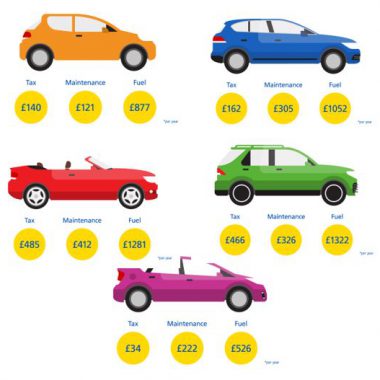
Aviva Insurance recently looked at how much hatchback, estate/saloon, convertible, SUV and electric/hybrid cars cost over their lifetimes. Their research assessed the main expenses of popular models for each category of car in current dealerships.

Stuart Masson from The Car Expert has reviewed each of these models with us to provide some invaluable advice when choosing your next car.

Hatchback

Masson says,

“Hatchbacks are still the most popular type of car sold in the UK, every day, week and month of the year. They are generally very practical and fuel efficient, and relatively inexpensive for servicing and repairs.”

Hatchbacks are the cheapest for maintenance at an average of just £121 annually, however, as with all non-electric vehicles, the cost of fuel can really add up over time.

Estate/Saloon

Estate and saloon cars fared worse than hatchbacks, due to the fact that they’re larger and use more fuel. At an average of £1519 for tax, maintenance and fuel, they’re nearly £400 a year more expensive than their hatchback cousins. Masson adds that

“depreciation is usually worse so you will lose more money over the first few years.”

Convertible

According to Masson,

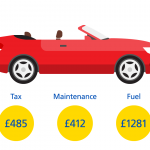
“UK drivers buy more convertibles than anywhere else in the world. But you do pay for the privilege of dropping the top; convertibles cost more than equivalent coupés, and driving at speed with the roof down will seriously affect your fuel consumption.”

Tax is significantly higher than other types of car on the list, and this could increase under new tax rules if the car is worth more than £40,000.

SUV

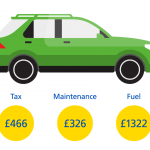
Masson states that buying an SUV for most people is “a case of style over substance.” He states, “most so-called SUVs have little to no off-roading abilities and will never see anything more challenging than a gravel driveway.” As you can see, their costs are very high in each category. Masson says this is because

“they are often based on normal hatchback models, but you are paying more money and getting extra weight, poorer fuel economy and higher levels of pollution, all to enjoy that chunky SUV styling and feel.”

Electric/Hybrid

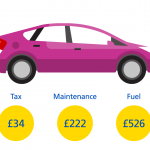
As you can see, the running costs of electric/hybrid cars is unrivalled. The cars Aviva Insurance looked at include both, which means the cost can be lower or higher depending on which car you choose. If you go for an electric model, you won’t have to pay fuel or tax but you will need access to a charging point – which is becoming much easier with thousands being installed across cities like London. In terms of hybrids, Masson says,

“around town, you can use the electric motor for clean, quiet urban driving. And out on the road, you have a petrol engine to give you the range you need.”

The results show that hatchback, hybrid or electric models will save you the most money over the course of your car’s lifetime. However, with recent plans to ban all diesel and petrol cars by 2040, selling non-electric vehicles on may become a challenge.

As a society, we are becoming more and more environmentally and financially conscious, and with that, the future is looking cleaner, greener… and electric.

Research Source: Aviva


Hyundai launches SUV, electric assault to overtake Toyota in Europe

Hyundai has announced it is to place electric vehicles (EVs) at the centre of its product line-up going forward, which alongside sister brand Kia, will total eight battery-powered vehicles and two hydrogen cars by 2020.

The Hyundai brand will also double its Europe SUV offering to four models by 2019, plus further bolstering of its crossover range, as it looks to ride the wave of these growing segments to meet its target of overtaking Nissan and Toyota to become the best-selling Asian brand in Europe by 2021.

The electric assault will be led by a premium long-range EV aimed at targeting upmarket leaders including Tesla and models launching from other rivals. This electric sedan will be launched under its high—end Genesis brand in 2021 with a range of 500km (310 miles) per charge – matching models launching from Volkswagen Group around this time.

Hyundai Executive Vice President Lee Kwang-guk said on Thursday: ‘We’re strengthening our eco-friendly car strategy, centring on electric vehicles,’ underscoring the realistic, mainstream promising nature of the technology.

Hyundai and Kia, together fifth in global sales volumes, said they would add three plug-in electric vehicles to their plans, surging their total line-up to 31 models by 2020 – including eight-battery-powered and two hydrogen models. This is a dramatic shift in plans from only three years ago, when in 2014 they had planned 22 models, with only two being battery powered.

It is also planning its first dedicated EV platform, allowing the company to build multiple EV models with longer driving ranges. While it launched its first all-electric volume car the IONIQ last year, its driving range was uncompetitive with those from Tesla and General Motors (Ampera-e).

Read more: Autovista Group

UK used car market follows new vehicle sales with Q2 decline

According to the latest data released by the Society of Motor Manufacturers and Traders (SMMT), the UK’s used car market declined in the second quarter of 2017, following record results in the previous year.

The figures suggest that 1,832,400 used vehicles changed hands during the period between April and June 2017, a drop of 13.5%.

The society puts this down to the strong results of Q2 2016 being hard to match and turbulence in the new car market following the introduction of new vehicle excise duty (VED) rates introduced in the country on 1 April. This follows the trend of UK new car sales, which experienced another drop in August 2017.

Overall, for the first half of the year, the number of used car sales fell by 5.1%, with 3,966,356 sales in total. Most of this drop was seen in the petrol market, which declined by 5.1%, whereas the diesel market, which has been much maligned in recent months and will soon see the introduction of manufacturer-backed trade-in incentives in the UK, only declined by 0.1% year on year in the first half of 2017.

Demand for alternatively fuelled vehicles (AFVs) rose 24.2% with electric cars enjoying particularly strong growth – up 79.3%. However, volumes remain low with AFVs currently accounting for just 1.2% of the used car market.

Read more: Autovista Group

Skoda announces EV offensive as Czech national EV network approved

Skoda is ramping up plans to launch four electric vehicles (EVs) by 2021 and a further two by 2025, including two SUVs and an image-boosting sports car.

The news comes as the European Commission approves the Czech Republic’s plans to launch a country-wide alternative fuel vehicle charging network, including recharging points for EVs, as it prepares for the upcoming EV revolution over the next decade.

First among Skoda’s EV plans will come the plug-in hybrid version of its Superb sedan in 2019, as well as an all-electric version of the small Citigo in the same year. Following this, 2020 will see the launch of Skoda’s first next-generation EV built on Volkswagen Group’s (VW’s) new MEB architecture, a model which has been unveiled in concept form as the ‘Vision E’ coupé-SUV.

This is expected to become the most expensive vehicle in the brand’s 122-year history and especially targets the surging Chinese EV market, where EV sales are expected to become mainstream first. The cost – around €44,000 (£40,000) – is due to the high number of batteries required to achieve Volkswagen Group’s ambitions for a 500km (310 mile) standard range for its EVs. While expensive for Skoda, it is still only half the price of the Tesla Model X. Alongisde other MEB vehicles, it is likely to be built at VW’s factory in Bratislava, the capital of auto-hub Slovakia, and due to Skoda’s success in China, it is being given almost the same priority as VW’s first MEB –based car, the Volkswagen ID.

Finally, in 2021, Skoda will add a second smaller EV more in line with the brand’s traditional pricing, which may carry the historic Felicia E name. This will essentially be Skoda’s version of the Volkswagen ID hatchback, including the rear-mounted 168bhp electric motor, and so will be smaller than the Octavia hatchback but roomy due to the clever MEB architecture.

Read more: Autovista Group

More details surface on VW, Audi and JLR’s model electrification plans

Further to the news reported yesterday (15 August) that Skoda is ramping up plans to launch four electric vehicles (EVs) by 2021 and a further two by 2025,  including two SUVs and an image-boosting sports car, more details of EV plans from Volkswagen Group’s other brands Volkswagen (VW) and Audi have come to light.

Also, Jaguar Land Rover (JLR) plans to offer plug-in hybrid variants of its best-selling Range Rover and Range Rover Sport models from the beginning of 2018.

According to an article published on autoblog.com, the I.D. Crozz crossover will be VW’s second EV based on the dedicated MEB (modular electric drive) platform, following the I.D. hatchback. The Crozz is now scheduled for a market launch at the end of 2020 or early in 2021. Autoblog also reports that the Crozz will even be the first MEB-based vehicle to launch in the US as there are no plans to introduce the I.D. hatchback there.

Whereas the I.D. hatchback has a quoted range of 373 miles on the European test cycle, the Crozz is quoted at 311 miles. As the Crozz will feature four-wheel drive, it will be powered by two motors producing a total of 302 horsepower, compared with the 168 horsepower reported for the regular I.D. hatchback.

As previously reported, the I.D. Buzz microbus-styled minivan (pictured) is expected to arrive in showrooms by 2022 and so will be VW’s third EV offering, but autoblog also suggests that this model could now come to market much later, possibly not even until 2025.

Meanwhile, Autocar reports that the second-generation Audi Q3, which is scheduled for launch within the next year, will be offered in both plug-in hybrid and fully electric versions. According to Autocar, ‘Ingolstadt sources involved in the engineering of the new Audi also confirm that the German car maker is working on a pure electric version of the second-generation Q3 as part of plans to meet China’s new energy vehicle regulations.’ Audi is also planning to introduce an electric version of its new Q2 subcompact crossover to the Chinese market within the next year.

Read more: Autovista Group

UK announces ‘innovative’ customs ‘partnership’ for post-Brexit trade, SMMT wants interim single market access

UK announces ‘innovative’ customs ‘partnership’ for post-Brexit trade, SMMT wants interim single market access

The SMMT and Freight Transport Association (FTA) have largely welcomed the first landmark UK policy paper outlining Britain’s Brexit negotiating strategy with the EU, which involves a proposal for an ‘innovative and untested’ new UK-EU customs ‘partnership’, which would avoid customs checks and enable ‘frictionless’ trade. This would involve importers from outside the UK and EU paying whichever tariff out of the UK or EU is higher, and then reclaiming the difference if the goods are sold in the region with the lower tariff. The plan also includes a transition period where UK customs arrangements remain equivalent to that of the EU; the SMMT, however, continues to call for full single market access during this period.

Customs arrangements are particularly crucial for the automotive industry, due to Rules of Origin requirements as well as ‘just in time’ production lines – and low margins that have little room for flexibility.

However, the SMMT warns that maintaining the substance of customs arrangements will not be enough, and that single market access is also essential for a smooth transition period. Hawes says:

‘To maintain frictionless trade and ensure business only has to adjust to one change, interim arrangements must retain membership of a customs union with the EU and full participation in the single market. Any other arrangement risks additional administration, delays and costs, undermining the competitiveness of UK exporters and increasing the costs of imports. We will continue to work with government to try and avoid such an outcome.’

The FTA, whose members operate half the UK fleet with more than 220,000 goods vehicles, was fully positive of the plans, but called for experts to play a greater role in negotiations to achieve the best deal.

Read more: Autovista Group

Electric vehicle charging hub approved

Planners have given the green light for a new electric vehicle charging hub near the centre of Dundee.

Images have been released showing how the charging hub would look in what is currently a vacant yard

Solar canopies and charging points will be installed at the site in Princes Street, which is currently a vacant yard.

The chargers will be available to the public, taxis, NHS vehicles and local businesses.

Dundee City Council now has an 83-strong fleet of electric vehicles, the biggest of any UK local authority.

Funding for the hub, as well as charging points at eight other locations, was part of a £1.86m award made to the city by the Office of Low Emission Vehicles (OLEV) last year.

Mark Flynn depute convener of Dundee City Council’s city development committee said:

“Our use and encouragement of electric vehicles in Dundee has been something of a quiet revolution and in leading the charge we have been meeting many social and economic priorities.

“Zero and low emission vehicles reduce cost, congestion and carbon emissions as well as improving air quality and the charging hub will help us to continue our journey.

“The council’s extensive use of such vehicles is encouraging other public bodies and private individuals to buy and use them as a real practical alternative to fossil fuelled cars.”

The council owns 58 charging point at eight publicly available charging locations, including Scotland’s first rapid charger.

Work on the new charging hub is expected to start in autumn and it is planned to be up and running by the end of the year.

Source: BBC News

New engine development at German makers to end by 2025, says supplier

Continental, a major supplier for automakers around the world, has come out with a bold prediction: internal-combustion engine development by German automakers will essentially end by the year 2025.

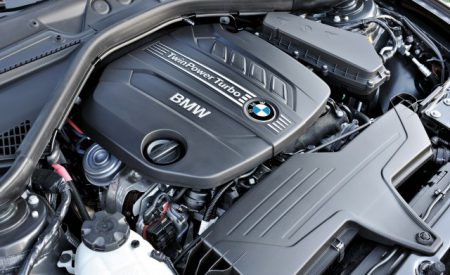
BMW Engine

The supplier, which makes exhaust-gas-cleaning systems for diesel cars and nitrogen oxide-measuring sensors, lists several factors contributing to its prediction: the increasing costs of development, the end of diesel’s dominance, and an overall shift to electric cars and other alternative propulsion methods.

Specifically, Continental CFO Wolfgang Schaefer predicts 2023 will be the final hurrah for German engines running on fossil fuels.

He believes one final generation of internal-combustion engines will be developed and launched by that date. Then investment and engineering will taper off after 2023, with 2025 sealing the engine’s fate with the very last refinements.

“A new generation of combustion engines will again be developed, but after that (around 2023), a further development will no longer be economically justifiable because more and more work will switch into electric mobility,”

he said in an interview with Reuters.

Schaefer’s prediction comes at a time when the use of fossil fuels for transportation faces greater scrutiny than ever across Europe.

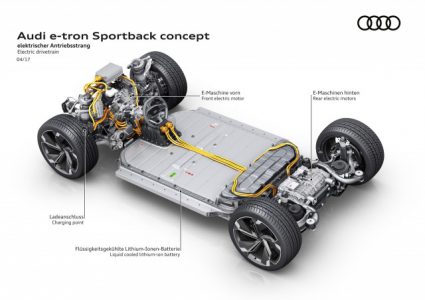
Audi e-tron Sportback concept, 2017 Shanghai auto show.

France, the United Kingdom, the Netherlands, and Norway have all announced similar plans to phase out sales of cars powered by internal-combustion engines.

The Netherlands and Norway want the ban to be in place by 2025, while France and the UK have targeted 2040 for implementation.

All the while, European authorities continue to investigate Volkswagen Group over diesel emission cheating and have alleged BMW, Daimler, and VW Group colluded to manipulate emission regulations.

Each German automaker now plans to update software on its diesel-powered vehicles to curb emissions further, at no cost to customers.

Read more: Green Car Reports