All posts by Jo

Windfarm (Image:UNK)

Google set to reach 100% renewable energy in 2017

In December 2016, Google announced that they are set to reach 100% renewable energy to power everything such as their offices and server farms. 

Every year people search Google trillions of times and upload over 400 hours of YouTube every minute! All of that takes a very large amount of processing power which means a lot of electricity is needed.

Windfarm (Image:UNK)

“I’m thrilled to announce that in 2017 Google will reach 100% renewable energy for our global operations — including both our data centers and offices. We were one of the first corporations to create large-scale, long-term contracts to buy renewable energy directly; we signed our first agreement to purchase all the electricity from a 114-megawatt wind farm in Iowa, in 2010. Today, we are the world’s largest corporate buyer of renewable power, with commitments reaching 2.6 gigawatts (2,600 megawatts) of wind and solar energy. That’s bigger than many large utilities and more than twice as much as the 1.21 gigawatts it took to send Marty McFly back to the future.”

Urs Hölze, Google’s Senior Vice President of Technical Infrastructure.

Google operates in an environmentally sustainable way which is one of its core values since its founding. This is a very good value and one we should all follow. Whatever your thoughts are on global warming, we all know that pollution is a bad thing for us and the environment.

Science tells us that tackling climate change is an urgent worldwide issue and that we must take steps in doing our own individual bit for the environment.

Read more: Medium. Phil Leach
Zoe Battery Recovery (Image: Jo Pegram-Mills)

Driving style (example shown in Renault ZOE 22kWh)

One thing any existing or soon to be, Electric Vehicle driver should always bear in mind is ‘Driving Style’, this can sometimes, quite dramatically, impact your expected range.

Electric Vehicles are smart, they analyse your driving style and take this into account when estimating your expected range. If you are a rapid accelerator and tend to brake hard, you might find that your estimated range will drop quite low. I certainly have a tendency to forget this and simply enjoy the ride a bit too much when I’m doing short journeys, I find myself in this situation quite a lot.

But it can easily be rectified, you simply need to adjust your driving style, drive more economically and with a bit more consideration, soon you won’t realise you’re doing it and the car will give you better range expectations. The good news is that this is easy to do by just reacting to the feedback that the acceleration indicator on the dashboard gives you.

Your Visual Guide to Acceleration

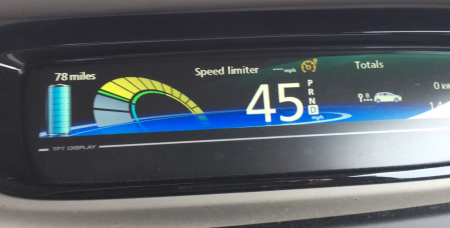
Zoe Accelerating (Image: Jo Pegram-Mills)

When you use rapid acceleration/peddle to the metal, it shows as many Yellow bars.

If you find you are constantly in yellow, be prepared to see your estimated range drop quite considerably.

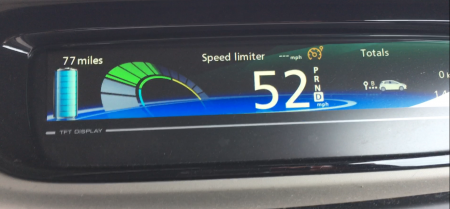
ZOE gradual acceleration (Image: Jo Pegram-Mills)

When you start driving more economically, with gradual acceleration, you can see this as fewer Green bars.

Get the most out of your range, try and stay within the green bars. If you switch to Eco mode the car will help you do this by restricting your maximum acceleration.

Success! Your range will become more predictable and consistent.

Your Visual Guide to Regenerative Braking

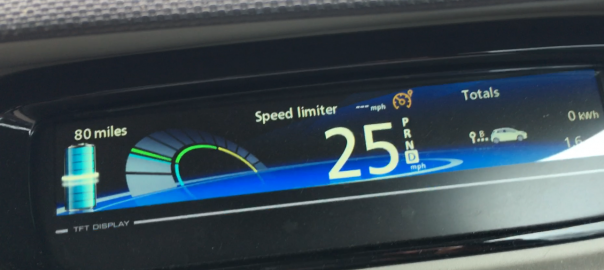
Regenerative Braking, also known as Battery Recovery is the clever trick where an Electric Vehicle reverses the behaviour of an electric motor. Instead of using electricity from the battery to create car motion, it uses the motion of the car to create electricity and recharge the battery. This results in the car slowing down.

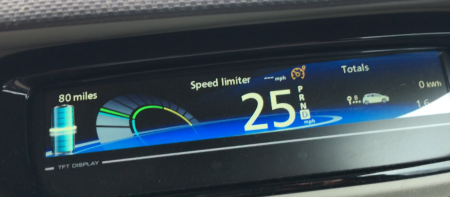
Zoe Battery Recovery (Image: Jo Pegram-Mills)

So, the battery recovery allows the car to slow itself when the road allows, and shows visually as Blue bars.

You will also notice the battery bar on the left gives a visual indication that a recharge is taking place. As a result, your range will sometimes increase the longer the car is moving without acceleration.

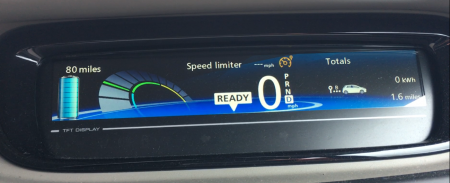
ZOE Display (Image: Jo Pegram-Mills)

An especially nice surprise is finishing your journey with more range than you started with. This can actually happen if you dramatically change your driving style during your journey, or if you do short trips. It’s a very satisfying moment and often results in excessive smugness.

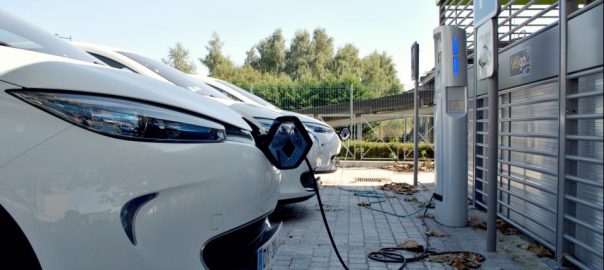
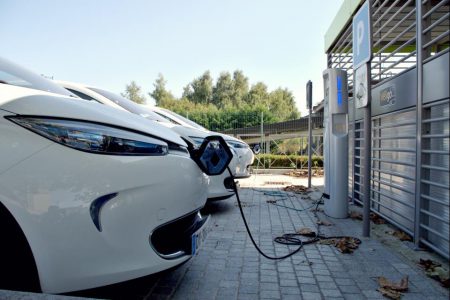
ZOE on Charge (image: UNK)

The beginning of the end for the infernal combustion engine

WHAT WE LEARNED IN 2016: After many false dawns, 2016 was the year electric cars showed they are on a path to rapidly replacing the infernal combustion engine.

There are now more than half a million battery electric and plug-in hybrid vehicles on Europe’s roads, and annual sales are expected to top 1.5% of the market for the first time. While the figures are modest, Dieselgate has created an EV earthquake, shaking carmakers from their complacency.

Renault ZOE
Renault ZOE

The Paris Motor Show was a turning point. Volkswagen launched its “revolutionary” I.D concept and announced it aspired to a quarter of its sales being electric by 2025. Mercedes launched an equivalent Generation EQ concept range, announcing it was “flipping the switch”, which was backed up with an €11 billion investment. Opel confirmed the launch of the 300km range Ampera-e; Renault and BMW announced upgrades of the Zoe and i3, both with significantly longer ranges; and Renault commented:

“Our vision of the electric market is that it is not a niche market.”

Also, around a quarter of Mitsubishi sales can be plugged in and 7% of Porsche’s.

The U-turn in European carmakers’ attitude has resulted from a combination of market, technology and policy changes. Dieselgate has brought about much needed realism that outside Europe the tiny 5% share of new diesel cars will in the future decline, not grow.

In Europe, the scandal is stiffening the resolve of regulators to effectively enforce better tests that commence in 2017. Several countries, including France, are also increasing fuel excise duties and cities are proposing to ban or charge diesels or all combustion cars. UBS shockingly forecast diesel sales will fall to just 10% of the market by 2025 from 50% today.

Read more: Transport & Environment

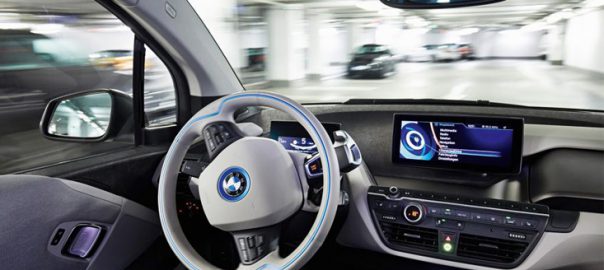
BMW sees chance for full autonomy by 2021

BMW has confirmed it has ‘the chance’ to deliver a self-driving car with complete Level 5 autonomy by 2021, according to its senior vice president for autonomy Elmar Frickenstein. This matches the date of their upcoming next-generation flagship, the iNext – a collaboration with Mobileye

However, as the turning point looms around 2020 for when self-driving moves from concept tech to serious deployment, a timeline split is developing between more careful established players and assertive new challengers. Issues beyond the tech’s capability also weigh on the date of its deployment.

As usual, Tesla is the most bullish, saying it is already ready for full autonomy, if only it were allowed to do so. This is despite several high-profile crashes last year.

The next closest deadlines come from challenger Nvidia, now aggressively competing against Intel’s Mobileye. It expects its Level 3 autonomous chips to be available in cars by 2018, with Level 4 following by 2019. Level 5 autonomy requires no human intervention under any scenario, whereas at lower forms, Level 3 requires a steering wheel for the driver to take over in case of a problem. Level 4 means the car can drive itself in most environments. Most cars currently on the road are below these at Level 2.

This Level 4 Nvidia 2019 deadline is in time for the typical 2020 self-imposed deadlines of OEMs. Volvo, Audi and Ford aim to have Level 5 autonomous cars on the road by 2020 or 2021.

BMW too hopes to reach Level 4, or even Level 5, autonomy by 2021, but is most confident about achieving Level 3 by then. Its head of autonomous driving Elmar Frickenstein said it is in progress to deliver a Level 3 autonomous car by 2021, but could actually produce Level 4 or 5 autonomous cars in the same year. He said:

‘We believe we have the chance to make level three, level four and level five doable.’

He added to Reuters that

‘the decision on which levels to release would depend in part on the market, and that cars with more autonomy might first be produced in small batches for single fleets.’

Chipmaker Nvidia’s CEO Jen-Hsun Huang has also said carmakers may speed up their plans given technological advances and that fully self-driving cars could be on the road by 2025. However, Nvidia does not even agree with its partner Bosch, the world’s largest auto supplier, which gives a timeline as much as six years longer (2031) to reach full autonomy, and would not even be drawn on a time for when fully autonomous cars would be deployed.

Read more: Autovista Group

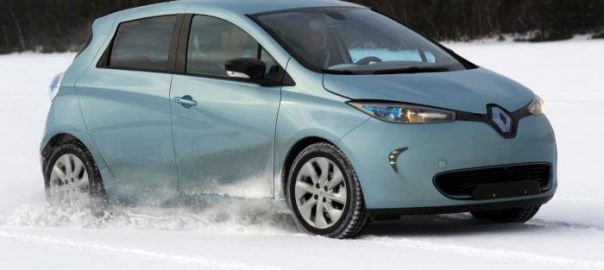
ZOE Winter Testing

ZOE it’s cold outside (or how I got my heating working)

♪ ♫ When the weather outside is frightful

the ZOE’s not so delightful

but now I know what to do

my fingers aren’t quite so blue! ♫♪

OK, I know we are past the month of December but with the current cold snap I am elated to finally have the answer to my winter woes. Don’t get me wrong I love my Renault ZOE 22kWh, but one thing I’ve always struggled with is heating her up. I’m not talking about the great pre-heat function; this is for those times when you either forget the pre-heat or you are out and about and want to get in your car knowing you can easily pop on some heat.

I have been driving my ZOE for two winters and have always been cold. I had just assumed it was a limit of the car, but having experimented, I realised there is just a bit of a knack to getting the heating to work right.  I now don’t have to wear full hat, gloves and scarf in the car!

ZOE Winter Testing
ZOE Winter Testing

After reading a few posts and trying out a few carefully selected combinations it would seem I have my solution ,these are the steps I follow and try to stick to in this order.

  • Set your heat to 24 degrees, not full whack
  • Select fan speed 3
  • Make sure Air Con is Off
  • Turn on Air Circulation
  • Leave on windscreen fan for the first minute or so
  • Change the fan direction and speed to your preference after a few minutes

Just in time for err Spring [facepalm]

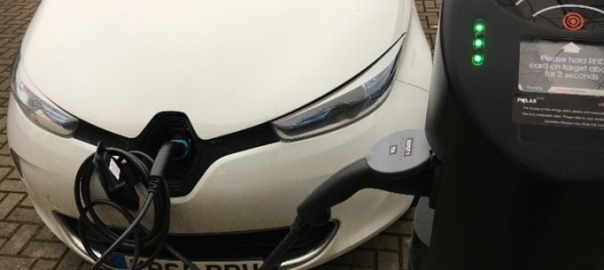
Charging my Renault ZOE in Milton Keynes (Image: J. Pegram-Mills)

How an electric car can work without a home charge point

Enthused by the technology and the idea of being an everyday Eco Warrior, I traded petrol for electric and became part of the EV revolution – despite not being able to charge my car at home! Yes that’s right … I charge my car publicly all the time!

The fact I don’t have an electric charge point installed at home seems to surprise a lot people I talk to about my EV (Electric Vehicle). In most cases it seems they wouldn’t even consider an EV if they couldn’t charge it up at home. I must admit if I were doing long journeys each day I think I would struggle a bit – but I’m not. My Renault Zoe is my ‘run around’ (albeit a High Tech run around). It gets me from A to B and serves exceptionally well as a city car, certainly in Milton Keynes which is a major hub for EV owners.

Charging my Renault ZOE in Milton Keynes (Image: J. Pegram-Mills)

When deciding to go electric I found out I couldn’t have a charge point installed at my home but rather than give up on the idea I started to look into other charging options, there were plenty! And all of these options made me realise it wasn’t actually a necessity and would still be much cheaper than running a petrol car. Fifteen months on I love my Renault Zoe and I do only charge publicly; Charging has become almost second nature when parking my car – it’s simply an additional thing to do like paying for a parking ticket. In fact I do it instead of paying for a parking ticket because electric car parking is free. As a result the cost of charging is actually less than the cost of parking.

So, If you want to go electric but can’t get a charge point installed at home, don’t be deterred – do some research (and FuelIncluded.com helped with this)….

* How often are you likely going to charge your car each week? Look at the real-world mileage range of the EV you are considering against how many miles you travel each week.

* Where is your nearest charge point to Home or Work, and what are the parking and charging terms?

* Check if there are charge points in the areas you regularly visit.

* Find out where your nearest Free charge points are – The Holy Grail!!

* Where are your closest ‘Rapid’ Charge points – these can be a bit more pricey but always great to use as a fall back if you need a full charge fairly quickly.

What’s important is you make charging your EV fit around your lifestyle, rather than make it a chore. Once you familiarize yourself with the Electric Charging Network available to you, public charging can actually work in your favour and you may be surprised to learn of additional perks and cost savings in doing so.

f