All posts by Jo

Climate March poster on the Underground (Image: T. Larkum)

Donald Trump’s Mar-a-Lago Florida estate to be submerged by rising sea levels due to climate change

Donald Trump once said climate change was a “hoax” invented by the Chinese but the phenomenon could be responsible for flooding his own Florida properties.

Environmental experts lined up to testify at a senate hearing on climate change this week, just four miles from Mr Trump’s Mar-a-Lago estate in Florida, arguing that water could rise so high by the end of the century that the President’s own resorts would be damaged.

According to data from the National Oceanic and Atmospheric Administration, the President’s so-called Winter White House would be partially submerged if sea levels rose by three feet in the next 83 years.

Climate March poster on the Underground (Image: T. Larkum)
Climate poster (Image: T. Larkum)

“Today we sit at ground zero of the impacts of climate change in the US,” said Democratic Senator Bill Nelson, ranking member of the Senate Commerce, Science and Transportation Committee.

His state has already suffered multiple cases of serious flooding.

“And while there are still some who continue to deny climate change is real, South Florida offers proof that it is real and it’s an issue we’re going to be grappling with for decades to come.”

Data from NOAA would not just affect the President, but millions of residents who live along the east coast as sea levels could rise by as much as five feet.

A recent study published in journal Nature found that sea levels could rise by six feet by 2100 due to ice melting in the Antartic, and the President’s golf course at Doral, Florida, and several of his Sunny Isles Beach properties – along with two million homes – would be underwater.

Read more: Independent

No Filter: The Air Pollution Update

As air pollution levels reach new highs, Vogue investigates the best ways to minimise the impact on your health and beauty.

Take a deep breath. Or maybe, don’t: the director general of the World Health Organisation has just described air pollution as “one of the most pernicious threats” facing global public health today, and UK scientists estimate that air pollution can cut life expectancy by up to six months. But before you presume that the UK has got things under control, the news gets worse: the government recently lost two court cases over illegally dirty air, and by July 2017 must come up with a new clean air plan to tackle illegal levels of pollution across the country.

At the same time, more and more is being discovered about the long-term health effects of pollution. There’s now evidence linking pollution to heart attacks, lung disease and asthma, with other conditions like dementia still being investigated. What is known now is that the microscopic PM2.5 molecules found in polluted air are small enough to get into your lungs and bloodstream.

So what can you do to protect yourself? Many people have begun taking matters into their own hands: some London schools are considering issuing pupils with masks, environmentalists are calling for diesel car scrappage schemes and one council in Cornwall has even suggested moving people out of houses located in “pollution hotspots”. And inevitably, a whole industry of pollution-fighting products has sprung up. In China, since 2013’s “airpocalypse” of record pollution levels, home air purifiers are on track to become as ubiquitous as fridges, and Mintel has identified anti-pollution as one of the beauty industry’s biggest growth areas. These and other products like them may provide a “sticking plaster” solution while our governments raise their game, but it’s worth considering the latest anti-pollution products to minimise the impact on your health and beauty.

Read more: Vogue

Uber launches new electric vehicle initiative

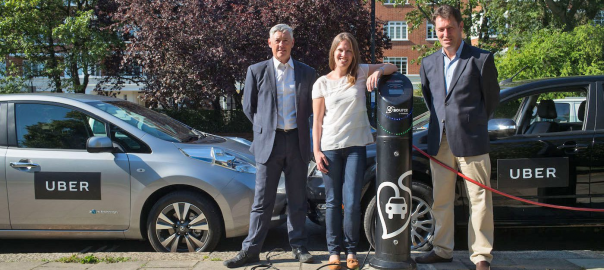
Uber has a few interesting electric vehicle initiatives, like an all-electric fleet pilot project with 20 Nissan LEAFs in London and they deployed a fleet of Tesla Model S in Madrid, but now they are bringing their first EV program stateside.

The company will help drivers purchase or lease electric vehicles. They are starting the program in Portland, Oregon, but hopefully, they expand the program to other markets.

Not only it will bring more electric vehicles on the road directly through drivers, but they will also incentivize drivers to educate riders about EVs through an

“EV Ambassador program”.

It’s especially important when you consider that the lack of awareness is surprisingly still the biggest problem for electric vehicle adoption.

Uber says that the Portland metro area already had a higher percentage of Uber drivers with electric vehicles (100 out of ~6,000), but they aim to “add hundreds more.”


Uber describes the EV Ambassador program:

“Part of Uber’s new initiative will be opportunities for drivers to serve as EV Ambassadors, a role in which they will help educate riders about the environmental and economic benefits and feasibility of electric vehicles. Drivers interested in participating are invited to share their name and contact information on a new microsite. Drive Oregon will train EV Ambassadors on how to effectively communicate with riders about the benefits of electric vehicles. In the first four months of Uber’s London electric vehicle pilot, 60 EVs gave rides to more than 35,000 riders.”

They will tailor the program to Oregon, which offers a lot of EV incentive, and they will also promote local EV manufacturer Arcimoto. I had a chance to test their all-electric three-wheeler in Las Vegas earlier this year.

Overall, it looks like a force for good to promote EVs. Hopefully, they expand this to other markets soon.

Read more: electrek

The death of diesel: has the one-time wonder fuel become the new asbestos?

Diesel was the dream fuel, promoted by governments and the car industry as a cheaper way to save the planet. Then the cracks started to appear

It’s hard to believe, as diesel vehicles find themselves thrust into the spotlight of a global urban environment crisis, that Audi’s Superbowl advert was made just seven years ago. Air pollution now kills 3.3 million people prematurely every year – more than HIV, malaria and influenza combined – with emissions from diesel engines among the worst culprits; a joint investigation by the Guardian and Greenpeace showed hundreds of thousands of schoolchildren across England and Wales are being exposed to illegal air toxicity levels from diesel vehicles. And yet such was the more or less widely accepted thinking as recently as Superbowl XLIV in 2010 – namely, that cars running on diesel fuel could be driven with a pure, unclouded conscience.

Diesel was touted at inception as a wonder fuel. It was a way of driving cost-efficiently while doing your bit to save the planet. Government, industry and science united to sell us the dream: cars running on diesel would help us cut our CO2 emissions as we eased smoothly into a new eco-friendly age.

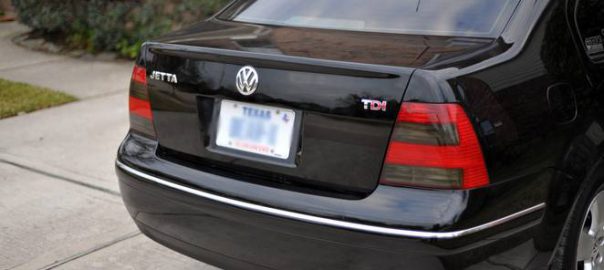
Then in 2015 came Dieselgate. In September of that year, Volkswagen, which vies with Toyota for top spot in the list of world’s biggest car companies and a firm that had for years been running its own marketing campaign in favour of “clean diesel”, rocked the industry by admitting that it had cheated on its emission tests. As recently as last week, David King, the UK government’s former chief scientific adviser on climate change, admitted ministers had made a huge mistake by promoting diesel. They had trusted the car industry when it said the fuel was clean. “It turns out we were wrong,” he said.

Sadiq Khan, the mayor of London, has stopped short of an outright ban on diesel, but he has ordered the replacement of the capital’s current diesel bus fleet with clean alternatives. The mayor’s office will also enforce a £10 toxicity charge, or T-charge, on the highest-polluting cars entering the city centre as of October. The measures are part of a wider plan to create an ultra-low-emission zone (ULEZ) in central London from April 2019.

Read more: The Guardian

A third of Britons set to make switch to electric cars

New figures show that 29 per cent of UK motorists are considering making the switch from a conventionally fuelled vehicle to a zero-emissions one or replacing one electric vehicle with another.

As new tax rules punish drivers of all but the lowest-polluting vehicles and cities around the country consider charging drivers of older, more polluting vehicles for using their roads there has been a rapid growth in interest in electric and other ultra-low emission vehicles (ULEV).

Industry figures for the first quarter of this year show that sales of alternative fuel vehicles, including all-electric and hybrid engined cars, have risen by 29.9 per cent over the same period in 2016, and now account for a larger share of the market than ever, with 33,405 alternative fuel cars sold.

Neil Addley, managing director of NFDA Trusted Dealers which commissioned the survey, said:

“Our research has revealed that a significant number of car buyers are now seriously considering low emission vehicles for their next car, but are at a loss on where to start. On the Trusted Dealers site we have seen more green cars filtering through to the used car market, with more than 200 vehicles listed on our site.”

Read more: iNews

New Toyota Prius Plug-in hybrid 2017 review

Plug-in Prius is a technological achievement, but it’s pricey and we wonder if the regular hybrid is better for day-to-day driving

Toyota has been making huge strides with its latest Prius, managing to improve both the driving dynamics and fuel efficiency over the car it replaced last year. Now the plug-in hybrid version of the new generation is about to land in UK dealers – and although we sampled the car in American form last autumn, this is the first opportunity we’ve had to try a UK-spec model on European roads.

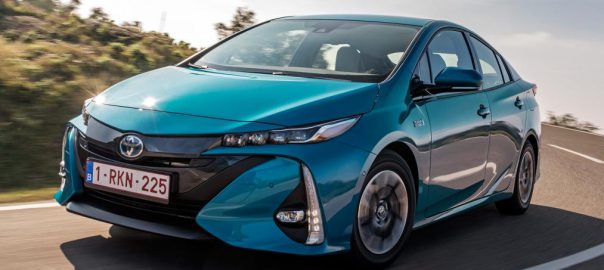
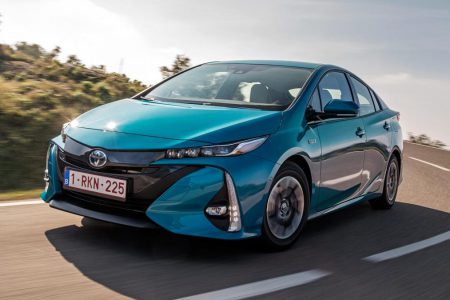
Toyota Prius Plug-in hybrid 2017 (image: Toyota)

Plug-in hybrids are all about pure-electric range, of course, because if you aren’t bothered by the ability to drive without any combustion engine noise, you’ll just buy the regular hybrid instead. The old Prius Plug-in could manage a claimed 15 miles on electric power alone, but the new model doubles that figure.

The gain is down to a more efficient electric motor in the middle of the 121bhp powertrain, and the latest lithium-ion battery tech; Toyota’s engineers managed to double its capacity compared with the unit in the old car, in fact – but in physical terms it’s only two thirds larger and 50 per cent heavier.

Toyota has also fitted a clutch to its innovative drive system, allowing the generator to be switched into a secondary electric motor; this has allowed engineers to raise the maximum speed in pure-electric mode to more than 80mph.

The other significant numbers on the Prius Plug-in are a 0-62mph time of 11.1 seconds, combined fuel economy of 283mpg and CO2 emissions of just 22g/km. A 43-litre fuel tank means that you can still travel a meaningful distance when you’re away from a plug socket, too. A full charge on a rapid domestic charger will take you about two hours; add just over an hour to that figure if you’re going to use a 13A plug.

The Prius Plug-in comes in just two trim levels in the UK. Business Edition Plus brings more than enough kit, with safety features such as rear-cross traffic alert, a pre-collision system with pedestrian detection, road sign assist and adaptive headlights. You also get an 8in touchscreen with sat-nav, plus dual-zone air-con, a wireless mobile phone charger and heated front seats.

Read more: AutoExpress

Diesel cars will ‘almost disappear’ by 2025, says UBS

I got pretty excited when I heard that London was committing to buying only 100% emission-free buses for all single-decker city center routes. Likewise, when Eindhoven and Helmond bought 43 extra-long electric buses, it felt like one more step toward cleaner, greener cities.

Given that Paris, Athens, Mexico City and Madrid are pledging to ban all diesel vehicles by 2025 at the latest, the news has been pretty good for those of us who would like to see healthier air and a reduction in emissions.

Now the Financial Times reports that Swiss investment bank UBS is connecting the dots between these trends—making the bold claim that diesel cars will all but disappear from the global car market by 2025.

Not only are individual cities taking up the fight against diesel, says UBS, but countries like Belgium and France are also pledging to fix disparities between gasoline and diesel taxes too. (Lower taxes on diesel have long boosted popularity in Europe.) Add this to the fact that long-range, lower cost electric cars are finally becoming increasingly viable, and that cities are exploring ways to reduce dependence on motor vehicles overall—and you really start to see a convergence of factors which should lead to diesel’s demise in the passenger car market much sooner than many of us would have expected. UBS does expect diesel to continue to be used in large SUVs and trucks for now—but we’ll see if even that prediction really pans out.

Even more exciting than the demise of diesel cars, to me, is the fact that this demonstrates how the broader transition to a low carbon economy will ultimately come about. Just as US utilities are pressing ahead with phasing out coal, regardless of what short-term electoral politics might look like, diesel is not falling victim to any single policy or initiative. It’s simply facing a perfect storm of headwinds that will ultimately bring about its demise.


Read more: TreeHugger

Tony Seba: All new vehicles, globally, will be electric by 2030

My brother-in-law sent me a video this morning of a talk given by Tony Seba at the Swedbank Nordic Energy Summit in March of last year. I started watching it with mild interest, as it covered many of the topics I’ve already been harping on in recent posts:

• Solar power will keep getting cheaper
• Batteries will continue to become more commonplace
• Electric vehicles will soon become a mainstream transport option
• This confluence of technologies will begin to disrupt the economics of our existing energy system

Then, about halfway through, Seba made a claim that I had to stop and rewind: He believes that all new road vehicles—buses, cars, vans, trucks etc—will be entirely electric by 2030. That’s a pretty astounding prediction. Made even more astounding because he’s not talking about one country—he’s talking about the entire world.

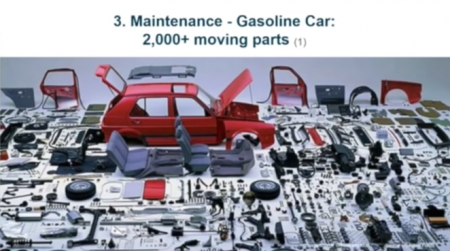
Regular Fossil Fuel Car has 2,000 moving parts

The whole talk is very worth watching, but to give a very brief summary, there are two factors coming together to make such a shift possible.

Firstly, from battery tech to solar to autonomous vehicle components, technology is improving and getting cheaper following the same “Moore’s Law” curves that have made computes so cheap and powerful. The LIDAR—a laser and radar system used for autonomous vehicles—sed to cost $70,000 in 2012. By 2016, we’re looking at a LIDAR that costs in the region of $250 and will soon be down at $90. Similarly, says Seba, solar power won’t soon just be cheaper than coal, wind, nuclear or natural gas. By 2020, it’ll be cheaper than the cost of transmission—regardless of any subsidies. Meaning a utility could generate electricity for free, and still not be able to sell it because panels on your roof would still be more competitive. And long range EVs are becoming affordable and mainstream too—providing better performance and lower cost of ownership than their gas-driven counterparts.

Secondly, new technologies are enabling new business models: When a car sits idle in the driveway 96% of its life, that’s a massive opportunity for business model disruption that could change how we think about our relationship to vehicles. From Uber to Lyft, such changes are already taking place in many cities.

Read more: treehugger

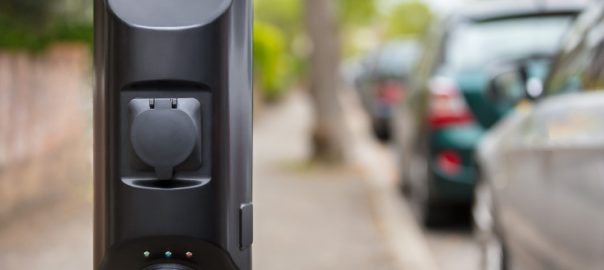
Char.gy taps into lampposts to charge your electric car

If you have a garage with a power socket, an electric car makes an awful lot of sense. If you park on the street, however, the infrastructural challenge of keeping your electron-powered vehicle topped up becomes complicated enough that perhaps sticking to driving on squished dinosaurs makes sense for a while longer. Until Char.gy comes along, that is.

“Seventy-two percent of drivers in London don’t have off-street parking,” says Richard Stobart, CEO of the London-based Char.gy. “If you want an electric car, not being able to charge at home is a major disincentive.”

So, in a world where people want to drive electric cars, cities are trying to clean up the air and car makers want to sell electric cars, how do you take on the not insignificant challenge of charging car batteries in a dense and fast-moving city such as London? You tap into other, already existing infrastructure, of course.

“People want to charge their cars while they are doing something else, preferably when they are parked at home and asleep in their beds,”

Stobart points out, and offers a solution. The company has developed charge points that connect to the existing street furniture: Lampposts. Makes sense: The cables are already there, the local government owns them, and once you’ve gone that far, you may as well make the next couple of logical steps

Read more: techcrunch

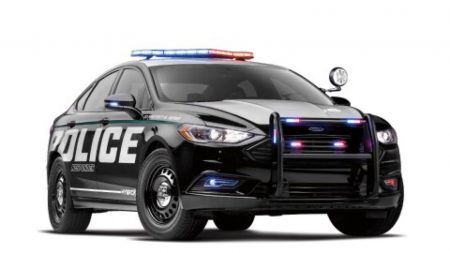
Ford launches ‘green’ police car to save the environment while fighting crime

Ford says US forces with fleets of more than a thousand vehicles will save millions of dollars a year using “gas-electric” cars.

US police will soon be saving the environment as well as fighting crime thanks to a new hybrid car powered by both petrol and batteries.

The car will be on the streets in 2018

The Ford Motor Company says its new Police Responder hybrid sedan – a modified Ford Fusion – is the first “gasoline-electric” car to be “pursuit rated”, which means it can race through city streets and navigate crowded areas or high kerbs.

The car averages 38 miles a gallon when driven in the city and on highways – more than twice that of the current Police Interceptor model.

Ford estimates police forces will save more than £2,000 on fuel for every car over a year, which would translate into savings of millions of pounds for forces with fleets of more than a thousand cruisers.

The new car, which was unveiled in New York and Los Angeles, will be on the streets in the summer of 2018 and can go from zero to 60mph in 8.7 seconds.

Read more: Sky News