All posts by Jo

Volvo says no more diesel engines, the future is electric

Stricter nitrogen oxide emissions regulations mean an end to diesel-engine development.

Volvo Cars has come down with a case of electric fever, and the cure is “no more diesel engines.”

The company’s CEO, Håkan Samuelsson, recently told German publication Frankfurter Allgemeine Zeitung that Volvo’s current diesel engines may well be the last of their kind.

Volvo S90

Samuelsson said that the technology is necessary to meet upcoming European carbon emission standards, which require OEMs to drop from 130g/km to just 95g/km in 2021.
But the outlook farther ahead involves regulations that will also severely limit nitrogen oxides (NOx). As a result, the company will devote its energy to electrification instead.

As we reported earlier this week, NOx are noxious and linked to 38,000 premature deaths in 2015 alone. Contributing to that body count is evidently beyond the pale for an automaker which has built an impressive reputation for safety.

The news is all the more remarkable given that the bulk of its sales in Europe are diesel-engined vehicles. Right now, Volvo uses a 2.0L diesel engine that shares much with the 2.0L gasoline engine that we get here in the US in the S90, V90, and XC90 models.

Samuelsson said that Volvo’s first purely electric vehicle will arrive in 2019. He also paid a mighty compliment to Elon Musk’s EV outfit.

“It must be acknowledged that Tesla has managed to offer such a car for which the people are queuing. In the area, we should also have space, with high quality and attractive design,”

he told Frankfurter Allgemeine Zeitung.

Source: Cars Technica

Cash-strapped councils breaking the law on air pollution, documents reveal

Exclusive poll for The Independent shows public – and most Conservative voters – back banning the most-polluting cars from city centres as pressure builds on the Government

It has been described as a “public health emergency” responsible for tens of thousands of deaths every year, but dozens of local councils have been failing to report on air pollution as required by law for years.

The revelation, based on documents obtained under Freedom of Information rules, casts doubt on local authorities’ ability to play their part in the Government’s new draft Air Quality Plan – its third attempt to meet minimum safety standards after repeatedly being taken to court by campaigners.

Ministers had sought to delay publication of the plan until after the general election, with a Government lawyer arguing it would drop a “controversial bomb” on the campaign.

But a judge ordered ministers to comply with a court-ordered deadline and the resultant plan was duly derided as “feeble” and “much weaker” than expected.

Public concern about air pollution has been growing. A new survey for The Independent found the majority of the public is now in favour of banning the most-polluting vehicles from city centres.

Some 51 per cent of respondents agreed with this suggestion, with only 15 per cent against and the remainder not expressing a view, pollsters ORB said.

The Government’s latest Air Quality Plan sought to pass the buck to a large degree to councils, saying they were “best placed to take the lead”.

However, the council documents, obtained by the DeSmog UK environmental news website, show that local authorities have already been failing to carry out the current requirements, suggesting they would struggle to cope with further responsibilities without extra funding.

Of the 77 councils contacted, 59 had not made air pollution reports, which must be produced under the 1995 Environment Act, available to the public.

After the website got in touch with the councils, 34 authorities were found to have gaps in their reporting between 2011 and 2016, although some said they were still in the process of producing reports covering last year. If this is a representative sample, it would mean 44 per cent of councils in the country are failing to properly monitor and assess the extent of air pollution.

Mat Hope, deputy editor of DeSmog UK, said:

“I think it shows local councils need resources to be able to deal with this problem properly.

“I think the councils themselves are doing what they can, but with the current budget constraints it’s clear they are likely to struggle with the extra obligations under the new Air Quality Plan.

“The Government needs to think very hard about the resources they are putting behind this.”

Read more: The Independent

Solar panels, EV chargers required in new homes in Fremont, CA

Half a century ago, the General Motors assembly plant was the largest employer in Fremont, California, and the town was known for its dragstrip.

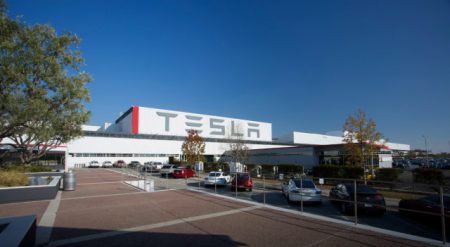
Today, that plant makes Tesla electric cars and Fremont is a part of the San Francisco Bay Area’s Silicon Valley, creating advanced technology for the world.

Tesla Factory, Fremont, California

The city has now taken another step into the future, requiring that all new houses be delivered ready for the installation of electric-car charging stations.

According to the East Bay Times, the city of Fremont has announced that any new housing project must include both solar panels and the electrical wiring required for the installation of a charging station.

The town, across the bay from Palo Alto—where a similar regulation was adopted in 2013—prides itself on being the ZIP Code with the highest concentration of electric-car owners in the state.

That makes it likely to have the highest such concentration in the U.S.

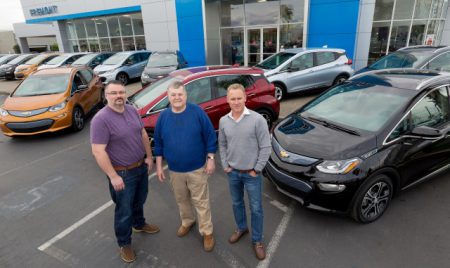
First 2017 Chevrolet Bolt EV Buyers, Fremont, California: Bobby Edmonds, Bill Mattos and Steve Henry

When the first 2017 Chevrolet Bolt EV electric cars were sold in December, Fremont Chevrolet was the site—because it sells more Chevy Volt plug-in hybrids than any other dealer in the country.

It’s exactly 3 miles from the dealer to the Tesla factory, formerly the GM-Toyota joint venture known as New United Motor Manufacturing Inc. or NUMMI.

The required coverage of the solar panels will be determined by the size of the new project.

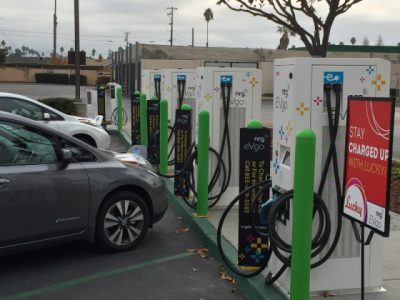
EVgo DC Fast-Charging Site in Fremont, California.

As for the charging stations, the wall hardware itself will not be mandatory.

New buildings will, however, have to be equipped with the electrical setup needed for later installation.

For commercial or multifamily projects, the ruling goes even further, requiring that at least 10 percent of the parking spaces have charging stations installed

Read more: Green Car Reports

Runaway Adoption of Pure Electric Vehicles: Multiple Triggers

It has long been speculated that electric vehicle adoption may have a sudden tipping point of adoption. IDTechEx pointed out that incentives help as does reaching lower cost of ownership but lower up-front price is the killer blow.

We noted how that has happened with small vehicles such as gasoline-assisted bicycles and golf cars becoming more expensive than pure electric alternatives, this resulting in runaway adoption of electric. Ten years ago, IDTechEx correctly predicted that this will progress to ever larger vehicles with on-road small cars in line for being cheaper as pure electric from 2020 onwards.

On cue, several car makers have now said they will be offering pure electric versions at no price penalty in that timeframe. That is more dramatic than it sounds, because maintenance of the much simpler pure electric powertrain and the cost of the electric “fuel” are tiny compared to conventional and vehicle life is often to be longer too.

Domino effects

There will be a domino effect. Take diesel. Many cities have set dates when they will ban diesel vehicles and some countries are contemplating such legislation. Globally sales of diesel vehicles are dropping due to the Volkswagen scandal, purchasers fearing that resale prices may collapse. In European countries sales of diesel are essential to gasoline stations: for example, in the UK, they represent 65% of fuel sales. There, the number of such “forecourts” is one sixth of what it was and the few remaining ones will be very tempted to grab the hefty increased property value and let someone turn them into apartments or, since they are shopping locations already, as supermarkets.

Ironically, shutting down gasoline stations is encouraged by the fact that you cannot make significant money out of EV chargers on your forecourt. Legislation is going through in the UK that gives the government the right to force the larger forecourt owners to provide EV charging.

Other unintended consequences

The unintended consequence will be extra journey time and hassle for drivers seeking petrol, not just diesel. Suddenly it is the internal combustion engines that become a pain to refuel whereas EVs are charged at home and at destination, a convenience not possible with the conventional vehicle.

This will make petrol vehicles undesirable even before cities and countries ban them and they become overpriced as they become more complex to meet 2025 and 2030 carbon dioxide laws intended to reduce global warming and a raft of acid gas restrictions, diesel being hit by particulate restrictions too.

Multiple hits

We face multiple hits on conventional vehicles all the time now, another example being linkage between diesel and breast cancer, depression and more, not just lung and heart disease.

As causality is proven and the true scale of injuries is revealed, people will be more and more cautious of putting money that way and that includes investors, so modernisation of facilities, reduced emissions and competitive pricing of conventional vehicles becomes more and more difficult.

Fuel cell tipping point

With runaway adoption of battery electric vehicles, even the grants for these non-green fuel cell vehicles are under threat, creating a self-fulfilling prophesy and boosting pure electric.

IDTechEx correctly forecasted the realisation that fuel cell vehicles will never be mainstream but, like all forecasters, we are struggling to predict accurately when the tipping point of pure electric cars will come.

Read more: IDTechEX

Fleet News Awards 2017: Best Plug-in Car (1-50g/km) – BMW i3 Range Extender

BMW has got all the ingredients right for it i3 electric car, despite its quirky looks.

Transport minister John Hayes CBE hands the award to BMW Group general manager, corporate sales Steve Oliver.

Although the fully electric version lost out to the more affordable Hyundai Ioniq in the zero tailpipe emissions category of our awards, members of our judging panel had plenty of praise for the Range Extender (REX) version of the i3, which has a small motorcycle engine to charge the battery when the plug-in range has depleted.

Made available with revised battery chemistry last year to boost its range, the i3 can now reach up to 195 miles on the official test cycle, or up to 243 miles with the Range Extender.

The i3 has played its part in the past three years to draw greater attention to EVs and make them desirable and aspirational. By far the most powerful compact EV on sale with 172PS, and using carbonfibre construction to minimise weight, the rear-wheel drive i3 has been very much the driving enthusiasts’ choice among plug-in cars.

Finalists

  • Audi A3 e-tron
  • BMW i3 Range Extender
  • BMW 330e
  • Mercedes-Benz C350e
  • Mercedes-Benz E350e
  • Volkswagen Golf GTE
  • Volvo XC90 T8

Judges’ comments

Practical and with a striking design, the i3 Range Extender offers a decent range with the added security of the range-extender petrol engine. It is great to drive and has competitive running costs thanks in part to the clever use of carbon fibre technology for low-cost repairs.

Award winner video

Source: FleetNews

Renault Zoe Named A Game Changer At Awards

The Renault ZOE has received the ‘Game Changer’ award by Autocar judges at the world’s oldest motoring magazine’s annual awards ceremony at Silverstone.

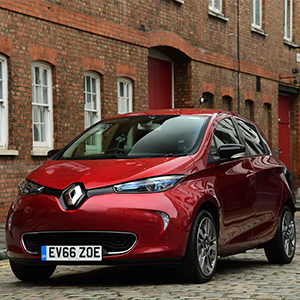
The Renault ZOE, fitted with the new 250-mile range (NEDC) Z.E.40 battery, has been recognised at the Autocar Awards 2017 as a true innovator in the ever-growing electric vehicle market. The Renault ZOE’s new Z.E.

Renault ZOE ZE40

40 battery delivers almost double the range of the previous battery, providing motorists with an electric vehicle option that is better suited to many lifestyles with the average daily commuting distance being well within the ZOE’s capabilities.

Renault, as Europe’s best-selling electric vehicle manufacturer, believes in giving the customer confidence in their use of electric vehicles by estimating ZOE’s real-world range as 186 miles.

Renault, as Europe’s best-selling electric vehicle manufacturer, believes in giving the customer confidence in their use of electric vehicles by estimating ZOE’s real-world range as 186 miles.

Commenting on the decision to award the ZOE Autocar’s ‘Game Changer’ award, Mark Tisshaw, Editor, Autocar said:

“The new Renault ZOE is an important step in bringing affordable electric motoring to the masses. An already good car has been improved further, now coming with a real-world range that extends close to 200 miles to make it a more viable everyday proposition for more people. We commend Renault for that, and

An already good car has been improved further, now coming with a real-world range that extends close to 200 miles to make it a more viable everyday proposition for more people. We commend Renault for that, and recognise the ZOE as a trailblazer for electric cars.”

Vincent Tourette, Managing Director, Renault UK, said of the result:

“The Renault ZOE has always excelled at providing motorists with a stylish, comfortable and practical electric car at an affordable price tag. The 2017 ZOE with the Z.E.40 battery, as well as interior and exterior upgrades, builds on this success and now delivers the longest range of any mainstream electric vehicle.”

Read more: Fleet Point

Qualcomm can charge EVs while they’re moving

A new track can simultaneously charge two cars driving in opposite directions.

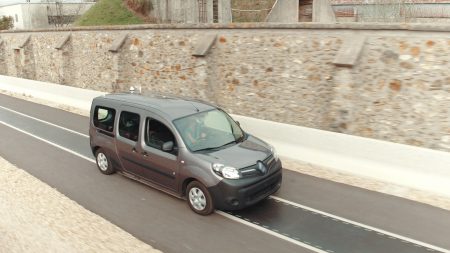
Renault Kangoo EV used in Qualcomm’s tests. Qualcomm

Forget about better batteries, what if you could just drive your EV forever? Qualcomm just showed off technology called dynamic electric vehicle charging (DEVC) that juices an EV via road-embedded wireless charging hardware while you’re driving. During the demonstration, two Renault Kangoo vehicles equipped with Qualcomm’s “Halo” DEVC receivers were charged simultaneously while moving down a 100 meter test track.

Based on Qualcomm’s wireless electric charging (WEVC) tech, the track can charge vehicles driving at highway speeds in both directions (both in forward and reverse) at 20 kW max. If it works, the tech could be used in a system that lets you call a car using a smartphone, get picked up where you are and be whisked to your destination autonomously (as shown in the animated video, below).


Qualcomm will now hand its DEVC charging system to Vedecom, which

“will evaluate the operation, safety and efficiency of energy transfer to the vehicles for a wide range of practical scenarios, including vehicle identification and authorization on entering the track, power level agreement between track and vehicle, speed and alignment of vehicle along the track.”

Read more: engadget

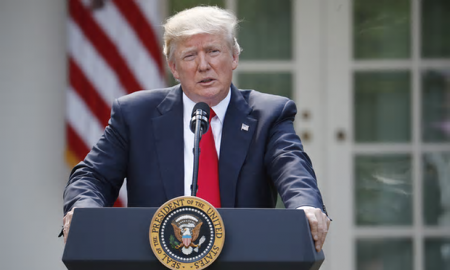
Trump just passed on the best deal the planet has ever seen

His rationale for abandoning the Paris agreement is outdated and false. Now, America forges its own, lonely path in being shackled to coal and fossil fuels

Since day one as a contender for the Oval Office, current US President Donald Trump has pushed a dominant narrative: he’s a businessman. He gets economics. He knows the art of the deal. This week, with his decision to withdraw the US from the Paris agreement, the president has given the world strong reason to reject that narrative.

His rationale – that it’s a choice of economy over environment, and a fossil fuel economy is the top priority – is outdated and false. States and nations around the world have harvested the fruits of clean energy, and are redefining their economies and energy sources accordingly. Yet under false pretenses that “clean coal”, natural gas and other fossil fuel fixes are better than energy conservation and clean energy, the US forges its own, lonely path.

The idea that clean, renewable energy will generate power for our planet for generations to come is not rhetoric. The extent of human-caused climate change – and the rapidly improving economics driving the proliferation of renewable energy sources – make it fact.

If the US administration isn’t ready to move forward, hundreds of individual states and other countries will.
California is already a world leader on climate policy. Texas is rapidly expanding its wind energy capacity. In Germany, clean energy has become a movement itself, focused on thousands of small-scale projects under the Energiewende program. In Scotland, wind generation has increased by 81% over the past year, and in March this year, it produced enough energy to satisfy 136 % of the country’s household energy needs. These are just a few examples.

The US’s withdrawal doesn’t mean Americans and US investors will sit still, either. There is substantial economic opportunity in renewables. The US solar industry alone creates one in 50 new jobs. Worldwide, nearly 10 million people already work in renewable energy. Global clean technology exports doubled between 2008 and 2015, surpassing $1.15tn per year. Even America’s corporate giants – from Apple and Google to Walmart, and even oil giant Exxon Mobil – support the Paris agreement.

When news of the potential withdrawal reached the United Nations, the organization’s Twitter page read:

“Climate change is undeniable. Climate change is unstoppable. Climate solutions provide opportunities that are unmatchable.”

A Globe and Mail report showed that even fossil fuel companies – the likes of ExxonMobil, BP and Shell – think the US should stick with Paris.

This withdrawal is an ugly decision, made by a country that ought to be leading the transition to a cleaner future – not only because of its stature as an international economic powerhouse, but also because of its less-than-desirable environmental track record.

Read more: The Guardian

GM commits to sustainable natural rubber for tires

General Motors buys a lot of tires. About 49 million a year, in fact. As part of its sustainability efforts, the automaker announced a goal of 100-percent sustainability for its natural rubber needs, and suppliers like Bridgestone, Continental, Goodyear, and Michelin – which were all represented at GM’s announcement this week in Detroit – ­are on board, too.

The partners also want to uphold labor rights for those in the rubber industry, conserve wildlife, and preserve carbon stocks, all while still producing quality products without raising costs.

Together, they aim to set the standard for sustainable and ethical rubber, holding every member of the supply chain accountable, and encouraging other suppliers and customers to follow suit. Traceability and transparency are keys, GM says, to making sure the rubber doesn’t lead to deforestation, and that it contributes to the economic and social development of the areas where it’s harvested.

Natural rubber will continue to be part of tire manufacturing for the foreseeable future. As Dr. Juan Botero, Continental VP of Sales of Passenger & Light Truck Tires for the Americas, points out,

“The properties that you get from that material, unfortunately, we have not been able to replicate in a laboratory. Mother nature does a fantastic job with this material.”

At this point, manufacturers simply can’t build as good of a tire without natural rubber. Over the years, advances have allowed them to use a smaller ratio of natural rubber, but it still makes up 10 to 15 percent of a passenger car’s tires, up to around 30 percent for a truck, and even higher for larger vehicles.

Proper management is critical to making natural rubber more sustainable. It’s better, of course, to make the most of existing trees than to clear land for new plantations, and all participating parties aim to dramatically increase their yield as demand continues to grow. It’s also important to protect rubber trees from disease, as their limited growing range makes them particularly susceptible. At the end of their lifecycle of about 20 years, the trees can harvested for their wood, and new ones are replanted in their place.

The natural rubber industry produces about 12 million tons per year, 75 percent of which is used in the tire industry. GM and the participating tire manufacturers hope this initiative will make a difference in their impact, as well as that of the other customers that share their supply chain.

The sustainable natural rubber plan is in its early stages, and we can expect more announcements about this initiative in the future.

Read more: Auto Blog

Ford replaces CEO with head of ‘mobility’ and appoints new exec for electric vehicles

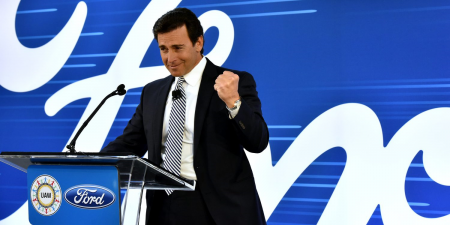
Ford had a massive leadership shakeup today that saw CEO and longtime executive Mark Field ousted and replaced by Jim Hackett, the head of the automaker’s ‘Smart Mobility’ division.

Mark Fields, Former Ford Motor Company president and CEO has been replaced.

The company also appointed a new executive in charge of “strategy and business model development for electrified vehicles and autonomous vehicles.”

In a press release, Ford gave some bullet points on the leadership changes:

  • Jim Hackett named as Ford Motor Company president and CEO, succeeding Mark Fields, who is retiring. Hackett, who will report to Executive Chairman Bill Ford, is recognized as a transformational business leader
  • Hackett led Steelcase Inc.’s turnaround to become the world’s No. 1 office furniture maker, served as interim Athletic Director at University of Michigan and has led Ford Smart Mobility LLC since March 2016. He served on Ford’s board from 2013 to 2016
  • Hackett, together with Bill Ford, will focus on three priorities: Sharpening operational execution, modernizing Ford’s present business and transforming the company to meet tomorrow’s challenges
  • Ford also named leaders to three new roles under Hackett. Jim Farley is appointed executive vice president and president, Global Markets, Joe Hinrichs is appointed executive vice president and president, Global Operations, and Marcy Klevorn is appointed executive vice president and president, Mobility
  • Mark Truby is appointed vice president, Communications, and elected a company officer.  He succeeds Ray Day, who plans to retire from the company next year and will provide consulting services until then
  • Paul Ballew is appointed vice president and Chief Data and Analytics Officer

In his new role as executive vice president and president of Global Markets, Jim Farley will be the executive in charge of Ford’s electric vehicle plans.

Read more: Electrek