All posts by Jo

Nissan to turn over new Leaf on September 6

Pioneering electric car must make big advancements in range, tech to keep pace.

After seven model years and hundreds of thousands of units sold, it’s finally time for Nissan to reveal a new Leaf. The Japanese automaker has just confirmed that its second-generation all-electric hatchback will bow on September 6, although it remains cagey about further details.

The next Leaf is expected to draw its styling inspiration from Nissan’s well-received IDS Concept, an aggressive-looking five-door showcar from 2015 featuring next-generation electric propulsion as well as autonomous drive tech. The new hatchback — which will likely come to market as a 2018 model — is expected to substantially improve on the 107-mile range offered in today’s car.

It had better. Fresher competitors like the Chevrolet Bolt EV, Hyundai Ioniq and next-generation Volkswagen E-Golf have all eclipsed Nissan’s pioneering EV in both range and in-car electronics, and Tesla’s Model 3 looms large over the segment (even though it hasn’t been shown in production form yet). In other words, Nissan is going to have to seriously up the Leaf’s technology game in order to compete in this small but fiercely competitive segment.

The company may well be up to the challenge. Nissan CEO Carlos Ghosn has made developing all-electric powertrains a cornerstone of the brand’s future product plans, and as the first modern mass-production electric automobile, the Leaf maintains a special place in the company’s heart.

To that end, the Yokohama-based automaker recently disclosed that the next Leaf will be available with a version of its ProPilot driver-assist technology. The hardware will manage acceleration, braking and steering within a single lane on the freeway to help increase safety and lower driver stress. Thus far, class rivals have yet to bring anything similar to market.

Source: Road Show

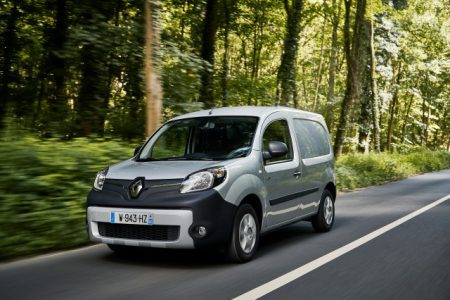
Renault Kangoo ZE small electric van now on sale with longer range

French automaker Renault has given its small light commercial electric vehicle a handful of upgrades, including a significantly longer battery range.

Renault Kangoo ZE 2017

The Renault Kangoo ZE is now officially on sale with a longer rated range, a more powerful charging system, and a heat pump to keep the little van efficient in the coldest temperatures.

Renault revealed the Kangoo ZE back in 2010 as an electrified option for light commercial vehicle buyers, even before its 2012 Renault Zoe subcompact electric hatchback.

An electrified Master ZE joined the smaller van earlier this year. Just shy of six months later, the Kangoo ZE updates should receive a warm welcome from commercial-vehicle buyers with an eye for efficiency.

Rated range for the updated electric van jumps from 170 kilometers (105 miles) to 270 kilometers (167 miles) on the New European Driving Cycle.

Renault Kangoo ZE 2017

However, Renault acknowledges the NEDC’s shortcomings, noting that a real-world range of 120 km (74 miles) to 200 km (124 miles) may be more likely.

That’s still a jump from its previous non-NEDC estimates of 80 to 125 km (50 to 77 miles).

The longer range is due to a new 33-kilowatt-hour battery, which was developed between Renault and LG Chem.

Read more: Green Car Reports

Paris to host on-demand driverless vehicle service

Europe’s first on-demand driverless vehicle service on open roads is set to begin operating in France later this year.

Delphi Autonomy

The pilot service, a collaboration between Delphi and French-based public transport operator Transdev, will see autonomous vehicles operating in Saclay, a Paris suburb, and Rouen in Normandy.

In Paris, initially one shuttle will operate along a fixed route from the train station to the campus of the University of Paris-Saclay.

In Rouen the service will operate in an area of the city where there is currently no public transport, and will initially consist of two driverless Renault Zoe cars.

Customers will be able to use a smartphone app to book a ride in the vehicles, which will be tracked by a remote control and command centre. A driver will initially sit in on the journeys to monitor the vehicles, but by 2018 the companies hope to operate the service without a driver on-board.

For the pilot the companies have chosen the so-called “last-mile” of public transport – the journey between a train or bus station and the commuter’s place of work, for example – as it is seen as an area of particular need, according to Serge Lambermont, director of automated driving at Delphi.

“People like to travel by public transport, but this last mile, how to get from your subway station to your destination, is an inconvenience,”

he said.

“So if you can arrive with the ticket already on your smart phone connecting you to an automated, mobility-on-demand taxi or pod system, which takes you on to your location, you take all the inconvenience out.”

The vehicles will be equipped with a range of different sensors, designed to complement each other. Each vehicle will be fitted with short range radar, for example, with sensors at each corner and two at either side, as well as one forward facing image radar and one rear facing long range radar.

Read more: The Engineer

Ford sees ‘strong push’ for electric vehicles

The head of Ford’s electric van programme has outlined the company’s strategy for promoting electric vehicles to commercial users, and said there is a ‘strong’ desire to reduce vehicle emissions within the business sector.

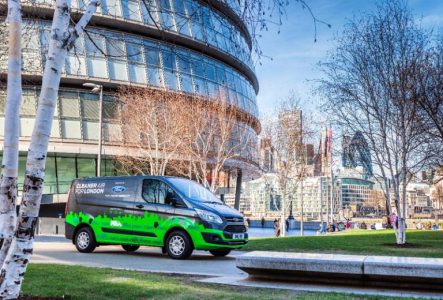
From autumn 2017 Ford will be trialling 20 hybrid electric Transit vans across London

Mark Harvey, director of Ford’s electrified van programme spoke to airqualitynews.com ahead of his presentation to the LowCVP conference in London this week, at which he revealed details of the company’s trial of 20 plug-in hybrid Transit vans for commercial users in the capital (see airqualitynews.com story).

The 12-month Transit plug-in hybrid trial will involve users including Transport for London, Metropolitan Police, British Gas and Addison Lee and will commence later this year.

Ford has revealed that the trial will use a telematics system to collect data on each vehicles’ financial, operational and environmental performance to understand ‘how the benefits of electrified vehicles could be maximised’.

Mark Harvey, director of Ford’s electrified van programme. Picture: Spencer Griffiths

Mr Harvey explained that the trial forms part of a wider commitment by the car maker to target the electrical vehicle market. He said: “Within Ford we have announced that we are investing $4.5 billion globally in electrified vehicle programmes between now and 2020 and that will deliver 13 new electrified vehicles in that time, of which the Transit Hybrid Custom vehicle that we are talking about is one.

“It’s a massive commitment from us and recent organisational changes in Ford also highlighted the importance of electric vehicles with Sherif Marakby [who has returned to the company from Uber] in a role in that space so it is absolutely exciting times.”

Read more: Air Quality News

Accelerate electric vehicle targets to more than half of new car sales, urges new report

A key Government advisory body has called for an electric vehicle boom to help meet legally binding climate targets.

The Committee on Climate Change (CCC), an independent advisory body, has urged the Government to set a target that electric vehicles should make up at least 60pc of new cars and vans sold in the UK by the end of the next decade.

The drive should include financial support, tax incentives and a strategy to roll out electric vehicle charging infrastructure as well as tougher emissions standards on new car sales beyond 2020, the committee said.

The committee’s chairman, Lord Deben, said:

“The UK has shown global leadership on climate change, but progress will stall at home without urgent further action.

“New plans, for a new Parliament, are needed as a matter of urgency to meet our legal commitments, grasp the opportunities offered by the global low-carbon transition, and protect people, businesses and the environment from the impacts of a changing climate,”

he added.

 The report warned that it is “no longer justified or wise” to delay the publication of the Government’s emissions reduction plan which is required by law.

The UK’s greenhouse gas emissions have fallen by 42pc from 1990 levels, even while GDP climbed by 62pc, in large part due to the shutdown of coal-fired power plants and a threefold increase in renewable energy in less than ten years.

But the committee’s report to parliament has warned that this progress will not be enough to meet the UK’s legally binding target to cut emissions by 57pc from 1990 by the end of the next decade unless the Government kickstarts a major drive to roll out electric vehicles.

The call comes in the wake of major commitments from the governments of China and India which have both set ambitions electric vehicle targets to help tackle air pollution.

Read more: Telegraph

Renault Commended Twice In Awards

Renault received commendations in two categories at last night’s Auto Express Awards with ZOE in the Electric Award category and All-New Grand Scénic in the Best MPV category.

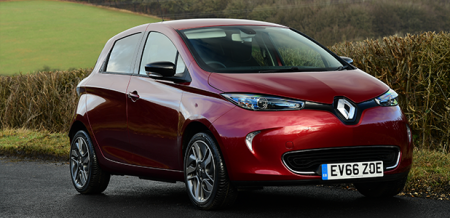
The Renault ZOE, fitted with the new 250-mile range (NEDC) Z.E.40 battery, was commended in the Electric Award category. The Renault ZOE’s new Z.E. 40 battery delivers almost double the range of the previous battery, providing motorists with an electric vehicle option that is better suited to many lifestyles with the average daily commuting distance being well within the ZOE’s capabilities.

The All-New Grand Scénic, recently launched in the UK, was commended in the Best MPV category.

Commenting on the commendations, Graham Hope, Editor at Auto Express said: “The ZOE is doing a great job of making electric motoring a realistic option for more and more buyers. With its increased range, it makes running an EV viable for many, it doesn’t cost the earth to own and it’s an enjoyable car to drive, too.

Vincent Tourette, Managing Director, Groupe Renault UK, said of the results:

“The 2017 ZOE with the Z.E.40 battery, as well as interior and exterior upgrades, builds on its previous success and now delivers the longest range of any mainstream electric vehicle. We’re delighted that Auto Express have commended these as vehicles in their respective segments.”

Read more: Fleet Point

BMW tech wins big at the 2017 Auto Express New Car Awards

Auto Express singled out BMW for tech innovation across the board

The Auto Express New Car Awards took place yesterday, and among all the awards – from the Pick-up of the Year to the Small SUV of the Year – there were two slightly newer categories; Best Electric Car and the Technology Award. As you’d expect, the first went to the best EV on the roads today, and the latter was awarded to the brand with the most innovation across the board – and BMW won them both.

Electric Car of the Year – BMW i3

The BMW i3 is one of the most important cars on the road today. Sure, it’s not got the speed or the glamour of its i8 sibling, and it doesn’t sale in the same numbers as the Leaf, but the i3 is still an iconic electric car. Inside and out, it displays new thinking, innovative design and a sophisticated technology – three things BMW’s i brand has become known for. Fresh from a new facelift, Auto Express awarded it the title of Best Electric Car, beating competition from the new Renault Zoe and the Tesla Model S.

Technology Award – BMW

BMW also won the Technology award, but before we explain why, it’s worth outlining exactly what the award is for. Rather than in-car tech alone, the Technology Award is designed to recognise brands that are innovating across the board, inside the car and out, from apps to hybrid vehicles.

Read more: alpher

Solar pioneer David Mills’ life in the burbs – with PV, two EVs, and battery storage

Solar pioneer David Mills says if he can do it, almost anyone can. And by doing “it”, he means powering his suburban house and his two electric vehicles largely through rooftop solar, and storing excess output in battery storage.

For the last two years, Mills  has been been working on integrating solar PV with battery storage, a hot water system and two EVs – a Tesla Model S85 and a BMW i3 – all in a conventional grid-connected home.

And, he admits, it is not a particularly energy efficient home, or even very well placed for solar. His home is angled about 45°C from the north, and one of his two solar arrays is shaded by trees, particularly in winter.

The house – built in 1921 – has no special seals, window coatings or double glazing. In other words, it is not particularly energy efficient. And it is not exactly low usage either. Apart from the demands of the EVs, there are five adults and three of them are young “profligate” users of electricity.

But here is his cheerful and re-assuring message, particularly for the many people in the suburbs looking at how they can reduce their soaring electricity bills.

“If our home can do it, then any home can do it.”

Mills estimates that if solar PV was being installed today, then almost 2/3 of the energy could be supplied for this house and the two EVs. Were the site less shaded by trees, it had better insulation, and if higher quality solar PV panels were included, then solar could provide a lot more.

“The impact of storage is also likely to be significant,”

he says.

“It can almost eliminate peak and shoulder period imports on many days, even in rainy and cloudy weather if the storage draws from the grid during off-peak periods. Such storage should make the grid more stable, especially in hot weather as experienced in eastern Australia in February.”

Read more: One Step Off The Grid

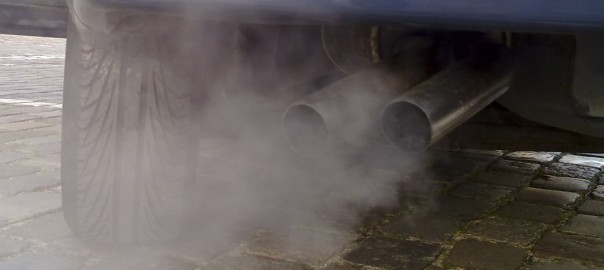
Car exhaust pollution (Image: Wikipedia)

Latest diesel car models remain highly polluting, tests show

Six new vehicles including Land Rover and Suzuki are adding to air pollution crisis, despite stricter rules coming in months.

Car exhaust pollution (Image: Wikipedia)

The latest diesel car models are failing to meet pollution limits when on the road, just three months ahead of stricter new tests, independent tests have found. Results show that none of six new 2017 diesel cars met the EU standard for toxic nitrogen oxides (NOx) pollution in real-world driving.

The updated Equa Index, produced by the testing firm Emissions Analytics, shows that 86% of all diesel models put on to the British market since the 2015 Volkswagen emissions scandal failed to meet the official limit on the road, with 15% producing at least eight times more NOx emissions.

Levels of NOx, emitted mostly by diesel vehicles, have been illegally high in 90% of the UK’s urban areas since 2010. The toxic fumes are estimated to cause 23,500 early deaths a year and the problem has been called a public health emergency by a cross-party committee of MPs.

Ministers have already lost twice in the courts over the adequacy of government air quality plans and are being sued again over their latest proposals, which were published on 5 May but widely condemned as inadequate. The government’s own analysis shows clean air zones in urban centres, where charges deter the most polluting vehicles, are the most effective way to cut pollution quickly. But Nick Molden, CEO of Emissions Analytics, said the wide variation in real-world performance of diesel cars undermines such plans.

Read more: The Guardian

Volkswagen Is Bringing 2 New Electric Cars to U.S., Report Says

A leaked slide confirmed the plans to unveil two new U.S.-bound EVs under the Volkswagen brand.

Volkswagen Group is getting ready to hit the EV market hard. Between the recent news of a new Microbus successor and the continual improvement of Audi-brand EVs, Volkswagen is positioning itself in a very good way. But after a slide deck was reportedly leaked by Autoblog Netherlands, it seems that two new models are headed to the States.

The blog, which is written in Dutch, reveals the planned markets for several releases of electric vehicles under the Volkswagen brand between 2019 and 2022. These two models, the I.D. Lounge and I.D. AEROe are set to be released in the United States and China sometime between 2020 and 2021, assuming things go according to plan. To put this in perspective with Volkswagen’s other releases, the timeline also shows the following vehicles and the possible target dates for their corresponding markets:

  • Volkswagen I.D. – Released in the European market sometime around 2019
  • Volkswagen I.D. Cross – Released in the European and Chinese markets sometime between 2019 and 2020
  • Volkswagen I.D. Lounge – Released in the Chinese and United States markets sometime around 2020
  • Volkswagen I.D. AEROe- Released in the Chinese and United States markets sometime between 2020 and 2021
  • Volkswagen I.D. BUZZ – Release is still to be decided presumably between 2021 and 2022

Judging by the images, which are cars covered by sheets, the I.D. Lounge appears to be a full-size SUV, while the I.D. Aero seems to possibly fit a smaller hatchback profile, similar to the existing Audi A3 E-Tron. It is likely that these models will also be built in Volkswagen Group’s large electric assembly plant in Brussels, assuming it is up to the task of eight (five Volkswagen and three Audi) new EVs in the next five years.

Read more: The Drive