Monthly Archives: September 2023

Will Electric Vehicles Become More Affordable? Exploring the Future of EV Prices

Electric vehicles (EVs) are gaining popularity as car manufacturers strive to make them more affordable and accessible. The emergence of mid-range EVs such as the Chevrolet Bolt EV, Nissan Leaf, Hyundai Kona Electric, and Tesla Model 3 has lowered the prices on entry-level models. This trend raises the question of whether EVs will become more affordable in the future.

Experts speculate that increasing competition, government incentives, and the drop in raw material prices, particularly lithium and cobalt, may make EVs more affordable sooner than anticipated. Bloomberg’s New Energy Finance Reports suggests that by 2025, electric cars may cost less than traditional gas-powered vehicles. The advancements in battery technology, including the growth of solid-state batteries, have improved energy storage and reduced production costs, making EV batteries more efficient and affordable to manufacture.

Infrastructure also plays a significant role in reducing EV costs. A well-developed and easily accessible charging network alleviates range anxiety and boosts confidence in EV ownership. Vehicle-to-grid (V2G) technology allows EV owners to return unused electricity to the power grid, providing additional cost savings.

The used EV market also contributes to affordability. As early adopters trade up for newer models, a thriving second-hand EV market emerges. Savvy shoppers can take advantage of this market to purchase electric vehicles at a fraction of the cost of a brand-new one.

Governments worldwide are introducing attractive incentives and policy changes to encourage EV adoption.

Read more: EnergyPortal

It’s Time to Go Green!

If you would like to know more about Solar Panels and the PowerBanx range of home battery systems, and get a free instant quote, please complete our online form:

The EV car crash is a warning for Europe’s industrial transition

China is so far ahead in the electric vehicles market that its competitors are trailing in the dust

AT AN event last week, a businessman suddenly pulled out his phone to show me his experience in a driverless taxi in downtown Beijing. In the video, a robotaxi impressively navigated a turn across several lanes of a busy road.

Needless to say, the autonomous fleets roaming around an increasing number of Chinese cities are electric. The lasting impression, for him at least, was how far China has pulled ahead in the future of transport.

Those at the Munich motor show last week came to a similar conclusion. Germany’s biennial celebration of its own automotive prowess was dominated by Chinese brands, who were there in double the numbers seen in 2021.

While European manufacturers showed electric vehicles…

Read more: TheBusinessTimes

It’s Time to Go Green!

If you would like to know more about Solar Panels and the PowerBanx range of home battery systems, and get a free instant quote, please complete our online form:

NEW ELECTRIC PEUGEOT 3008 CROSSOVER GETS 435-MILE RANGE AND DRAMATIC STYLING

There will be hybrid power available, too

Peugeot is replacing its highly successful 3008 crossover with an all-new model with electrification to the fore. The new all-electric E-3008 model is the latest chapter in the French brand’s shift to a fully electric future, something it plans to achieve by 2030.

Helping differentiate the new 3008 from its predecessors is a fastback design featuring a sloping roofline with an integrated spoiler. This is said to funnel airflow over the rear window in a bid to reduce drag and enhance the car’s aerodynamic efficiency.

The three-claw design that has become a signature of Peugeot is seen more vividly in the new car, with LED daytime running lights forming an extension of the headlight units into the front bumper. In the E-3008 EV, the Peugeot emblem is surrounded by a mesh effect that includes body-coloured sections to blend in with the bodywork.

Three different electric powertrains

Two batteries will be available in the E-3008, starting with a 73kWh unit that will feature in the single- and dual-motor versions providing 326 miles of driving range on the WLTP test cycle. The single-motor version has up to 207bhp, reaches 62mph in 5.4 seconds from rest and a top speed of 105mph.

Peugeot will offer an all-wheel-drive version with two motors using the same battery and managing to achieve the same driving range. Peak power climbs to 315bhp, while 0-62mph in only 3.9 seconds.

Read more: Driving

It’s Time to Go Green!

If you would like to know more about Solar Panels and the PowerBanx range of home battery systems, and get a free instant quote, please complete our online form:

ZS EV (Image: MG)

‘I bought an electric MG eight weeks ago – it’s incredible value for money’

A motoring expert has highlighted how easy it was to make the transition from a petrol-powered car to an EV.

An automotive YouTuber has revealed his thoughts on a popular , stating that it offers good value for money.

Paul runs the channel Life of Cars, and regularly posts videos in which he reviews a variety of cars and informs drivers on how to fix common issues.


ZS EV (Image: MG)
ZS EV (Image: MG)

In one of his most recent videos, Paul talks to a relative who bought an MG4 eight weeks ago about the switch from petrol to electric.

The relative said: “It’s just easy, it does it all for you. Acceleration off the line is pretty sharp, that’s a big difference.

I like to put it into eco mode and into energy saving mode which obviously helps with the battery, especially driving long distances.”

In the video, Paul and his relative take the MG4 for a spin, discussing various aspects of owning an electric car.

The relative noted that the car came equipped with several driver assistance features, such as lane keep assist, preventing the driver from accidentally drifting out of their lane.

They both added that the interior was incredibly roomy, which has been achieved by using a battery that is thinner than ones found in other EVs.

Read more: Express

It’s Time to Go Green!

If you would like to know more about Solar Panels and the PowerBanx range of home battery systems, and get a free instant quote, please complete our online form:

Peugeot 3008 hybrid SUV (Image: peugeot.co.uk)

The new Peugeot E-3008 is swoopier and more electric than before

The electric crossover debuts with a fresh platform, three powertrains and over 400 miles of range

This is the new Peugeot E-3008. And yes, it’s another new electric crossover. You’d be forgiven for rolling your eyes so dramatically they’re pointing right out the back of your head.

But this one warrants a lingering glance. The outgoing 3008 was something of a surprise star when it launched back in 2016. It returned Peugeot to form in a number of key areas, not least by virtue of being a car that was interesting to look at for all the right reasons. It drove well, too, and had an interior that first dropped your jaw but then simply worked properly.

Peugeot 3008 hybrid SUV (Image: peugeot.co.uk)

This new version intends to pick up the baton – and then run with it by adding fully electric power for the first time. The styling is once again arresting, the 3008’s profile now much more coupifed than before (it’s a word) with a boxier, more practical shape likely reserved for the new E-5008.

Both will utilise the Stellantis group’s all-new mid-sized electric platform, debuting it with 400V battery architecture before it no doubt sits below a whole host of Vauxhalls, Citroens, Jeeps and more, such is the sheer breadth of the company now. But the E-3008 is where you’ll sample it first, the car launching with three electric powertrain options before hybrids land further down the line.

Read more: TopGear

It’s Time to Go Green!

If you would like to know more about Solar Panels and the PowerBanx range of home battery systems, and get a free instant quote, please complete our online form:

Can an EV be your everyday car? The questions to consider first

In the early 2000s, it would have been difficult to consider an EV as your everyday car. They were too expensive to buy, offered a limited driving range, and the charging network was too small to make them a realistic prospect.

Matters began to improve when the Nissan Leaf arrived in 2010, and EV uptake has only accelerated since. In August 2023, more than 20 percent of new cars sold in the UK were fully electric – and Tesla had two vehicles (the Model Y and Model 3) inside the top 10 best-sellers.

The availability of better and more affordable EVs, along with the rapid growth of the charging network, means the answer to our original question is ‘yes’ – an electric car can indeed be your everyday car.

Nonetheless, there are several important questions you need to ask yourself first…

How long is your daily commute?

The average round-trip commute in the UK is around 21 miles. Even an electric car with the most miserly range estimate will be able to cover that. You don’t even need a longer-range EV, such as a Porsche Taycan, to tackle a longer daily commute.


Kia Niro Plug-in Hybrid_Geneva 2017 (image: Next Green Car)

For example, the Kia Niro EV offers 285 miles of electric range, which might be enough for an entire week of commuting. At the time of writing, it costs £37,295 in entry-level ‘2’ specification.

Read more: MotoringElectric

It’s Time to Go Green!

If you would like to know more about Solar Panels and the PowerBanx range of home battery systems, and get a free instant quote, please complete our online form:
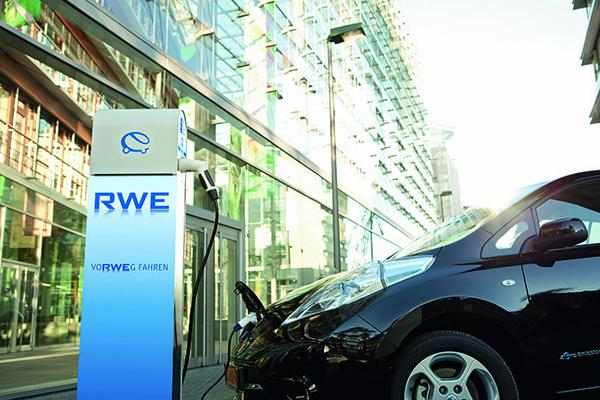
BMW to invest more than £600 million in UK EV MINI factories with £75 million gov support

BMW Group has announced that it plans to invest more than £600 million in its Oxford and Swindon MINI factories to develop a “new generation of electric MINIs”.

With the ban on Internal Combustion Engine (ICE) car sales coming into force in 2030, many car manufacturers are preparing for the transition, and BMW says that by 2030, production at its UK factories will be exclusively electric.

BMW says it is gearing up to build two new all-electric models of MINI from 2026: the MINI Cooper 3-door and the compact MINI Aceman. By 2030, BMW says it will have spent over £3 billion on its Swindon, Hams Hall and Oxford plants since 2000.


Citroen Ami (Source: uk-mediacitroen.com)

BMW says the development of its UK plants “has been supported by the UK Government”. The Financial Times reported that “The investment by the German carmaker at the site in Cowley will be backed by about £75 million of taxpayer funds, according to people familiar with the matter.”

The Oxford MINI plant has also recently celebrated its 110th anniversary this year, and has been producing the MINI Electric since 2019.

Prime Minister Rishi Sunak hailed the announcement, saying it was a “major vote of confidence in our car sector”.

Business and Trade Secretary Kemi Badenoch said, “This decision is a big vote of confidence in the UK economy and the work of this Government to ensure the continued strength of our world-leading automotive sector.

Read more: Current+

It’s Time to Go Green!

If you would like to know more about Solar Panels and the PowerBanx range of home battery systems, and get a free instant quote, please complete our online form:

10 Myths About Electric Cars That Owners Know Aren’t True


10 Myths About Electric Cars That Owners Know Aren’t True

Are electric cars going to ruin driving for everyone? If there’s one thing we all know, it’s that people don’t like change. Electric vehicles are an enormous change for the automotive world. EVs have been criticized, questioned, and insulted at every turn, yet the world is moving toward them and away from traditional ICE vehicles.

Why are electric cars criticized and questioned as much as they are? Consider the first person to drive a horseless carriage. Everyone around them still had horses to pull the wagons and get them where they needed to go. Were those with horses jealous of the person who didn’t need to feed and brush their method of transportation? Perhaps.

1EVs Don’t Have Enough Range

The U.S. Department of Transportation reports that the average American drives 40 miles per day. Some people commute much further in one direction, while others stay at home and don’t have to drive anywhere every day. Most electric cars provide ample driving range to handle the daily commute and much more.


Common EVs Driving Range

Nissan Leaf 150 Miles
Hyundai Kona EV 258 Miles
Chevrolet Bolt EV 259 Miles
Tesla Model 3 310 Miles
Tesla Model S 335 Miles

Electric vehicle skeptics might have a point when it comes to road trips. It’s difficult to complete a road trip, especially if the destination is key, when driving an EV.

Read more: TopSpeed

It’s Time to Go Green!

If you would like to know more about Solar Panels and the PowerBanx range of home battery systems, and get a free instant quote, please complete our online form:

How long does it take to charge an electric car?

The time taken to charge an electric car can vary from as little as 20 minutes to as much as 24 hours. Here’s why…

With almost one-in-five new cars being fully electric, more drivers will be learning about charging electric cars for the first time. And alongside how much charging an electric car cost and how to use a charging point, they’ll likely be considering the time it takes to charge.

The two biggest factors in how long it’ll take to charge your electric car are the size of the battery, and the speed at which your car can charge. For example, an electric car with a small battery and a fast charging speed will charge a lot faster than one with a large battery and a slow charging speed. We’ll go into both of those factors in more depth in this story, as well as looking at the different types of electric car chargers and answering your electric car charger questions.

Types of electric car chargers

The speed at which you can charge your electric car can be governed by the type of charger you’re using. Charging at home using a three-pin plug is the slowest method, typically taking around 24hrs to replenish the battery on your car. Doing so is therefore impractical for many electric car owners, although it can be doable if you own a plug-in hybrid car.

Read more: WhatCar

It’s Time to Go Green!

If you would like to know more about Solar Panels and the PowerBanx range of home battery systems, and get a free instant quote, please complete our online form:

Plugging into the future: electric van production begins at Ellesmere Port

In nearly 60 years of making cars Ellesmere Port’s Vauxhall factory had come close to the end several times, said the Unite union convener John Cooper, standing beside the body of an electric van on the production line. Last-minute negotiations saved the plant each time, but it was a close-run thing.

Things have changed now: on Thursday the site began production as the UK’s first factory dedicated purely to producing electric vehicles at scale. It is a landmark moment in the shift away from fossil fuels for the British automotive industry.

LONDON (Mar. 28, 2017) – Over 100 years after the legendary London department store first added an electric van to its fleet, Harrods is once again returning to EV technology, with the addition of the 100-percent electric Nissan e-NV200 delivery van. The British department store is the latest European business to add a zero emission Nissan e-NV200 to its fleet, with more than 27,000 Nissan electric vehicles sold to businesses across Europe so far. Nissan officially handed over the 100-percent electric van to Harrods outside its luxury Knightsbridge store this week.

The plant, by the River Mersey in Cheshire, will assemble 50,000 electric vans a year under the Stellantis group’s Vauxhall, Opel, Peugeot, Citroën and Fiat badges, with passenger car versions to come next year.

Inside the 1960s shed, newly installed robots trundle around following lines on the floor. They carry 50-kilowatt-hour batteries – enough to go 175 miles – around the plant. The batteries are assembled on-site, using cells from China, before they reach the “marriage” stage of life: being lifted up to be bolted to the bottom of the van’s metal bodies.

Shifting to electric vans before a 2035 ban on new petrol and diesel sales will be a key part of cutting the UK’s carbon emissions to net zero. Carbon emissions from vans have been increasing, in part because of the boom in online retail orders.

Read more: TheGuardian

It’s Time to Go Green!

If you would like to know more about Solar Panels and the PowerBanx range of home battery systems, and get a free instant quote, please complete our online form: