Monthly Archives: December 2022

Electric cars are still cheaper to run than petrol and diesel. T&E did the maths

Electricity prices have soared, but it’s still cheaper to recharge an EV than to refuel at the pump

Even if electric cars still cost more to buy than petrol cars, battery-electric vehicles have long been cheaper overall to own and run.

This is largely because recharging has typically cost much less than refuelling, so owning an electric vehicle (EV) would pay off after a couple of years. This is an irrefutable fact – or at least it was until recently.

Europe’s ongoing energy crisis, fuelled by Russia’s invasion of Ukraine and threats to cut off gas supplies, not only stirs up fears of a cold winter but is also sending electricity prices sky-high, due to the high share of gas in power generation.

Oil supply, on the other hand, was less affected and many European countries are heavily subsidising petrol and diesel.

In September, the average EU household had to pay a staggering 72 per cent more for each kWh of electricity than a year before. At the pump, aided by governments’ generous subsidies, fuel prices have increased less: diesel by 36 per cent and petrol by only 15 per cent.

The unprecedented surges in electricity prices have thrown into question the notion that recharging is cheaper than refuelling, and some are already predicting that the transition towards e-mobility will come to a sudden halt.

Read more: Transport&Environment

It’s Time to Go Green!

If you would like to know more about Solar Panels and the PowerBanx range of home battery systems, and get a free instant quote, please complete our online form:

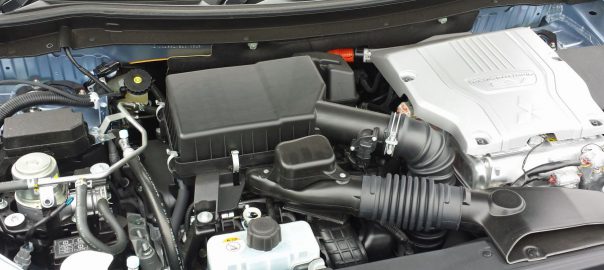
Electric car servicing and repairs in the UK: costs, pitfalls and finding a local garage

The popularity of electric cars is growing exponentially. But with more and more on the road, where do you go to get your pride and joy maintained and repaired?

Electric cars are here to stay. Before too long, they’ll be the only option open to new car buyers in the UK and a little while after that they’ll be the majority of all cars on the road. That, of course, means people are going to need to service, maintain and repair electric cars in rapidly increasing numbers.

The environmental angle is a big selling point for electric cars but to get the full benefit the car needs to be used for a long time, not treated as a disposable commodity. That means we need the availability of high quality servicing and maintenance from dealers and independent garages that know what they’re doing.


Kia Niro PHEV, Plug In Hybrid, Geneva Motorshow 2017 (Image: Kia)

This is a big challenge for the car industry. Electric cars are different to the internal combustion engined vehicles we’ve been using for a century. The right training and tooling are needed before mechanics used to petrol and diesel cars can turn their hand to EVs or even plug-in hybrids. Right now, electric car owners can take their cars to main franchised dealers where the investment in the necessary skills should have happened but in the future we will also need cheaper, independent options to keep older EVs on the road.

Read more: AutoExpress

It’s Time to Go Green!

If you would like to know more about Solar Panels and the PowerBanx range of home battery systems, and get a free instant quote, please complete our online form:

Hyundai Kona Electric (Image: Hyundai)

IT’S COMING OHM I travelled around Qatar in an electric car – where the chargers are free but nobody uses them

“I HAD David Beckham in the car a few weeks ago,” says our guide Manu, as we buzz past Qatar’s Lusail stadium. 

“To be honest I am not a big football fan, so we talked about our families instead.”

This quietly spoken IT engineer has a job for the next few weeks chaperoning the stars of the beautiful game around Doha in a fleet of Hyundai Ioniq 5s.

Spilling the beans on his celebrity clientele would not go down well so he discreetly refuses to spill Beckham’s beans.

We agree Lusail is an impressive stadium, but our favourite is the one close to Doha airport, through which 1.2million fans will pass over the next a month and a half.

The stadium we like most is 974, a structure made from 973 shipping containers. The 974th sits out front as a gate guardian.

From 974 to Lusail is 18 miles. The furthest any two of the eight stadia are apart is 25 miles. It is the most compact World Cup ever.

Qatar, the UK’s second-largest supplier of natural gas, is still wedded to gas-guzzling V8s

The immaculate streets of Doha are populated with Toyota Land Cruisers, V8 Land Rover Defenders and giant Chevy Escalades made popular by Hollywood’s red-carpet brigade.

Read more: TheSun

It’s Time to Go Green!

If you would like to know more about Solar Panels and the PowerBanx range of home battery systems, and get a free instant quote, please complete our online form:

Citroen Ami (Source: uk-mediacitroen.com)

‘It’s so sad that Britain’s new electric car battery factory is already going bankrupt’

As we approach the end of 2022, Mike Rutherford thinks motorists in the UK have never had it so bad

Much as we love it, the car isn’t always the star. Sometimes it’s actually less important than the people, the numbers, and the jobs in and around the automotive business.

First, a handful of (many) developments in growth-obsessed, recession-ravaged Britain as we approach the end of 2022: the population recently hit 68 million (in a land where our road ‘system’ is set up to deal with more like 50 million); the general annual inflation rate hit a 41-year high of 11.1 per cent; and hikes in the prices of new cars, and the petrol, diesel and electricity to power them, are even higher.

Smart FourTwo

As for interest rates, they’re through the roof, too. And with few, if any, ordinary, working-class families able to save up the necessary £40,000(ish) for even a modest, medium-sized new electric car, increasingly expensive loans are more obligatory than optional these days. Yet, as our Government proves, large debts and high interest rates can be ruinous.

If you, dear car user, aren’t miffed at the rocketing MIF (Motoring Inflation Figure), you bloody well should be. The motorist has never had it so bad.

Read more: AutoExpress

It’s Time to Go Green!

If you would like to know more about Solar Panels and the PowerBanx range of home battery systems, and get a free instant quote, please complete our online form:
Why solar electric vehicles might be the next generation of EVs

The world’s first commercial solar electric vehicles are hitting the U.S. and European markets in the next few years. German company Sono Motors, Southern California-based Aptera Motors, and Dutch company Lightyear are all producing electric vehicles with integrated solar panels, which can harness the sun’s power to provide around 15-45 additional miles on a clear day.

These vehicles also have regular, lithium-based batteries that can be charged using electricity from the grid, so for longer drives these cars essentially function like a standard EV. But for commuters and other short-distance drivers, the majority of their miles could be fueled almost entirely from the sun, free of charge.


Dan Kammen, professor of energy at U.C. Berkeley, said he expects this tech will make good financial sense for many consumers.

“Solar panels are so inexpensive and integrating them into the skins is so easy that once you get over that initial learning curve, those initial couple thousand vehicles out there, it’s hard for me to envision that this won’t be cost-effective,” Kammen said.

The cars coming to market

The Sono Sion, which is expected to begin production in Europe in mid-2023, is priced starting at just $25,000. Its battery has a 190-mile range, and while the car also has 465 integrated solar half-cells on its exterior, the boxy, five-seat hatchback appears unassuming and practical.

Read more: CNBC

It’s Time to Go Green!

If you would like to know more about Solar Panels and the PowerBanx range of home battery systems, and get a free instant quote, please complete our online form:

New ECIU study shows EVs are cheaper to own than fossil fuelled vehicles

A study commissioned by the Energy & Climate Intelligence Unit (ECIU) has shown that electric vehicles (EV) owners in the UK are currently saving £600 a year, totalling £8,300 over the 14-year lifetime of an EV, making them cheaper to run than fossil fuelled vehicles.

The research organisation’s Global Momentum on Clean Transition report also found that the number of EV sales doubled globally in 2021 reaching 6.6 million cars and the market is on track to double this figure again in 2022. The number of EV models available has also grown to 184, five times more than there was five years ago.


It is unclear how the removal of the Vehicle Excise Duty exemption for EVs in 2025 in the UK will effect this continued growth.


More positive findings highlighted by the report include that owners of second-hand EVs could get a battery bonus, with the potential return of 10-20% of the vehicle’s value, by selling its battery for recycling at the end of its life-span.

“This is a UK snapshot of a global story, of a car market that is speeding ever faster towards an electric future. EVs charged, increasingly by cheap renewables, will bring down the cost of driving for everyone, particularly as more and more EVs find their way on to the second-hand market,” commented Colin Walker, transport lead at ECIU.

Read more: Current+

It’s Time to Go Green!

If you would like to know more about Solar Panels and the PowerBanx range of home battery systems, and get a free instant quote, please complete our online form: