Monthly Archives: October 2022

GRIDSERVE begins construction of Electric Forecourt at London Gatwick Airport

Electric vehicle (EV) charging company GRIDSERVE has started construction of a first-of-its-kind “Electric Forecourt” at London Gatwick Airport with plans to commence operation in 2023.

The site will feature 36 chargers on site at the Electric Forecourt, which includes high power chargers with up to 350kW of power, supplied by 100% renewable energy from the firm’s own hybrid solar farms.

GRDISERVE’s Forecourt will also have multiple connectors available to cater for all types of EVs whilst increasing accessibility via the use of contactless payments.

The site’s development follows the success of similar projects in Braintree and Norwich, all of which contributing to GRIDSERVE’s commitment to deliver over 100 Electric Forecourts.


Proposed Electric Forecourt (Image: GRIDSERVE)

The Norwich Forecourt offers visitors without EVs the opportunity to learn more and chat with EV gurus, while in the coming weeks visitors will be able to test drive electric cars from a variety of brands as part of GRIDSERVE Car Leasing.

This could potentially increase the adoption of EVs with the general public being informed on the positives of switching to EVs whilst also being able to trial one for themselves.

Read more: Current+

It’s Time to Go Green!

If you would like to know more about Solar Panels and the PowerBanx range of home battery systems, and get a free instant quote, please complete our online form:

Green Updates: EV Demand Accelerates Ahead Of Charging Capacity

5 October: EV Drivers Say Infrastructure Not Fit For Purpose

Three quarters of EV drivers (57%) believe the UK’s current charging infrastructure is not fit for purpose, writes Bethany Garner.

The Novuna Vehicle Solutions research, which surveyed 2,000 UK motorists, also revealed that 31% of EV drivers frequently face queues for a charger, and four in five say the UK government should do more to improve charge point availability.

Although the government aims to install 300,000 new charge points by 2030, Novuna’s analysis suggests this goal may not be enough to serve the growing number of EVs on UK roads.

The majority of petrol and diesel car owners — 59% — plan to purchase an EV when it’s time to replace their vehicle. Among young drivers demand is even higher, with 79% of 18 to 34-year-olds planning to switch to an EV.


The government is planning to ban the sale of new internal combustion engine vehicles by 2030.

John Berry, head of decarbonisation at Novuna said: “Demand for EVs has accelerated at a relentless pace, yet we’re rapidly facing the prospect of failing to realise the level of adequate public charging infrastructure to support mass adoption of EVs by the start of the next decade.”

Read more: Forbes

It’s Time to Go Green!

If you would like to know more about Solar Panels and the PowerBanx range of home battery systems, and get a free instant quote, please complete our online form:

Drive Energi 50kW Tritium Veefil-RT chargers (Image: Drive Energi)

UK drivers ditching petrol cars to save £3,000 more a year with an electric vehicle

Electric car drivers can save £3,000 a year despite the price of energy rising, with some motorists able to benefit from free charging today.

The RAC recently updated its Charge Watch data which showed that the average price of using a public electric car rapid charge point had risen to 63p per kWh. This represents a 42 percent increase since May for public charging, causing alarm to many EV drivers who cannot charge at home.

Mazda MX-30 EV (Image: Mazda)

However, Ed Carpenter, head of EV at Vanarama, highlighted how not all EV drivers would suffer from the expensive costs.

He pointed out that drivers could still save thousands of pounds a year in other ways.

He said: “It’s worth noting that many EV drivers predominantly charge from home so the above will impact some EV drivers, but not all.

“By comparison, those drivers who charge mostly from home will see a small rise in electricity costs from 28p to 34p per kWh as part of the Government’s October energy price cap.

“The price cap will remain in place until 2024 so it’s a good news story for those who are able to charge at home, especially as domestic electricity prices were set to rise to 52p per kWh from October 2022 with further price increases anticipated in 2023.”

Vanarama’s research found that EV drivers could save £175 a month through exemptions in Low Emission Zones, Clean Air Zones and the London ULEZ.

Read more: Express

It’s Time to Go Green!

If you would like to know more about Solar Panels and the PowerBanx range of home battery systems, and get a free instant quote, please complete our online form:

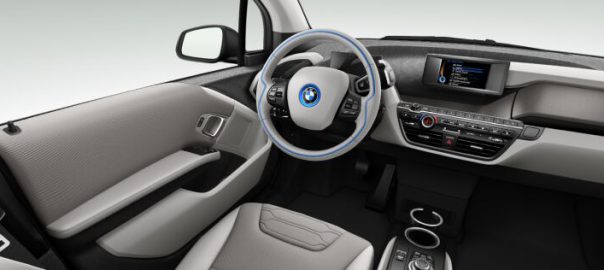
BMW i3 interior: Loft interior world with standard Dark Andesit trim (Image: BMW.co.uk)

BMW iX1 review

Not the most engaging to drive, but a seriously comprehensive and recommendable electric prospect

If you’re hoping for echoes of the BMW i3’s art deco design and originality in the new BMW iX1, you’ll be disappointed.

Let’s face it, the iX1 is rather derivative-looking; as with the vast majority of its rivals, from the Audi Q4 e-tron to the Mercedes EQA and Lexus NX, it’s not ugly but it’s not pretty or even terribly memorable, either. Which is why we’ll actually start with the inside of the BMW iX1, because it’s here that it really makes an impact. Don’t worry, we’ll get to the 308bhp all-electric, four-wheel drive powertrain in just a moment.

BMW i3 and i3S 120Ah (Image: BMW Group)

First, check out the curved touchscreen; a focal point in an interior that feels every bit as plush and high-class as that of an X3, and is deliberately reminiscent of the BMW iX.

Complete with a 10.7-inch touchscreen and a 10.4-inch driver’s information screen, the operating system 8’s graphics are second to none. With wireless Apple CarPlay and Android Auto as standard on ever iX1, native features such as the excellent nav will be defunct for most. If you do use them, the configurable shortcut icons on the touchscreen’s home page will be useful.

Read more: Autocar

It’s Time to Go Green!

If you would like to know more about Solar Panels and the PowerBanx range of home battery systems, and get a free instant quote, please complete our online form:

Mini Electric review

The Mini Electric – like a Georgian-style country house that’s just been built – takes appealing retro aesthetics and gives them a thoroughly modern twist.

In fact, while the Mini has its roots in the Fifties, this version of the car has the heart of a Generation Z eco-warrior. It runs purely on electricity as the name suggests, yet – with 181bhp – it’s more powerful than the petrol-powered Cooper S.

MINI Electric
MINI Electric

By electric car standards, it’s attractively priced, managing to undercut a lot of its rivals, including the Honda E. However, before you rush to put down your deposit, it’s worth bearing in mind a couple of things.

Firstly, one of the reasons the Mini Electric can be temptingly priced is that it doesn’t have a very big battery, and the official range is only around 145 miles. You won’t even get that far in real-world driving, and don’t expect Tesla-esque charging speeds when you do need a top-up.

Secondly, squeezing the battery under the rear seats has reduced the amount of space in the back compared with a conventionally powered Mini (and there wasn’t a huge amount to begin with).

Read more: WhatCar

It’s Time to Go Green!

If you would like to know more about Solar Panels and the PowerBanx range of home battery systems, and get a free instant quote, please complete our online form:
Green number plates explained

Wondered what the green stripe you see on the side of some cars’ number plates is for? Wonder no more

In June 2020 the Transport Secretary announced that electric cars would be able to wear number plates featuring a vertical green stripe (officially known as a ‘flash’) on the left-hand side of the plates.

If you’re curious what the thinking is behind the green number plates, we’ll go through this here, as well as precisely which types of car are eligible for them, and what the mechanics of procuring a set of green plates involve.

What does the green strip on a number plate mean?’

In short, if you see green number plates, it means the car wearing them is an EV. The plates can only be fitted to cars that produce zero tailpipe emissions, so only pure electric cars can benefit from them.


BMW i3 120Ah (Image: BMW)

These plates still feature the traditional yellow (at the rear) and white (at the front) colours, but have a green box to the left of the characters. The plates themselves are also often made sustainable materials.

Hydrogen cars can also have green plates but there are only two such cars on the market in the UK (The Hyundai Nexo and Toyota Mirai), both of which remain niche propositions sold in tiny numbers.

Read more: carwow

It’s Time to Go Green!

If you would like to know more about Solar Panels and the PowerBanx range of home battery systems, and get a free instant quote, please complete our online form:

Barclays commits to electrifying its UK fleets by 2030

UK-based Barclays has joined Climate Group’s EV100 initiative committing to electrify its fleets by 2030.

The multinational bank confirmed it would introduce a variety of electric vehicles (EV) in order to decarbonise its UK operations. This is of growing concern with the impending internal combustion engine (ICE) sale ban coming into force from 2030.

Although recognised as a global movement, the UK has reaped the benefits from the EV100 initiative with nearly 16,900 EV chargepoints having been installed by companies signed up to initiative.


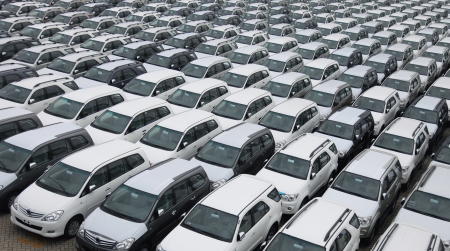
Copyright: arisanjaya / 123RF Stock Photo
9822883 – cars pattern

“In March 2020 we become one of the first banks to announce an ambition to be net zero by 2050, which includes our operational emissions,” said Myriam Coneim, global sustainability and governance lead, operations at Barclays.

“To decarbonise our operations, earlier this year we committed to transitioning all of our UK vehicle fleet to electric by 2025 with an additional target of 2030 for our global fleet, using ultra-low emissions vehicles for the latter where electric is not viable.

Read more: Current+

It’s Time to Go Green!

If you would like to know more about Solar Panels and the PowerBanx range of home battery systems, and get a free instant quote, please complete our online form:

Hyundai Kona Electric (Image: Hyundai)

MG ZS EV vs Hyundai Kona Electric: 2022 twin test review

Entry-level electric SUVs from MG and Hyundai are put through their paces to find the penny-pinching champion

The words “budget” and “electric” seem to sit a little awkwardly beside each other in the new-car world at the moment. While the cost of batteries has tumbled significantly since the early mass-market EVs from as little as 10 years ago, in many cases electric models cost more than their fossil-fuelled alternatives. This forces many brands to pitch their EVs as high-spec premium models, pushing costs up even further.


ZS EV (Image: MG)
ZS EV (Image: MG)

However, dig a little deeper and you’ll find some fantastic exceptions to the trend, and we’ve got two of them here. The new arrival comes in the form of the refreshed MG ZS EV, which has received a wide-ranging update focusing on both style and substance.

It’s going up against the Hyundai Kona Electric, a car which sits at the more affordable end of the EV spectrum and is also among the cheapest to run, while being highly rated by owners. So does the updated MG have what it takes to overcome the Hyundai in this test?

The current MG line-up is quickly gaining a reputation for delivering affordable yet accomplished performance, and its EVs are spearheading the charge. Our Standard Range Trophy test car costs £31,995, which rises by £545 to £32,540 when you add Monument Silver paint.

Read more: AutoExpress

It’s Time to Go Green!

If you would like to know more about Solar Panels and the PowerBanx range of home battery systems, and get a free instant quote, please complete our online form:

Will every electric car feel the same?

Unlike with gas-powered motors that can sound and feel different, there seems to be a lack of diversity when it comes to electric motors.

We hear it all the time. Behind closed doors, we even talk nervously about it. The idea that as vehicles become electric, brands will lose what makes them unique.

That every vehicle will feel exactly the same without the separation that comes with engine choices like an inline-six instead of a V8. And that the only difference for the driver will be the logo on the steering wheel they’re sitting behind.

For some brands, it can feel like the powertrain — all those components that make the wheels turn — is an afterthought. For others, it’s a key part of what makes the brand.


Kia Ceed Sportwagon PHEV and XCeed PHEV (Image: Kia)
We spoke with both BMW and Kia, brands on opposite ends of the automotive spectrum, to ask how important the powertrain experience was to each, and to find out what they were doing to tune their EVs to help give their vehicles a unique feel. Their answers surprised us.

David Sherrard, director of strategic planning for Kia Canada, said the feel of the powertrain was important for the automaker.

Read more: TheStar

It’s Time to Go Green!

If you would like to know more about Solar Panels and the PowerBanx range of home battery systems, and get a free instant quote, please complete our online form:

California’s ban on gas-powered vehicles: Huge victory in the 50-year war for the electric car

It took 50 years, but California clean-air regulators never surrendered — and the electric future is here

The California Air Resources Board’s recent decision to phase out all sales of gasoline-powered vehicles by 2035 marked the culmination of a 50-year struggle by CARB to clean up California’s vehicular pollution, which has long been the largest source of the state’s infamous and sometimes horrendous smog syndrome, and is now its biggest contribution to the climate crisis.

The story begins with two defeats, more than 20 years apart: All the way back in 1969, the California legislature came within one vote of phasing out the internal combustion engine. Even then, nearly enough legislators were convinced that the gasoline-powered engine could never be sufficiently clean. A generation later, in 1990, CARB tried again to mandate a shift  to electric vehicles (EVs) in place of oil-dependent gasoline and diesel — this time with new concerns about climate change as a driving force. On that occasion the oil and auto industries dug in their heels — while making seemingly insincere efforts to produce a few thousand electric cars — and then managed to roll back the entire EV mandate as a failure. The cars that had actually been built were almost all scrapped, leaving behind, as this effort’s principal legacy, the powerful but plaintive 2006 documentary “Who Killed the Electric Car?” narrated by Martin Sheen.

Read more: Salon

It’s Time to Go Green!

If you would like to know more about Solar Panels and the PowerBanx range of home battery systems, and get a free instant quote, please complete our online form: