Monthly Archives: April 2022

BP Chargemaster Rapid Charger at Milton Keynes Charging Hub (Image: T. Larkum)

Government EV charging plan a ‘missed opportunity’ for drivers

The Department for Transport (DfT) has published plans outlining how it seeks to significantly increase the UK’s electric vehicle charging capacity.

Funding for the £1.6 billion Electric Vehicle Infrastructure Strategy has previously been announced. The DfT has now detailed exactly how the allocated money will be used.

At its core is the aim to have 300,000 public charging devices available by 2030. This represents a tenfold increase from the 30,000 currently installed across the country.

Rapid-charging roll-out

Tackling electric vehicle charging for the millions without access to off-street parking is a key part of the strategy.

Some £450 million will be used by the Local Electric Vehicle Infrastructure fund. This allows for local authorities to apply for money to deliver EV hubs and innovative on-street charging solutions.

Solar EV Charging Hub on Princes Street, Dundee (Image: eVolt)


An existing £950 million Rapid Charging Fund is intended to support the installation of fast-charging devices at motorway services. It expects to deliver 2,500 rapid-charging points by 2030, and 6,000 by 2035.

Charging operators will be mandated to provide customers with real-time data about the status of charge points. A 99 percent reliability rate for charging devices will also be expected.

Read more: MotoringElectric

It’s Time to Go Green!

If you would like to know more about Solar Panels and the PowerBanx range of home battery systems, and get a free instant quote, please complete our online form:

Milton Keynes 'Mushrooms' Charging Hub (Image: T. Larkum)

Tesco to make big change to car parks at 500 of its branches

Supermarket giant Tesco has announced a ‘big change’ is coming to 500 stores across the United Kingdom. The retailer revealed plans to bring electric charging points to its branches.

The giant expanded the UK’s largest free electric vehicle charging network after usage of the points surged by 300% over the past year, reports the Echo. It unveiled its 500th charging point at Tesco Extra in Inverness.

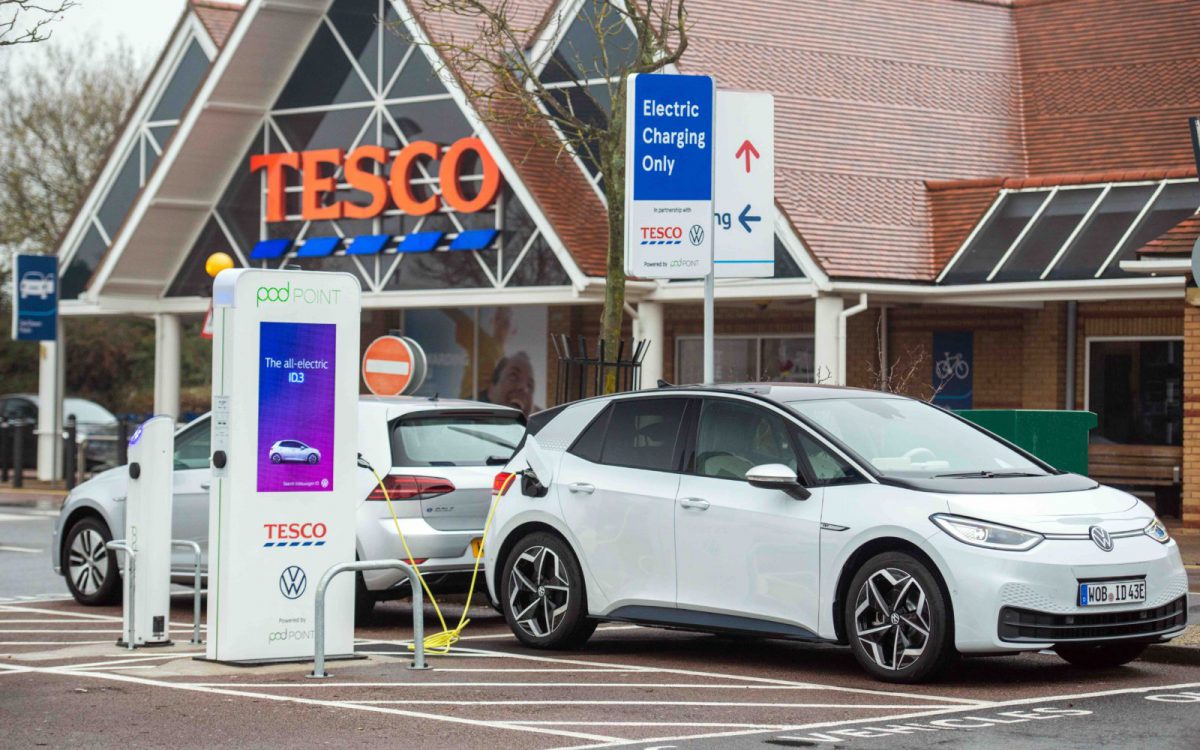
POD Point Rollout at Tesco Stores (Image: Tesco/POD Point)

Other areas that have benefitted from improved charging access include Southend-on-Sea, Bolton, Wirral and Port Talbot. Since the network was launched in 2019 by Tesco, Volkswagen and Pod Point, the charging points have provided more than 41 million miles of free electric driving.

The network uses renewable energy and, since it launched, has saved 8,786 tonnes of CO2 compared with travelling the same distance in a typical car with an internal combustion engine. Designed to offer Tesco customers a secure, reliable and accessible way to top up their electric cars, the network of more than 1,000 chargers at 500 Tesco supermarkets in the UK also now includes 100 rapid chargers.

Read more: msn


It’s Time to Go Green!

If you would like to know more about Solar Panels and the PowerBanx range of home battery systems, and get a free instant quote, please complete our online form:
ONE FAST CHARGE IN THE KIA EV6 TOLD ME EVERYTHING I NEEDED TO KNOW

And why it’ll win top trumps at every EV charging station debate

EARLY-ADOPTER EV lovers insist that range anxiety and charging speeds are red herrings, not actual issues with electric cars, but they’re wrong. These are legitimate concerns that will impede the growth and adoption of electric vehicles beyond the enthusiast set if not addressed.

But, after more than a decade of stops and starts in the development and deployment of electric vehicles, the marketplace has finally come up with an answer to both: really fast charging.

I was testing the Kia EV6 this week (corporate sibling to the Hyundai Ioniq 5 that I drove and loved last year) and was genuinely astonished by how speedy DC fast charging can be — less than 18 minutes to gain more than 200 miles of range — and it changes everything.

THE EV6 USES an advanced (and expensive) 800-volt architecture, achieved thanks to massive economies of scale from the E-GMP platform that will underpin most of the upcoming EVs from Hyundai, Kia, and Genesis. Competitors like the Ford Mustang Mach-E, Volkswagen ID.4, and Polestar 2 use 400-volt systems that charge much more slowly.

The increase in voltage is important, but we have to talk some physics to see why: volts * amps = watts. Translated into English, it means that if you want to increase an EV’s charging speed, you have to increase the volts or the amperage or both. By using an 800-volt architecture instead of a 400-volt, the E-GMP platform can charge twice as fast as a 400-volt vehicle at the same amperage.

Read more: Inverse

It’s Time to Go Green!

If you would like to know more about Solar Panels and the PowerBanx range of home battery systems, and get a free instant quote, please complete our online form:

Tesla Model Y (Image: Tesla.com)

20% Of New Cars In Europe Have A Plug!

Despite declining growth rates, the European passenger plugin vehicle market is still in the fast lane. Some 160,000 plugin vehicles were registered in February — which is +38% year over year (YoY). This performance is especially impressive when we consider that the overall auto market continued to fall — down 7% last month, with the 804,000 units registered last month making it the lowest February in over 20 years!

Tesla Model3 (Image: Wikimedia/Carlquinn)

With plugin registrations rising fast and the overall market shrinking significantly, plugin vehicle market share had to rise significantly, and it did. Last month’s plugin vehicle share of the overall European auto market was 20% (11% full electrics/BEVs). That result pulled the 2022 plugin vehicle (PEV) share to 19% (11% for BEVs alone).

Growth came from both plugin fields, but while BEVs (+79% YoY) keep gaining momentum, PHEVs (+6%) are slowing down significantly, allowing pure electrics to represent the majority of registrations last month (57% vs. 43%). That allowed BEVs to gain 2 percentage points of market share in the YTD count (55% vs 45%).

Also worthy of notice is the fact that besides the EV disruption, the overall market is being heavily changed by other factors as well, like the chip shortage, which is tanking registrations from most OEMs. Of the major players, only Hyundai–Kia (+25% YoY!!!) avoided a significant drop.

Read more: CleanTechnica

It’s Time to Go Green!

If you would like to know more about Solar Panels and the PowerBanx range of home battery systems, and get a free instant quote, please complete our online form:

BP Chargemaster Rapid Charger at Milton Keynes Charging Hub (Image: T. Larkum)

Electric cars: Positive news for EV owners as plan to boost number of public charge points unveiled

Electric vehicle owners will have access to 300,000 public charge points by the end of the decade, the government has said.

Some £500m will be invested to hit the target, according to the Department for Transport, which represents a 10-fold increase on the current 30,000 public charge points across the UK.

The 2030 deadline is the same date the government aims to ban the sale of new petrol and diesel vehicles, as motorists are encouraged to go electric to help the UK hit net zero by 2050.

Read more: Every key policy in UK’s plan to reach net zero

Helping drivers without access to off-street parking will be a focus when rolling out the new charge points.

The plan, part of the government’s wider Electric Vehicle Infrastructure Strategy, also highlights the need to ensure readily accessible fast charging for longer journeys.

At least 6,000 superfast charge points will be installed across England’s motorways by 2035 as part of an existing £950m commitment.

Read more: SkyNews

It’s Time to Go Green!

If you would like to know more about Solar Panels and the PowerBanx range of home battery systems, and get a free instant quote, please complete our online form:

Petrol prices are driving us to electric cars, and surging utility bills are no deterrent

EV sales are rising way beyond forecasts, indicating that most of us are more than ready to make the switch

The net zero transition is really a big invest-to-save plan. Saving the planet is obviously the main goal, but there are purely financial savings too if you take the long view: we pay upfront in the next few decades for the infrastructure for lower carbon travel, heating and production, which saves us money over time because it’s cheaper to run.

Electric vehicles (EVs) are where the big savings come from. A year’s petrol or diesel typically costs well over £1,000, but if you can charge an electric car at your home overnight the annual fuel cost can be under £150.

Making the EV switch is a big job – we’ve got 32m cars to replace. But the turnover has recently gone up several gears, with EV sales outpacing all forecasts: they now account for one in five new car purchases.

Interesting new research digs into how sensitive are drivers pondering the switch to the savings that come from moving from petrol to electric vehicles. Using data from California, it shows the obvious: EV sales respond both to electricity prices (falling as they rise) and to petrol prices (rising as pump prices increase).

The interesting bit is that sales respond to petrol prices at around four to six times the rate of electricity prices. Why? Consumers are just less aware of electricity prices than petrol prices. I definitely am, having watched petrol pump prices rise by 40p a litre over the past year.

So if you want a (small) silver lining to today’s catastrophic energy price surge, it’s that bonkers pump prices should encourage more people to buy electric vehicles while nuts electricity prices won’t put them off much.

Read more: TheGuardian


It’s Time to Go Green!

If you would like to know more about Solar Panels and the PowerBanx range of home battery systems, and get a free instant quote, please complete our online form:
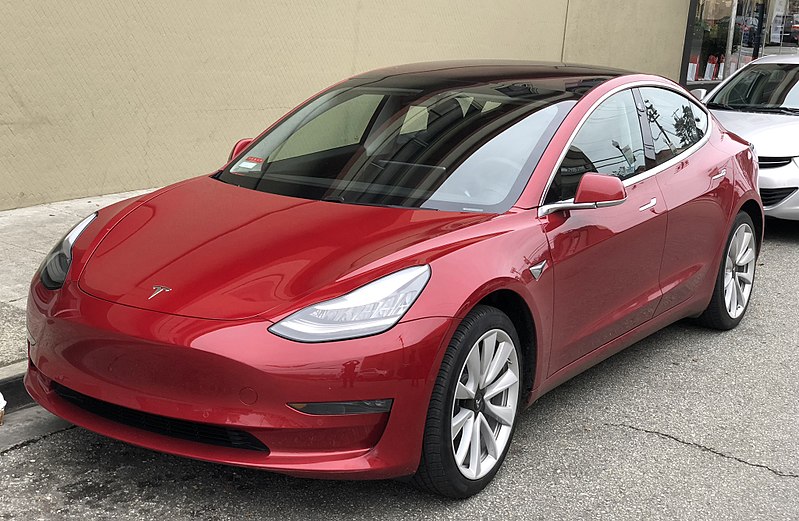
2020 Hyundai IONIQ (Image: Hyundai)

2022 World Car of the Year – top 3 finalists are all EVs

The top three finalists in the running to be named as the 2022 World Car of the Year have been announced, and all are electric vehicles, rather symbolic of where things are heading. Whittled down from the previous round, the final showdown will see the Ford Mustang Mach-E duking it out with the Hyundai Ioniq 5 and Kia EV6, the 2022 European Car of the Year winner, for the coveted title.

The Ioniq 5 is also in contention to grab wins in two other categories, the first being in the World Electric Vehicle of the Year segment, which is a new addition to the awards this year. Here, the Korean offering is going up against the Audi e-tron GT and the Mercedes-Benz EQS.

Hyundai IONIQ Electric 2020 (Image: Hyundai)


It’s also in the running to bag the World Car Design of the Year award, although it will have to edge out another two EVs, the Audi e-tron GT and Kia EV6, for the gong. Now, if you’re thinking that the tentacles of electrification end there, think again, because two of the three final competitors in the World Luxury Car category are also electrics – will either the BMW iX and Mercedes-Benz EQS edge out the Genesis GV70 for that particular crown?

It doesn’t end there, because the Audi e-tron GT appears once more, this time in the World Performance Car category – challenging it for the win will be the BMW M3/M4 and Toyota GR86 / Subaru BRZ twins. As for the final three competing for the World Urban Car title, they are the Opel MokkaToyota Yaris Cross and Volkswagen Taigun.

Read more: paultan


It’s Time to Go Green!

If you would like to know more about Solar Panels and the PowerBanx range of home battery systems, and get a free instant quote, please complete our online form:

Electric car particulate pollution myths busted by RAC report

A new report casts doubt on claims that EV tyres and brakes produce more particulates than those of petrol and diesel cars

Motoring organisation the RAC has commissioned an expert report from leading battery electrochemist Dr Euan McTurk to address what it calls ‘negative myths surrounding electric cars’, specifically those around non-exhaust emissions from brake and tyre wear.


The report addresses the quantities of toxic fine particulate matter (also known as PM 2.5s) generated from an electric car’s tyres and brakes, which are often said to be much worse than for an equivalent internal combustion-engined car. That’s because it’s commonly believed the extra weight of an EV’s battery increases the wear on these two items during normal driving.

Government Environment Secretary George Eustice recently spoke to MPs during a select committee session on the subject. “There is scepticism,” the cabinet minister said. “Some say that just wear and tear on the roads and the fact that these vehicles are heavier means that the gains may be less than some people hope, but it is slightly unknown at the moment.”

However, the RAC says Dr McTurk’s findings based on real-world use show that electric car brakes in fact wear much more slowly than those in conventional cars, because EVs rely so heavily on regenerative braking where the motor works in reverse to charge the battery, slowing the car without the brakes being applied. Dr McTurk said: “Dundee Taxi Rentals says that brake pads on its 11 Nissan Leaf taxis have a lifespan of 80-100,000 miles – four times that of their diesel taxis. Discs tend to be changed due to warping rather than wear unlike on a conventionally fuelled vehicle, and last twice as long as those on diesel taxis.

Read more: Auto Express


It’s Time to Go Green!

If you would like to know more about Solar Panels and the PowerBanx range of home battery systems, and get a free instant quote, please complete our online form:

Smart charge point regulations explained

EV charging is changing in June 2022

On 30th June 2022 the way we charge electric vehicles is going to change. That’s when The Electric Vehicles Smart Charge Point Regulations 2021 come into force  (catchy title isn’t it!).

Charging with an Ohme smart charging cable

Hang on. Don’t you just plug in and charge?

Well in theory, yes. Charging your EV at home or work is really simple – although you can charge from a standard (13A) socket – you ideally need to have a suitable charge point installed for topping up your battery.

Currently charge points simply need to be ‘internet connected’ – which often means some nice visual tools in a mobile app – with some charge points also allowing you to set schedules so that you charge overnight when the electricity prices from some energy suppliers are lower.


Great for EV drivers, but what happens if every EV starts charging at the same time? 

There are lots of people who enjoy spreading doom and gloom about EV’s and the electricity supply. According to the National Grid who manage the electricity transmission network, there’s plenty of capacity to meet the future electricity demand – but not if everyone charges at the same time.  That’s the what the new smart charge point regulations are aiming to solve.

Read more: myenergi

It’s Time to Go Green!

If you would like to know more about Solar Panels and the PowerBanx range of home battery systems, and get a free instant quote, please complete our online form: