Monthly Archives: February 2022

Volkswagen e-Up charging outside the Experience Centre (Image: T. Larkum)

These are the 10 cheapest electric cars currently on sale today

From Mazda to Mini, Vauxhall to Volkswagen, these are the EVs to buy on a budget

“The Fortwo is like a hypercar. And not just ‘cos it’s a two-seater. We mean that it’s great in its chosen environment, and pretty rubbish elsewhere. In crowded streets it’s agile like a little kitten, as parkable as your shoes, fresh-breeze clean and as cheap as the coffee you drink on the way to work. But stray far beyond the ring road and it’s slow, wobbly and short on range. Use it as intended and you won’t find much wrong with the execution.”

Volkswagen e-Up charging outside the Experience Centre (Image: T. Larkum)

“The 500 is small, but if you don’t need space it could be your only car. That’s because it’ll go far enough on a charge to make motorway trips tenable. Whereas the Honda e or Mini Electric would have to be second cars to anyone who ever drives beyond conurbations rather than just within them. It’s not as fun to drive as those are, mind. It’s trying harder to feel normal. With a stylish, recognisable design and a quality feel. So the recipe’s been re-cast for health and welfare, but it still looks and tastes like la cucina della nonna.”

“The e-Up is certainly a frumpier, subtler EV than a Honda e or Mini Electric or even a Renault Zoe, but there’s a huge amount to be said for VW’s ‘just a good car, but electric’ approach – it’s what made the e-Golf such a sleeper hit. It’s also kept the e-Up relevant, recommendable, and ready for a new dawn in the small car world.”

Read more: Top Gear

It’s Time to Go Green!

If you would like to know more about Solar Panels and the PowerBanx range of home battery systems, and get a free instant quote, please complete our online form:

Nissan Leaf (Image: Qurren/Wikipedia)

Long distance driving in an electric car

Planning for a long-distance drive in your electric car doesn’t have to be a headache. Here’s everything you should consider before you set off.

While petrol and diesel drivers have recently faced fuel anxiety, the range anxiety that comes with driving an electric car has been around much longer and is still a real concern for many, whether they own an electric car or are simply contemplating one.
Range anxiety can be conquered though, so let’s break down what needs to be considered to keep your mind at ease if you’re planning a long-distance drive in a plug-in car.

How far can you travel on a full charge?

Nissan Leaf (Image: Qurren/Wikipedia)
The first thing to consider when planning a long-distance journey in an electric car is how long the battery will last on a full charge.
Of course, the ideal scenario would be to make the journey on a single full charge and recharge overnight while you catch some Zs but, if your range doesn’t quite cut it, you’ll be able to plan out where to make that tactical first stop to recharge and how many times you’ll need to stop along the way to your destination. Depending on the make and model, weather conditions, and your driving style, you can expect to have a range of anywhere between 100 and 300 miles from a fully charged electric car. The UK’s best-selling electric car this year is none other than the Tesla Model 3, having sold over 22,000 units by 1st December and topping the best-selling car list back in September. This sought-after beauty comes with a range of 360 miles, which could get you from Cambridge to Edinburgh on a full charge, so depending on where you’re heading, you wouldn’t have to make many stops, if any at all!
Read more: AutoTrader

It’s Time to Go Green!

If you would like to know more about Solar Panels and the PowerBanx range of home battery systems, and get a free instant quote, please complete our online form:

Charging Station in Sunderland (Image: Fastned)

Shell replaces petrol pumps to open first UK EV charging hub

Shell has replaced existing petrol and diesel pumps at its Fulham fuel station with ultra-fast chargers to open its first electric vehicle (EV) charging hub in the UK.

The hub features nine 175kW chargepoints, as well as a timber canopy with built-in solar panels. These chargers run on 100% certified renewable electricity, with this certified through the Renewable Energy Guarantee of Origin (REGO) scheme.

Charging Station in Sunderland (Image: Fastned)


István Kapitány, Shell’s global executive vice president for mobility, said: “EV drivers are looking for a charging experience that is as fast, convenient and comfortable as possible. This is exactly what Shell Fulham aims to offer.”

The site also features a seating area, free Wi-Fi, a Costa Coffee café and a Little Waitrose & partners.

In 2021, Shell announced that up to 800 Shell EV chargepoints would be installed in as many as 100 Waitrose sites across the UK by 2025.

Additionally, Shell is aiming to install 50,000 on-street chargers in the UK by 2025 through ubitricity, having acquired the company in early 2021.

Read more: Current+


It’s Time to Go Green!

If you would like to know more about Solar Panels and the PowerBanx range of home battery systems, and get a free instant quote, please complete our online form:

Tesla Model Y (Image: Tesla.com)

Europe: Plug-In Cars Captured 26% Market Share In November 2021

Tesla Supercharging Station at Westfield, London (Image: Tesla)

The #1 seller for the year is already decided, but the race for #2 between the Volkswagen ID.3 and Renault ZOE is still on.

November has been the slowest month in terms of new passenger car registrations in Europe for about 30 years, as the volume decreased 18% year-over-year to 864,000.


However, plug-in electric car sales still increase, which combined with ICE’s backpedaling, translates into a significant increase in market share.

According to EV Volumes’ data, in November, some 221,828 new passenger plug-in electric cars were registered, which is 33% more than a year ago.

The market share stands at 26%! As it turns out, the all-electric cars alone took 15%!

See more sales reports for Europe here.

An interesting thing is that the all-electric cars are not only in the majority but also grow quickly (by 59% year-over-year), while plug-in hybrids are up only 7%.

So far this year, over 1.99 million passenger plug-in electric cars were registered in Europe. That’s also 18.4% of the total market (9.6% BEVs). BEVs account for 52% of the plug-ins, which is over 1 million.

The most popular models

The Tesla Model 3 was the most registered EV in November with 10,912 units – good enough to become #12 overall in Europe. The Model 3 is also the #1 EV year-to-date (115,485) with a huge advantage over other models that we can already safely say that it’s the best-selling car of 2021.

The second best last month was the Renault ZOE (8,888), which reduced the year-to-date gap to the Volkswagen ID.3 to a point at which it can become the second best-selling EV of 2021 in Europe. A lot depends on the December result.

The third most registered model happens to be the Dacia Spring (5,161). Then there are crossover/SUVs: Tesla Model Y (5,437), Skoda Enyaq iV (5,249) and Volkswagen ID.4 (4,900).

The Ford Kuga PHEV (Ford Escape PHEV in the U.S.) basically has secured the title of best selling PHEV of 2021.

 Among the new models, we can see 3,989 Hyundai Ioniq 5, 2,651 Kia EV6 and 846 Cupra Born (Volkswagen ID.3’s cousin).
Read more: Inside EVs


It’s Time to Go Green!

If you would like to know more about Solar Panels and the PowerBanx range of home battery systems, and get a free instant quote, please complete our online form:

Topping up at Tiverton (Image: T. Larkum)

Barnet Council to embark on £4.65m EV chargepoint rollout

Of the funding, £3.5 million has been secured from the On-Street Residential Charge Point Scheme

Over 500 electric vehicle (EV) chargepoints are to be installed in Barnet, North London, due to new funding from the On-Street Residential Charge Point Scheme (ORCS).

Barnet Council secured £3.5 million from the Office for Zero Emission’s ORCS, which funds 75% of the costs of local authorities providing public chargepoints for residents who don’t have off-street parking.

Topping up at Tiverton (Image: T. Larkum)


The remaining 25% of the costs for Barnet Council’s rollout will either be funded by the council, a commercial partner or a part-funding agreement, reaching a total project value of £4.65 million.

The 34 streets to receive chargepoints as part of the rollout have been selected based on resident requests, suitability for installing on-street chargepoints and where off-street parking is not possible.

“As electric cars continue to grow in popularity, I’m glad to see the council taking action at the scale that is needed, driving down emissions and cleaning up the air,” transport minister Trudy Harrison said.

Previous research has showed that uptake of ORCS funding has been slow, with it revealed that as of 2018, only five local authorities had taken advantage of the ORCS.

Additionally, research released in January by Centrica which was sourced from Freedom of Information requests found that over the next four years, only 9,317 on-street chargepoints are planned for installation by local authorities.

Read more: Current+

It’s Time to Go Green!

If you would like to know more about Solar Panels and the PowerBanx range of home battery systems, and get a free instant quote, please complete our online form:
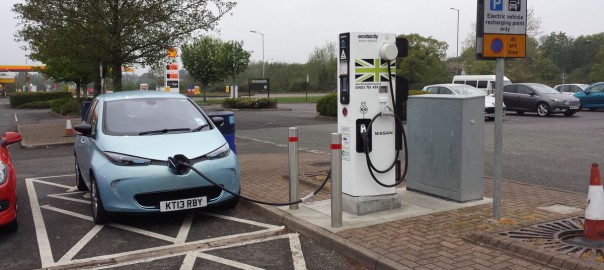
OVO Vehicle-to-Grid (V2G) charging (Image: T. Larkum/Fuel Included)

How electric vehicles offered hope as climate challenges grew

In the midst of a climate crisis, the EV began to gain traction

This was another year of bleak climate news. Record heat waves baked the Pacific Northwest. Wildfires raged in California, Oregon, Washington and neighboring states. Tropical cyclones rapidly intensified in the Pacific Ocean. And devastating flash floods inundated Western Europe and China. Human-caused climate change is sending the world hurtling down a road to more extreme weather events, and we’re running out of time to pump the brakes, the Intergovernmental Panel on Climate Change warned in August (SN: 9/11/21, p. 8).


OVO Vehicle-to-Grid (V2G) charging (Image: T. Larkum/Fuel Included)

The world needs to dramatically reduce its greenhouse gas emissions, and fast, if there’s any hope of preventing worse and more frequent extreme weather events. That means shifting to renewable sources of energy — and, importantly, decarbonizing transportation, a sector that is now responsible for about a quarter of the world’s carbon dioxide emissions.

But the path to that cleaner future is daunting, clogged with political and societal roadblocks, as well as scientific obstacles. Perhaps that’s one reason why the electric vehicle — already on the road, already navigating many of these roadblocks — swerved so dramatically into the climate solutions spotlight in 2021.

Just a few years ago, many automakers thought electric vehicles, or EVs, might be a passing fad, says Gil Tal, director of the Plug-in Hybrid & Electric Vehicle Research Center at the University of California, Davis. “It’s now clear to everyone that [EVs are] here to stay.”

Read more: Science News

It’s Time to Go Green!

If you would like to know more about Solar Panels and the PowerBanx range of home battery systems, and get a free instant quote, please complete our online form:

BMW i4 EV (Image: BMW)

2022 BMW iX xDrive50 | PH Review

Part carbon, 2.5 tonnes and that grille – welcome to BMW’s immediate future

The new i4 M50 that got its moment in the wintry sun last week represented the sensible, buttoned-down side of BMW’s electrification strategy, being an EV version of the 4 Series Gran Coupe. It’s the sort of car that offers an easy – if pricey – migration for those who want to change powertrain but keep the rest familiar. Not so the equally fresh iX, a car with all the nuanced subtlety of a Frankie Boyle punchline.

BMW i4 EV (Image: BMW)


The design was always going to trigger debate and lead to social media punch-ups. Indeed that seems to have been part of the corporate strategy, with BMW’s corporate “OK, boomer” tweet last year targeting those with doubts as to whether this was a bright new future for the brand. Yet, as often the case with louder personalities, the iX is much less radical under the surface than it is on top, sitting on the same CLAR platform that underpins the combustion-powered dinosaurs in the range.

Read more: Piston Heads

It’s Time to Go Green!

If you would like to know more about Solar Panels and the PowerBanx range of home battery systems, and get a free instant quote, please complete our online form:

Electric cars: deadline nears to claim home charging grant

Funds are designed to give up to £350 towards cost of buying and installing a home charging point

There are only a few weeks left to apply for a UK government grant to help with the cost of getting an electric vehicle home charging point installed if you own your house.

The Electric Vehicle Homecharge Scheme is an official grant that provides a 75% contribution – up to a maximum of £350 – towards the cost of a charging point and its installation. The main requirements are that the applicant owns, leases or has ordered a qualifying vehicle and has appropriate off-street parking.


From April 2022, the scheme will no longer be open to homeowners living in “single-unit properties” – in other words, detached, semi-detached and terrace houses and bungalows, so the charging point will need to be installed by 31 March and probably booked by February.

However, the scheme will remain open to homeowners who live in flats, and people in rented accommodation.

The cost of installing a home charging point varies, depending on the type you go for, although quotes typically come in at between £500 and £1,000.

Read more: Guardian

It’s Time to Go Green!

If you would like to know more about Solar Panels and the PowerBanx range of home battery systems, and get a free instant quote, please complete our online form:

Pluggin in at IKEA Southampton (Image: T. Larkum)

Char.gy lauds ‘first successful trial’ of public inductive charging

Electric vehicle (EV) charging firm char.gy said it has today (15 December) confirmed the world’s first trial of public EV inductive charging, having launched in Marlow, Buckinghamshire in October.


Pluggin in at IKEA Southampton (Image: T. Larkum)

A further 7 locations to be added in the London Borough of Redbridge and Milton Keynes, with this first trial using a low-power inductive charging installation provided by technology partner IPT Technology and adapted vehicle available for public hire through the hiyacar.co.uk app and website.

Inductive charging – which involves integrating charging infrastructure into the road surface and installing an induction charging pad in the EV – can help simplify the charging experience, de-clutter busy urban pavements and improve accessibility.

This is because the charging cable is removed, therefore removing trip hazards for pedestrians and allowing less mobile, elderly or disabled drivers to avoid navigating kerb drops between road and pavement to plug in the cables.

Read more: Current+


It’s Time to Go Green!

If you would like to know more about Solar Panels and the PowerBanx range of home battery systems, and get a free instant quote, please complete our online form:
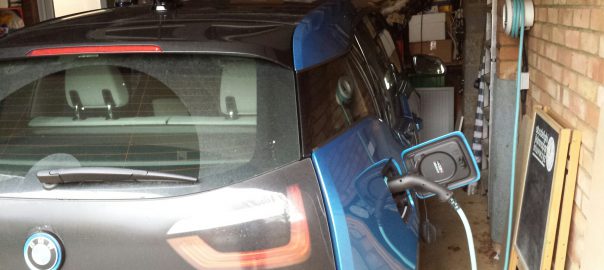
Zappi 2018 EV Charge Point (Image: myEnergi)

Plug-in Car Grant for electric cars cut AGAIN

The government has cut the Plug-in Car Grant for electric cars by another £1,000, meaning motorists will save even less on affordable EVs

The Plug-in Car Grant to help make electric cars more affordable has been cut by further £1,000 in a surprise announcement that will infuriate electric car buyers and manufacturers alike.

Previously £2,500, the Plug-in Car Grant is now just £1,500 as of 7am today (15 December 2021).


Zappi 2018 EV Charge Point (Image: myEnergi)

What’s more, the qualifying maximum price of an electric car has been reduced, from under £35,000 down to less than £32,000.

Both cuts are effective immediately.

The government argues that its approach to Plug-in Car Grant cuts “is clearly working – whilst the grant has slowly reduced over time, the sales of electric vehicles has soared”.

Transport minister Trudy Harrison said the government is “refocusing our vehicle grants on the most affordable vehicles and reducing grant rates to allow more people to benefit, and enable taxpayers’ money to go further”.

Read more: Motoring Research


It’s Time to Go Green!

If you would like to know more about Solar Panels and the PowerBanx range of home battery systems, and get a free instant quote, please complete our online form: