Monthly Archives: February 2022

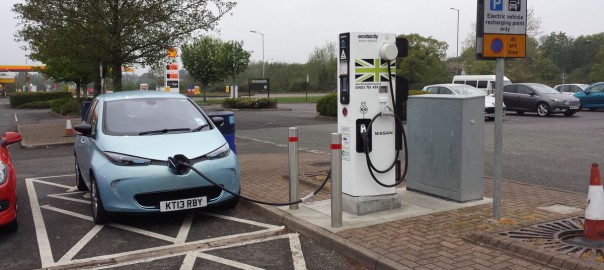
Topping up at Tiverton (Image: T. Larkum)

Electric vehicles bring down CO2 emissions of new cars in UK to lowest level ever

Though only 12% of new sales were zero-exhaust electric vehicles, emissions fell by 11.2% in 2021


Topping up at Tiverton (Image: T. Larkum)

The carbon dioxide emissions of new cars sold in the UK dropped to the lowest level ever in 2021 thanks to the unprecedented surge in electric vehicle sales, industry data suggests.

Average new car CO2 emissions fell by 11.2%, to 119.7g for every kilometre driven, according to the Society of Motor Manufacturers and Traders (SMMT), a lobby group.

Battery electric vehicles accounted for only 12% of UK sales during 2021, but they rapidly drag down the figures because they produce zero exhaust emissions. Increased sales of hybrids, which include a battery alongside an internal combustion engine, also contributed to the fall in emissions, which was previously stymied in recent years by the rise of sales in higher-emission sports utility vehicles (SUVs).

In 2021, the SMMT reported a 38% drop in average new car emissions since 2000, although those data were produced under a different test methodology so are not directly comparable.

Car sales data for January, also published on Friday, showed that the number of battery electric cars more than doubled year on year to 14,400, accounting for 12.5% of cars sold

‘Ambitious’ UK plans for electric vehicles welcomed – with reservations
Read more

Total new car sales rose by 27.5% year on year in January, although that was compared with January 2021 when the UK was in a strict lockdown and car showrooms were closed. The industry reported that sales were still limited by the months-long shortage of computer chips that has forced carmakers to favour key vehicles, including electric cars – which are vital for meeting emissions legislation.

Mike Hawes, the SMMT’s chief executive, said: “Once again it is electrified vehicles that are driving the growth, despite the ongoing headwinds of chip shortages, rising inflation and the cost-of-living squeeze.

Read more: The Guardian

It’s Time to Go Green!

If you would like to know more about Solar Panels and the PowerBanx range of home battery systems, and get a free instant quote, please complete our online form:

Porsche Taycan Turbo S (Image: Porsche)

What’s the best electric vehicle for shaming supercars?

The Porsche Taycan Turbo S puts the ‘fast’ in ‘fasten your seatbelts’

It’s one of the best things about an electric car – that instant slug of full-on torque, wheels scrabble then the rubber bites into the road, none of the other drivers can see your Nissan Leaf for dust away from the traffic lights.

We might have laughed at all those Reva G-Wiz drivers weaving about the road into the paths of overtaking cyclists, hunched painfully behind the wheel, those hairiest of hair-shirted early adopters. But it’s clear now that these were performance pioneers, in the same way that someone taking a corner too fast in their Benz Patent-Motorwagen was setting us all inexorably on the road to world rally championships and Grand Prix glory.

Porsche Taycan Turbo S (Image: Porsche)
And sure there have been upstarts and disrupters on the electric path so far, but of course we all knew that the big daddies of car making would come through with the sort of tech that would make others weep.

Porsche has spent decades and decades refining the 911 formula that people said couldn’t work. It positively crushed the naysayers under the bluff front end of its Cayenne performance SUV when they said that pseudo-4x4s were too dumpy to drive well.

Latterly the Stuttgart-based firm has electrified us all with the delights of its Taycan EV, a car that juggles the old-fashioned dynamic delights of a Porsche with the brave new world of electromobility. Critics will wiffle on about the lack of engine noise and aural titivation, or they complain in the same whiny tones as an electric motor about the fact that the Taycan has a Turbo model in its line-up when it doesn’t even have a turbo in its engine. “Watt’s going on”, they say. “Ohmigod”, they cry.

Maybe the Taycan Turbo S doesn’t even have a turbo, but with 751bhp on overboost you definitely won’t even care. A 2.8secs 0–62mph run will leave most other drivers sobbing pathetically in its wake – it’s basically a bargain at £139k and the polar ice caps will practically refreeze themselves as you thunder along. What’s not to like? You’ll be the envy of all the sad chumps at the charge points.

Read more: TopGear


It’s Time to Go Green!

If you would like to know more about Solar Panels and the PowerBanx range of home battery systems, and get a free instant quote, please complete our online form:

Electric Cars vs. Gas Cars Pros and Cons

There’s a lot to know about the advantages and disadvantages of owning an EV.

Before deciding to buy an electric car, it’s important to know that EVs aren’t the only electrified vehicles on the road. Electric vehicles rely solely on batteries and electric motors for propulsion. When the car runs short on charge, pull up to a charging station and you’ll be on your way in half an hour or so.

Plug-in hybrids have a battery pack and electric motor(s), but also a gas engine. They are capable of all-electric propulsion, but have a much shorter electric-only range than their EV counterparts. After the electric range is exhausted, the vehicle’s engine takes over and the electric motors fill in the gaps for the gas engine at low speeds.

Mercedes-Benz EQC (Image: Mercedes-Benz)

Gas Vehicles

PROS OF GAS VEHICLES

Internal combustion engines have been around for over a century and offer a familiar driving experience. Gas-powered cars are easy to use, easy to fuel, and have a driving range that makes them practical for long-haul road trips. These advantages, along with the generally lower up front costs to buy them, make gas-powered cars attractive for many drivers.

Gas engines have become increasingly complex over the years, and are now remarkably fuel efficient and powerful, but there’s no way around the fact that burning fuel creates emissions.

CONS OF GAS VEHICLES

Despite gains in fuel economy and lower tailpipe emissions, gas vehicles’ days are numbered. Humans’ negative impact on the earth and its climate far outweighs the pros of gasoline vehicles, and car companies know this. They are developing electric cars at a breakneck pace, and incentives from the government, such as tax credits, make electric car buying an attractive prospect for many.

Read more: Autoweek

Why Are EVs So Quick?

Here are the reasons that some of the quickest-accelerating cars on the planet are electric.

EVs are quick. Our testing has revealed that multiple mainstream EVs—including various sedans and SUVs that make no claim of being high-performance vehicles—can accelerate from zero to 60 mph in less than 5.0 seconds. Of 16 vehicles we’ve tested in the past decade that blasted to 60 mph in less than 3.0 seconds—supercar territory in the gasoline world—three of them were EVs.

Why are many of the latest EVs so quick? It’s down to the basic differences between electric motors and internal-combustion engines. When it comes to delivering their peak output, gasoline engines are surprisingly finicky things, and they tend to have far narrower horsepower and torque peaks than do electric motors.


To get a gas engine to deliver as much power to the drive wheels as possible, it needs the help of a transmission to match varying road speeds to the engine’s most powerful operating range. These days, high-volume passenger vehicles can have six to 10 gears in their transmissions. Even so, there’s lag off the line as the engine spools up from idle to, say, 2000 rpm or more, and that lag is a lot more noticeable with smaller turbocharged engines that increasingly populate today’s vehicles than it is with large naturally aspirated ones.

Big Torque Instantly

Suppose you had a vehicle with a powerplant that offered an almost flat torque curve, with close

to maximum output at zero rpm—and no need for a transmission to optimize its acceleration from zero to 100 mph? That would solve most of the performance shortcomings associated with gas and diesel engines, wouldn’t it?

Read more: CarandDriver


It’s Time to Go Green!

If you would like to know more about Solar Panels and the PowerBanx range of home battery systems, and get a free instant quote, please complete our online form:

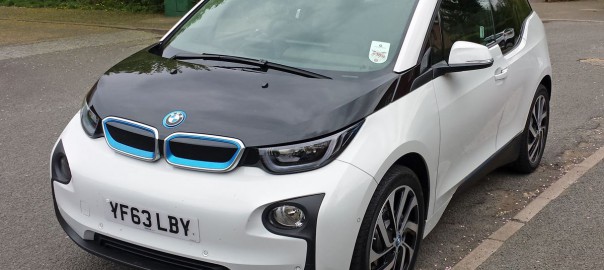
BMW i3 Test Drive (Image: T. Larkum)

BMW Says The i3 Is Being Retired Because Customers Want Bigger EVs

After nine years on the market and more than 200,000 vehicles produced, the BMW i3 heading towards a well-deserved retirement. The announcement didn’t come as a shock, but it’s still sad to hear the quirky EV will be no more from July. The pint-sized hatch arrived before the electric boom, which is why it suffered from poor sales in the early years. Well, the lack of government incentives for electric cars also played its part.

My first glimpse of our new i3 (Image: T. Larkum)

While most vehicles enjoy their best years in terms of sales during the first part of the life cycle, it was the other way around for the i3. So much so that BMW extended the model’s production run to meet strong demand. You could say it aged like a fine wine, but all good things must come to an end. Why is the company pulling the plug now?

Customer tastes have changed, and people are looking for something else when shopping for EVs. Specifically, the typical buyer wants a bigger and therefore more practical car than the i3. That’s the explanation given by a BMW spokesperson in an interview with German publication Automobilwoche, a sister site of Automotive News. But it’s not the only reason.

The company representative went on to specify electric cars should look “normal” in the sense they should mirror combustion-engined models. Well, that’s certainly not the case for the i3. While any other car from 2013 looks more or less outdated, the diminutive hatchback still seems like it traveled back from the future.

Automobilwoche says “quite a few BMW employees” have found the exterior design polarizing, mainly due to the unconventional shape. Apparently, the styling has “deterred many customers”. Even to this day, it’s unclear whether i3 has made any money with the EV and its range-extending counterpart.

Read more: BMWBLOG


It’s Time to Go Green!

If you would like to know more about Solar Panels and the PowerBanx range of home battery systems, and get a free instant quote, please complete our online form:

Renault, Nissan and Mitsubishi outline £19bn EV plan

Alliance will sell 35 pure-electric cars on five new platforms by 2030

The RenaultNissanMitsubishi Alliance has confirmed a €23 billion (£19bn) investment in electrification over the next five years as it seeks to strengthen the partnership between the three brands.

The money will be spent on expanding the common electric platforms available to brands within the Alliance from four to five after the introduction of a small EV platform for use from 2024 for European models such as the forthcoming Renault R5 and newly announced replacement for the Nissan Micra. Both cars will be engineered by Renault and built in its ElectriCity network of plants in northern France.


Captur E-TECH Plug-in (Image: Renault)

The new CMF-BEV platform was described as a “game-changer” by Renault CEO Luca de Meo, who said it reduces costs by 33% compared with the platform currently used by the Renault Zoe. “It will be the key to democratise electric cars,” he said. “For the very first time, EVs will be able to compete with internal combustion engines in this segment.”

Renault said more than 60% of components will be carried over from the CMF-B platform, which underpins cars such as the Renault Clio and Nissan Juke.

For Autocar Business webinars and podcasts, visit Autocar Business Insight

The platform will underpin five cars from Nissan, Renault, Alpine and Dacia and volumes will reach 250,000 cars a year, de Meo said. The relatively low volumes suggest it will be a Europe-only platform.

Read more: Autocar

It’s Time to Go Green!

If you would like to know more about Solar Panels and the PowerBanx range of home battery systems, and get a free instant quote, please complete our online form:
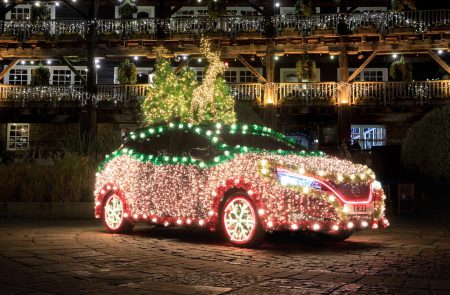
Warsaw. City Cleaning Authority rented 4 electric Renault Zoes

Four zero-emission Renault ZOE E-Tech vehicles were leased for a period of 36 months. The first electrics in the ZOM fleet are to cover 100,000 km per year, which means that each vehicle should cover no less than 25,000 km per year.

Thanks to the signed contract for the lease of Renault ZOE E-Tech, the Warsaw-based ZOM will meet the requirements of the Electromobility Act, which requires public entities to have 10% of zero-emission vehicles in their fleets.

The tender for car rental was won by Arval Service Lease Polska from the BNP Paribas Group. It is one of the first companies to join the leasing path of the government program “My Electrician” of the National Fund for Environmental Protection and Water Management.


Thanks to this subsidy, the Municipal Cleaning Authority will save almost PLN 110,000 gross, i.

2018 – Renault ZOE

e. the equivalent of one of the electricians rented. Monthly, this translates into a lower rental installment by over PLN 600 per month for each of the rented cars.

The new electricians will be driven by ZOM inspectors who monitor the streets of the capital city for cleanliness 24 hours a day and verify how cleaning companies fulfill their tasks.

In addition, in the winter, employees at Renault ZOE will control road conditions in order to decide whether to send snow spreaders to the capital’s streets.

The zero-emission car is equipped with a 52 kWh battery. According to the manufacturer’s declaration, Renault ZOE E-Tech is to allow driving up to 395 km according to the WLTP cycle (Worldwide Harmonized Light vehicles Test Procedure), which covers 57 percent of distance driving around the city, in 25 percent. suburban driving and 18 percent. moving around the highway.

Read more: Spark Chronicles

It’s Time to Go Green!

If you would like to know more about Solar Panels and the PowerBanx range of home battery systems, and get a free instant quote, please complete our online form:
Renault ZOE Van (Image: Renault)

RAC notches up a first as it tries out all-electric Renault Zoe patrol van

The RAC has become the UK’s first major roadside assistance company to use an electric patrol vehicle to reach breakdowns.

It is trying out a zero-emission Renault Zoe Van E-Tech, which has a range of 245 miles, as it said it dealt with some 7,000 random events every day – unlike delivery companies which can plan their routes – meaning a 200-plus-mile range was vital.

No electric van can tow broken-down vehicles as yet, but the RAC said the Zoe Van E-Tech was one of the few EVs on the market that could carry the tools and parts needed to fix four out of five breakdowns on the spot without its range being compromised.

The patrol van will mainly be used to attend the RAC’s two most common breakdowns – batteries and tyres – which together account for nearly half of its call-outs.

Renault ZOE Van (Image: Renault)

It can carry up to six replacement 12v car batteries, two tyres, a trolley jack, battery tester, the RACScan diagnostic tool and a variety of standard patrol tools.

The 55kW Renault Zoe patrol van will be used in urban and rural areas to assess its efficiency as a patrol vehicle.

RAC group operations director Paul Coulton said: ‘We are very excited to be putting our first electric zero-emission patrol van into service.

‘We have been assessing various electric vans for some time but have been frustrated by the fact there isn’t one on the market that can do what our diesel-powered patrol vans can do at the moment in terms of carrying 500 parts and tools and towing broken-down vehicles, with a range that’s even half what one of our standard vans can do on a full tank.

Read more: CarDealer

It’s Time to Go Green!

If you would like to know more about Solar Panels and the PowerBanx range of home battery systems, and get a free instant quote, please complete our online form:

Kia Ceed Sportwagon PHEV and XCeed PHEV (Image: Kia)

Car of the Year Awards 2022: Overall winner

Being named overall What Car? Car of the Year is the highest honour a new model can receive…

Choose any of our 2022 award winners and you’ll be getting an absolutely fantastic car that’s better than all of its direct rivals. However, the overall Car of the Year award is reserved for the model that has moved things on the farthest in the past 12 months. And this year, that’s the Kia EV6.

The electric car market is a particularly exciting one at the moment; sales are booming, prompting all of the major manufacturers to respond by launching new models. But the great news for car buyers is that the heat of competition has inspired car makers to really up their games, and none has done more so than Kia.

or starters, the EV6 combines a huge real-world range with the ability to charge at speeds that even some Teslas can’t keep up with, addressing two of the biggest concerns that people still have about electric cars.

Kia Ceed Sportwagon PHEV and XCeed PHEV (Image: Kia)

What’s more, by basing the EV6 on bespoke electric underpinnings rather than a set that’s shared by petrol and diesel models, Kia has been able to take advantage of the compact size of electric motors and produce a car that’s hugely spacious and practical.

 Read more: What Car


It’s Time to Go Green!

If you would like to know more about Solar Panels and the PowerBanx range of home battery systems, and get a free instant quote, please complete our online form:

Dacia Spring 2021 (Image: Dacia.co.uk)

Record year as EVs rise to one-sixth of all new UK car sales

More than a quarter of the UK’s car market is now electrified in some form, with the sale of new petrol and diesel cars scheduled to end by 2030.

The UK’s electric vehicle (EV) market hit new heights in 2021, with more battery electric vehicles (BEVs) sold than over the previous five years combined.

According to the Society of Motor Manufacturers and Traders (SMMT), 191,000 new BEVs joined Britain’s roads, along with 115,000 plug-in hybrids – meaning 18.5% of all new cars registered in 2021 can be plugged in. This is in addition to the 147,246 hybrid electric vehicles sold, which took a further 8.9% market share. In total, 27.5% of the country’s car market is now electrified in some form.

Dacia Spring 2021 (Image: Dacia.co.uk)

Customer preference for EVs continues to rise, with December seeing BEVs take a record market share in a non-lockdown trading month, accounting for 25.5% of all new registrations. More than 40% of models are now available as plug-ins.

The UK was the third-largest European market for new car registrations in 2021, but the second largest by volume for both plug-in hybrids and BEVs. It is, however, only the ninth largest in Europe for BEVs by market share, despite the country having among the most ambitious climate targets for cars, with the sale of new petrol and diesel cars scheduled to end by 2030.

Norway is streets ahead of the rest of Europe when it comes to EV sales. Over the course of 2021, 65% of new car registrations in the country were all-electric BEVs and 28% were hybrids (22% plug in, 6% non-plug-in).

Read more: Energy Monitor

It’s Time to Go Green!

If you would like to know more about Solar Panels and the PowerBanx range of home battery systems, and get a free instant quote, please complete our online form: